PC
PS5
Xbox Series
There’s a version of WILL: Follow the Light that could have been genuinely affecting. The premise is strong, the setting is strong, and the game clearly understands the appeal of loneliness, weather, distance, and the kind of emotional baggage that arrives long before the characters do. On paper, this should be the sort of quiet, moody adventure that lingers after the credits. In practice, it never quite makes the leap from promising to persuasive.

That is the problem hanging over the whole game. WILL wants to be a reflective story about family, grief, and the long shadow of loss, while also serving up exploration, sailing, puzzles, and slow-burn tension across a frozen, inhospitable landscape. None of those ideas are bad. Some of them are even excellent. But the game seems unsure about how to connect them, and that uncertainty leaves everything feeling a bit loose, a bit padded, and a bit less impactful than it thinks it is. There are moments where the atmosphere nearly does the job on its own, but atmosphere can only carry a game so far before the cracks become impossible to ignore.

The first thing WILL gets right is the look and feel of its world. It has the sort of brooding visual identity that immediately sells the fantasy of isolation. The lighthouse, the sea, the cold weather, the permanent sense of danger lurking just outside the beam of light — all of it works in theory, and often enough in practice, to make the game easy to admire. The lighting is especially effective, giving the world a real sense of contrast between safety and exposure, warmth and abandonment, guidance and uncertainty. When it is just sitting in its own mood, WILL is very good at being bleak in a way that feels intentional rather than merely dull.
But good atmosphere is not the same as good pacing, and this is where the game starts to wobble. The journeying that should define the experience too often feels more like a sequence of chores than a compelling survival trek. Sailing sounds like it ought to be one of the game’s major pleasures, but it is rarely interesting enough to justify how much the game relies on it. Instead of creating a satisfying relationship between player, vessel, and hostile environment, sailing becomes little more than a slow delivery system for the next narrative beat. That is a serious problem for a game built around movement and discovery, because movement here is supposed to mean something. Too often, it just means time passing.

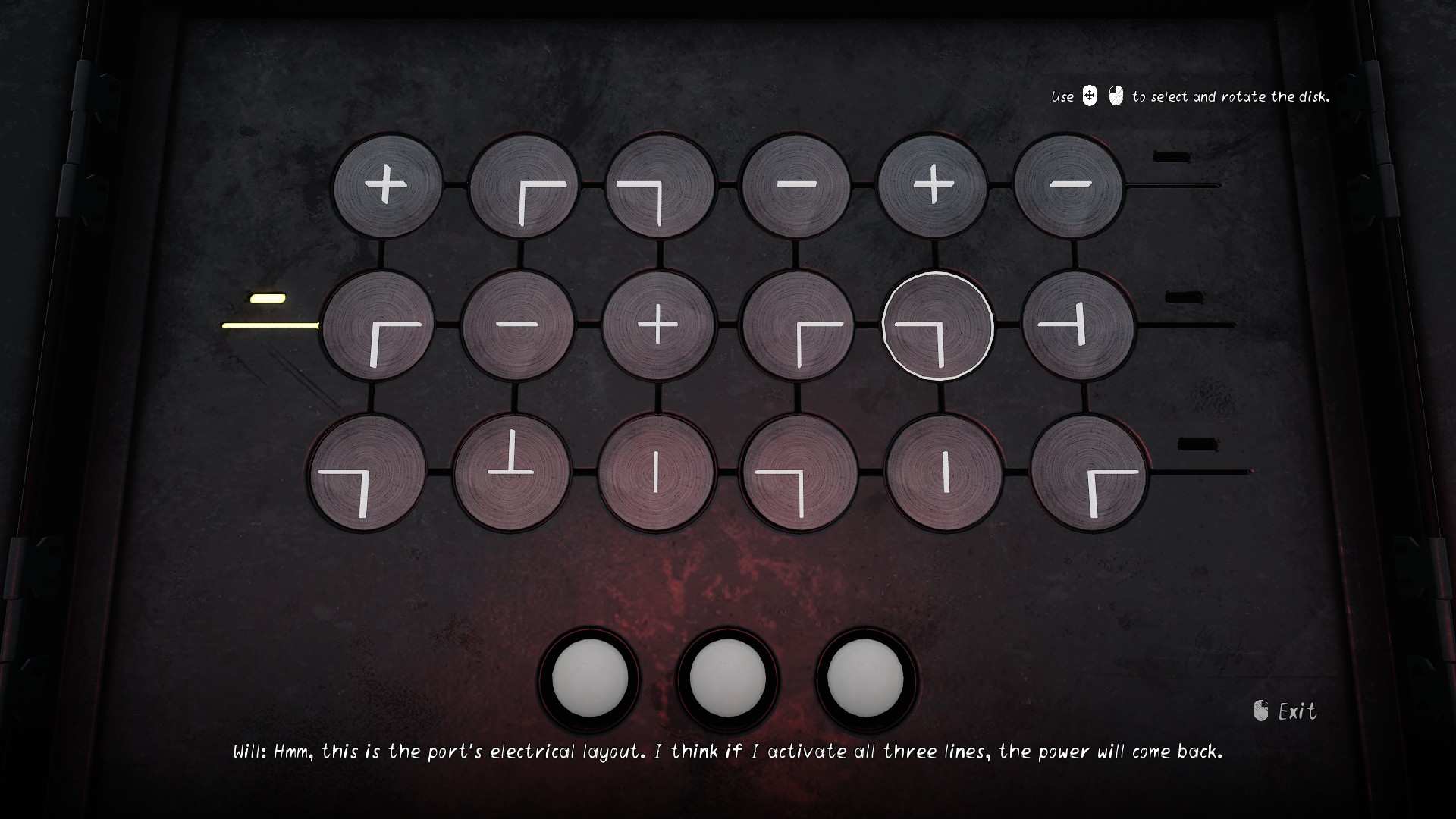
The same issue shows up in the puzzles and interaction design. Nothing here is offensively bad on its own, but so much of it feels familiar in the least flattering way. The game is constantly asking you to prod, fetch, adjust, and solve in ways that never quite reward your attention with insight or tension. One of the first major puzzles I struggled with was the reassembly of a winch. It was not only dull, but inconsistent in its mechanics — I had to switch from controller to keyboard to accurately select the pieces I needed, and even then the hitbox for placing them was wildly inaccurate. The best adventure games make you feel as though each obstacle is another way of understanding the world. WILL more often makes you feel as though you are clearing a path because the game needs you to reach the next cutscene. That is a huge difference, and it drains a lot of life out of the experience.

The writing doesn’t help enough to compensate. The emotional core is clear, and there is no doubt that the game is reaching for something sincere, but the execution is uneven. Some scenes are carried by the strength of the premise alone, while others feel underdeveloped, over-explained, or simply not specific enough to land with force. The game keeps circling around major feelings without always pinning them down. As a result, the story can feel more like a summary of emotional significance than the real thing. I understood what it wanted to say. I just didn’t always feel it.

That’s especially frustrating because the subject matter absolutely deserves better. A story about family fracture, guilt, and a desperate search through a hostile landscape has real potential, and certainly ticks a lot of the emotional boxes I look for in this type of game. WILL knows how to frame that material, and it occasionally hints at something more personal and more haunting than the final product allows. But it never fully commits to the emotional detail needed to make its themes truly resonate. What remains is a game aiming for poignancy while often landing on restraint instead. And restraint, in itself, is not enough.
There are still moments where the game nearly breaks through. Environmental storytelling is often more convincing than the dialogue, and some of the abandoned spaces have enough texture to imply a much richer world than the game can always afford to show. Those sections are useful reminders that WILL does have a strong sense of place. It understands how to make silence feel heavy and how to let the landscape carry some of the narrative burden. Unfortunately, that burden becomes heavier as the game goes on, because the mechanics are not robust enough to keep the journey engaging for the full run time. By the final stretch, progression started to feel more dutiful than compelling, and I found myself pushing forward more out of obligation than genuine curiosity.
That mismatch is the defining issue. WILL looks and sounds like a thoughtful, emotionally resonant adventure, but it plays like something more hesitant and less refined. Its ideas are better than its systems, and its mood is better than its structure. That does not make it a bad game, but it does make it a frustrating one. There is enough craft here to see what it wants to be, and enough roughness to make sure it never quite gets there.
So the verdict is a middling one, and I mean that in the plainest sense. WILL: Follow the Light has ambition, atmosphere, and a setting that does a lot of the heavy lifting. But the pacing is slack, the mechanics are too often dull, and the emotional beats don’t land with enough force to justify the game’s slower stretches. It is easy to respect what it is trying to do. It is harder to recommend it without a long list of reservations.
You can subscribe to Jump Chat Roll on your favourite podcast players including:
Let us know in the comments if you enjoyed this podcast, and if there are any topics you'd like to hear us tackle in future episodes!