PS5
PC
Switch
Switch 2
Xbox Series
If you’ve ever looked at a Scrabble board and thought, “I wish this was more exciting,” then Beyond Words might be your answer. It aims to do for tile-based word games what Balatro did for poker — wrapping familiar mechanics in a roguelike, deck-building shell. It comes from Steve Ellis and David Doak, of TimeSplitters and GoldenEye fame (no, really), and while word games don’t exactly scream adrenaline, the core loop here is compelling… for a while.
The goal is simple: hit a level’s target score within a set number of moves by building the highest-scoring word from your rack. Succeed, and you progress to the next round with a higher target. After several rounds, you’ll face a tougher “boss” stage. Straightforward on paper, but the real depth comes between rounds, where you can purchase modifiers — some persistent, others single-use — that tweak everything from tile values to multipliers and rack composition.
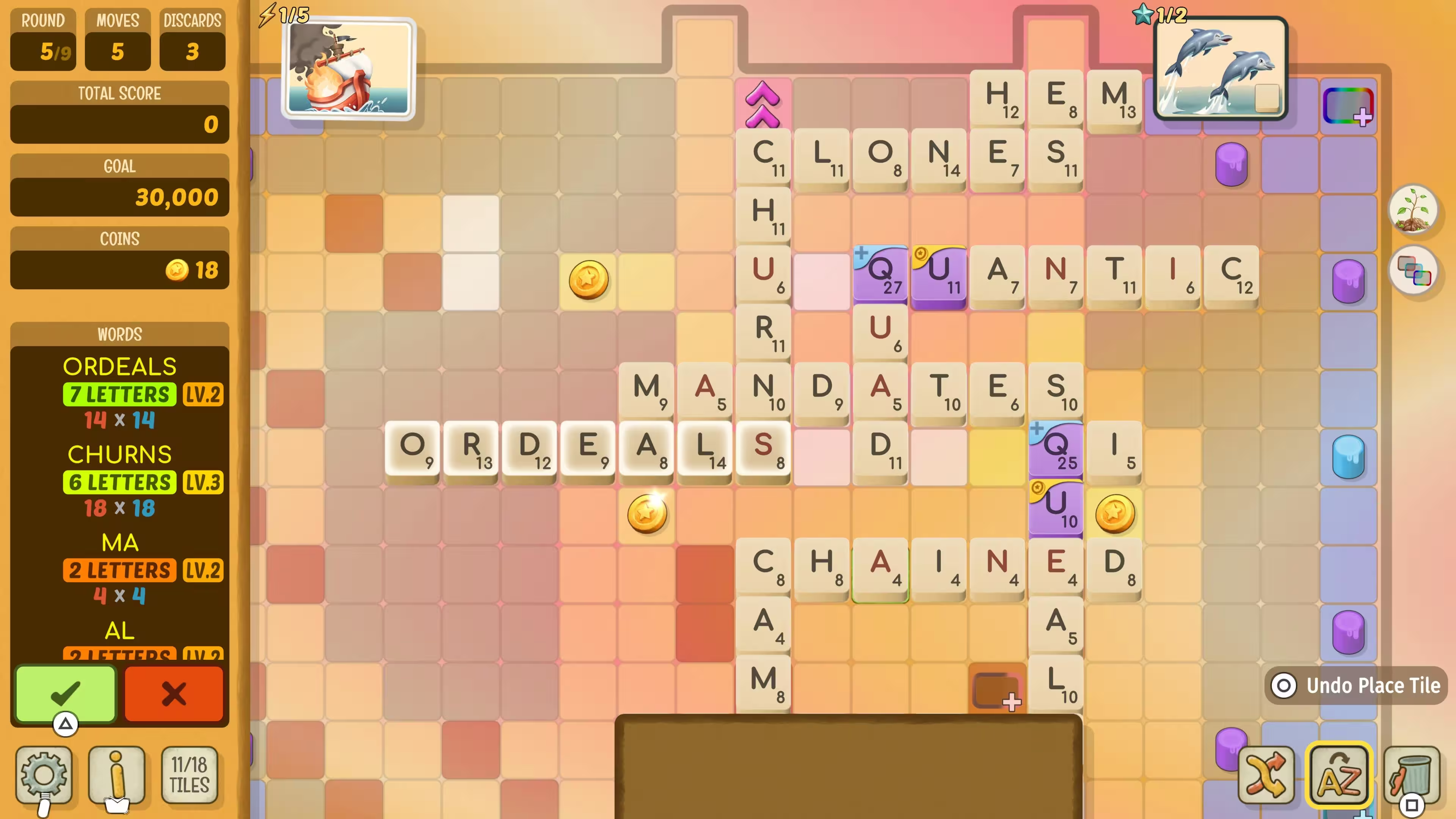
Some of these may seem counterintuitive - for instance, getting bonuses for keeping words under four letters. But when you see the boards you’re playing on, where the traditional Scrabble layout is replaced by the kind of icon-filled, coin-spinning colourfest King would love to shit out and charge you for, they start to make sense.
Each board comes with its own rules, layouts, and opportunities. Success depends on how well you adapt your build: ditching unhelpful modifiers, investing in the right ones, and weighing up risk versus reward. Coins scattered across the board add another layer, feeding into the shop economy. Do you play it safe to hit the target, or stretch for a riskier word path that might net you more currency? That tension is where Beyond Words is at its best.
It’s also, mercifully, more permissive than Scrabble. The dictionary allows slang, swear words, and proper nouns, which adds a layer of freedom often missing from traditional word games. There’s a simple, childish joy in slamming down something like “f*ck” on a board for a huge score. And yes, that isn’t a censored word — asterisks act as vowel wildcards, while question mark tiles can be substituted for any letter at all. You’ll see far more of these than Scrabble’s stingy blanks.
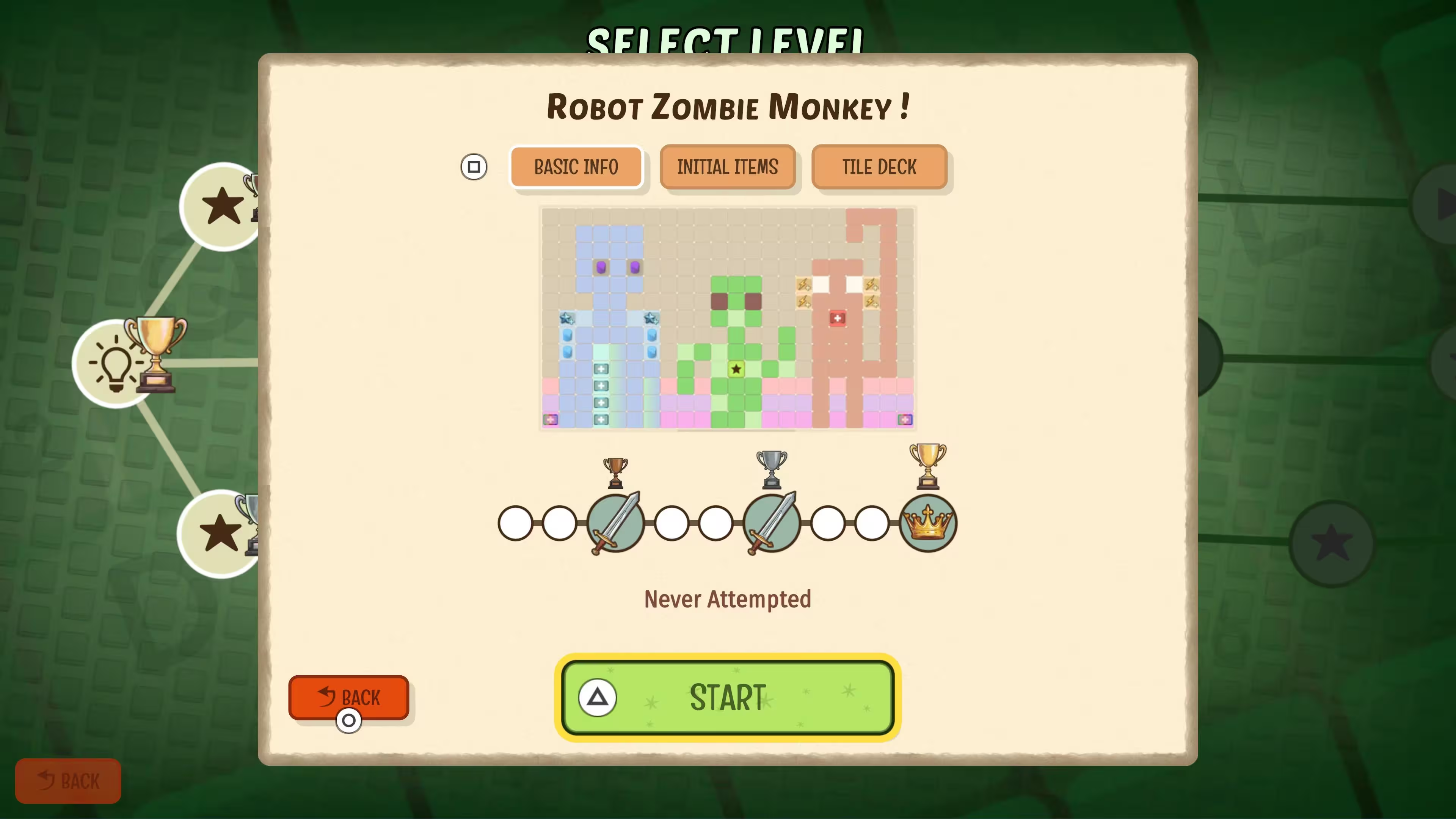
The boards themselves are living, upgradable entities. Tiles you place might activate not just coins, but tile, card or word modifiers or multipliers. As with Scrabble, the juicier bonuses are at the extreme edges of a lot of the boards, tantalising you with potentially huge scores — if you’re brave enough to branch out to them, and have the lexicon (and hopefully the tiles) to reach them.
The deck-building layer is where things start to wobble. Each round offers opportunities to stack multipliers and refine your build, but the difficulty curve is steep to the point of frustration. Early rounds might ask for 500 points; by round four, you’re staring down six-figure targets alongside brutal restrictions. Some of these feel excessive — doubling a target from 100,000 to 200,000, or limiting you to seven-letter words or longer. Even the most committed word nerd is going to struggle. Even the most hardened sesquipedalian would struggle to succeed.
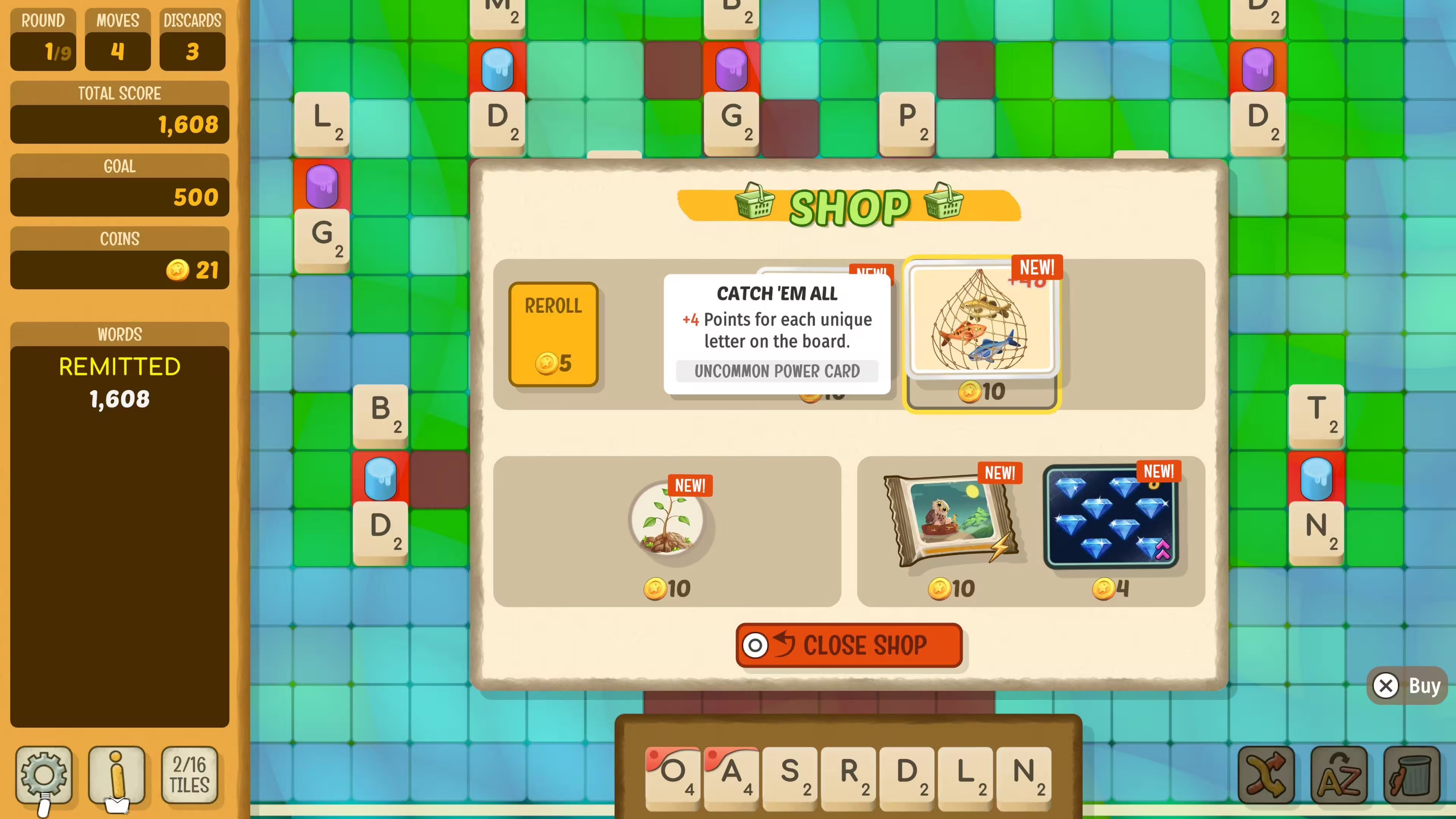
And that’s the problem. I love word games. I’m a huge fan of Wordle, Parseword, Connections, and yes, Scrabble. But even with a decent vocabulary, consistently hitting the higher thresholds here feels more like luck than mastery. When you’re falling tens of thousands of points short, it stops feeling like a challenge and exposes a fundamental flaw in the design.
The controls don’t help. Shortcuts for selling cards or scrapping tiles are awkwardly mapped, leading to accidental losses more than once, and there’s no option to remap them. Navigating the board with a controller is similarly clunky, which becomes a real issue in timed modes that demand quick, precise input.
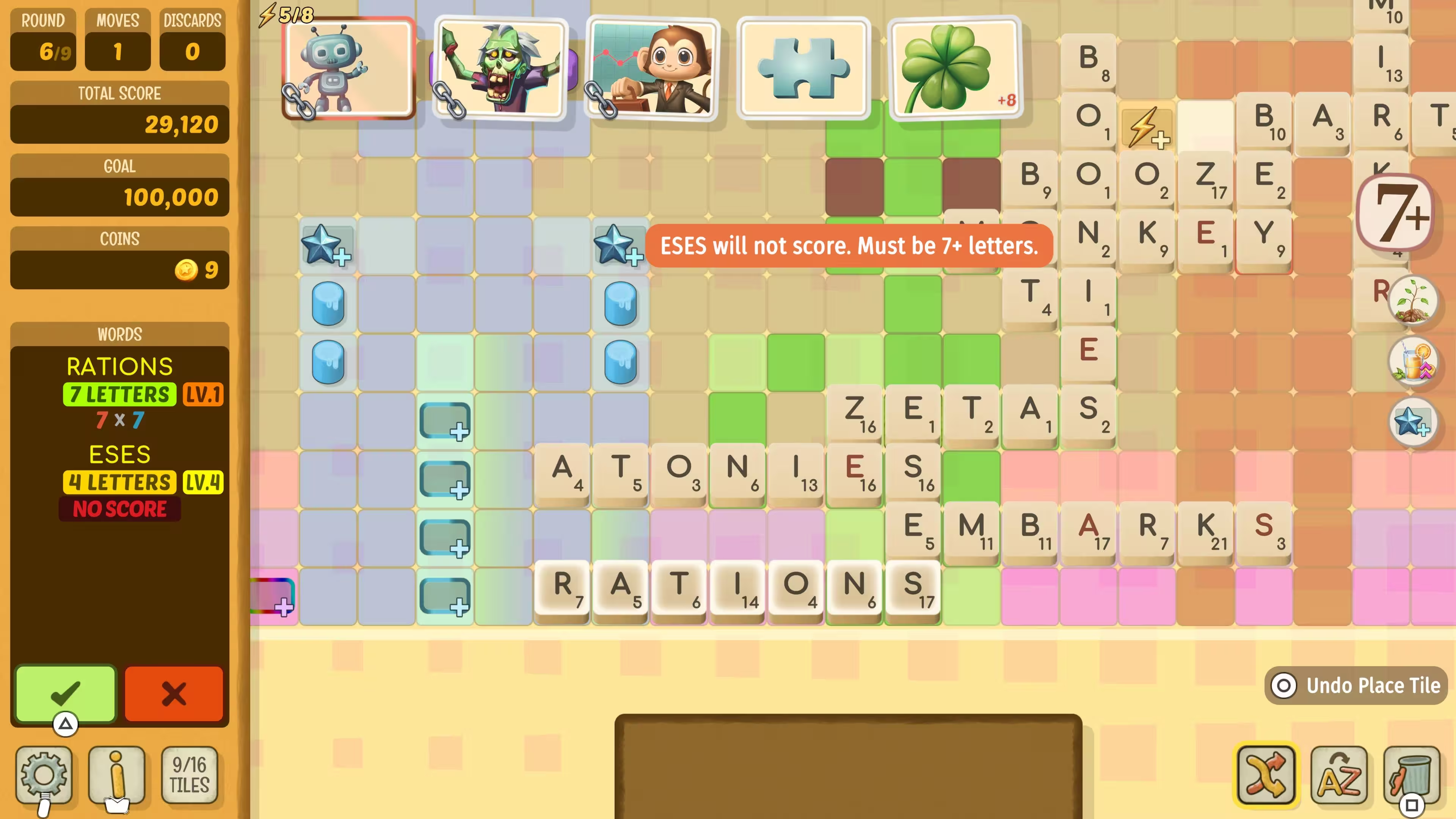
What’s most upsetting is that there are flashes of a great game here. It’s simply buried beneath a swamp of power cards (the equivalent of Balatro jokers), tile packs, and the ever present shop. When everything clicks — when your modifiers align, your multipliers stack, and your word-building flows — it delivers a genuine rush, like clearing a Peggle board for the first time. But the path to get there is too inconsistent.
The game actively discourages big, ambitious words early on, instead nudging you towards smaller builds that you gradually extend — TON to TONE to STONES to KEYSTONES, and so on. It’s a clever idea in theory, but heavily dependent on your rack and a degree of randomness that can derail an entire run if it doesn’t fall your way.
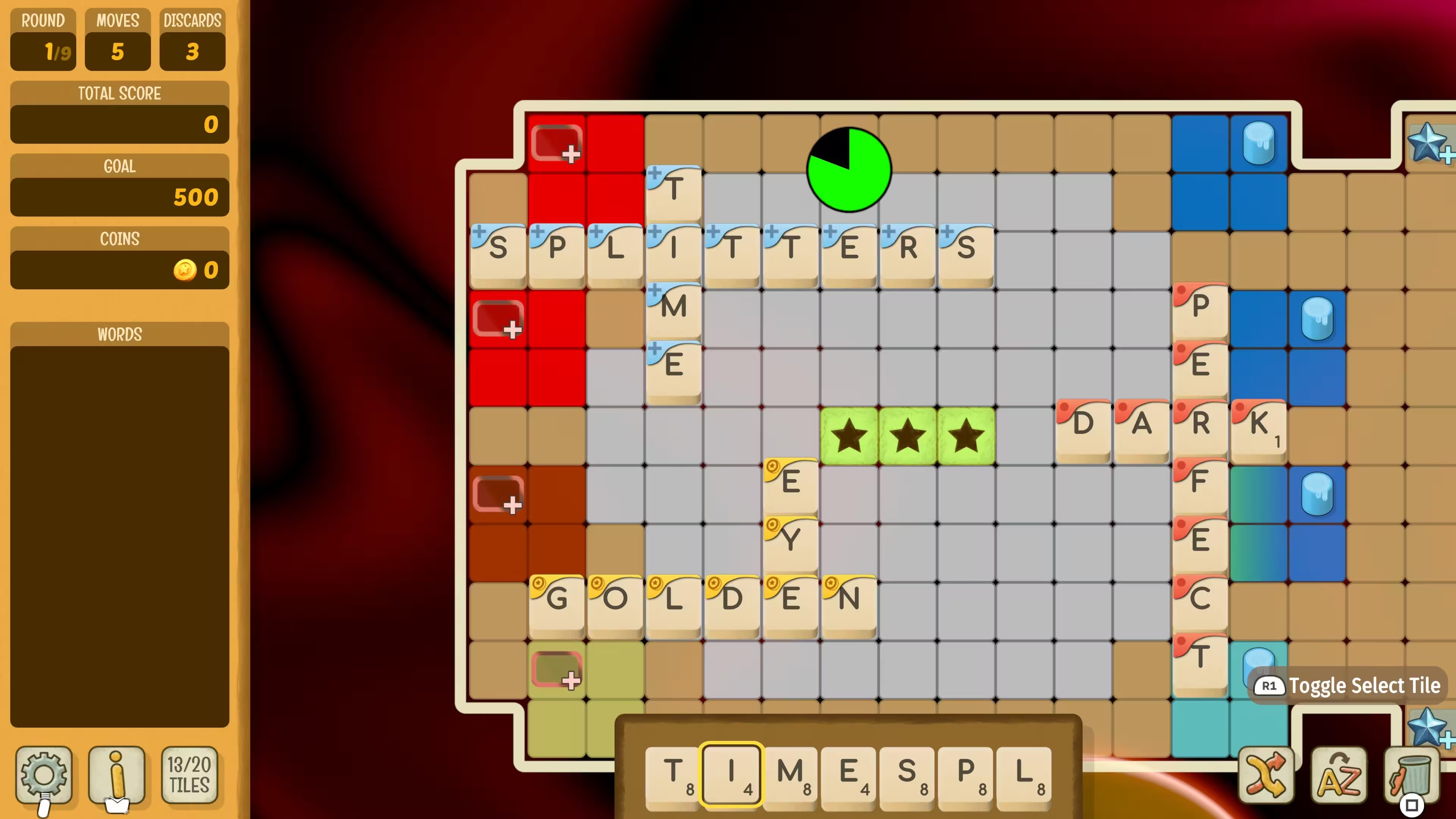
Visually, it’s clean but unremarkable, polished in a way that feels more mobile than premium. The audio follows suit. Functional, but forgettable. If you didn’t know the pedigree behind it, you’d never guess.
Beyond Words is an interesting twist on a familiar formula, but it struggles to sustain its own ambition. Like a bag of candy floss, it’s immediately appealing, but the more time you spend with it, the less satisfying it becomes.
You can subscribe to Jump Chat Roll on your favourite podcast players including:
Let us know in the comments if you enjoyed this podcast, and if there are any topics you'd like to hear us tackle in future episodes!