
PS5
PC
It would be an incredible proposition to step back into the blood-soaked history of Japan, wouldn't it? Knowing the intricate lore of the nation and putting that into action against hordes of demonic yokai (it’s important to include the folklore, too) to shape the destiny of an empire just sounds marvellous. The premise of Koei Tecmo and Team Ninja’s Nioh 3 sets out to enable exactly that, delivering a sprawling, masocore action-RPG experience that sees the franchise built for the current console generation. To truly appreciate what Team Ninja has accomplished here, one must acknowledge the origins of their specific design philosophy. While Nioh 3 shares DNA with the broader landscape of modern Souls RPGs – demanding stamina management, punishing enemy encounters, and the retrieval of dropped experience upon death – its true lineage traces back to Team Ninja's own action pedigree, most notably the Ninja Gaiden series. Instead of relying on the methodical, pacing-heavy atmosphere typical of an RPG, the focus here is relentlessly fixed on hyper-technical, blistering combat. With Nioh 3, the developer has delivered a third instalment that fundamentally reconstructs the foundations of its predecessors while expanding its scope to a massive, intimidating scale.
The narrative ambition of Nioh 3 immediately eclipses the grounded, singular-era focus of its predecessors. You take on the role of Tokugawa Takechiyo, a warrior poised to become the next Shogun during a highly volatile period of Japanese history. However, the path to leadership is shattered by his younger brother, Tokugawa Kunimatsu. Consumed by jealousy and empowered by a sinister force, Kunimatsu unleashes a horde of yokai, plunging the nation into hellish chaos. Guided by the Guardian Spirit Kusanagi, Takechiyo is forced to transcend time itself, battling across dramatically different eras to save the kingdom. You will carve your way through the Tōtōmi region during the Sengoku period, explore the ancient capital of Kyoto during the Heian period, and even survive the political upheaval of the Bakumatsu period. This time-jumping narrative framework is vast, and while it occasionally verges on the melodramatic, it serves as an excellent vehicle to pit you against a staggering variety of historical figures and mythological monstrosities.
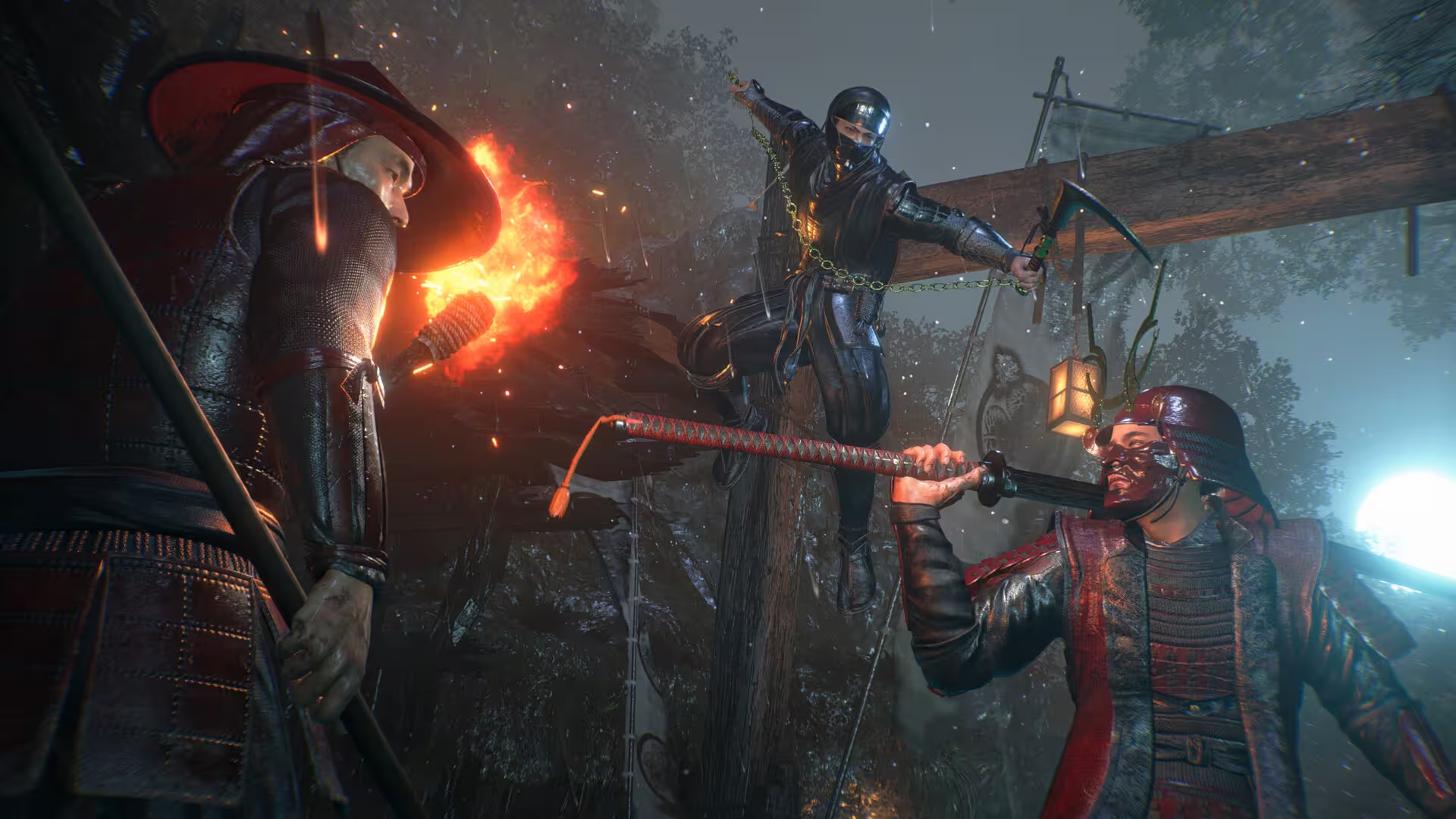
This massive narrative scope is matched by a significant structural shift. Nioh 3 marks the series’ first bespoke foray onto the PlayStation 5, built heavily on the proprietary Katana Engine, and the graphical leap is immediately apparent. When comparing the visual fidelity of this title to the first two games, the upgrade is substantial. More importantly, the environments are no longer confined to the murky, segmented corridors and strict mission-based structures of the past. Instead, the game features expansive open-field (think open-world, but with limitations) environments that look undeniably beautiful. The art direction masterfully utilises a rich, high-contrast palette, dominated by deep blacks, vibrant reds, and golds that pop off the screen during exploration. Despite the massive increase in environmental scale and the sheer volume of particle effects during combat, the performance on the PlayStation 5 is exemplary. The game maintains a remarkably smooth framerate with virtually no slowdowns, a technical necessity for a masocore title where a dropped frame frequently equates to death. I was playing with FPS prioritised as I am limited to a 1080P display, so keep this in mind if wanting to up the resolution.
It is a genuine shame, then, that the auditory experience presents a noticeable flaw that must be addressed early on. The default English voice acting is, quite frankly, poor. In a game so steeped in the rich history, political machinations, and mythology of Japan, the English delivery feels disjointed, wooden, and frequently shatters the carefully constructed immersion of the cutscenes. It is highly recommended that players immediately delve into the options menu to switch the audio to the default Japanese voice track – much as you might with Street Fighter over the years – with English subtitles that are comprehensive and can be varied in size for accessibility. Doing so instantly elevates the narrative experience, grounding the interactions in a much more authentic atmosphere and allowing the historical drama of Takechiyo and Kunimatsu to resonate exactly as intended.
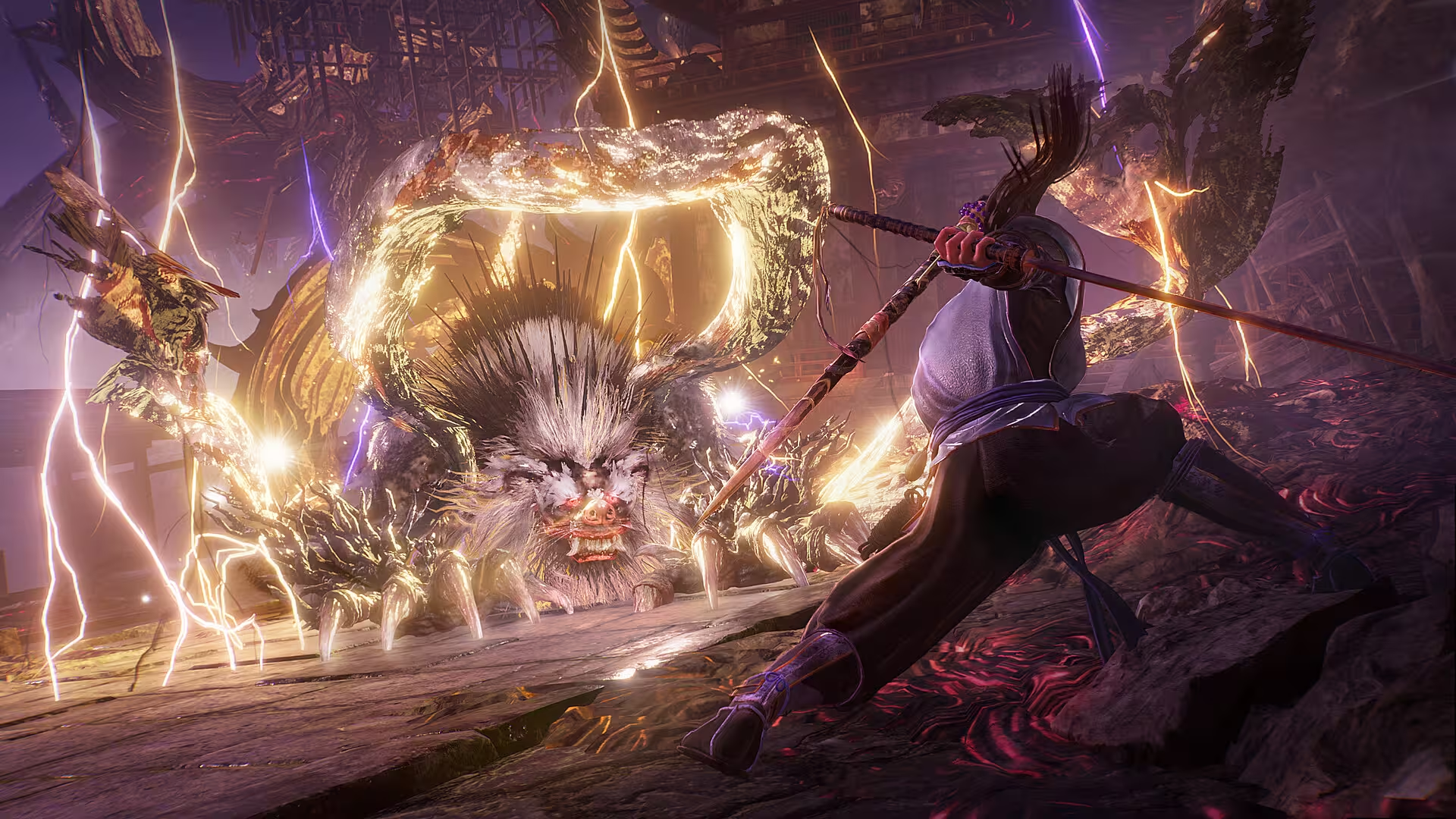
Before you can begin slicing your way through these historical eras, you are tasked with creating your protagonist. The character creation suite remains remarkably comprehensive, allowing players to meticulously craft their vision of Takechiyo with a lovely array of sliders, facial features, and physical options. You will be spending a significant amount of time observing your creation. Nioh 3 is a big game. Players can expect to invest roughly 25-35 hours just to complete the main story campaign. For completionists looking to conquer the daunting new 'Crucible' challenges, clear every open-field enemy base, and master the dizzying array of weapons, the playtime will comfortably blow past the 60-hour mark.
At its core, the game retains the deeply layered RPG mechanics that fans expect. You are constantly levelling up your stats, refining your character build, and aligning yourself with various Guardian Spirits that significantly alter your tactical approach. The loot system remains incredibly dense, showering you with gear that must be managed, forged, and optimised at the blacksmith. While this level of micromanagement can feel overwhelming, it ensures your damage output keeps pace with the increasingly resilient enemies. You cannot simply randomly place skill points; given the unforgiving difficulty curve, a cohesive build is a hard requirement for survival.
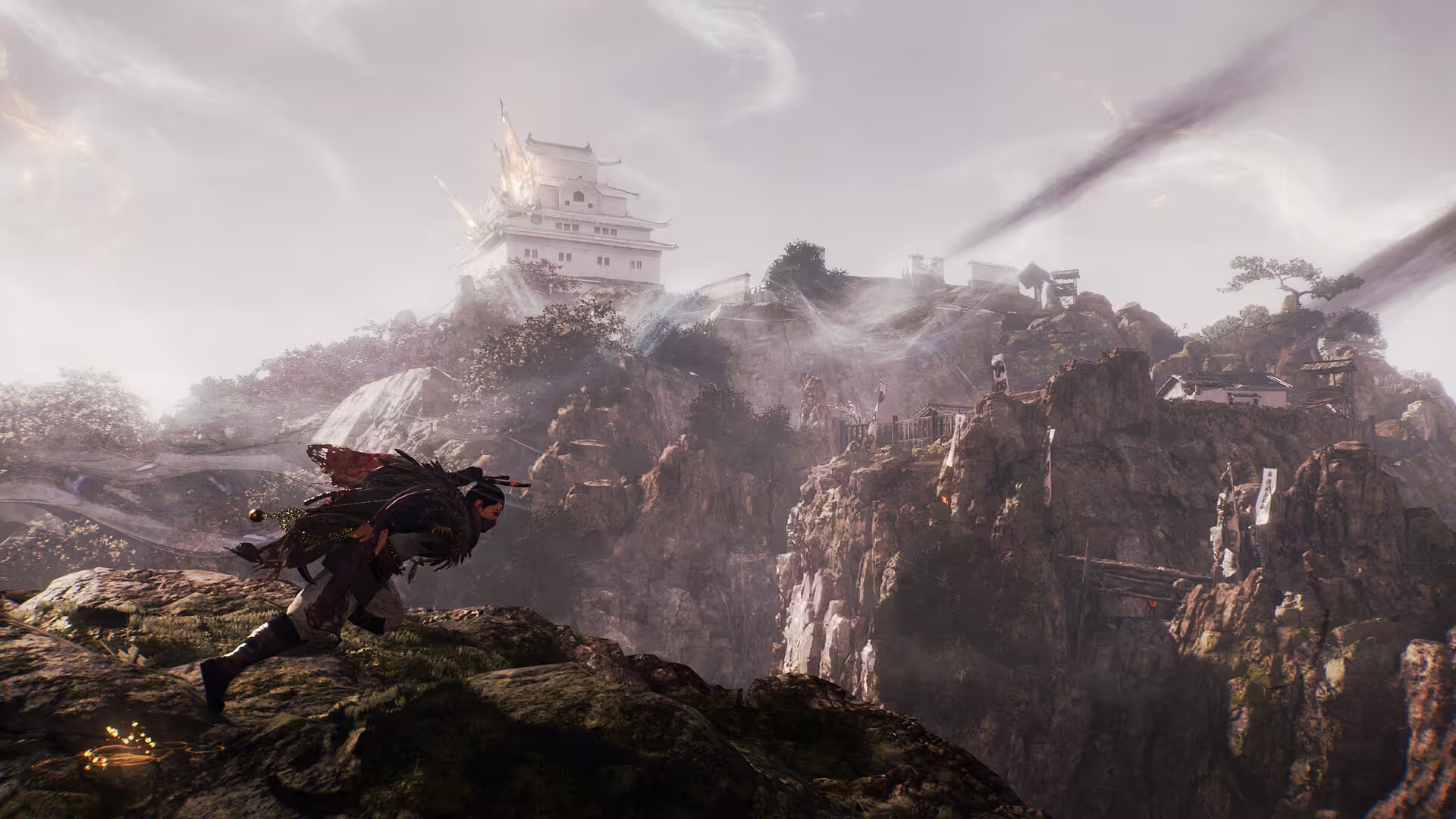
Where Nioh 3 truly distinguishes itself, and where it justifies its existence most completely, is in its overhauled combat system. Nioh 1 and Nioh 2 relied heavily on a singular framework of switching between High, Mid, and Low weapon stances. Nioh 3 entirely replaces this with the seamless, instantaneous swapping between two distinct methodologies: Samurai and Ninja fighting styles. This fundamental change shifts the flow of battle closer to the blistering parry-rhythm of Sekiro while maintaining the expansive weapon variety of a traditional action RPG.
The Samurai style represents the evolution of the classic Nioh experience. It is grounded, heavily reliant on disciplined timing, and excels at breaking through an enemy's defences. Crucially, it introduces a new 'Deflect' mechanic, allowing players to block enemy attacks at the absolute last microsecond to turn the tide of battle, alongside an 'Arts Proficiency' system that actively enhances your martial arts capabilities the more you engage in face-to-face confrontations.
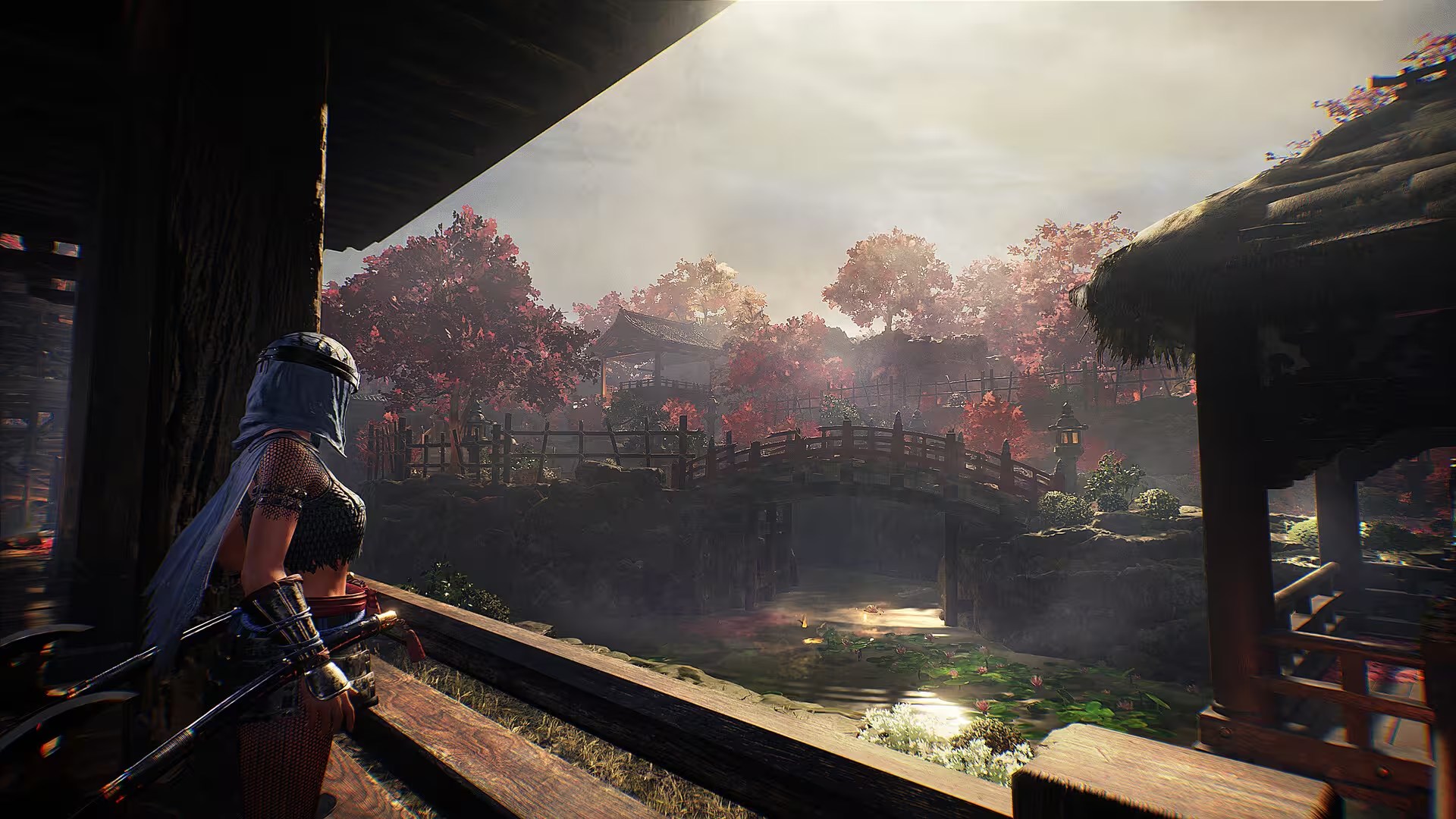
Conversely, clicking over to the Ninja style unlocks an entirely different game. This style focuses heavily on agility, rapid aerial finesse, and outmanoeuvring adversaries from outside their standard range. It introduces the vital 'Mist' mechanic, a specialised evasion technique that leaves a visual afterimage behind to momentarily distract enemies, allowing you to slip past their guard and deliver devastating, swift strikes from behind.
Against standard grunts early in the game, you might find that sticking to one style works well enough to scrape by. However, the masocore difficulty ensures this rudimentary approach will quickly lead to catastrophic failure. The enemy AI is terrifyingly aggressive, closing distances rapidly and punishing passive play with brutal efficiency. To defeat the game's formidable bosses, you are forced to engage with both styles dynamically. You must Deflect a heavy blow in Samurai style, instantly switch to Ninja style to Mist-dodge a sweeping unblockable attack, and capitalise on the microscopic window of opportunity to counter. It is a demanding, hyper-technical system that requires intense patience and practice. You cannot cheese these encounters; you must learn them. So, if you haven’t been enamoured by a previous Nioh game, you’re unlikely to find happiness and joy with Nioh 3.
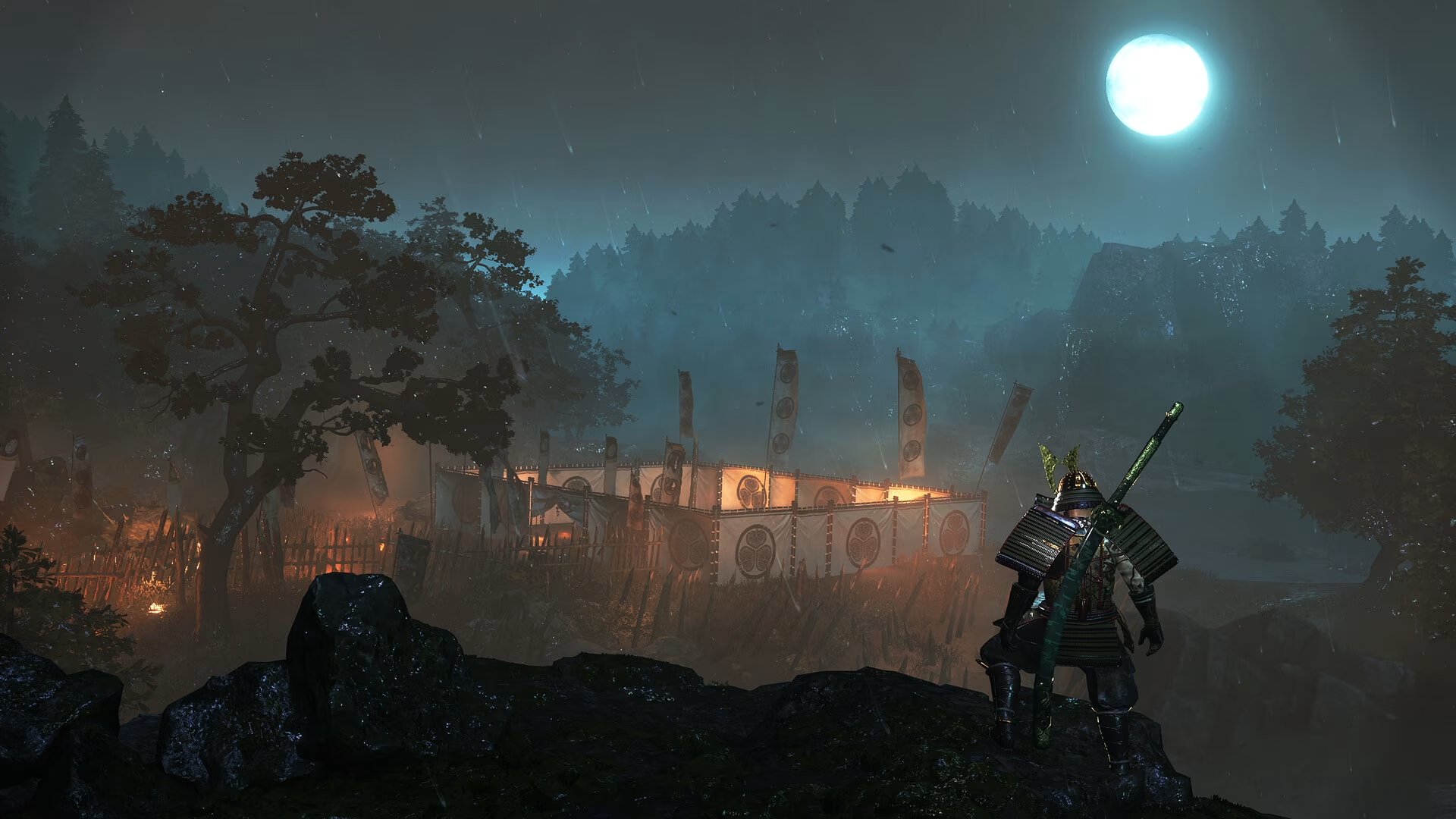
Ultimately, any game should enable you to pass the time in an entertaining way and compel you to come back for more, even when it mercilessly punishes your mistakes. Nioh 3 manages this delicate balance brilliantly for its target audience. It is an exhilarating, complex piece of entertainment that demands your full, undivided attention. It does have flaws – the massive open fields can occasionally feel formulaic, the English dub is a severe misstep, and the overwhelming complexity of its loot system might deter newcomers – but these are minor blemishes when viewed against the majesty of its combat.
If you appreciate the specific brand of hyper-technical, masocore action that Team Ninja's history guarantees, you will undoubtedly love this game. It is the definitive evolution of their formula, blending high-speed, demanding action with deep RPG mechanics perfectly. Conversely, if you found their previous games frustrating or impenetrable, Nioh 3 will not change your mind; it leans heavily into its punishing identity rather than compromising it for mass appeal. It doesn’t manage to be a completely flawless masterpiece, but it’s fantastic fun watching it try.
You can subscribe to Jump Chat Roll on your favourite podcast players including:
Let us know in the comments if you enjoyed this podcast, and if there are any topics you'd like to hear us tackle in future episodes!