PC
Swan Song mashes up two of my favourite things in gaming: a heartfelt narrative and puzzle boxes. I love a box. I love games about boxes. I loved a game about boxes called Boxes so much that I still recommend it to slightly perplexed friends (“wait, so you just… open boxes?”). And so, I was fully on board with Business Goose Studios’ gentle puzzler from the get-go, although the meat of the head-scratching is a little more repetitive than I’d have preferred.
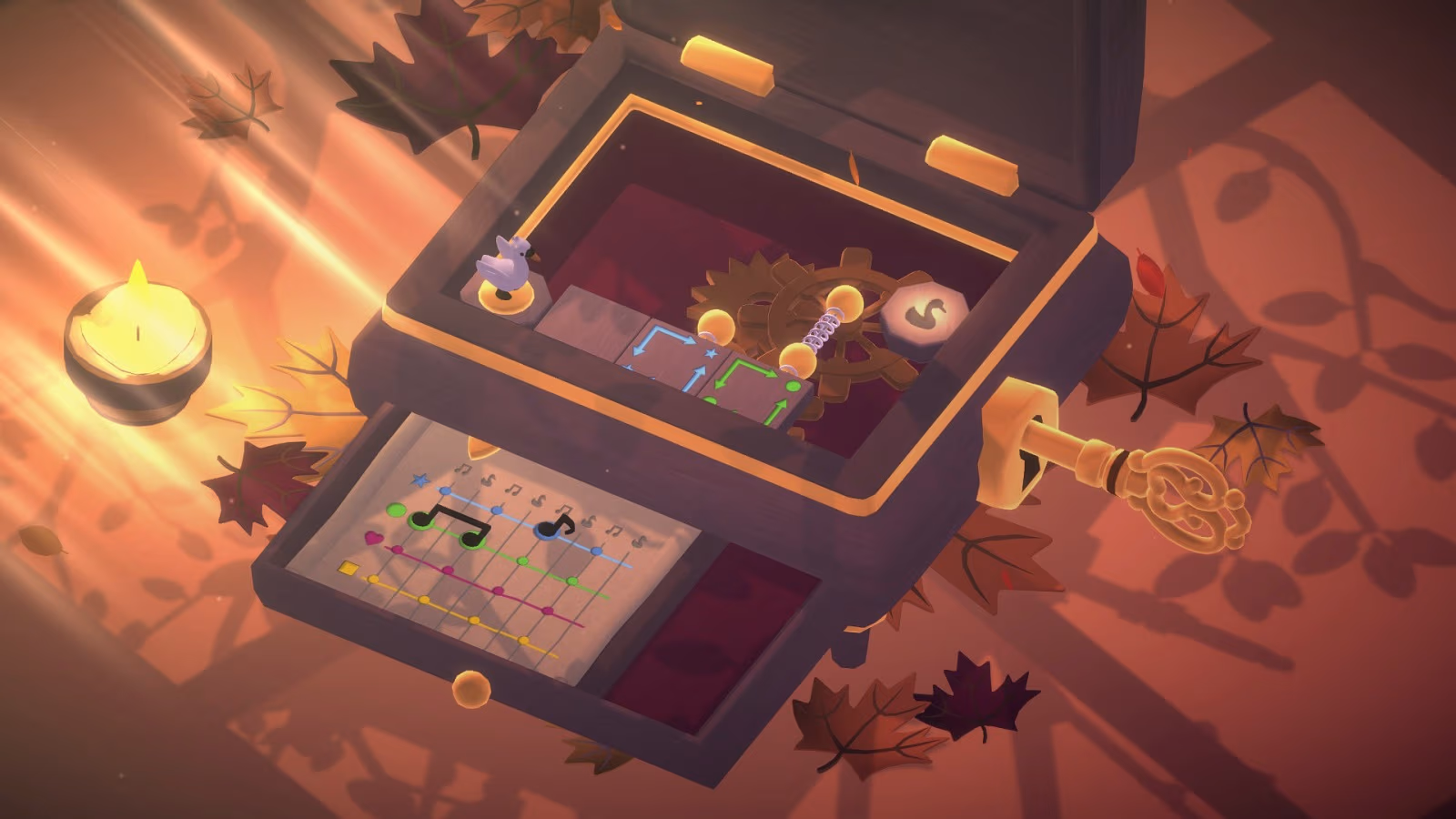
The gimmick here is interesting: you guide a tiny swan figurine through a series of musical clockwork puzzles, placing notes onto a score sheet which then activate platforms, lifts, rotating sections, and other moving pieces in sequence once the music box begins to play. If Microsoft Flow’s automation design was this cute, I’d have signed up for a developer licence years ago.
It starts off incredibly simple. Place a note. Turn the key. Watch the mechanism unfold. The swan waddles forward in time with the melody, and if your composition has been arranged correctly, pathways emerge exactly when they are needed. If they don’t, your swan falls to its doom, accompanied by the box slamming shut. You then try again. The sheet music (or at least, this simplified version of it) is colour-coded, so no musical knowledge is needed. Watching your solution play out successfully is deeply satisfying, because the game turns problem solving into performance. And thankfully your notation isn’t reset after a failure, so adjusting your cock-ups is an incremental process where you try and work out the order in which your hapless avian needs to traverse the box.
Before long, the notation expands beyond simple quavers and beams, representing single and double activations of the box's mechanisms. Swan Song understands escalation. New mechanics arrive at a sensible pace: tied notes which force more deliberate sequencing, hazards that require careful timing, and eventually the wonderfully ridiculous clockwork hunter — a moustachioed little menace capable of firing bullets (well, a cork gun) at your swan unless you manipulate the environment carefully enough to avoid disaster.
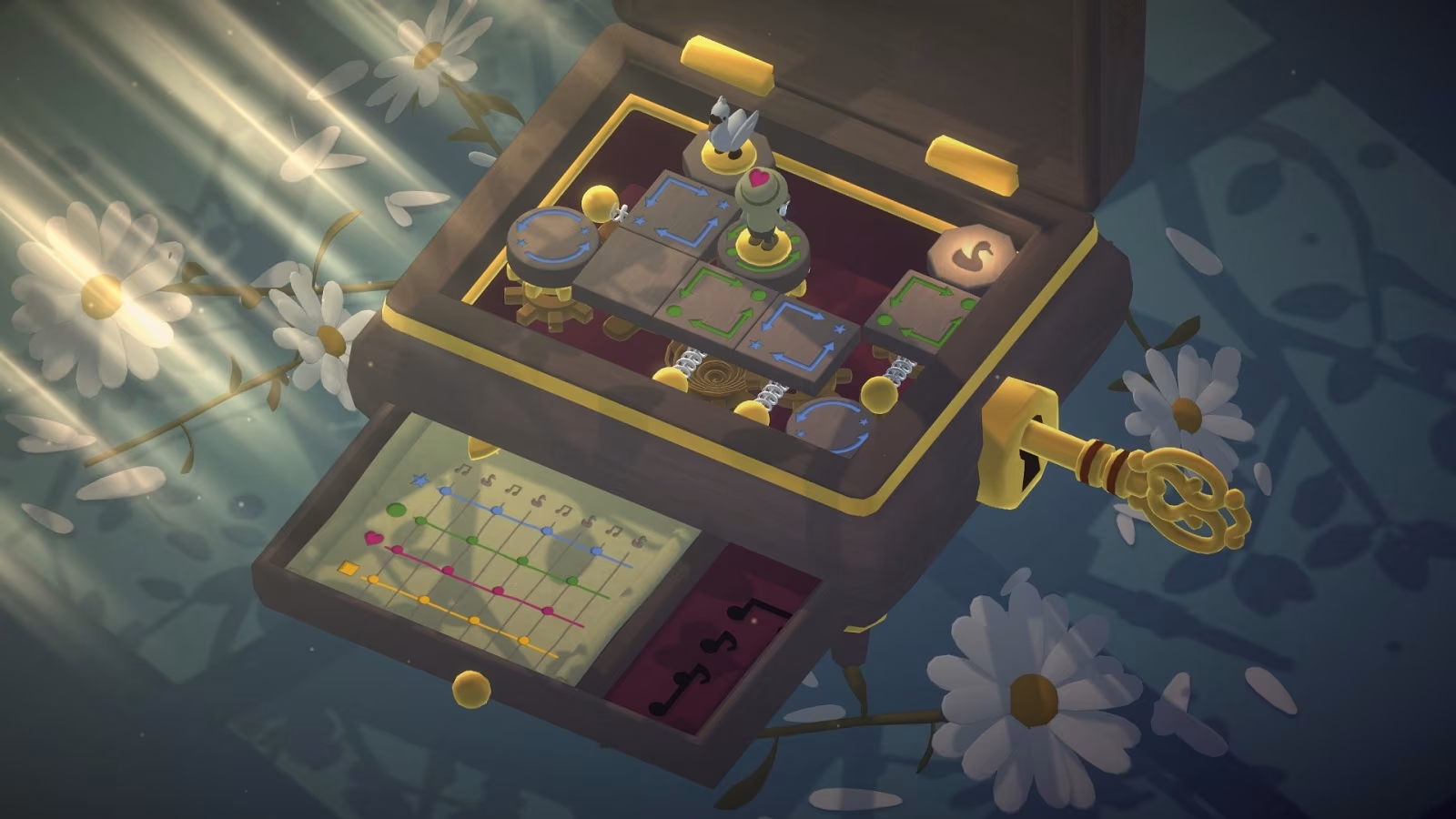
After a few batches of puzzles, things get even trickier. The series of four moves needed to complete the box — which you could essentially brute force, if you were lazy — doubles to eight. Thinking hats are required to map out your birdie’s trajectory, while shuffling board pieces back and forth. Yet, even then, the Swan Song is forgiving. Even as more outlandish features get added to the board, such as fragile tiles which break, a clock hand that knocks you off course, or notes that smash after one use, you’re never asked to do more than apply three objects to a sheet. Once you work out the first, the rest comes relatively easy. It is one of those puzzle games where failure rarely feels confusing. More often, you immediately understand why something went wrong and are eager to tweak your arrangement accordingly. It’s consistently inventive without tipping into chaos, and for much of its runtime it maintains an elegant balance between accessibility and challenge.
The game leans heavily into repetition as part of its rhythm. Every puzzle essentially asks you to observe, compose, rewind, and refine. There is a meditative quality to simply sitting with a cup of tea, rewinding the mechanism, and watching your tiny swan attempt the same journey again. But this exposes the game’s biggest weakness — mistaking repetition for contemplation.
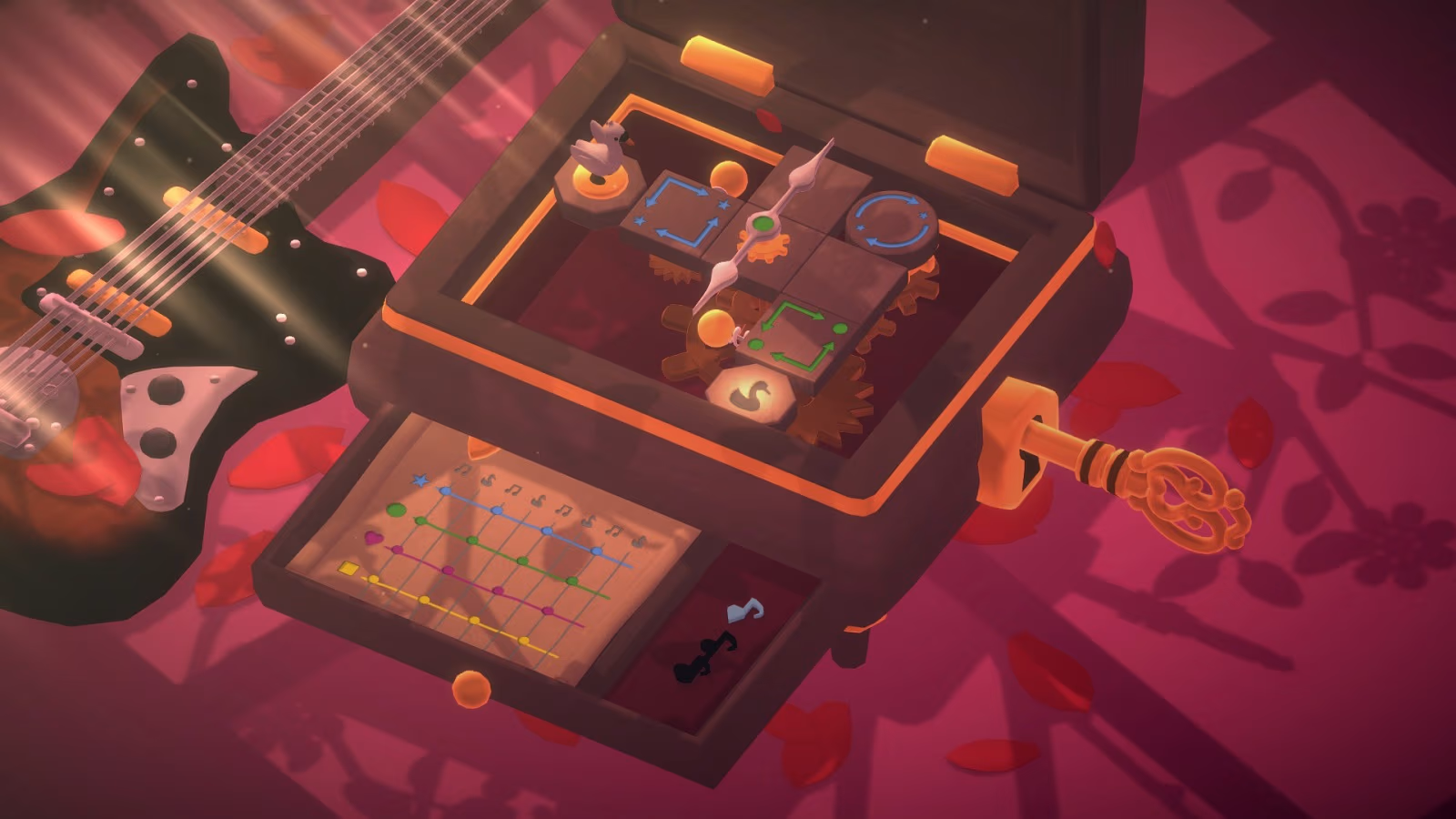
That tension between tranquillity and tedium hangs over much of the second half. Swan Song desperately wants to be soothing, reflective, and emotionally resonant, but puzzle games live and die by momentum. There were stretches where I found myself admiring the atmosphere more than actively enjoying the act of solving. The mechanics remain solid throughout, but the sense of discovery inevitably softens once you fully understand the game’s language.
The emotional storytelling fares slightly better, though it too occasionally leans a little too hard on implication over specificity. Between puzzle sequences, you uncover fragments of a family story through objects hidden inside the music box: letters, photographs, cassette tapes, scraps of memory left behind by its creator. The titular “swan song” refers not only to the music itself, but to the box as a final tribute shaped by grief, regret, and remembrance. The atmosphere is helped in no small part by Jamal Green’s excellent score, which drapes each level with gentle melancholy that perfectly matches the mood.
To the game’s credit, it shows restraint. It never collapses into melodrama, nor does it stop the puzzles dead in order to deliver lengthy exposition dumps. Instead, the narrative unfolds quietly through environmental changes and small discoveries. Rain taps against windows. Rooms grow darker. Objects accumulate emotional significance through context rather than direct explanation. Some players may find this understated approach a little too vague, but I appreciated the trust the game places in the player to connect the emotional dots themselves.
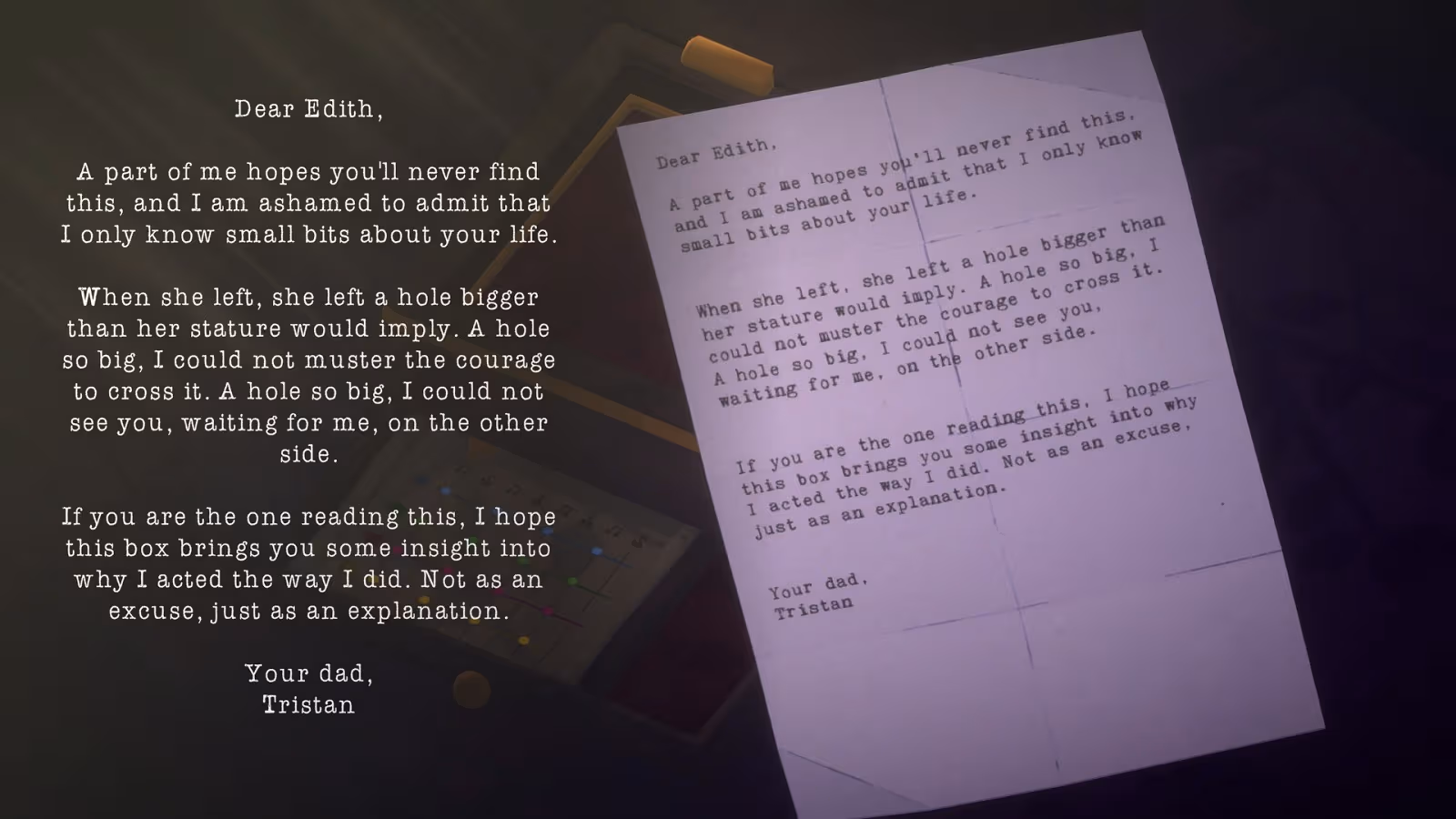
Still, there are moments where the story feels more adjacent to the puzzles than fully intertwined with them. The best puzzle narratives make mechanical interaction itself feel emotionally meaningful. Swan Song occasionally achieves that harmony, particularly when the rhythm of a solution mirrors the melancholy tone of the scene surrounding it, but it does not consistently sustain the connection. Sometimes you are solving an elegant puzzle while separately appreciating a touching story, rather than experiencing both simultaneously.
Visually, though, the game is a triumph of cohesive art direction. The warm low-poly style avoids the sterile minimalism many indie puzzle games fall into, instead embracing a handcrafted aesthetic that perfectly suits the music-box framing device. Every moving part feels tactile. You can almost imagine the tiny brass gears grinding beneath the wooden surface.
The animation work deserves particular praise. The swan itself is wonderfully expressive despite its simplicity, waddling nervously across fragile mechanisms with just enough personality to make you invested in its success. The movement of the clockwork components is similarly satisfying: platforms slide, hinges rotate, and mechanical arms shift into place with a physicality that makes the entire box feel believable.
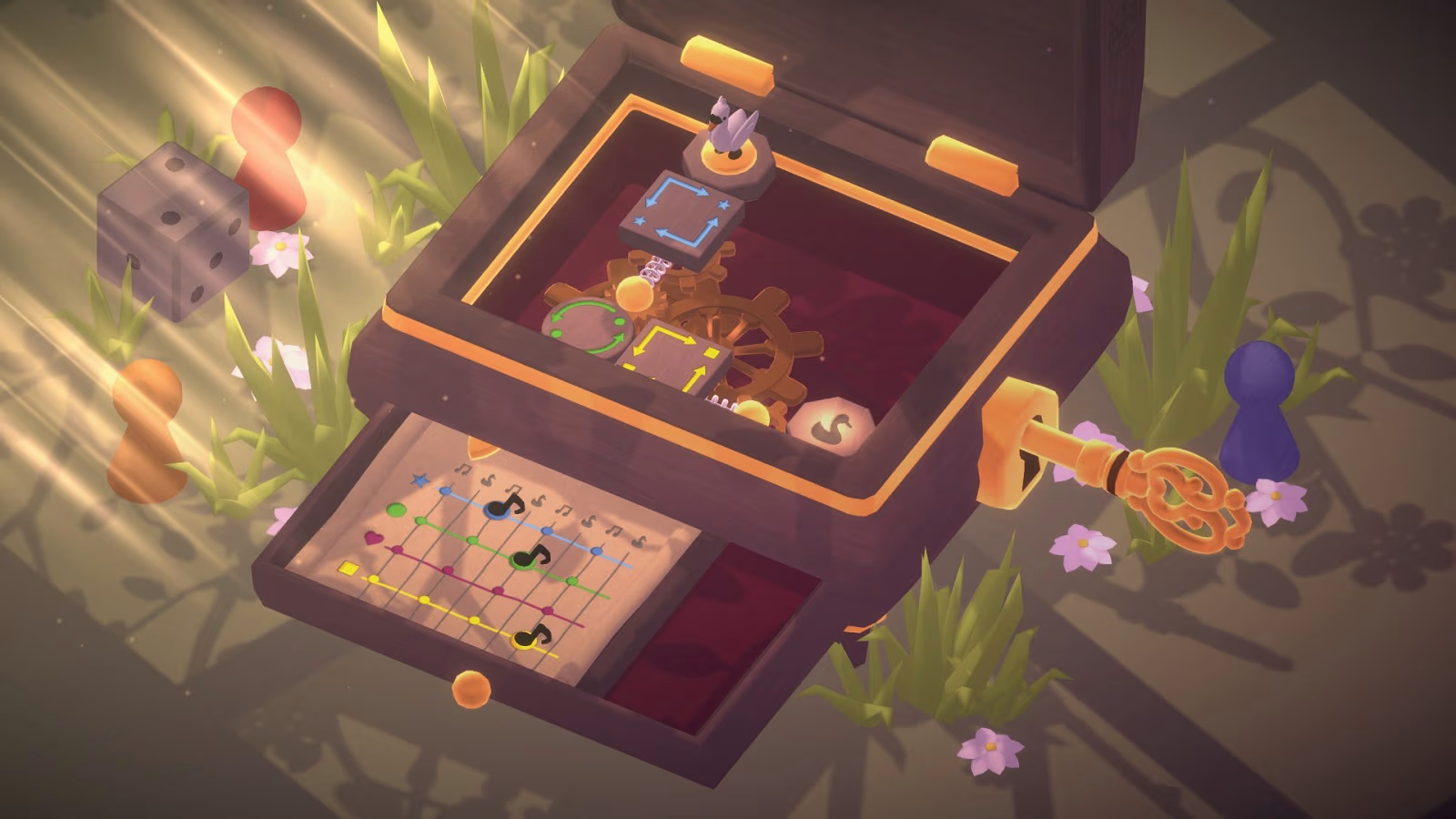
And honestly, there is something refreshing about a puzzle game willing to embrace gentleness without becoming saccharine. So many “cozy” games confuse slowness with depth or softness with substance. Swan Song mostly avoids that trap because the puzzles themselves are legitimately engaging. There is real design intelligence here beneath the comforting presentation.
Where it falls short is longevity. By the closing hours, the game has perhaps shown most of its hand. New mechanics continue arriving, but the emotional and mechanical cadence begins repeating itself in predictable ways. I never actively disliked playing it, but I did start wishing it trusted itself enough to end slightly earlier. The strongest indie puzzle games leave you wanting one more challenge; Swan Song occasionally leaves you checking how many remain. By the final act, I wasn't wrestling with difficult puzzles so much as variations of ideas I'd already mastered.
Yet even with those frustrations, it is difficult not to admire what Business Goose Studios has created here. This is an unusually thoughtful puzzle game, one more interested in memory, ritual, and emotional texture than simply escalating complexity for complexity’s sake. When everything aligns — the music, the movement, the melancholy atmosphere of the storybox itself — it achieves something beautiful. The problem is that it spends just a little too long trying to sustain that feeling.
You can subscribe to Jump Chat Roll on your favourite podcast players including:
Let us know in the comments if you enjoyed this podcast, and if there are any topics you'd like to hear us tackle in future episodes!