
PS5
PC
Xbox Series
There’s Always Something Formal About the Point of a Gun
For the better part of two decades, James Bond video games have suffered from a persistent, exhausting identity crisis. Ever since the seminal success of GoldenEye 007 on the Nintendo 64, developers have routinely fallen into the trap of trying to replicate Hollywood’s explosive set pieces at the expense of what actually makes Ian Fleming’s protagonist compelling. We have endured generic first-person shooters, uninspired cover-based clones, and titles that fundamentally misunderstood the delicate balance between the sophistication of a secret agent and the raw brutality of a double-O assassin. To me, aside perhaps from Everything or Nothing, the license has felt reactive, constantly chasing the coattails of whatever action trends dominated the market at the time, resulting in a string of thoroughly forgettable experiences. In part, that’s what led to the absence of Bond games on console and PC for the past eleven years.
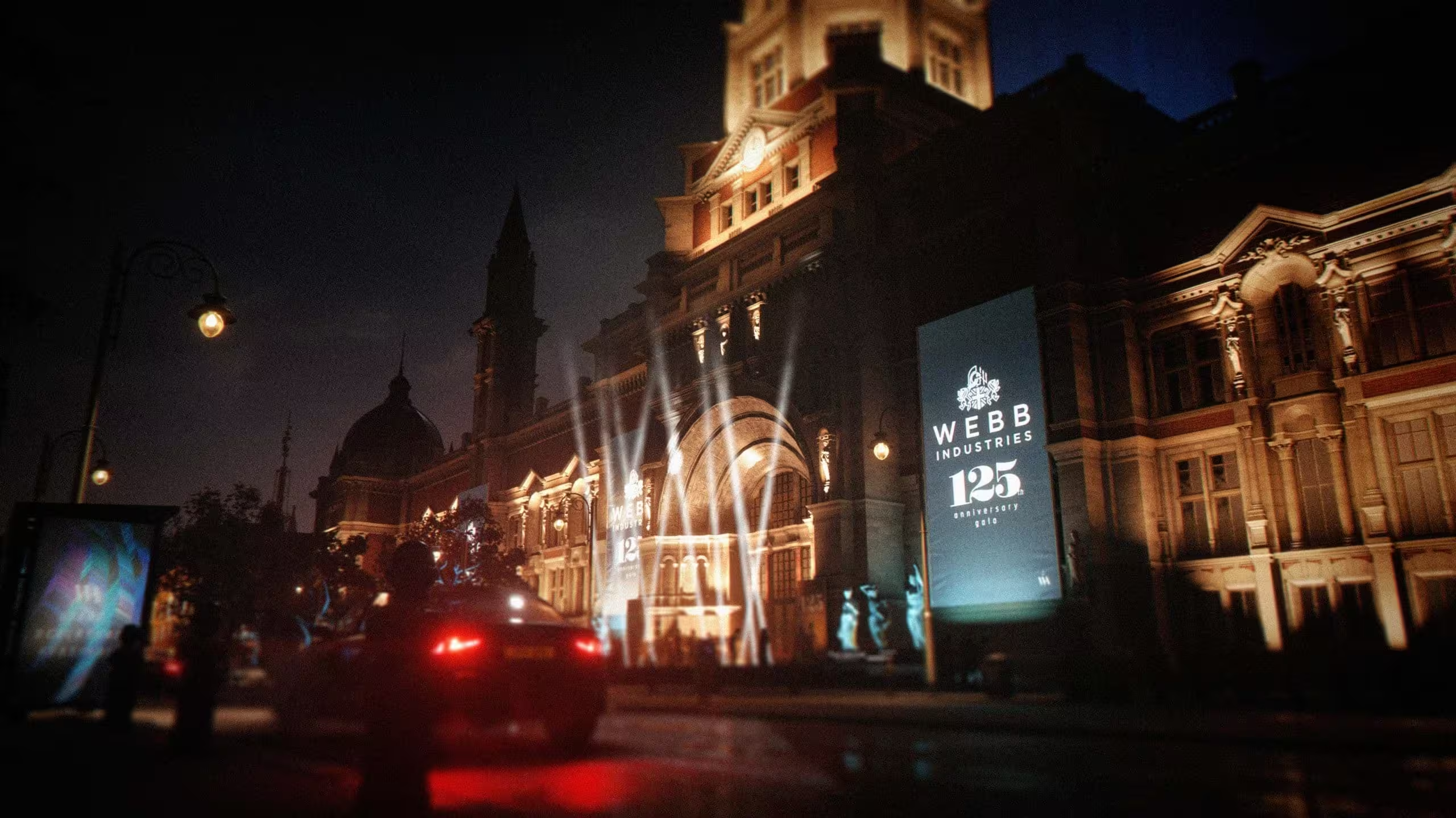
With 007 First Light, IO Interactive has finally broken the curse. They have done so not by discarding their past or inventing an entirely new genre from whole cloth, but by masterfully fusing the core design DNA of their own Hitman series with the sweeping, cinematic momentum of Naughty Dog’s Uncharted. The result is an incredibly confident, beautifully paced spy thriller that respects the intelligence of the player just as much as it honours its source material. It captures the pure, high-budget production value expected of a modern blockbuster while maintaining a distinct, mechanical soul. In short, it’s Goldfinger, not Die Another Day.
This Never Happened to the Other Fellow
The most immediate triumph of 007 First Light lies in its level design, which represents a deliberate and highly successful evolution of IO Interactive’s signature sandbox philosophy. I had wondered if this would simply be Hitman in an outfit by Anthony Sinclair, a kind of Agent 47 cosplay, but it emphatically isn’t. Where Agent 47 operates as a cold, entirely invisible ghost who blends into crowds to execute a singular, calculated strike, Patrick Gibson's young, 26-year-old James Bond is an improvisational blunt instrument. He infiltrates with elegance, but he is fundamentally built to handle chaos when a situation inevitably goes south. For me, it's a great performance, and one which comes across as having the swagger of Connery, the humour of Moore and the brutishness of Craig. That’s something.
Many levels function as a wide, linear-adjacent playground rather than the entirely cyclical puzzle boxes found in the World of Assassination trilogy. Take the magnificent Carpathian Hotel mission early in the campaign. The entrance to the estate behaves very much like a classic, miniature Hitman stage. You are given a clear objective – gain entry to a secure executive suite – but the approach vectors are left entirely to your own devices. You might choose to intercept an external security broadcast to map out guard routes, locate a high-altitude ventilation shaft by scaling a nearby balcony, or utilise social engineering to manipulate hotel staff into opening a secure perimeter door. I personally wanted to avoid confrontation as much as possible so I took my time and found three or four ways to achieve my goal, via eavesdropping on employees, searching rooms for information and more. It was jolly good fun.
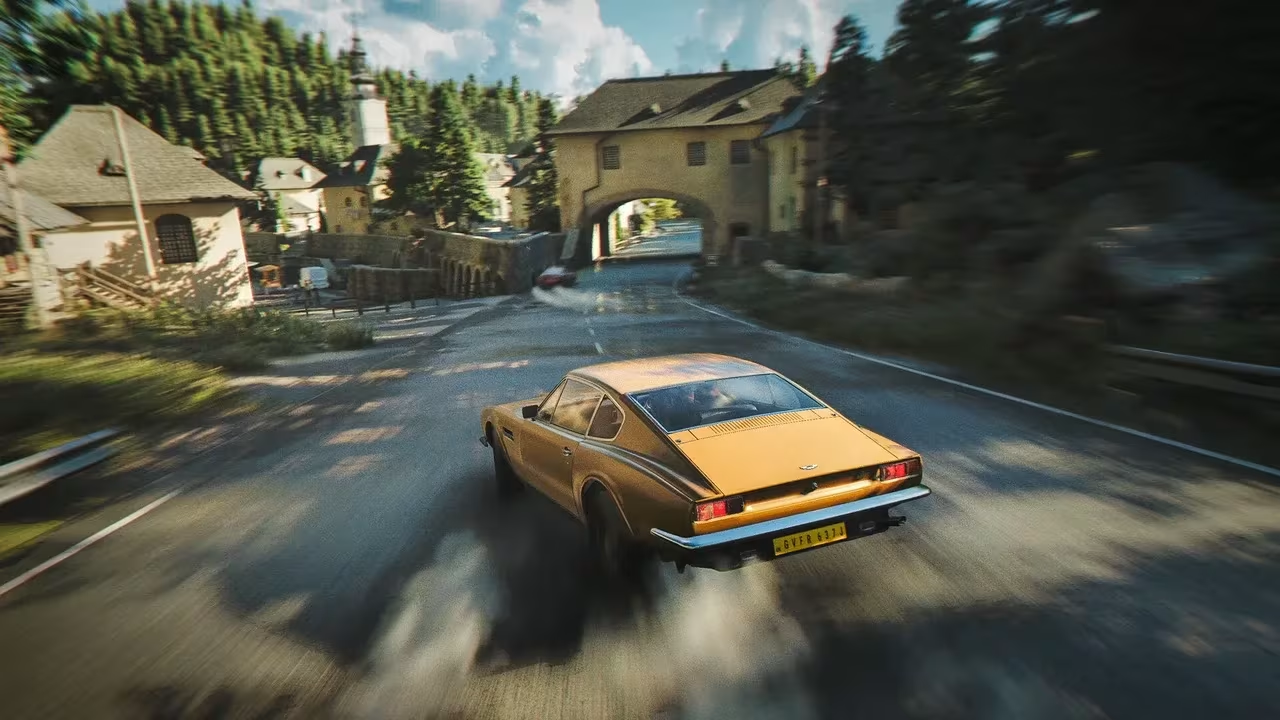
However, Bond operates under a different set of psychological rules than Agent 47. You aren't donning disguises to become a kitchen worker or a security guard; instead, you rely heavily on your environment and Bond’s signature charisma. The game features an incredibly novel "social bluff" mechanic. When your stealth fails and a guard catches you in a restricted area, pressing Circle triggers an immediate, impeccably delivered vocal bluff. Bond will confidently blag his way out of trouble, spinning a quick lie that momentarily stuns the guard into second-guessing themselves. It creates a brief, tense window of opportunity to slip out of sight or initiate a silent takedown before the alarm is officially raised. It is a brilliant mechanical translation of the character's core personality, replacing the paranoia of Hitman with sheer double-O swagger. It’s just Bond. I felt like Bond.
Let’s Count to Three. You Can Do That, Can’t You?
Inevitably, the silver tongue fails, or the narrative deliberately forces your hand and shatters the silence. 007 First Light then transitions into a surprisingly deep and highly tactile close-quarters combat system. Melee combat in third-person action games often defaults to repetitive, low-effort button mashing, but IOI has injected genuine physical depth into Bond’s physical encounters.
The brawling mechanics rely heavily on contextual awareness, precise parry windows, and crowd management. When facing a diverse crowd of attackers – ranging from lightly armoured scouts who rush you with batons to heavily protected enforcers, or ‘brutes’ as the game calls them – the combat demands active prioritisation. Bond fluidly redirects an opponent's kinetic energy, utilises structural elements like desk edges or low walls for swift contextual takedowns, and seamlessly transitions between defensive parries and offensive strikes. The animation work on the PlayStation 5 is exceptionally crisp, carrying a sense of weight and desperate momentum reminiscent of Sleeping Dogs' gritty style. Enemies don't just absorb hits; they tumble backward over furniture, collapse in a realistic pile of limbs, and struggle drunkenly back to their feet. All told, I didn’t find combat to be quite as fulfilling as that of Batman in the Arkham games, but it’s close. Importantly, it was fun throughout, and I couldn’t ask for more.
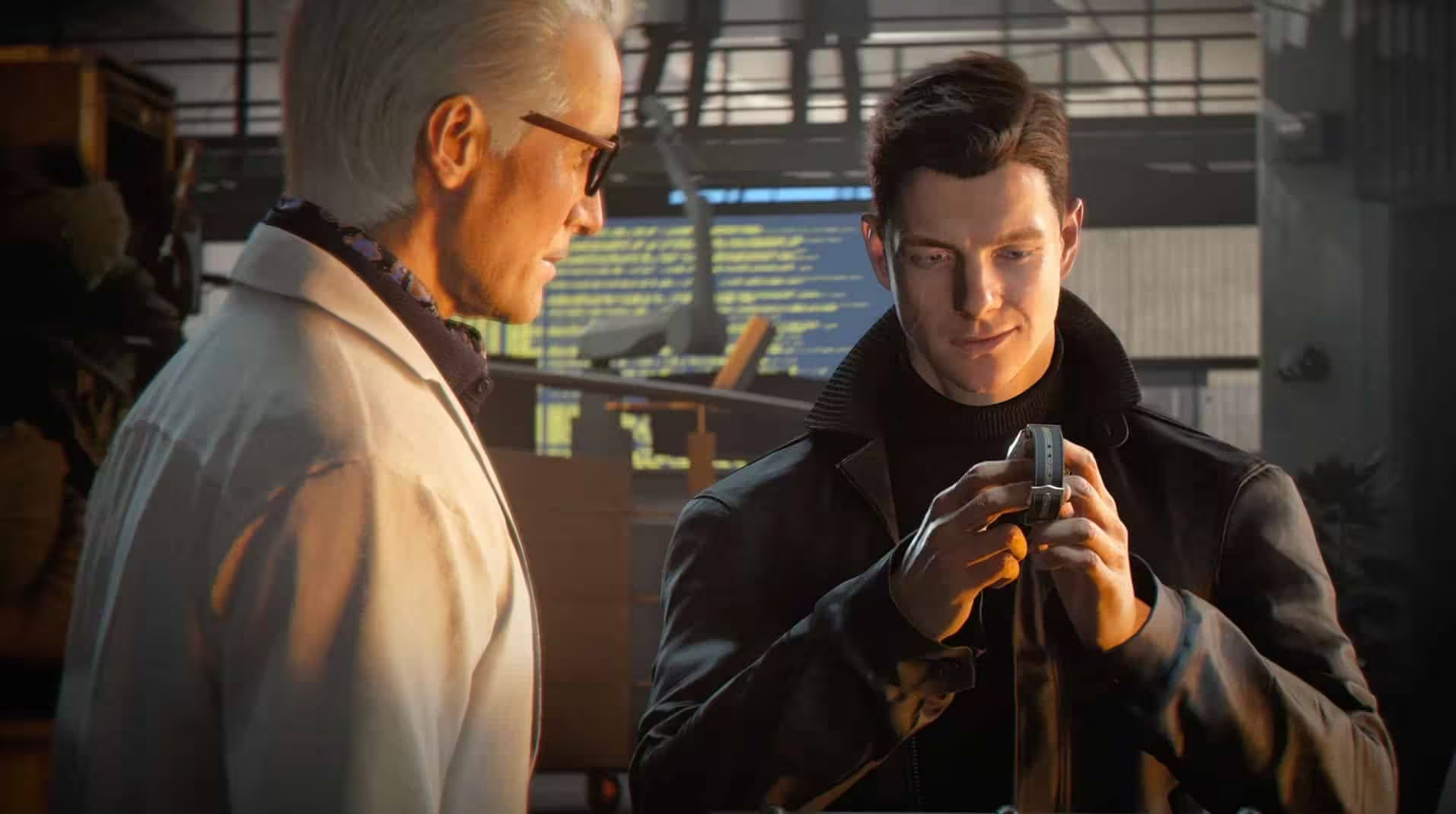
The gunplay is a more traditional, over-the-shoulder cover shooter affair, governed by a smart mechanical restriction: the "License to Kill." Bond is restricted to non-lethal physical takedowns and gadget subversion by default, but the moment an enemy displays explicit intent to use lethal force, your license is activated, allowing you to draw iron. Weapon handling feels exceptionally punchy, target acquisition is sharp – although I found shooting long distance targets quite a challenge – and the sound design gives the iconic, suppressed Walther PPK an appropriate sense of lethal utility. Bond isn’t yet a Double-O when you start the game so this is a fun, if cheeky way to get that licence in.
It is within these intense shooting mechanics, however, where the game encounters its most notable piece of friction. The sheer number of overlapping inputs can take a significant amount of time to truly master, and the camera system can occasionally feel remarkably cumbersome when you are pinned behind tight cover. Attempting to manually swap the camera viewpoint from shoulder to shoulder while managing multiple flanking angles feels distinctly unintuitive, often resulting in a feeling of hopelessness when you’re in a situation and position that’s unexpected, and you need to reset yourself from then onwards – without dying in the meantime. It is an annoying mechanical hiccup whereby I often found myself falling away from cover rather than switching to another point, or moving around where I was, and this did mar an otherwise incredibly fluid control scheme.
We All Have Our Secrets - We Just Didn’t Get To Yours Yet
To break up the tension of its systemic stealth, IO Interactive has punctuated the campaign with massive, scripted action sequences, including several dedicated driving levels featuring the heavily modified Aston Martin Valhalla. While the phrase "scripted sequence" often draws eye-rolls from purists who favour absolute player agency, its implementation here is spectacular.
Behind the wheel, the game deliberately sacrifices a degree of fine handling simulation to maximise cinematic framing and arcade-style drift physics. The result is a series of high-octane driving escapades heavily reminiscent of the Fast & the Furious franchise. Because the game handles the micro-adjustments of the vehicle's trajectory during high-speed chases through collapsing infrastructure, you are freed up to engage Q-Branch counter-measures and enjoy the absolute spectacle of the chase. It ensures the pacing remains breathless, taking you on wild, cinematic stunts you likely wouldn't have attempted if left entirely to manual control. Honestly, you feel in control 95% of the time anyway, save for those few moments where the devs have something more exciting in mind.

Tying this entire package together is an absolute masterclass in high-budget presentation values. Built on a supercharged iteration of the Glacier engine, the visual fidelity on the PS5 is striking — from the meticulous weave of Bond's dinner jacket to the stunning global vistas stretching across snowy Icelandic outposts and beautiful desert landscapes. The voice acting is universally excellent, anchored by a stellar cast that includes Lennie James as Bond's rigid MI6 mentor, John Greenway, and Lenny Kravitz as the flamboyant arms dealer, Bawma. The script balances political intrigue with a dry, sophisticated, and distinctly "Bondian" sense of humour. I’d actually go so far as to say if Patrick Gibson were to get the acting gig I’d be entirely confident about Bond’s cinematic future, and more so were IOI writing the script.
Furthermore, the experience is deeply enriched by a wealth of clever easter eggs and cultural nods. Trophy hunters will very much enjoy the witty milestone names, and sharp-eyed players will spot numerous subtle, affectionate nods to other classic adventure properties, including a brilliant, brief wink toward a certain fedora-wearing archaeologist.
Well, I Must Say You Become More Beautiful Every Day
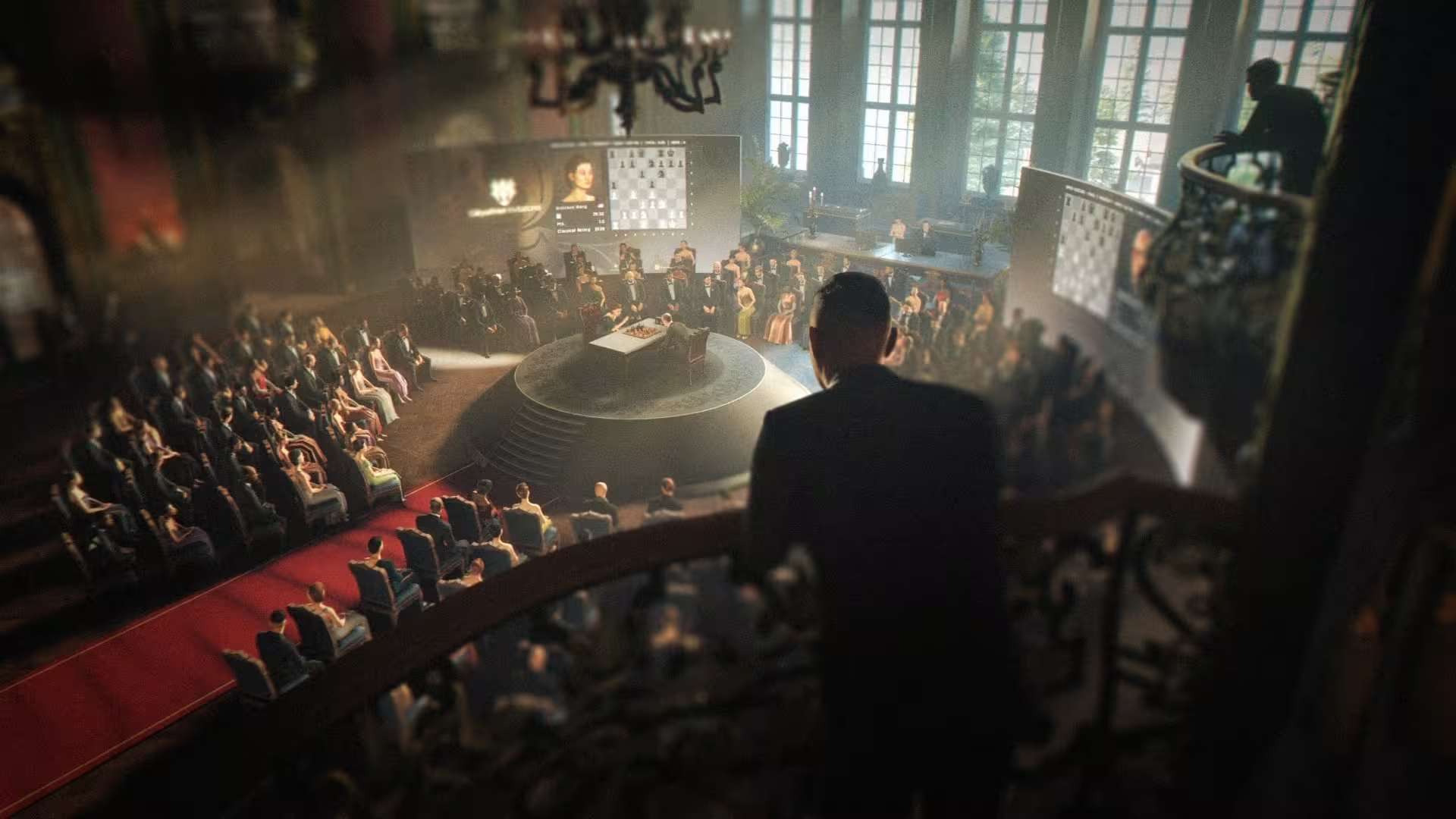
007 First Light is an absolute triumph for IO Interactive and a blueprint for how licensed intellectual property should be treated in the modern era. By taking the robust, choice-driven foundations of Hitman and combining them with the cinematic showmanship of Uncharted, they have created a varied, mechanically rich, and endlessly entertaining adventure. Despite minor camera inconsistencies and a crowded control scheme when behind cover, the sheer scale of its entertainment value and the fidelity of its execution make it an essential experience. James Bond is finally back where he belongs: delivering world-class entertainment at the absolute top of his game.
You can subscribe to Jump Chat Roll on your favourite podcast players including:
Let us know in the comments if you enjoyed this podcast, and if there are any topics you'd like to hear us tackle in future episodes!