PS5
PC
Xbox Series
It’s a strange thing, looking back at the golden age of arcade basketball. For me, and a whole generation of players who spent the mid-90s hunched over arcade cabinets or crowded around a 16-bit console, the arrival of NBA Jam was a seminal moment. It was cool, it was fast, and it convinced me, a perfectly rational person (I think, though that was a long, long time ago), that a tiny two-man team could set a basketball net literally on fire. And look very cool doing it. I didn’t need complex simulation parameters; I just wanted the thrill of a shattering backboard and a booming voice telling me I was "shaking the room."
So, when Play By Play Studios announced they were taking it back to the streets with NBA The Run, promising a fast-paced, online 3v3 streetball game packed with ankle-breaking tricks, I was eager to lace up my digital boots. Sadly, the reality of stepping onto these courts is a bit of a mixed bag, where flashes of genuine arcade fun are routinely tripped up by baffling design choices.
Can't jump, can't shoot, can't defend. Put me in, Coach!
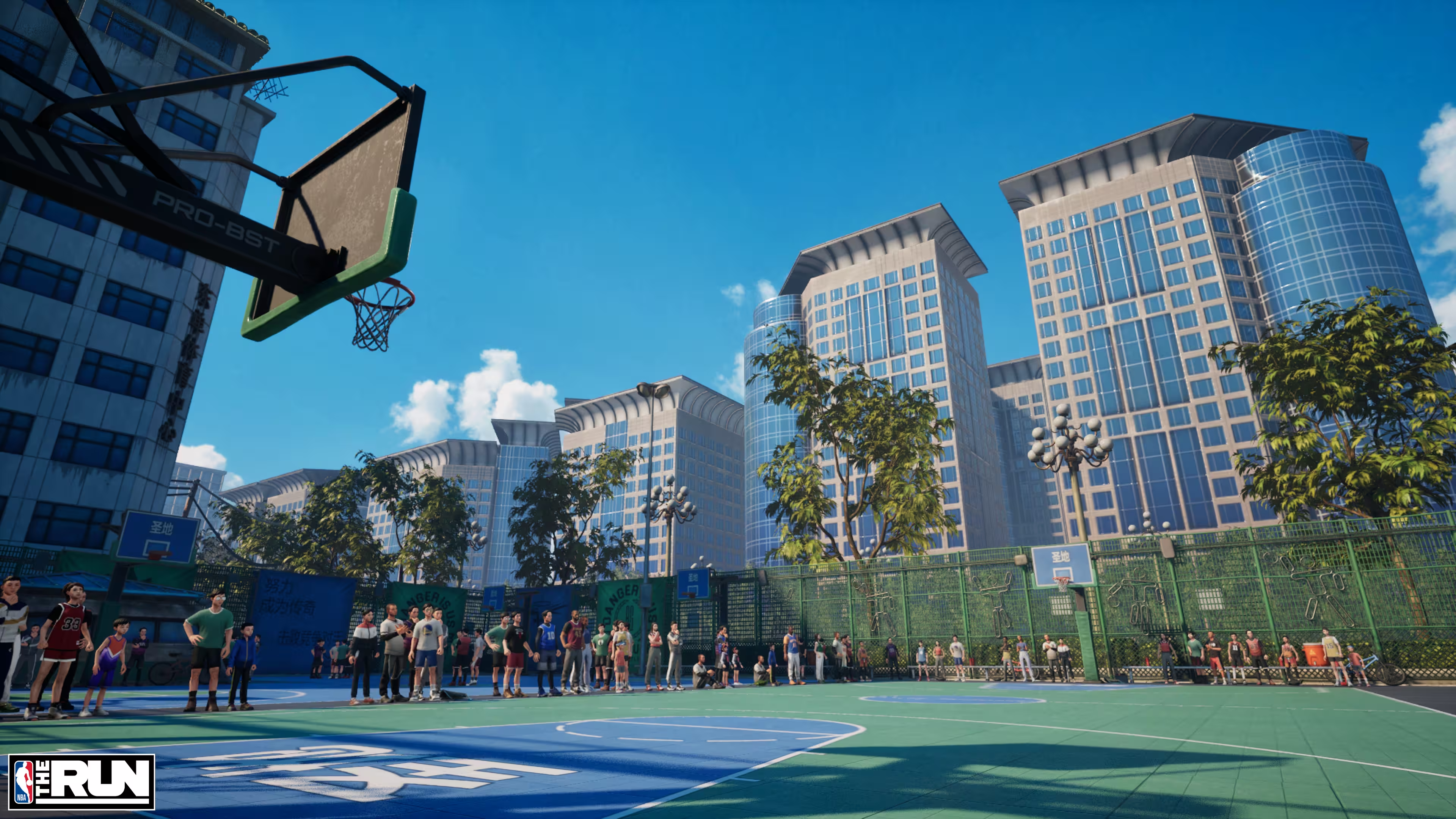
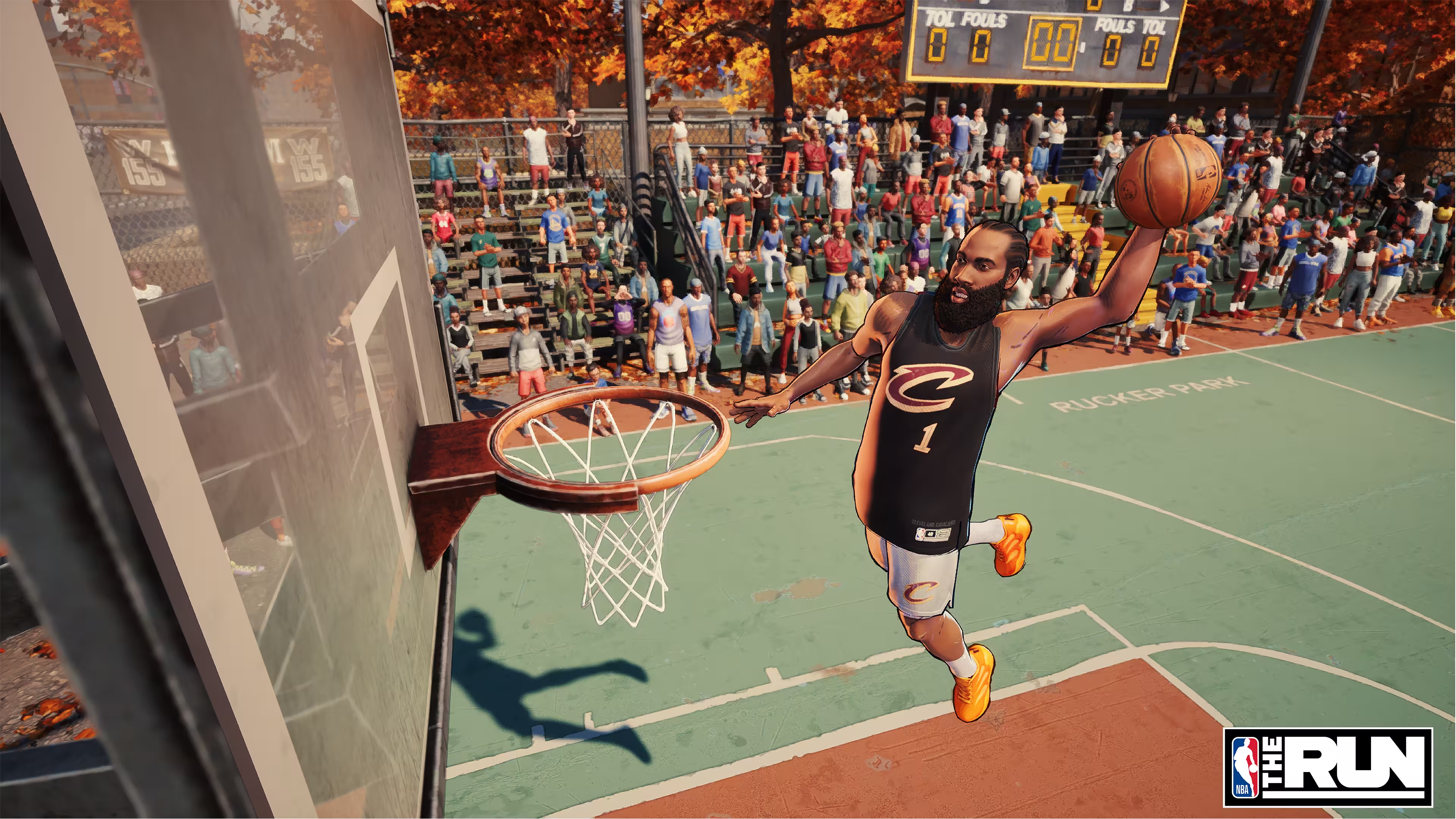
I’m going to be honest with you; from your very first match, the biggest hurdle you’ll face isn’t the opposing team’s defensive reach. It’s the camera. The developers have chosen a low-angle, isometric perspective as a default that looks incredibly slick in promotional screenshots but, in active play, it can easily prove an absolute nightmare. Because the viewpoint sits so low to the asphalt, depth perception is utterly destroyed. Working out exactly where your players are positioned in a crowded sequence becomes a frustrating game of guesswork. Or, at least, it did for me.
Now, you might get entirely different mileage depending on which camera views you are personally used to in other major sports titles. To be fair to the developers, you aren't completely locked into one single view; they have provided three different camera angles to choose from, offering a bit of welcomed variety and choice. Yet, even with these three options, it still feels incredibly limited compared to what you might have hoped for. If you look at the FIFA series – or almost any modern sports title worth its salt – the developers routinely provide a massive, highly customisable suite of alternative camera options, from sweeping tactical overviews to classic broadcast packages, allowing every individual to find the precise framing that works best for their eyes and playstyle. Play By Play Studios has promised that more camera options are on the way in their upcoming roadmap, which is a reassuring nod to player feedback, but it’s still a shame we have to wait for what is a basic industry standard.
This spatial confusion hits your passing game hardest of all. In a fast-paced 3v3 environment, you need to know that when you flick the analogue stick, the ball is traveling precisely to your open teammate on the perimeter. Here, you’ll regularly find your passes tracking in entirely the wrong direction, turning a promising breakaway into a cheap turnover – or, just as frustratingly, the ball might actually go where you wanted it to, but you'll have had absolutely zero confidence that it would. It’s woolly, and that’s a real problem. To combat the visual clutter of these tight angles, the developers implemented a feature that greyscales your opponents. Whilst technically helpful for a quick friend-or-foe check, it doesn’t solve the root issue. You still have your own shifting team members to contend with in the foreground, leaving you staring at a jumble of limbs wondering who actually has the ball.
My shooting 40% at the foul line is just God's way to say nobody's perfect
Anyway, let’s get to the point. When you actually manage to carve out some space, the core gameplay loop is decently paced. It opens up the floor for all kinds of high-flying dunking and snappy shooting that feels great when it connects. Each licensed NBA star and fictional Street Legend comes packed with unique "In the Zone" abilities that build up as you play well, giving you explicit strategic levers to pull. Taming these abilities and stringing together a crossover into a posterising finish is genuinely satisfying.
But it doesn’t last long. Despite the polished animation sequences, NBA The Run completely lacks that raw, compulsive core loop that made the arcade classics of yesteryear so legendary. The pull of "just one more match" simply isn’t here. Once a game ended, I didn’t find myself compelled to go and go again; instead, sessions feel oddly transactional.
Part of that disengagement stems from a glaring structural oversight: the game is entirely online. There is no offline play, and even the closest thing to local play – the 'Knockout Friends' mode – is shackled to the matchmaking servers just to boot. It’s a frustrating barrier for what should be a casual, pick-up-and-play experience.
The mode is surprisingly restrictive, too. You’re limited to one human player per team, meaning you can’t even crew up locally for a true squad match. Add in the absence of a single-player campaign at launch and, most shockingly for an arcade sports title, a total lack of couch co-op, and the game feels oddly antisocial. My friend and I, sitting on the same sofa, couldn't simply pick up controllers and play together. It’s a disconnect that really stifles the fun.
The framework for these missing features is clearly right there under the hood; the game already utilises AI routines to fill out empty slots or handle tournament brackets, so there is no logical reason why we shouldn't have a simple, fully disconnected mode of you versus the AI or traditional local multiplayer. Forcing a live server connection for every single interaction, even when you just want to run local bot matches in a stripped-back mode, completely eliminates casual accessibility. It leaves early adopters entirely at the mercy of server stability, pre-launch windows, and matchmaking queues. Given it’s the early adopters who will make or break the game, and therefore whether it lasts long enough to get the other modes, means that all of this is rather disappointing to me.
Ball is life
When you look into the menus, there’s a massive variety of content to see, and having a broad choice of players is a strong point upfront. It’s a shame, I think, that some of the coolest characters and variants are locked away tightly behind a severe progression wall. Hit the menu screens and you’ll find that everything from retro 'Rookie Variants' of marquee stars like Stephen Curry to advanced dunk animations, taunts, team badges, and banners are walled off behind your global account Rank or the in-game Shop economy.
Whilst this does mean you have lots to play for over the longer term, the current balance feels heavily skewed toward an aggressive grind. Earning enough 'Cred' payouts from standard matches to unlock a single premium tier animation takes hours of repetitive tournament loops. It pairs a casual, pick-up-and-play sports design with the economic pacing of a second job, which is a definitive issue for a title aiming for quick-burst fun. When you and your friends can’t just enjoy a quick burst of fun offline for 5 minutes at a time, it adds to the frustration.
Talent wins games, but teamwork and intelligence win championships
The social dynamics of the game are parcelled out across three current tournament configurations, each running through a 4-round knockout structure lasting between 2 and 5 minutes per game.
First up is ‘Knockout Squads’, where you take command of a single player on the court, filling out the remaining slots with either invited friends or random players from the matchmaking pool. I found playing this with randoms was an exercise in futility, as the camera issues aggravated the lack of vocal coordination.
Then there is ‘Knockout Solos’, which sets you up head-to-head against another human player, but gives you manual control over your entire team of three. It removes the headache of unreliable teammates but magnifies the finicky input tracking when you're trying to rapidly switch defenders on a fast break.
Finally, you have ‘Knockout Friends’, which acts as your own private tournament sandbox. You can play alone against the AI, crew up with friends against bots, or invite up to 48 players to join a custom bracket. Unsurprisingly, the game is infinitely better when playing with friends rather than just randoms. When you have a coordinated group, you can actively manage space and compensate for the camera's blind spots. Unfortunately, as mentioned earlier, this mode also frustrates because of what it doesn’t bring to the party.

Earned, not given.
Beyond the court architecture, some of the production values feel a little off and lack final refinement. For instance, when you load into the training mode to practice your ball-handling animations, there isn't a simple button combination to return to the dashboard. To exit training, you have to open the pause menu and select 'Forfeit' – triggering the exact same logic sequence the software uses to log an intentional rage-quit during a live competitive match. It’s a tiny, superficial blemish, but it highlights a distinct limitation in UI polish that pops up far too often.
The team at Play By Play Studios has already published a post-launch roadmap highlighting a 'Summer Heat' seasonal update, supplemental roster drops, and new rule modifiers. It is a profound shame that these features don't already exist in the launch build. As it stands right now, the package feels remarkably light on content, leaving you with an incredibly clean aesthetic style but very little connective tissue to hold your attention past the opening weekend.
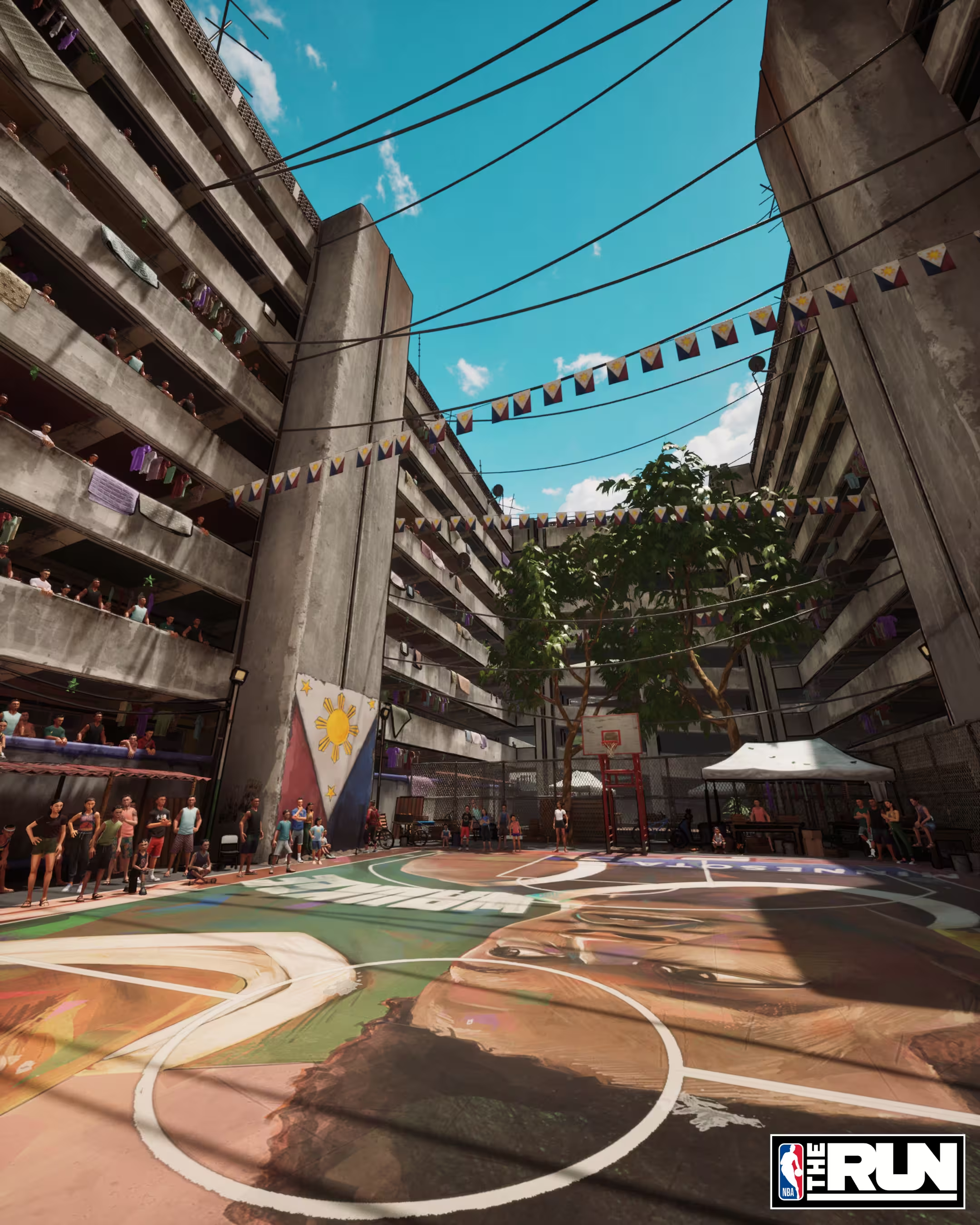
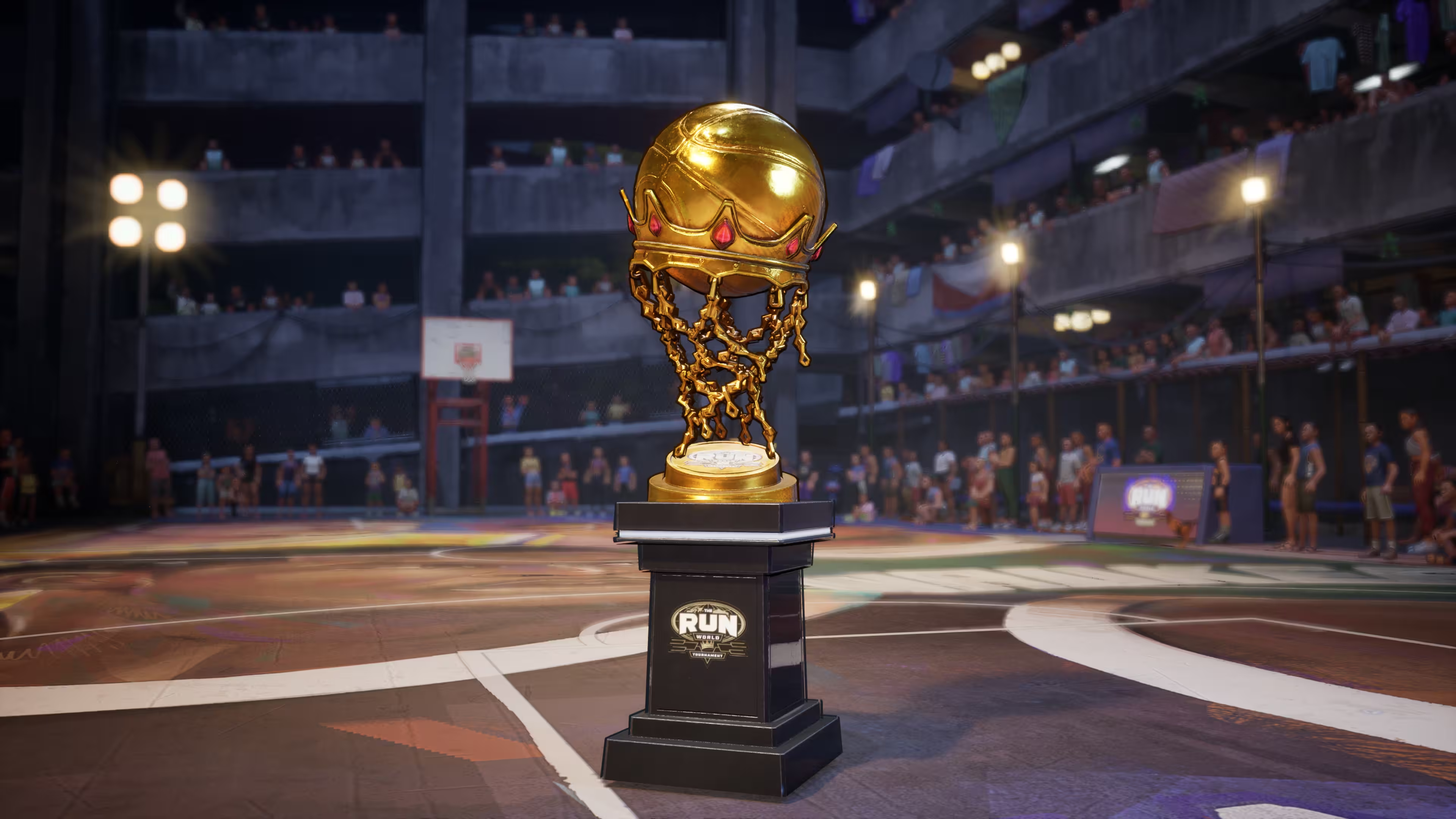
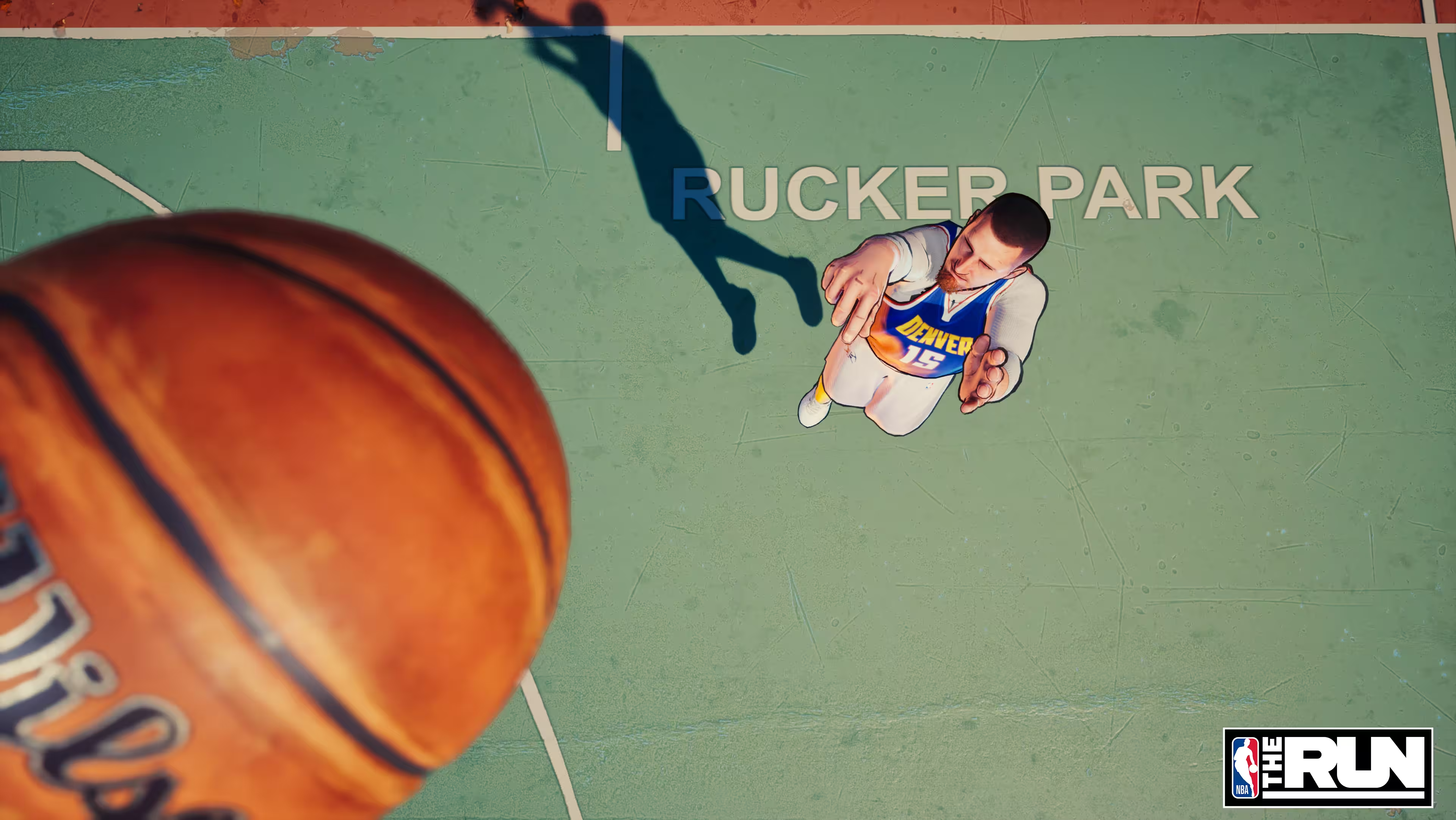
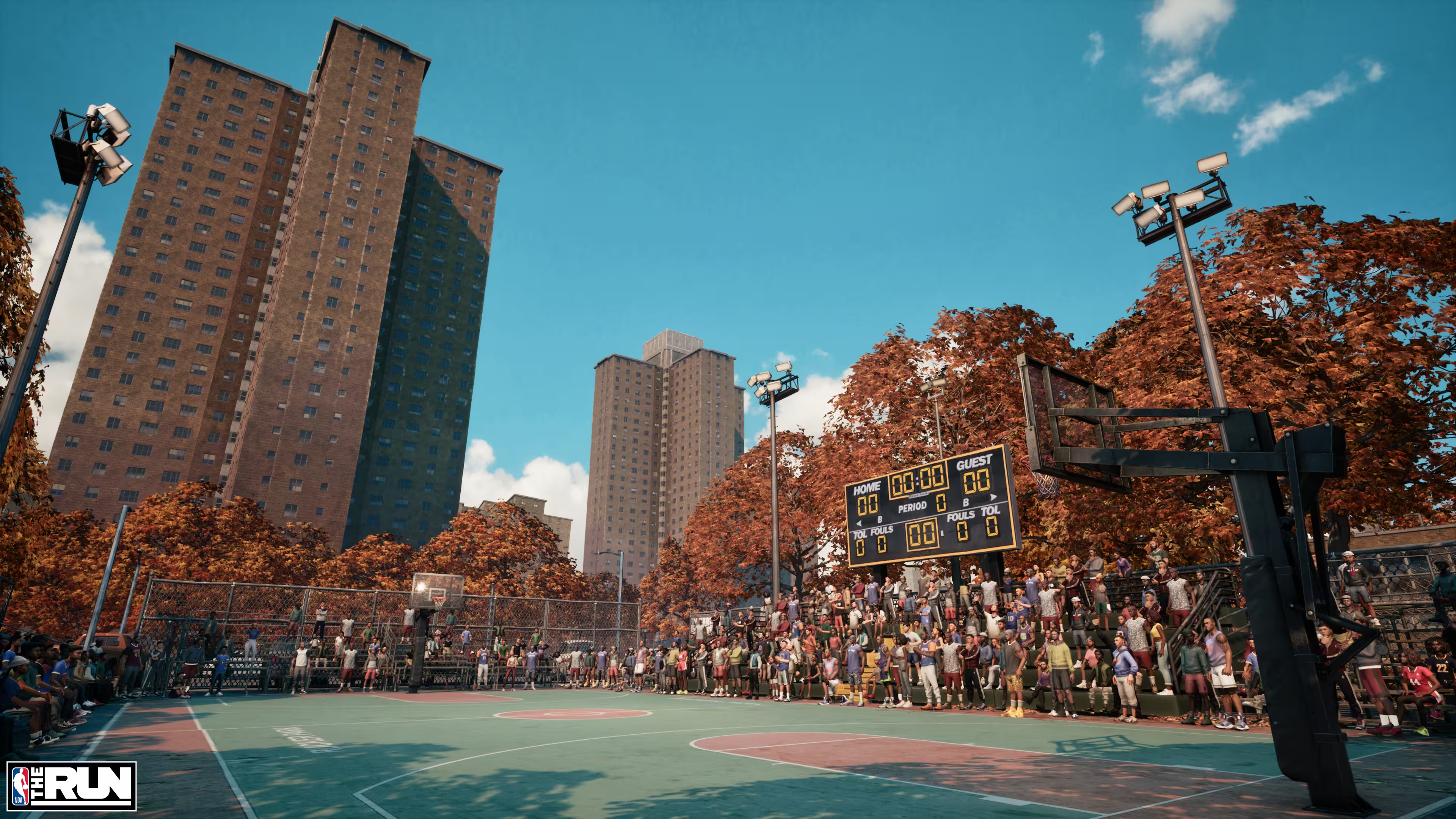
Visually, the game is a treat, throwing out broadcast photorealism to deliver a highly stylised, cell-shaded world that looks like a comic book brought to life. The seven iconic streetball courts – stretching from Chicago and Philly to international blacktops in Beijing and the Philippines – are gorgeous, packed with sharp colour contrasts and localised graffiti. The audio design is equally strong, anchored by the legendary Bobbito Garcia handling host duties. His classic, snappy commentary lines trigger accurately alongside your dribble moves, injecting a fantastic sense of streetball atmosphere that keeps the presentation feeling vibrant.
Ultimately, NBA The Run feels like a spectacular foundation awaiting a finished game. The on-court agility and expressive art direction show immense potential, but the online-only mandate, restrictive grind economy, and frustrating camera angles prevent it from reaching greatness. If you have a dedicated squad of friends to play with online, there are a few hours of relaxing, high-flying fun to be had here. Just taper your expectations before crossing the baseline.
You can subscribe to Jump Chat Roll on your favourite podcast players including:
Let us know in the comments if you enjoyed this podcast, and if there are any topics you'd like to hear us tackle in future episodes!