
PC
There are certain games that arrive carrying so much baggage that it becomes impossible to discuss them without first addressing the elephant in the room. Zero Parades: For Dead Spies is one of those games.
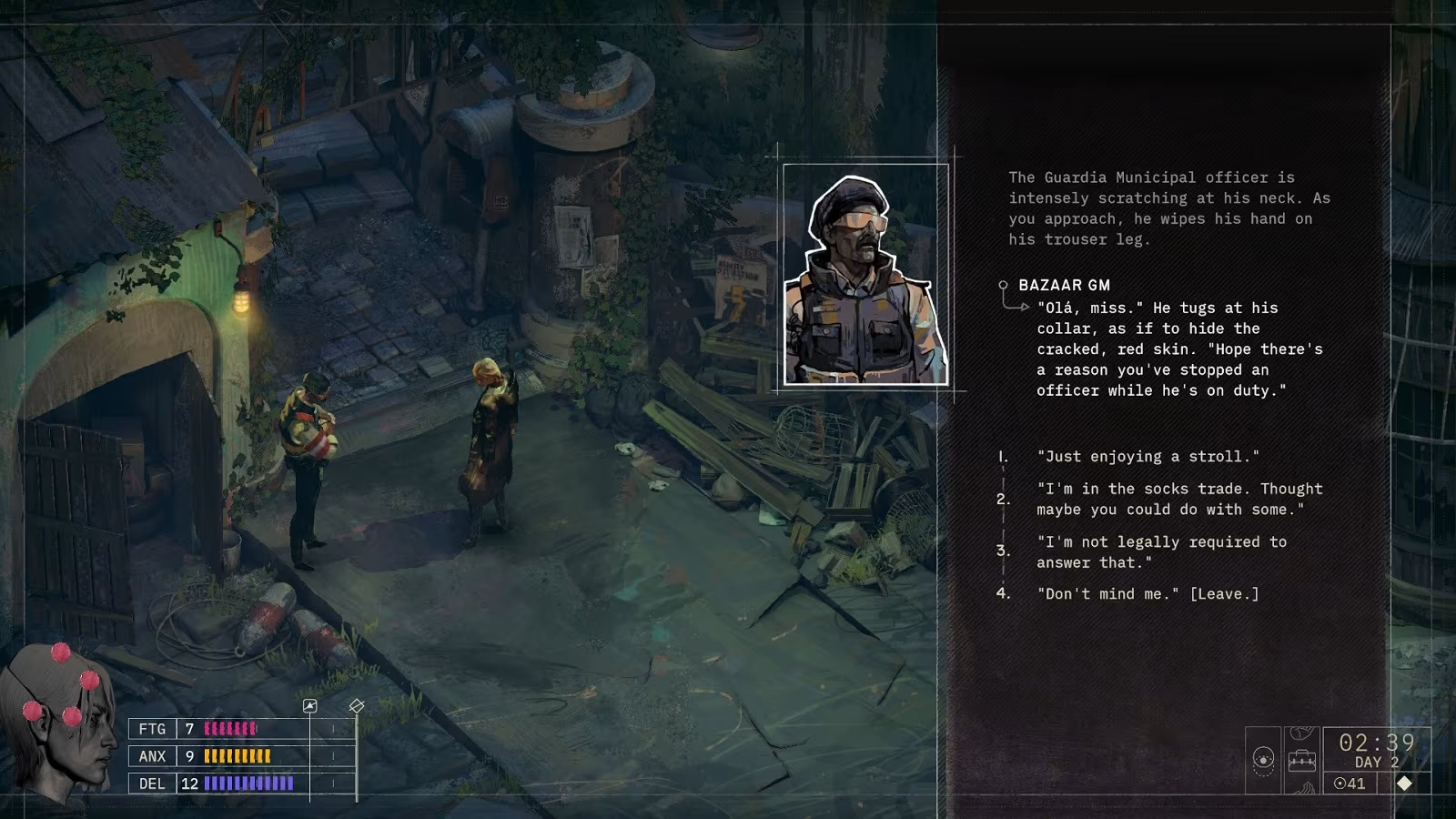
I’ve made no secret of Disco Elysium being one of the best — and most important — games I’ve played in the last decade. ZA/UM's previous work cast a shadow large enough to blot out entire genres. The legal disputes, public fallout, and endless discourse surrounding the studio over the last few years have only made that shadow longer. Every trailer, every screenshot, every line of dialogue from Zero Parades has been scrutinised through the lens of what came before. Is it worthy? Is it authentic? Does it deserve to exist?
The good news is that Zero Parades largely sidesteps those questions by being something rather simple: an excellent RPG. Not because it recreates the magic of what came before, nor because it successfully imitates a beloved predecessor, but because buried beneath the weight of expectation is a genuinely fascinating espionage story about failure, regret, identity, and the ghosts that refuse to stay buried.
You play as Hershel Wilk, cryptonym CASCADE, a disgraced operant returning to the coastal city of Portofiro five years after the catastrophic collapse of her network. Once a celebrated intelligence asset, she now resembles somebody held together with duct tape, nicotine, and increasingly questionable life choices. Her career is in ruins, her reputation is worse, and she has a bullet in her chest, millimetres from her aorta, from a previous job. Yet when a mysterious assignment drags her back into the field, she finds herself navigating a city full of former allies, old enemies, ideological extremists, and enough conspiracies to make a late-night radio host spontaneously combust.
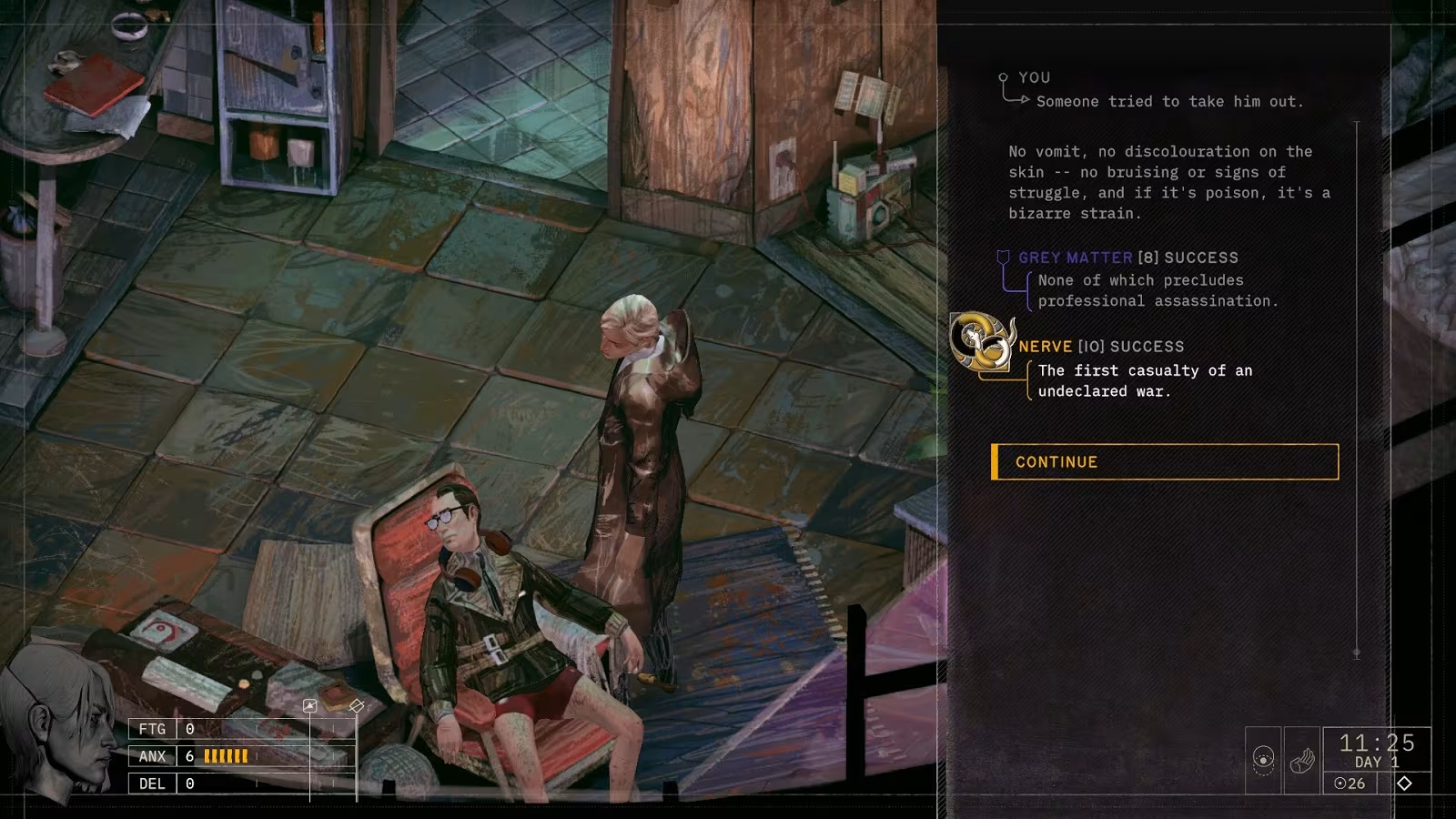
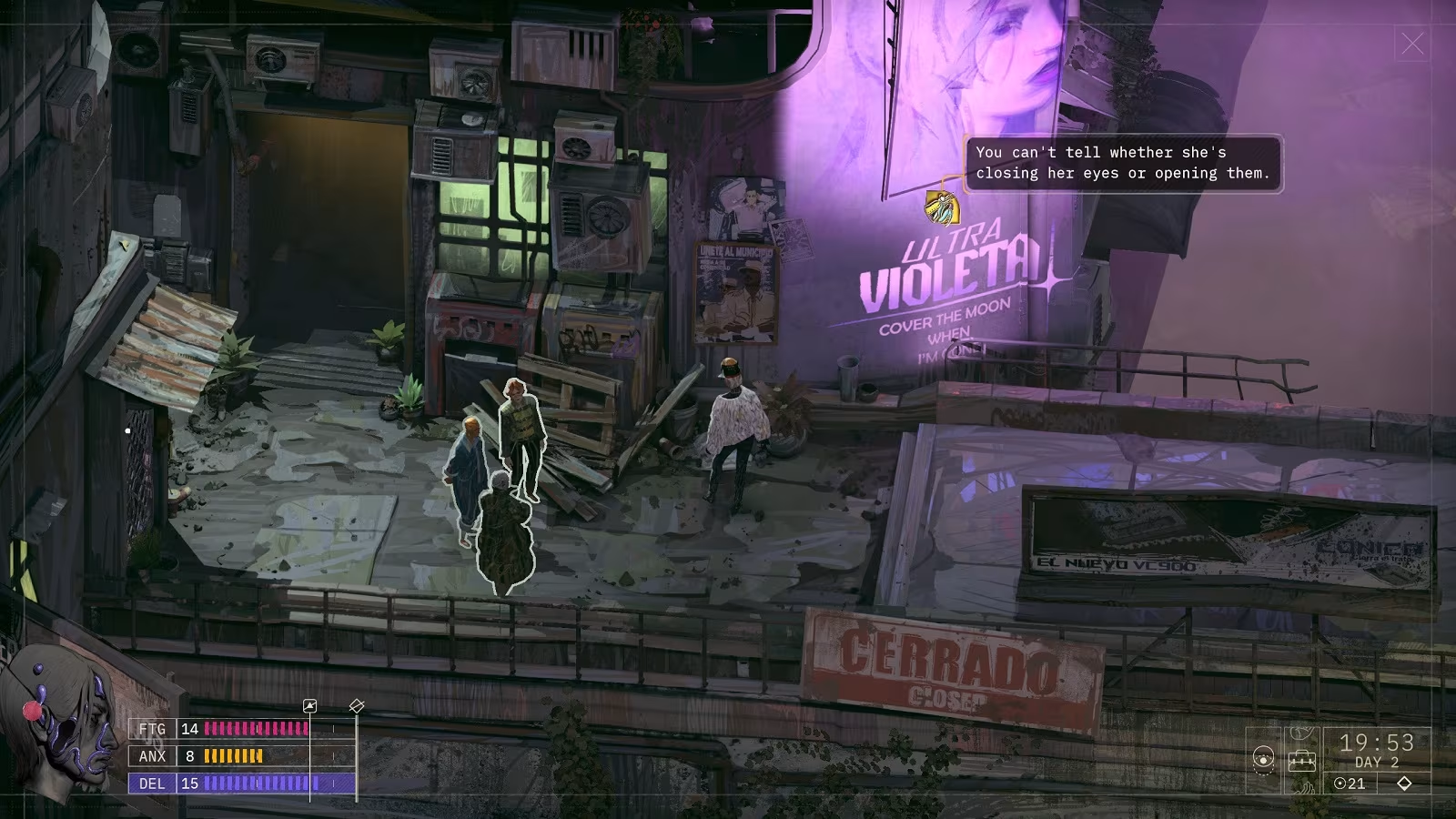
Portofiro itself is one of the finest settings I've explored this year. Like all great RPG cities, it feels alive long before you arrive. The streets hum with political tension. Economic decline hangs over entire districts like sea fog. Conversations drift from labour disputes to espionage, from philosophy to petty gossip, often within the same exchange. The city has history embedded into every brick and harbour wall, waiting for you to prod, pry and absorb it.
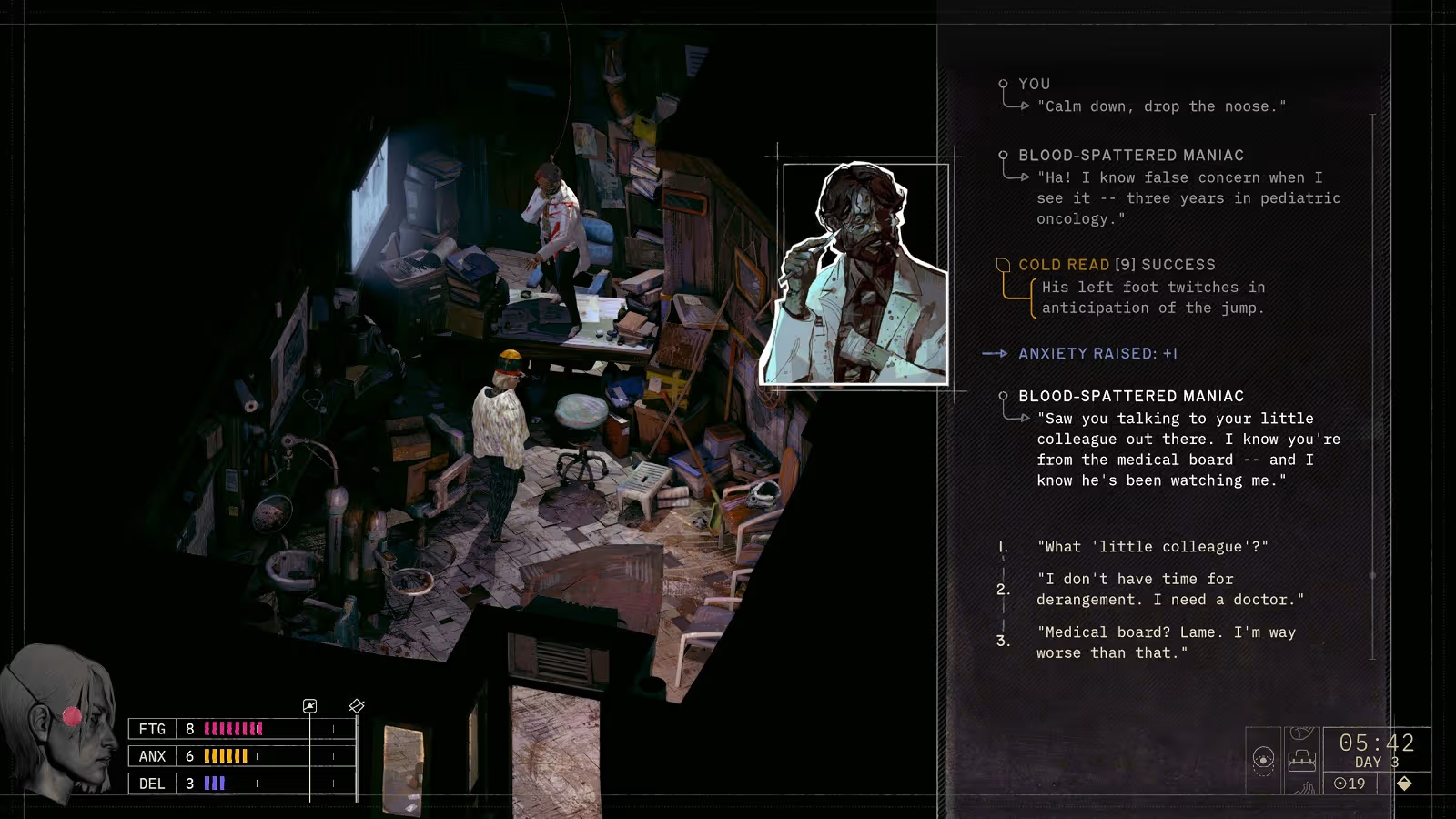
That's important, because Zero Parades is not a game in a hurry. I spent an hour in the first two rooms of the game alone, before I even ventured outside. If you're expecting car chases, silenced pistols, and dramatic rooftop escapes every twenty minutes, you've come to the wrong spy thriller. This is espionage viewed through the lens of bureaucracy, ideology, psychology, and personal collapse. ZA/UM’s intoxicating world-building and knack for a turn of phrase is undimmed from its debut. Here, information is the weapon, conversation is the battlefield, and, thankfully, the writing is more than strong enough to support that approach.
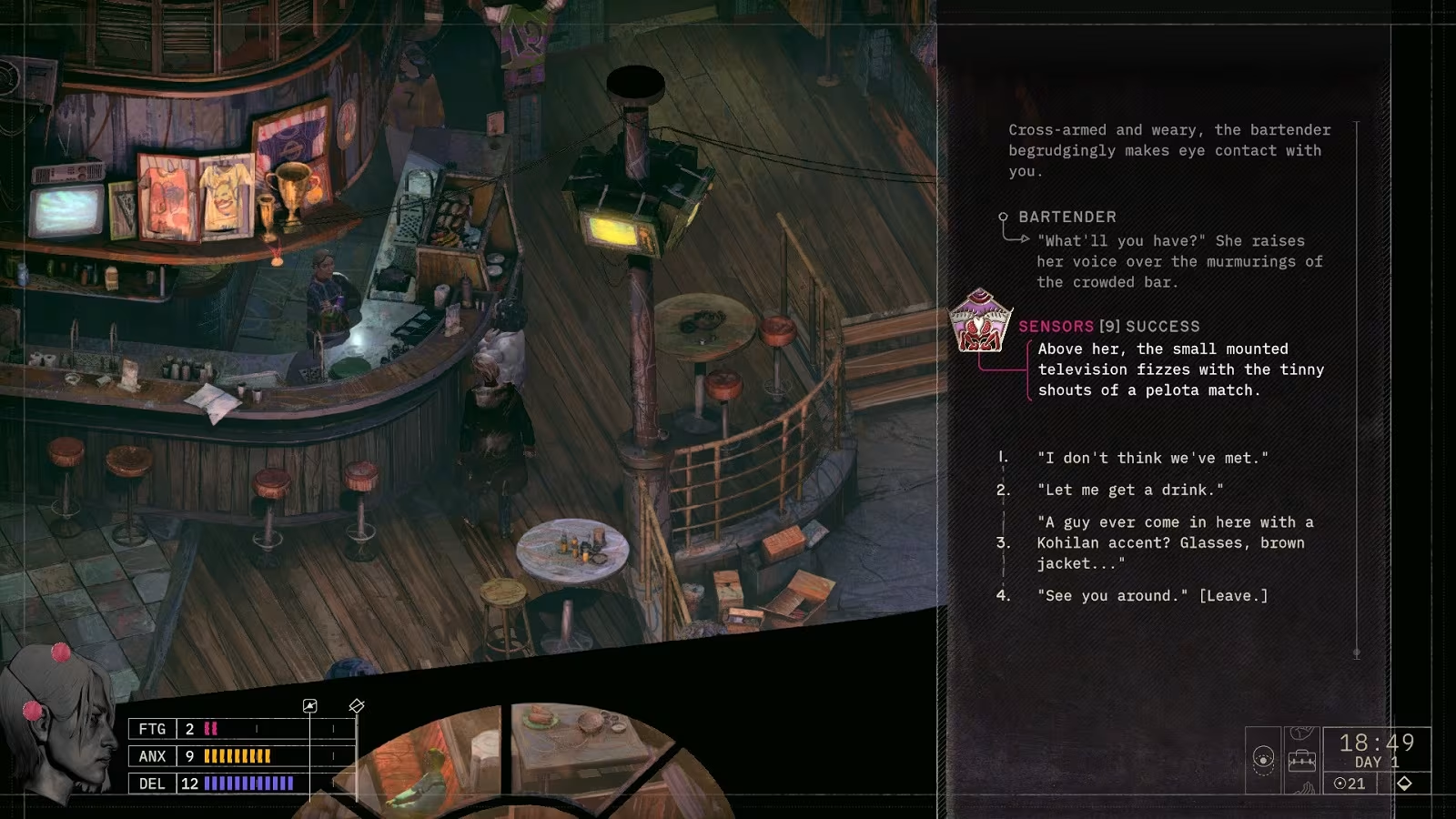
The obvious comparison is unavoidable. The game uses many familiar structural ideas: internalised skills, extensive dialogue trees, political discourse, and role-playing systems that encourage you to define who your protagonist becomes. Yet where Zero Parades distinguishes itself is through its protagonist.
Hershel is not Harry Du Bois. She isn't suffering from convenient amnesia, nor is she discovering herself for the first time. She knows exactly who she was, and that knowledge hurts. Rather than uncovering a forgotten past, you're constantly wrestling with one you cannot escape. Former colleagues remember your failures. Former friends remember your betrayals. Former lovers remember things you'd probably rather they didn't. Where Disco Elysium was concerned with discovery, Zero Parades focuses on accountability.
It creates some of the game's most powerful moments. One conversation with an old contact left me staring at the dialogue wheel for several minutes. Not because I didn't know what to say, but because every option felt awful in a uniquely human way. RPGs often excel at presenting moral choices. Zero Parades excels at presenting emotional ones.
The supporting cast deserves equal praise. From rival operatives to washed-up broadcasters, political zealots, eccentric informants, and individuals who appear to be operating several layers of reality beyond everyone else, Portofiro is packed with memorable personalities, almost uniformly voiced well. The game rarely settles for easy caricature. Even characters who initially appear absurd often reveal unexpected depth once you spend enough time with them.
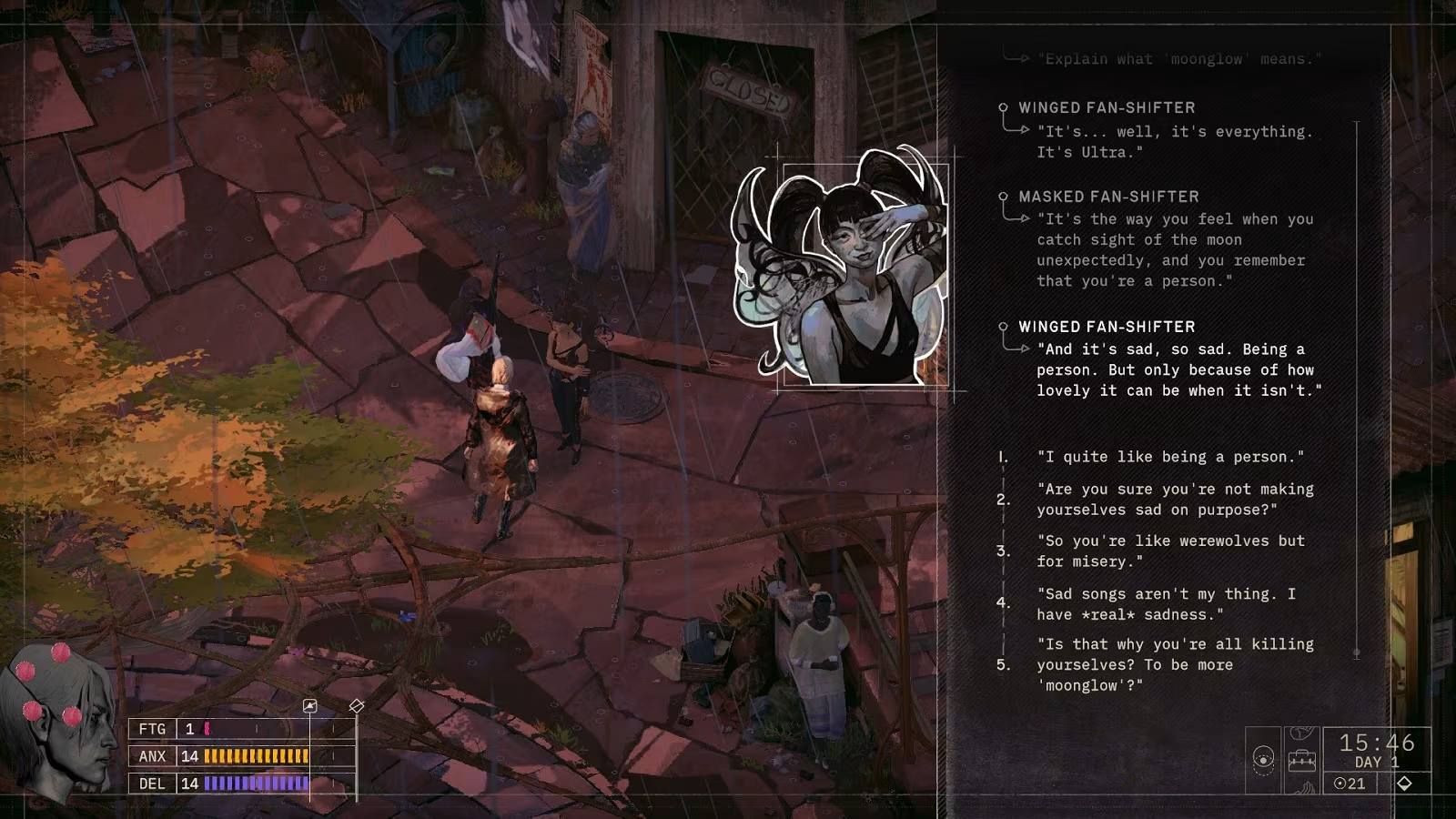
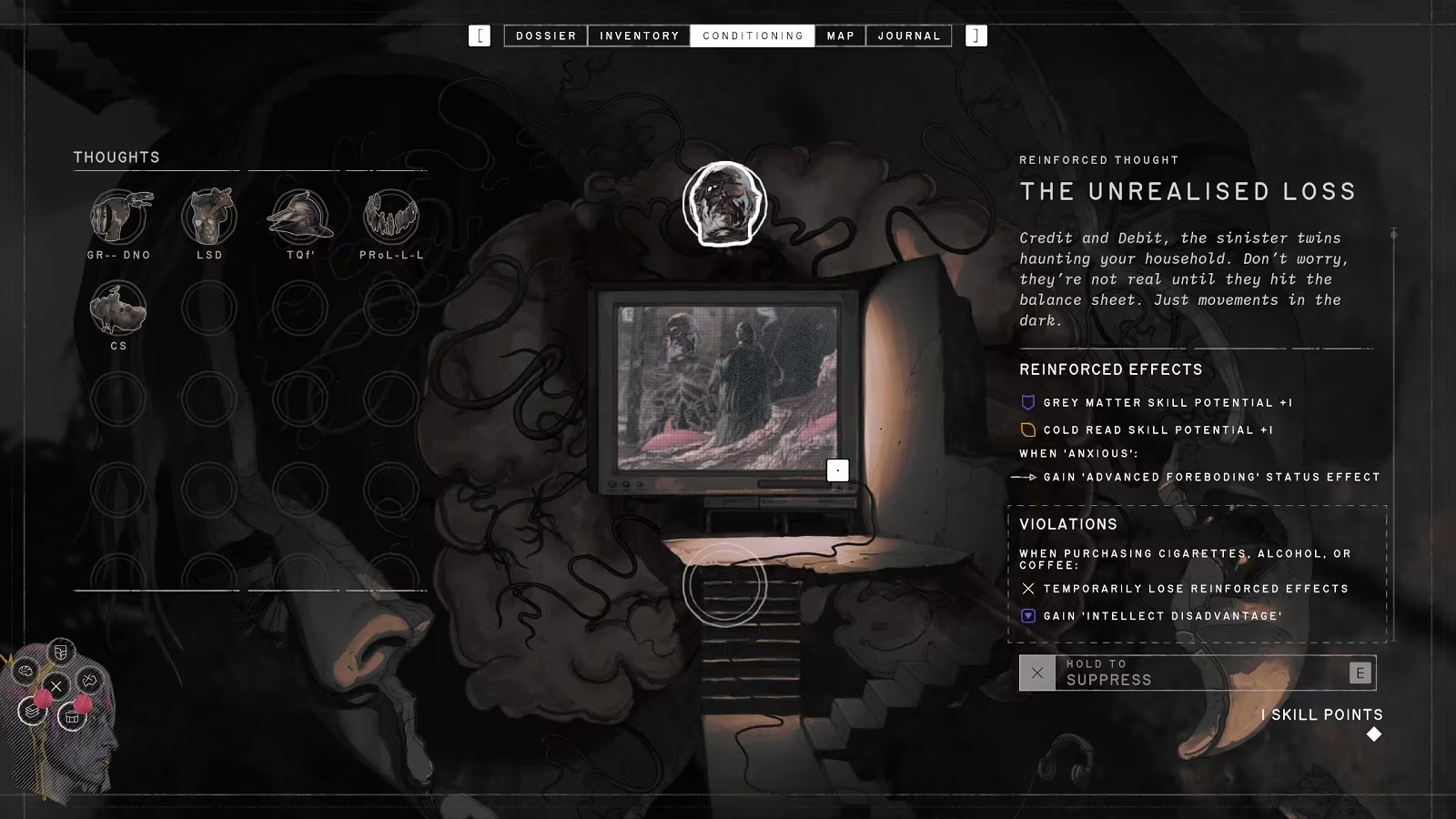
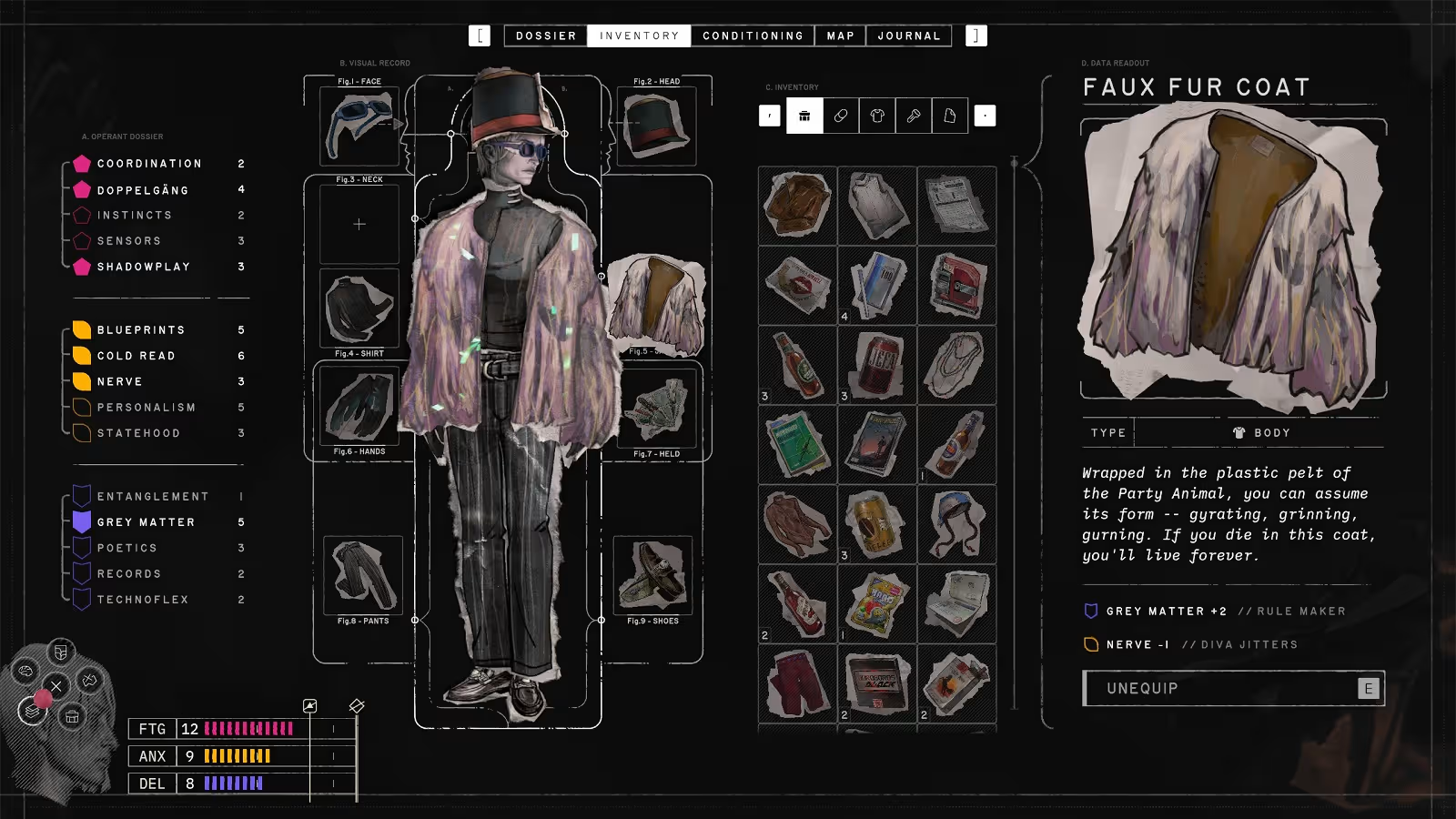
This commitment to character extends to the role-playing mechanics themselves. Like any good CRPG, Zero Parades allows you to build your version of CASCADE. Fifteen core skills influence everything from deduction and manipulation to emotional resilience and intuition. Yet the real innovation comes from the Conditioning system, which allows you to reshape your internal thought processes in ways that don't merely affect statistics, but actively alter how the game functions around you. Some conditionings grant obvious benefits. Others feel like psychological experiments. Several made me wonder whether I was becoming more effective or simply more unstable.
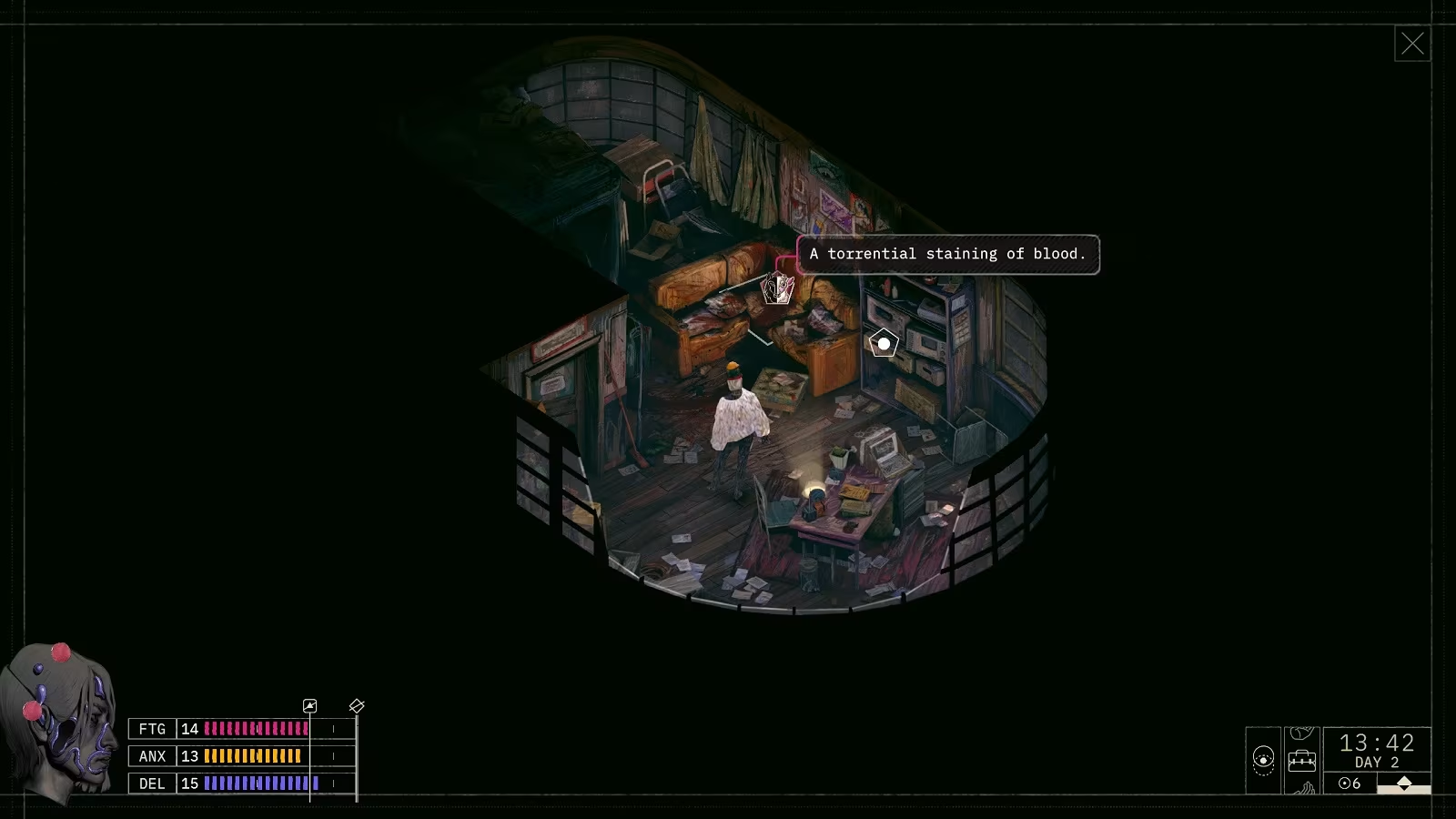
That's before you factor in fatigue, anxiety, and delirium, three systems that replace traditional health mechanics with something far more interesting. Push CASCADE too hard and consequences begin to accumulate. The game constantly asks how much of yourself you're willing to sacrifice in pursuit of success.
Mechanically, it's one of the smartest RPG systems I've encountered in years, largely because failure remains interesting — perhaps even more interesting than success. A failed skill check rarely represents a dead end. Instead, it often opens alternative routes, new complications, or entirely different interpretations of events. Like the best tabletop role-playing sessions, disaster frequently produces the most memorable stories.
I failed a critical interrogation midway through the game and, rather than reloading, rolled with the consequences. Three hours later, that failure had indirectly created one of my favourite narrative arcs in the entire experience. Few RPGs reward imperfection this effectively.
Visually, Zero Parades is stunning. Portofiro is rendered in a painterly style that balances beauty and decay in equal measure. Rusted industrial districts sit beside crumbling cultural landmarks. Rain-soaked streets glow beneath neon reflections. Interiors feel lived-in rather than designed. Paths through Portofino are well-trodden, deliberately carved out, or accidentally stumbled upon. Every environment tells a story before a single line of dialogue appears; each new section of the ramshackle city plays host to a multitude of doors, alleys and denizens to probe.
The soundtrack deserves similar praise. Melancholic jazz, ambient textures, and unsettling electronic flourishes combine to create an atmosphere that constantly feels slightly off-balance. It's the musical equivalent of a half-remembered dream or a conversation you suspect isn't entirely real, which fittingly describes much of the game itself.
Because beneath the espionage narrative lies something stranger. Without venturing into spoiler territory, Zero Parades becomes increasingly interested in the boundaries between ideology, memory, identity, and reality itself. What begins as a relatively grounded intelligence operation gradually spirals into territory that is philosophical, surreal, and occasionally deeply unsettling.
It's here that the game truly finds its own voice. The opening hours occasionally feel burdened by expectation. You can almost sense the developers nervously checking whether they're meeting comparisons that nobody can avoid making. But somewhere around the midpoint, Zero Parades stops looking over its shoulder. It becomes weirder, more confident, and considerably more ambitious — and is significantly better for it.
That isn't to say everything works perfectly. The pacing can be uneven. The opening chapters are dense, even by CRPG standards. Information arrives in enormous quantities, political factions blur together initially, and clarity is sometimes lost among complex reams of ideas, philosophies and world views. There were moments where I felt like a university student desperately trying to finish required reading for a lecture. James Bond didn’t need to tackle the tenets of socialism mid-mission. But imagine if he did.
The espionage fantasy itself can occasionally wobble too. For a supposedly elite operative, CASCADE has an amusing tendency to attract attention. Some investigative sequences feel like traditional RPG information gathering rather than genuine covert work. Players hoping for the systemic stealth and deception of immersive sims may find themselves disappointed.
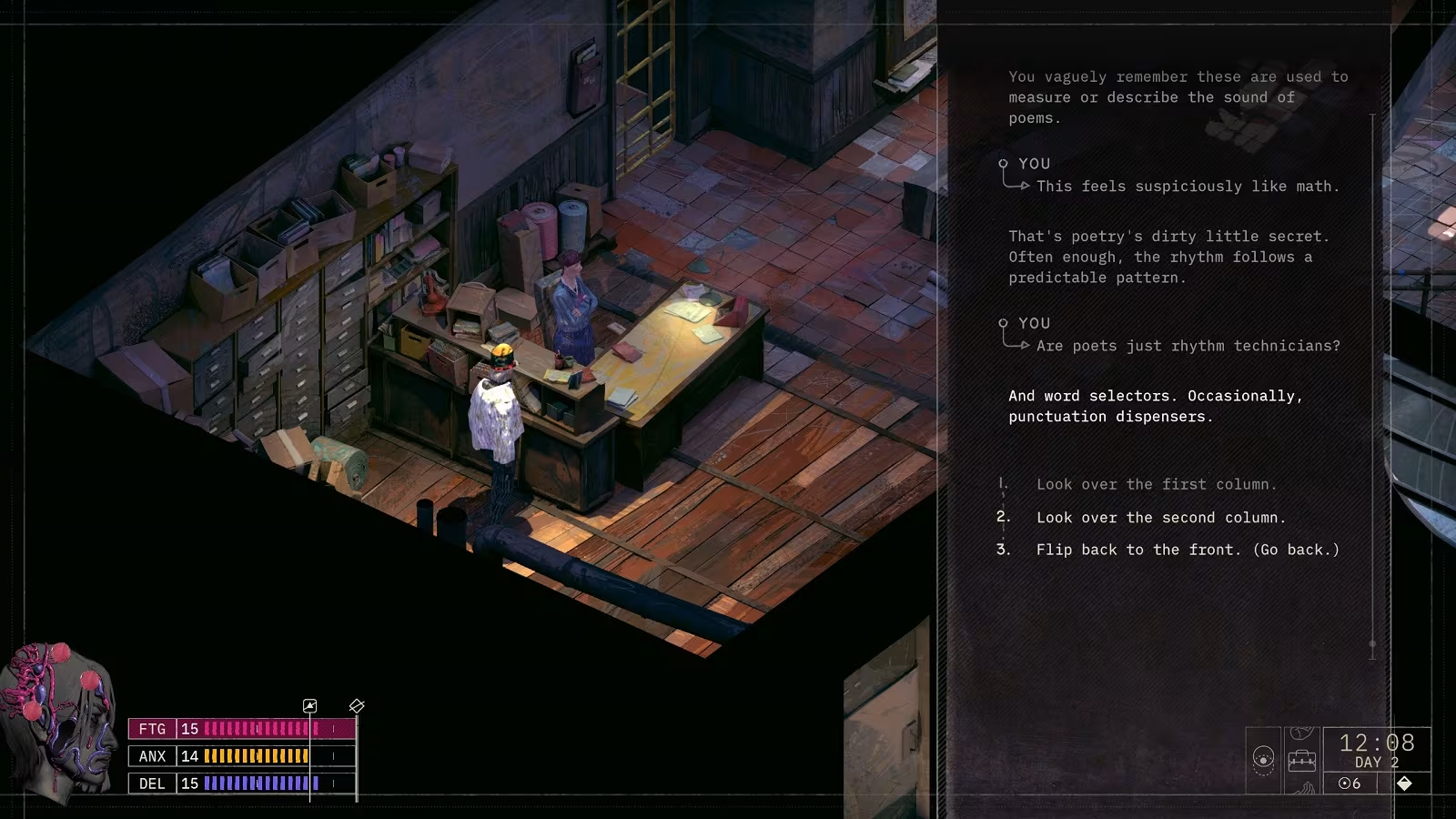
Certain UI frustrations persist as well. Dialogue-heavy games live or die on presentation, and while the interface is generally attractive, navigation occasionally feels sluggish. There were times when I found myself wanting conversations to move just a little faster. Disco Elysium was guilty of the odd indulgent aside; here, that’s ramped up a notch. Numerous NPCs are happy to wax lyrical about the state of the world order, whether they’re a telecoms worker suffering PTSD after an incident on the Moon, or a music seller who is furious when he learns that you’ve listened to an audio disc. They’re never less than engaging, but you should strap in for lengthy conversations.
But these complaints feel surprisingly minor once the story gains momentum. Because Zero Parades succeeds where many narrative RPGs fail. It trusts its audience. It trusts players to sit with uncertainty, to interpret rather than simply consume, and even to fail. Most importantly, it trusts them to think.
In an industry increasingly obsessed with optimisation, efficiency, and algorithmically generated engagement, there is something refreshing about a game willing to spend twenty minutes discussing political philosophy before ambushing you with an emotional revelation that leaves you questioning every decision you've made.
By the final act, thoughts of skill checks, character builds, and branching dialogue trees had been replaced by thoughts of people, regret, and the stories we tell ourselves in order to live with our mistakes. Is redemption something we earn or merely something we hope exists? Few games attempt those questions. Fewer still answer them with this much confidence.
The easiest thing Zero Parades: For Dead Spies could have done was become "more Disco Elysium." Instead, it eventually becomes something far more interesting: a flawed, ambitious, intelligent RPG willing to stand on its own merits. It occasionally stumbles beneath the weight of its predecessor's legacy, but when it speaks with its own voice, it becomes one of the most compelling narrative experiences available on PC today.
You can subscribe to Jump Chat Roll on your favourite podcast players including:
Let us know in the comments if you enjoyed this podcast, and if there are any topics you'd like to hear us tackle in future episodes!