
PC
Switch 2
Visual novels have always lived and died by a simple question: why should I keep turning the page?
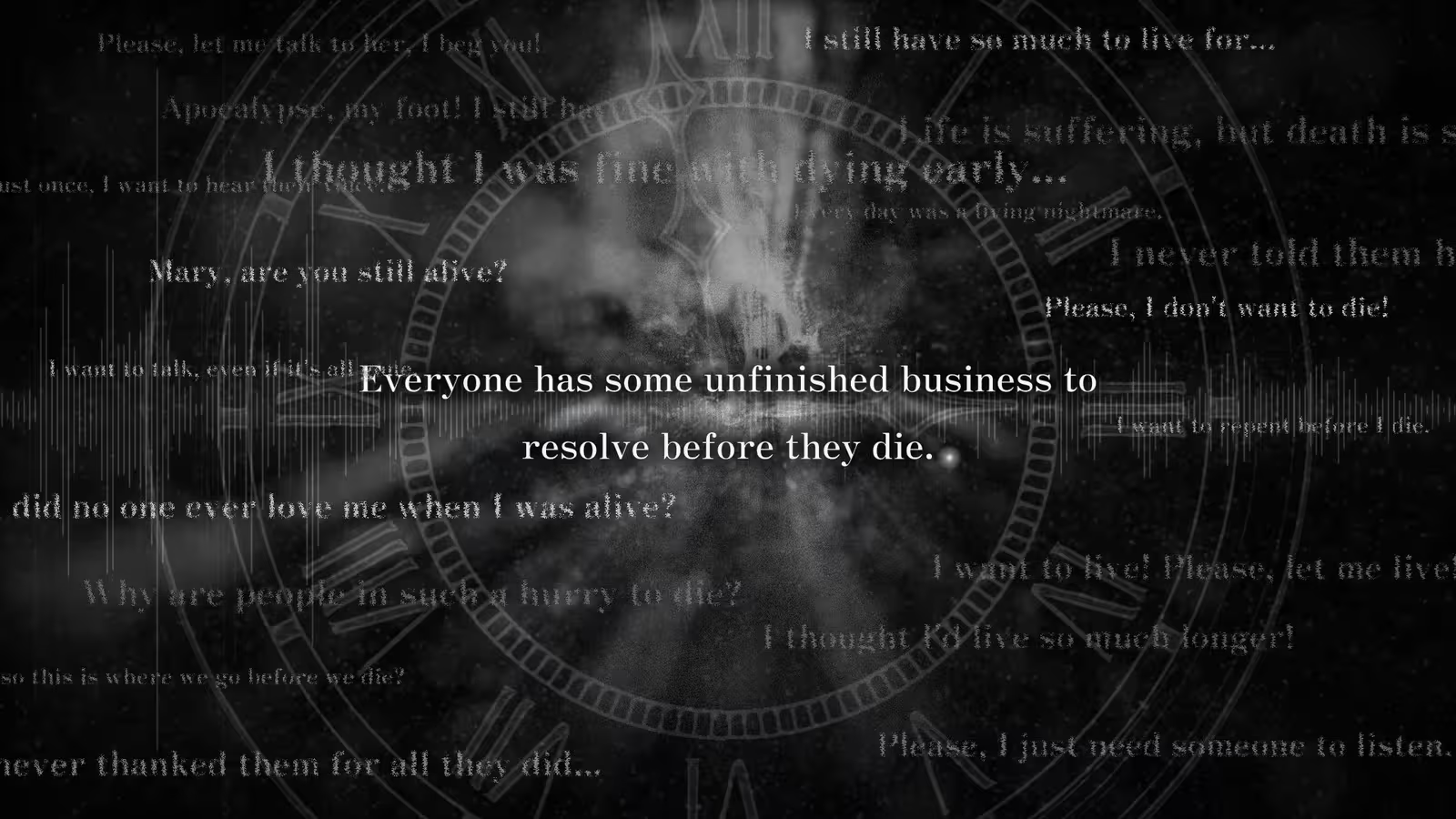
Some answer it with murder mysteries. Some with romance. Others throw increasingly absurd plot twists at the screen until your brain resembles a tumble dryer full of conspiracy theories. Schrödinger's Call takes a different approach. It asks what you would say if the world were ending, then spends the next few hours exploring all the things people wish they'd said before it was too late.
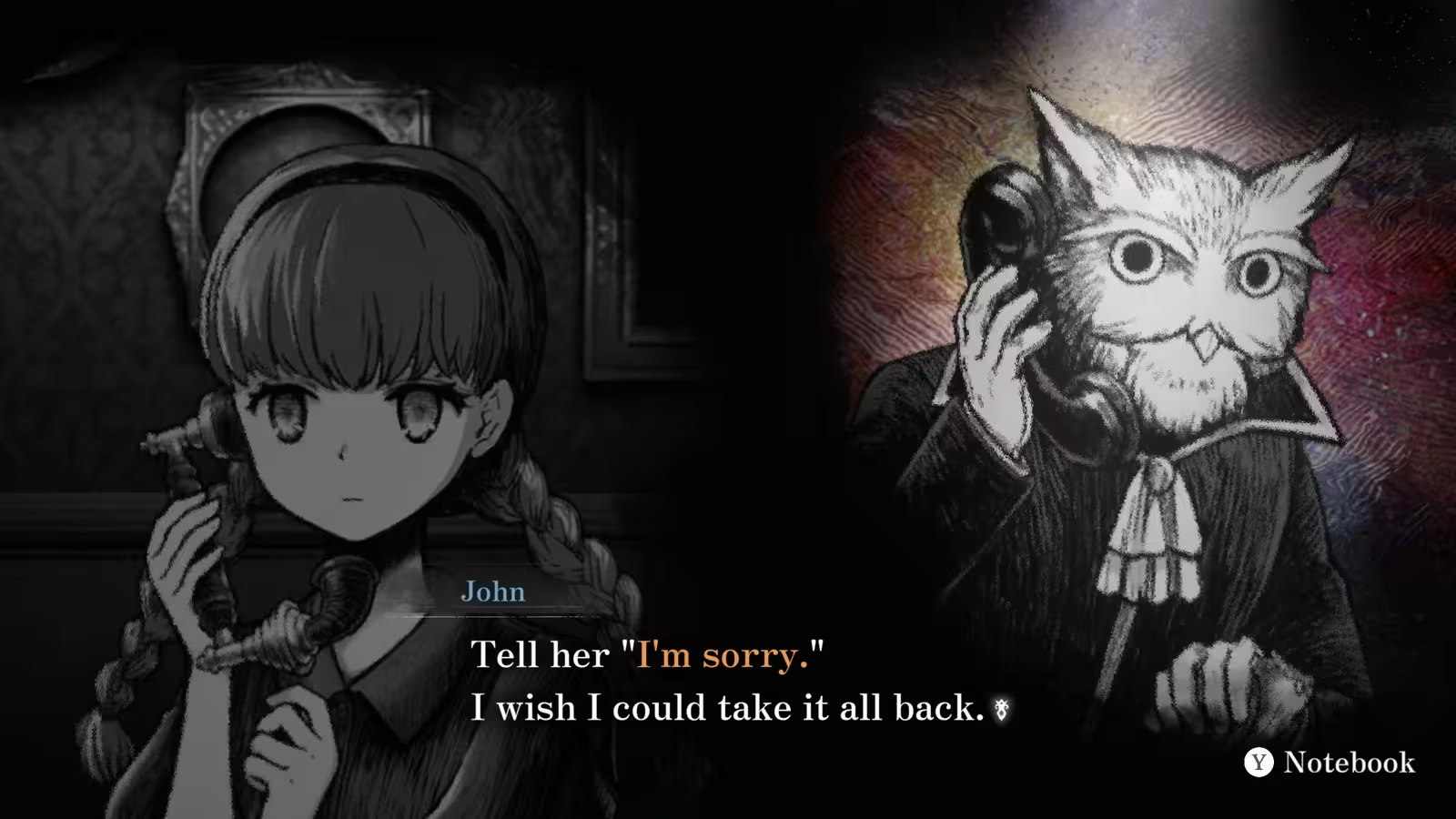
That premise alone was enough to grab my attention. I’m a sucker for heartfelt, tear-inducing narratives. This one pushed all of my buttons. The moon has fallen. Humanity is gone. The world has effectively ended. Yet in the infinitesimal sliver of time between life and death, twenty-one nanoseconds stretched into an eternity, certain souls remain trapped by regret, unable to move on. Into this liminal space steps Mary, a young woman who awakens in a dark room with no memory of who she is, accompanied only by a telephone and a talking cat named Hamlet. Her task is simple: answer the phone. Listen. Help these lost souls find peace.
“Simple”, of course, is not the whole story. What follows is one of the most affecting visual novels I've played in years. It’s a game that understands human connection isn't built from grand speeches or dramatic revelations, but tiny moments of vulnerability that arrive unexpectedly and hit all the harder because of it.
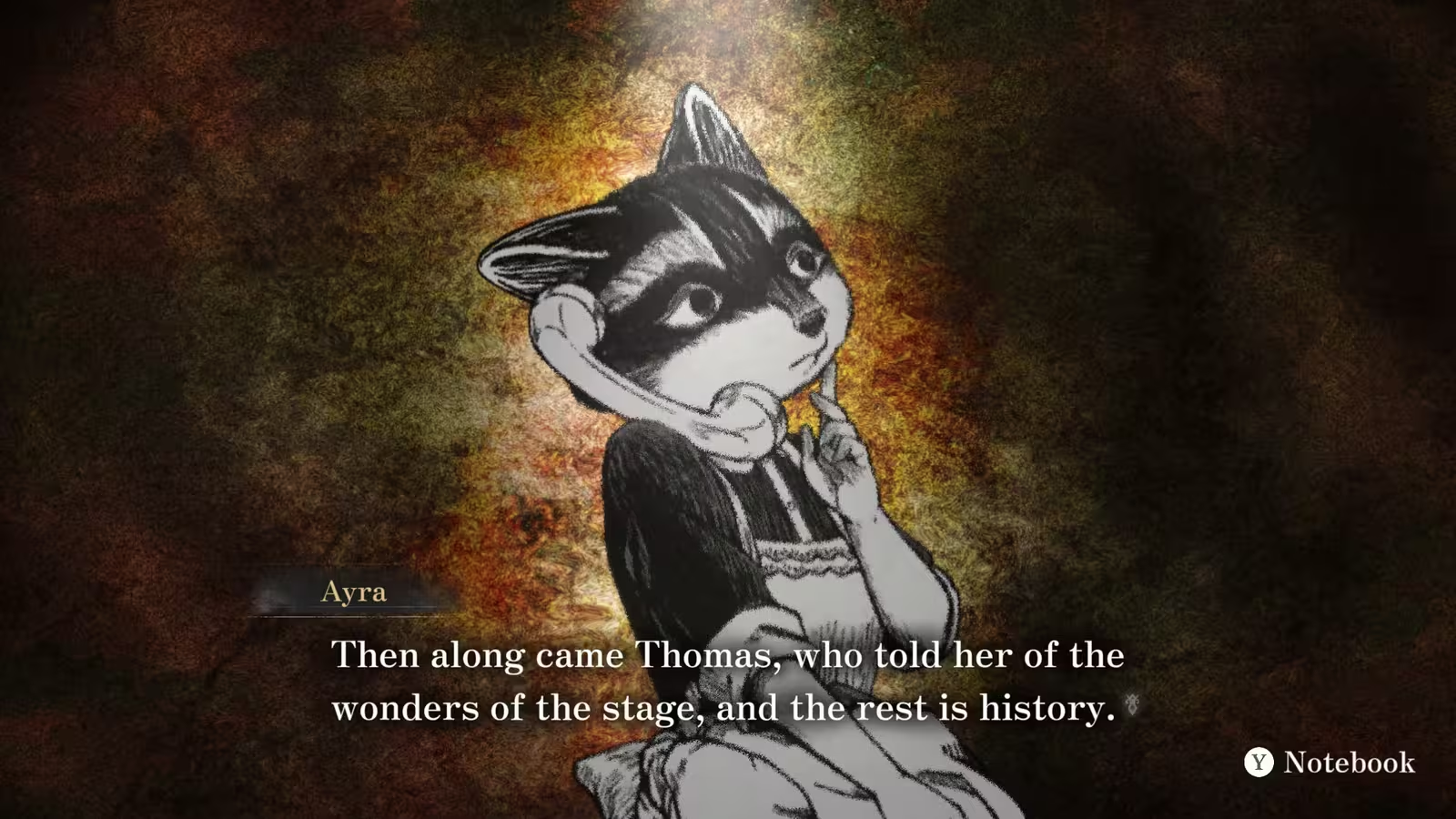
The setup initially resembles a supernatural anthology. Each call introduces a different soul, each carrying unresolved feelings, unfinished conversations, or regrets they cannot let go of. Mary's role is part therapist, part detective, and part ferryman. Through dialogue choices, observation, and careful listening, you attempt to guide these individuals towards acceptance while simultaneously piecing together the larger mystery surrounding Mary's own existence. Schrödinger's Call is brilliant because it understands listening is inherently dramatic.
Games often use dialogue to support the action. In Schrödinger's Call, conversation is the action. There are no combat encounters, inventory puzzles, or exploration segments to distract from the central experience. Instead, the tension emerges from trying to understand people. What aren't they saying? What are they avoiding? Why does a particular memory matter? Why does a seemingly insignificant detail keep resurfacing?
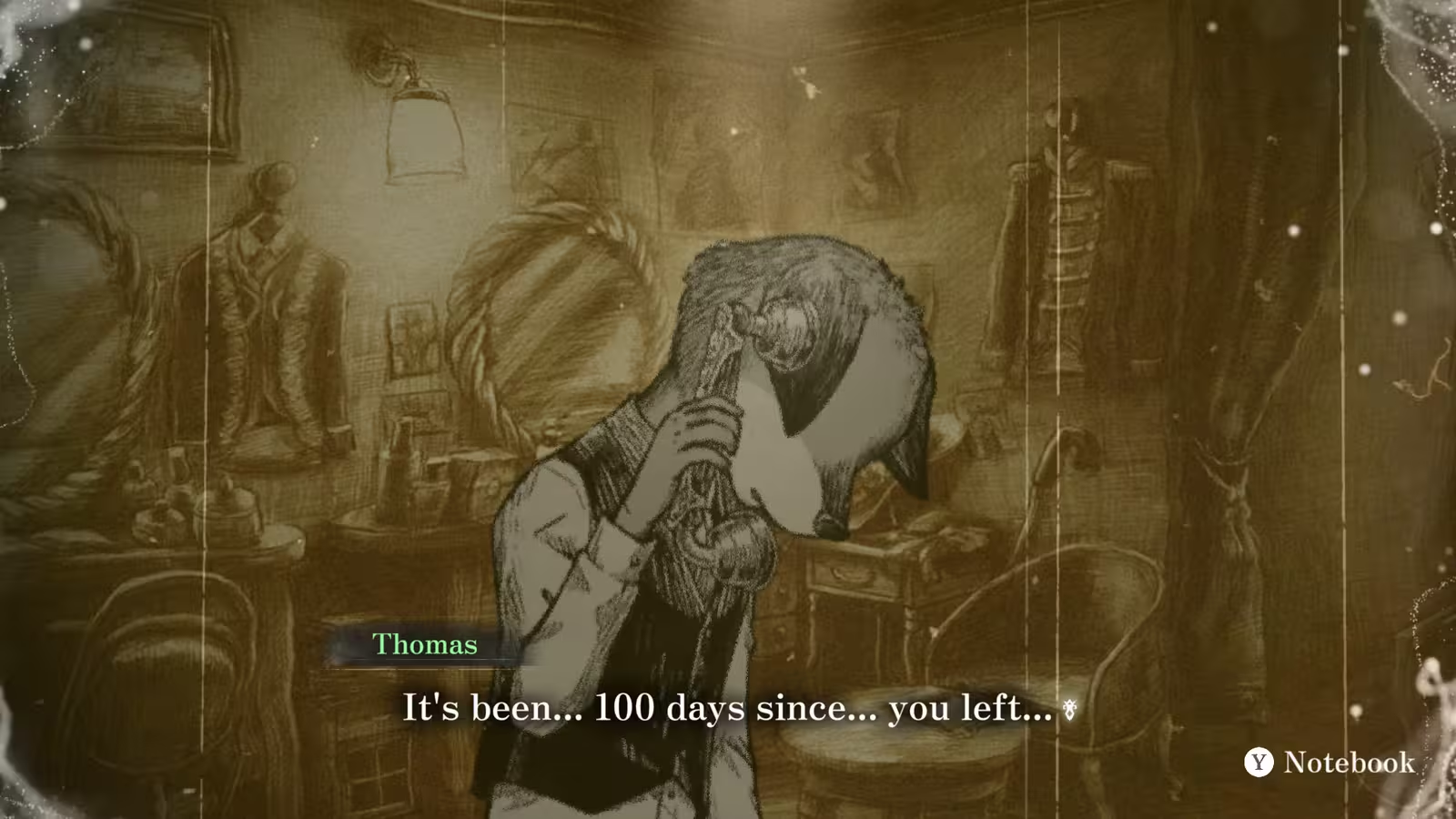
The answers rarely arrive neatly. Characters speak around their pain as often as they confront it directly. Conversations meander. Memories contradict one another. Emotional wounds reveal themselves gradually. It feels authentically human, and the writing deserves enormous credit for maintaining engagement despite the deliberately limited scope. A lesser visual novel might have relied on melodrama. Schrödinger's Call doesn't need to. Its emotional punches land because they feel recognisable. My word, I love games that make me cry. Over the decades I've been gaming, I can name a handful which have pushed that lacrimal button: Soleil. Brothers. Shadow of the Colossus. To The Moon and its sequel. And now this.
There were multiple occasions where I finished a chapter, sat back in my chair, and simply stared at the screen. Not because the game had blindsided me with some outrageous twist, but because it had dredged up a feeling I wasn't expecting. A conversation about regret. A relationship left unresolved. A missed opportunity that could never be reclaimed. By the time the credits rolled on each successive story, I found myself reaching for the tissues more than once.
That's what impressed me most. Every caller arrives with their own baggage, yet each story manages to find a different route into your heart. Some are devastating. Others are bittersweet. A few end on notes of acceptance that feel strangely uplifting despite the game's apocalyptic framing. The emotional consistency is impressive for an anthology, and most stories leave a mark.
The cast benefits enormously from this approach. Although most characters only occupy a portion of the runtime, they leave surprisingly lasting impressions. The game is very effective at sketching entire lives through relatively brief interactions. The writing understands that people are rarely defined by a single event or trauma. Instead, it builds them through fragments, memories, and the things they choose to share — or conceal. By the end of each call, many felt like people I genuinely knew.
Mary herself is equally compelling. Amnesia is hardly the most original narrative device in gaming, but Schrödinger's Call uses it intelligently. Her missing memories sit at the heart of the game's exploration of identity and human connection. As the story unfolds, the relationship between Mary's personal journey and the souls she helps becomes increasingly apparent, culminating in revelations that feel earned rather than mechanically delivered.
The beauty of Mary's arc is that it mirrors the player experience. As she slowly pieces together who she is, you begin assembling a larger picture of what this strange place represents and why these conversations matter. The mystery provides an excellent backbone, but it never overshadows the people at the centre of it.
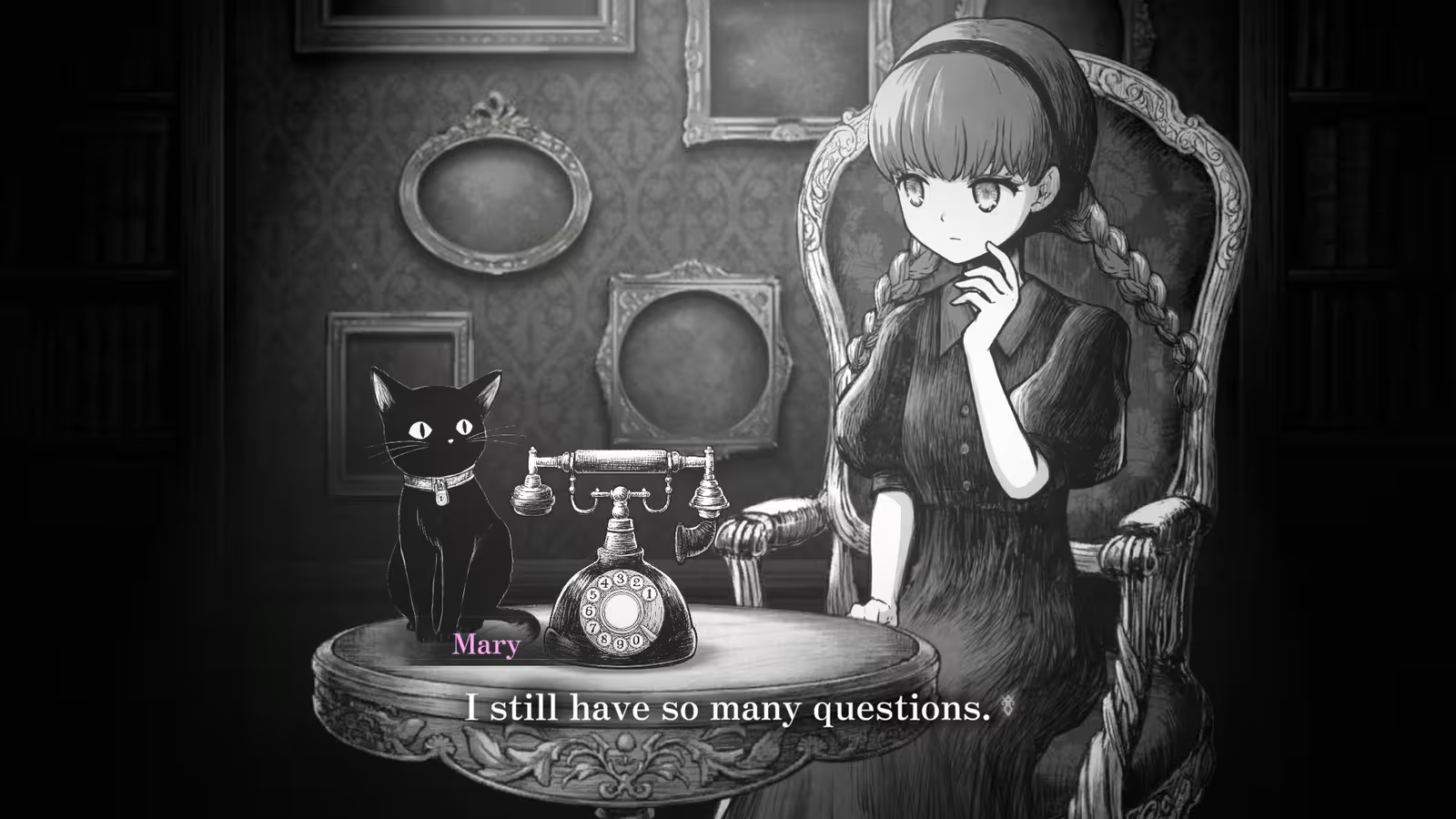
Hamlet deserves special mention as well. A talking cat explaining the metaphysics of existence sounds like a terrible idea on paper. Somehow, it works. Equal parts guide, philosopher, and occasional menace, Hamlet provides warmth and humour whenever the narrative threatens to become overwhelmed by its own melancholy. He prevents the game from drowning beneath its heavier themes while still contributing meaningfully to them.
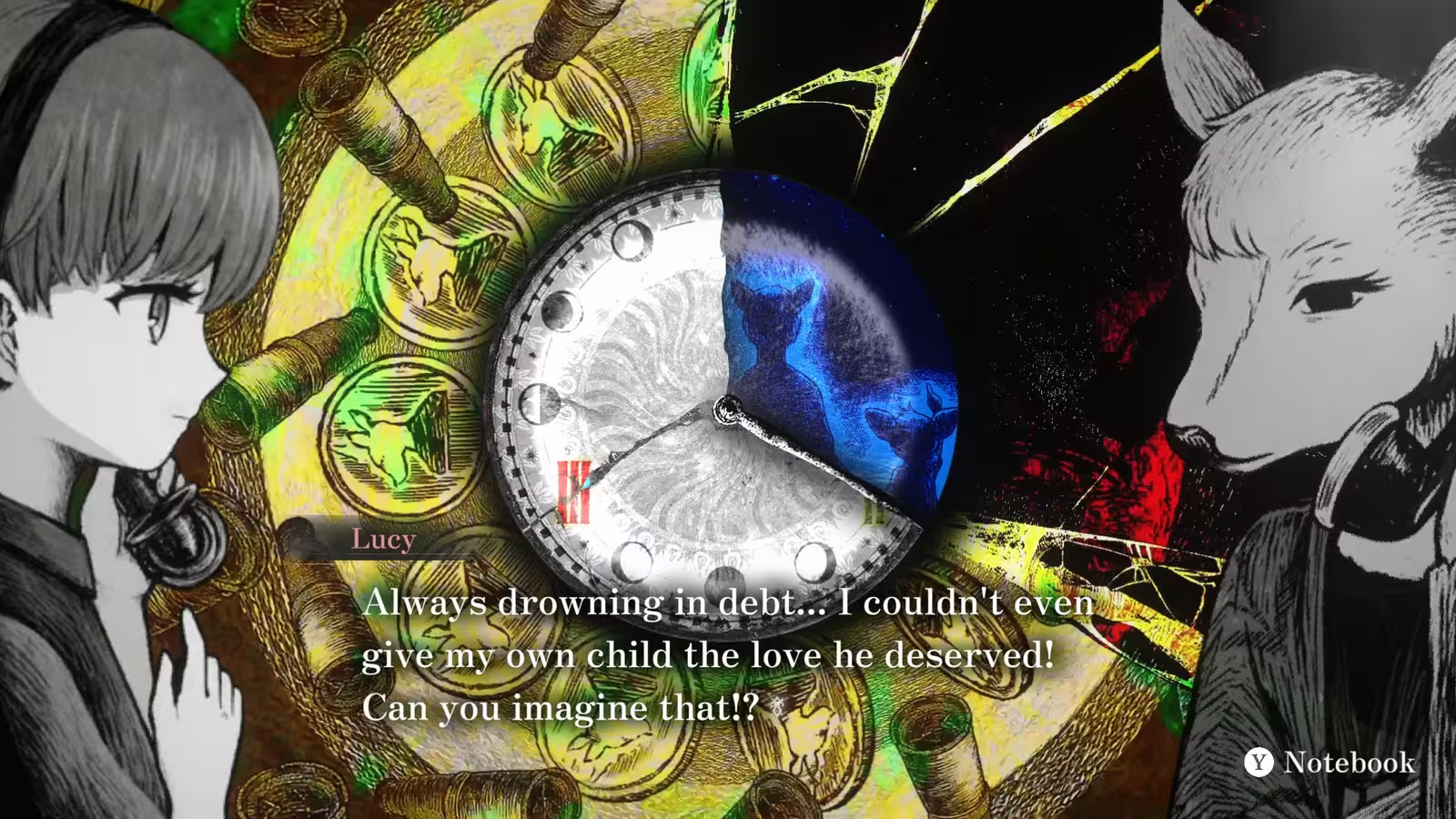
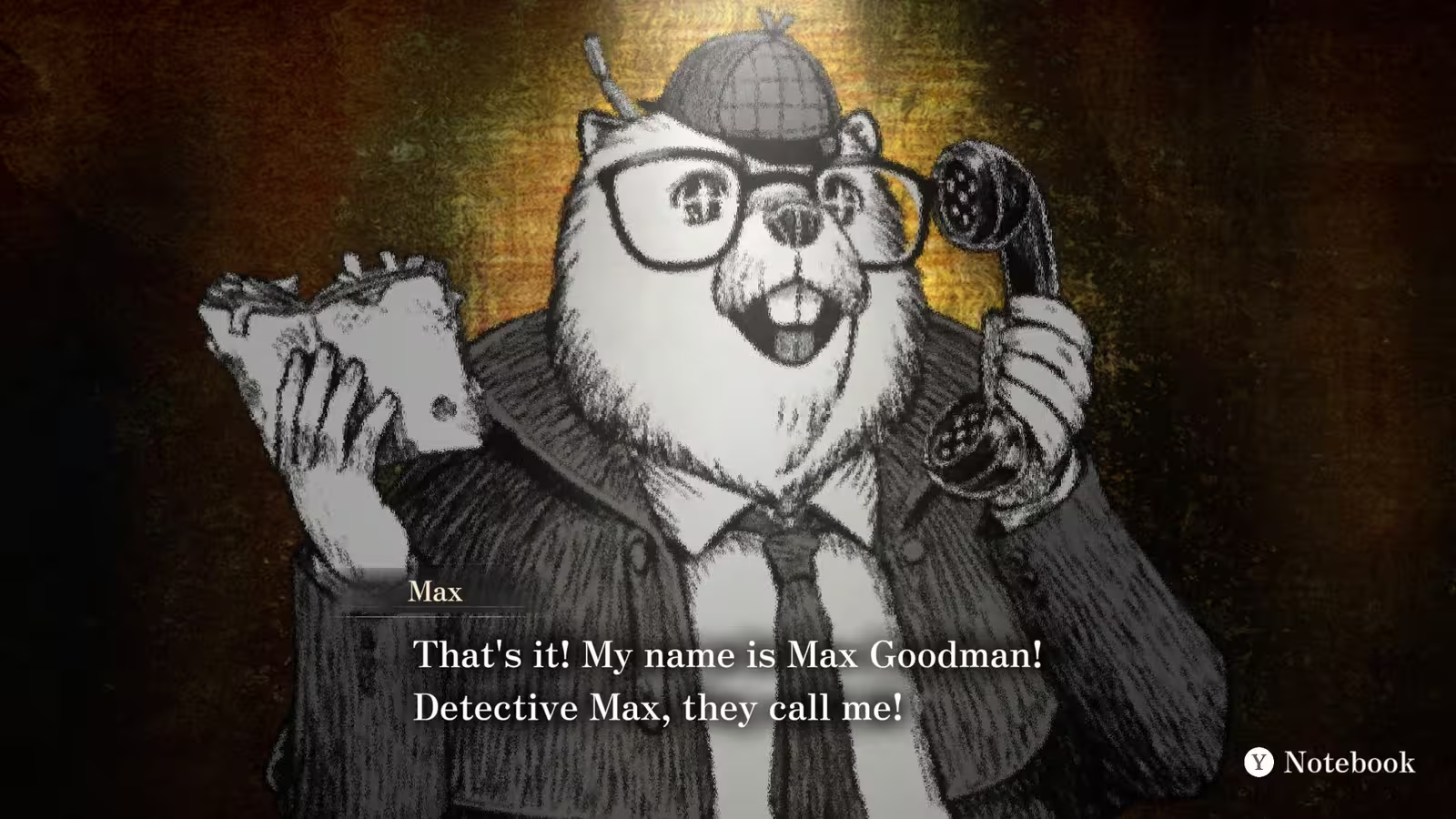
Visually, Schrödinger's Call is extraordinary. The entire experience resembles an illustrated storybook filtered through a fever dream. Much of the game exists within stark monochrome environments, only for bursts of colour to erupt during moments of emotional significance. Characters appear as stylised anthropomorphic animals. Reality bends. Shapes distort. Entire scenes transform into abstract visual metaphors for grief, fear, longing, and hope. It sounds like a collection of ideas that ought to clash horribly. In practice, it gives the game a visual identity unlike almost anything else released this year.
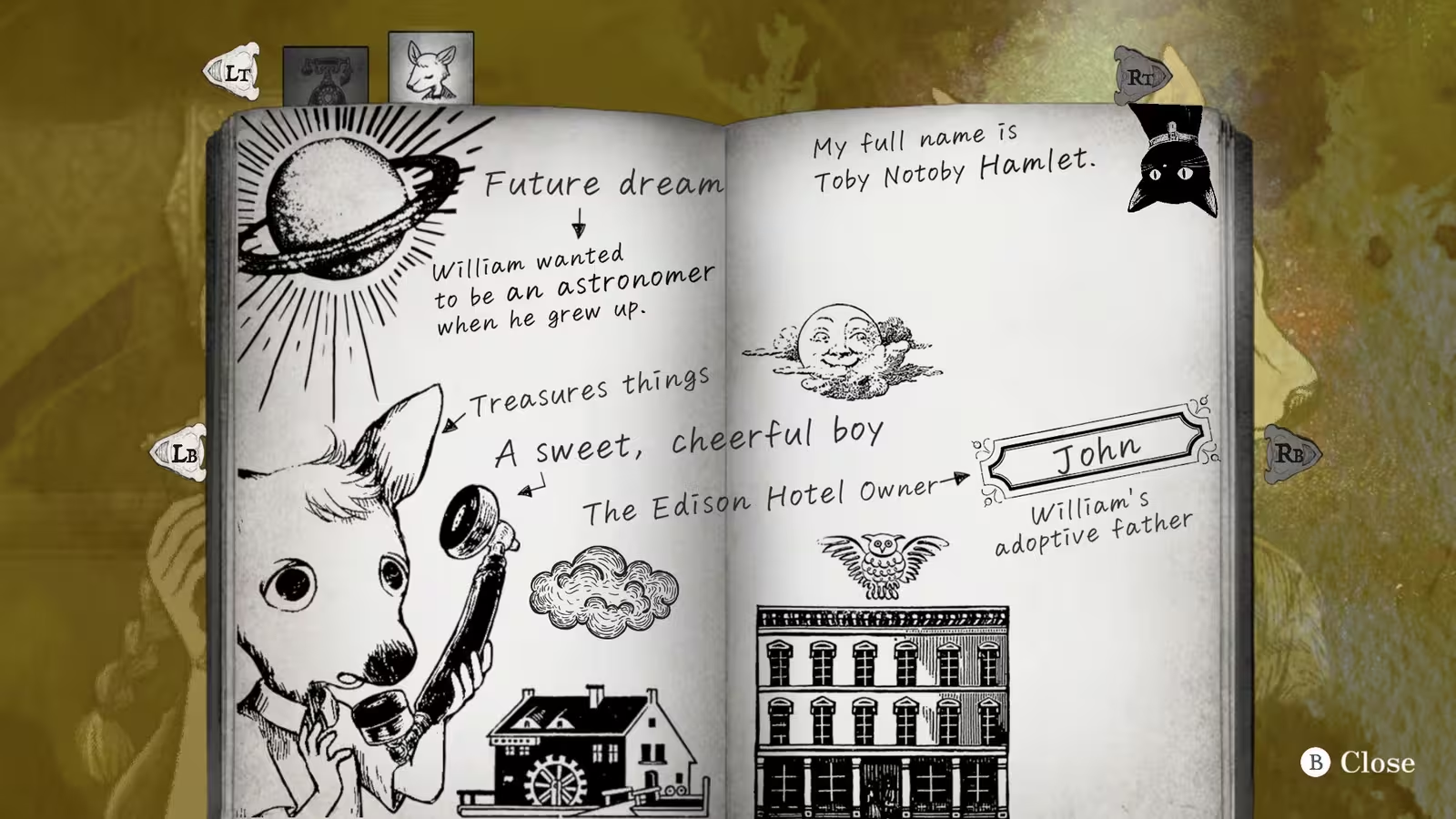
The contrast between the bleak setting and the vibrant emotional imagery creates a presentation that feels both dreamlike and intimately personal. There are sequences where words, colour, music, and animation combine to communicate feelings more effectively than dialogue ever could. Even when the budget limitations occasionally become visible, particularly in some compressed animations, the art direction consistently compensates through sheer creativity.
The soundtrack is equally impressive. Music in visual novels often functions as wallpaper, supporting the text without drawing attention to itself. Here, it becomes an active participant in the storytelling. Gentle piano melodies give way to unsettling ambient passages. Melancholic strings swell at precisely the right moments to tip you into blubsvillle. Silence is deployed just as effectively as sound. By the closing chapters, I found myself recognising emotional cues before characters had spoken a single word. It's one of the strongest audio presentations I've encountered in the genre, and I’ve played pretty much every Phoenix Wright game.
Mechanically, however, Schrödinger's Call is deliberately modest. Whether that's a criticism depends on your expectations as a player. Dialogue choices matter, but not always in the way players might expect. Players hoping every decision will radically reshape the narrative may come away disappointed. The game is more interested in shaping conversations, revealing perspectives, and influencing how Mary understands the people she encounters. The story is strictly linear: choices don't alter the final outcome, they mostly create the illusion of branching while emphasising different thematic angles. Personally, I think that focus works in its favour.
Too many narrative games become obsessed with consequence charts and alternate endings. Schrödinger's Call is far more interested in emotional truth than endless branching pathways. But then, the game isn't trying to create radically different stories — it wants you to understand this one more deeply.
That said, the pacing isn't flawless. The anthology structure means some calls inevitably resonate more strongly than others. A handful of stories feel slightly underdeveloped compared to the game's best material. Some conversations tend to cover similar ground, and not every character has a story that feels equally compelling. There are also moments where the central mystery surrounding Mary progresses more slowly than I'd have liked, leaving certain sections feeling like emotional holding patterns rather than meaningful advancement.
The game's commitment to ambiguity occasionally works against it as well. I generally appreciate stories that trust their audience, but there were moments where Schrödinger's Call seemed reluctant to provide enough concrete information for emotional revelations to land with maximum impact. Mystery is powerful. Obscurity is less so. The line between the two can be thin, and the game occasionally wobbles across it.
These criticisms are minor compared to what the game does well. Schrödinger's Call does something that most narrative games don't: it lingers. Even now, I find myself thinking about specific conversations, specific characters, and specific moments of vulnerability. Certain chapters have lodged themselves in my brain in a way very few games manage. Days after finishing, I was still replaying exchanges in my head, wondering whether I would have made different choices, or whether I would have found the right words if I had been on the other end of the line.
This is where the game finds its deepest note. We carry unfinished conversations with us. We replay old mistakes. We imagine different outcomes. We wonder what we should have said. Regret, here, isn't necessarily about grand failures. Sometimes it's a phone call you never made. Sometimes it's a conversation you ended too soon. Sometimes it's simply not telling somebody what they meant to you before time ran out. As someone who's lost most of their family, I know that kind of regret. This game gets it.
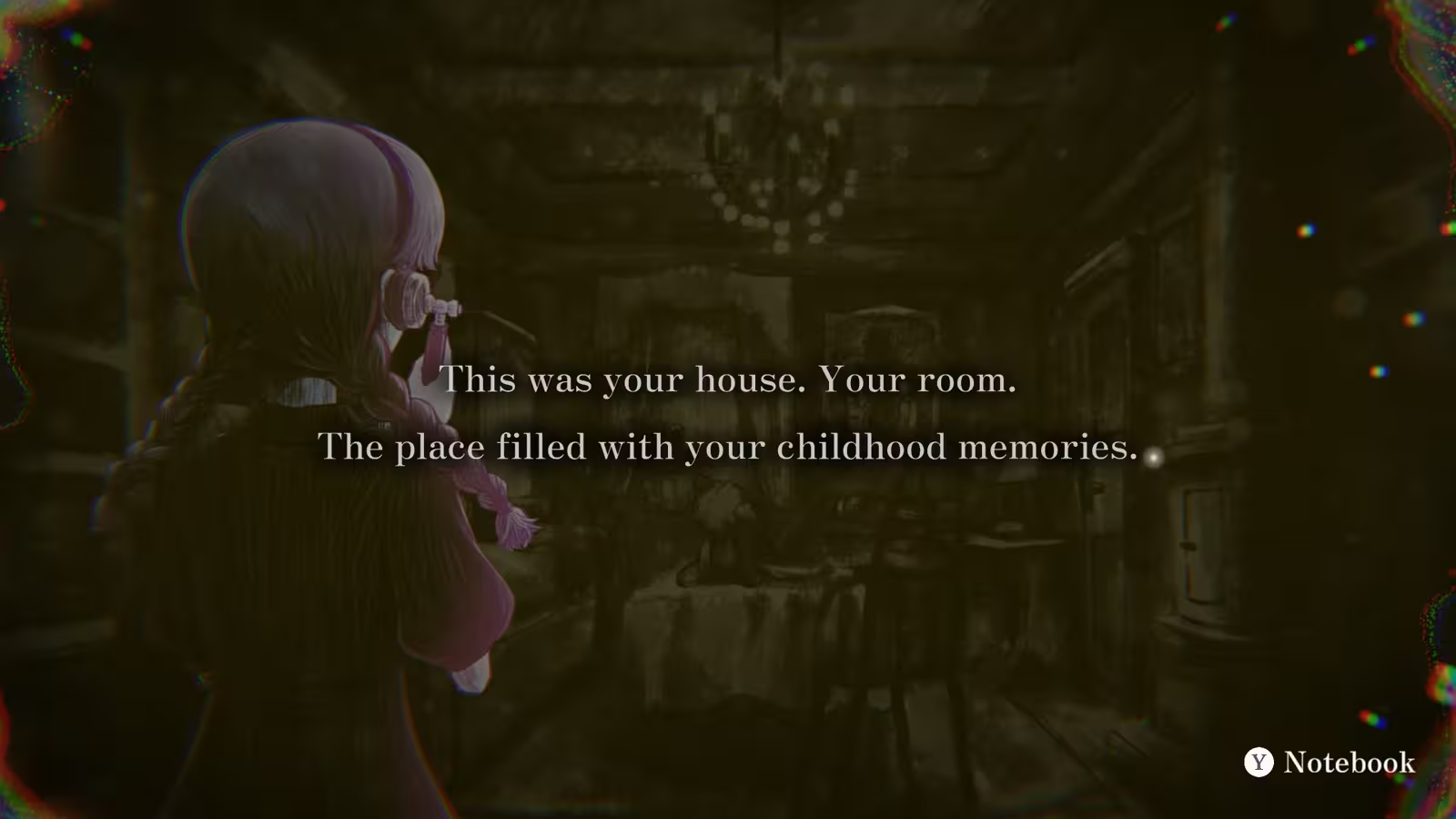
And that's where Schrödinger's Call finds its power. Beneath the surreal imagery, philosophical musings, and apocalyptic framing device sits a sincere story about connection. The world has already ended. The grand battles have already been lost. What remains are memories, relationships, and the small pieces of ourselves we leave behind in other people.
More importantly, it invites you to examine your own life in the process. The people you've drifted away from. The conversations you've postponed. The things you've left unsaid because there would always be another opportunity tomorrow. Schrödinger's Call knows that tomorrow isn’t guaranteed.
By the time the final call ended, I was thinking about people. The people I'd lost. The people I should probably call. The things I still needed to say.
Few games earn that kind of emotional honesty.
Schrödinger's Call does.
You can subscribe to Jump Chat Roll on your favourite podcast players including:
Let us know in the comments if you enjoyed this podcast, and if there are any topics you'd like to hear us tackle in future episodes!