
PC
Almost forty years ago, Ron Gilbert, of Monkey Island fame, wrote that video game puzzles and their solutions need to make sense. That may seem obvious, but a lot of developers have ignored the wisdom imparted by one of gaming’s all-time greats. Whirlight - No Time To Trip, Willy Morgan and the Curse of Bone Town, A Tale of Paper: Refolded… the list of puzzlers built on arbitrary logic is far longer than it should be. It’s perfectly fine for a title to be difficult, as long as that difficulty doesn’t feel artificial.
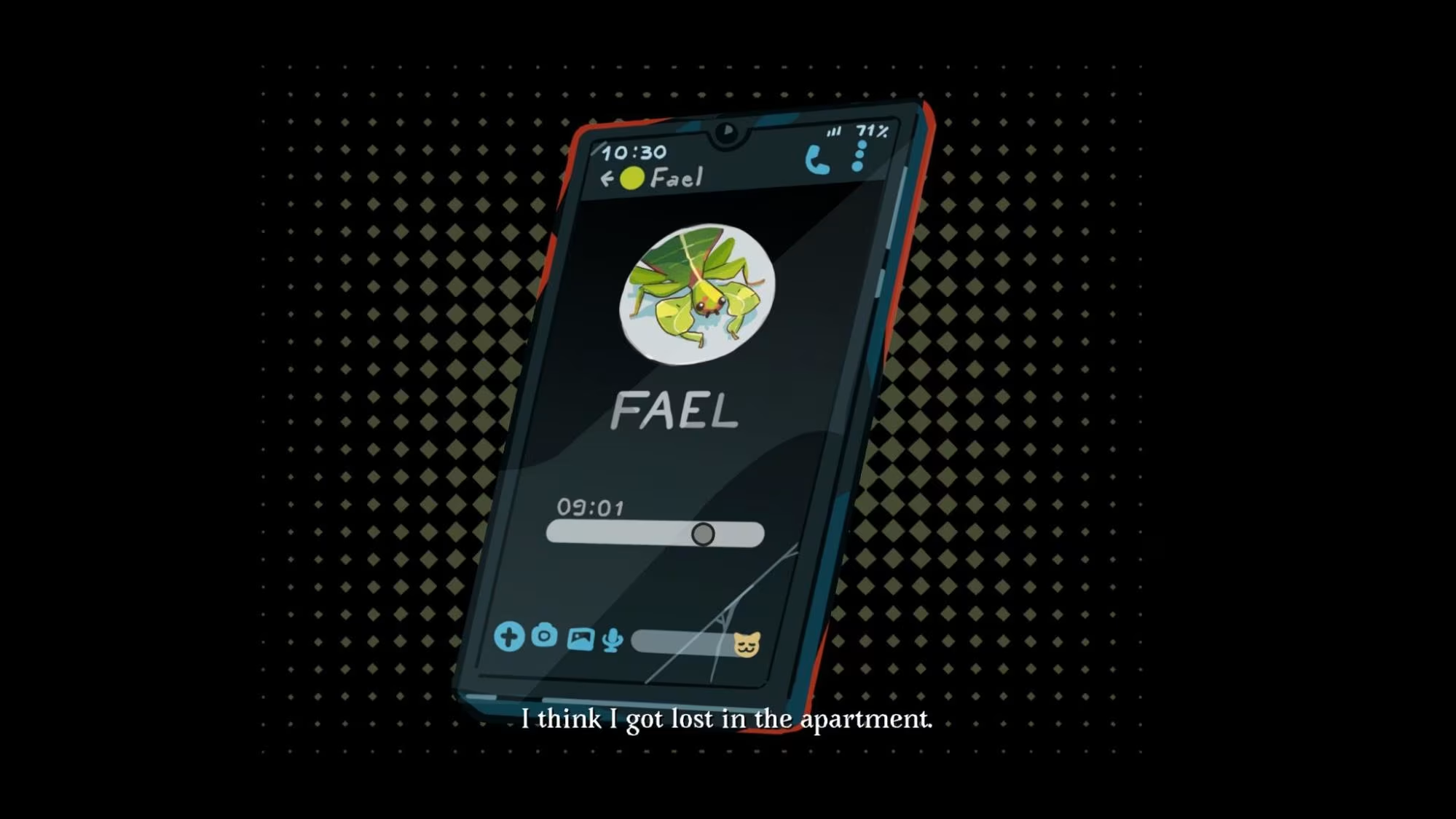
Looking for Fael isn’t a perfect video game. Its narrative is thin, its soundtrack is largely forgettable, and its difficulty can feel absurd at times. Yet the game’s puzzles never feel punishing for the sake of it. Every clue, every mechanic, and every answer follows the game’s logic. You’re encouraged to fill a real-world notebook with observations, and piecing together those disparate lines of thinking is immensely satisfying.
Your first objective is deceptively simple: figuring out the combination to your mailbox. After your roommate leaves a voicemail saying they’re lost in your apartment, you rush home to find them. When they’re nowhere to be found, though, you have to comb through every corner of your apartment, completing Tetris-esque minigames and navigating a convoluted floor plan in search of answers. It can take the better part of half an hour to figure out how to open your letter box. But because every clue exists for a reason, the eventual solution feels rewarding rather than exhausting.
The puzzles don’t get any easier after the first one. The game steadily introduces new mechanics, and the apartment your mate is lost in turns into a literal maze. However, you’re never tasked with doing anything that feels convoluted for the sake of it. You can always figure out answers by using in-game hints, screenshots you took earlier, and your own brain. Every answer feels obvious once you understand Looking for Fael’s rules.
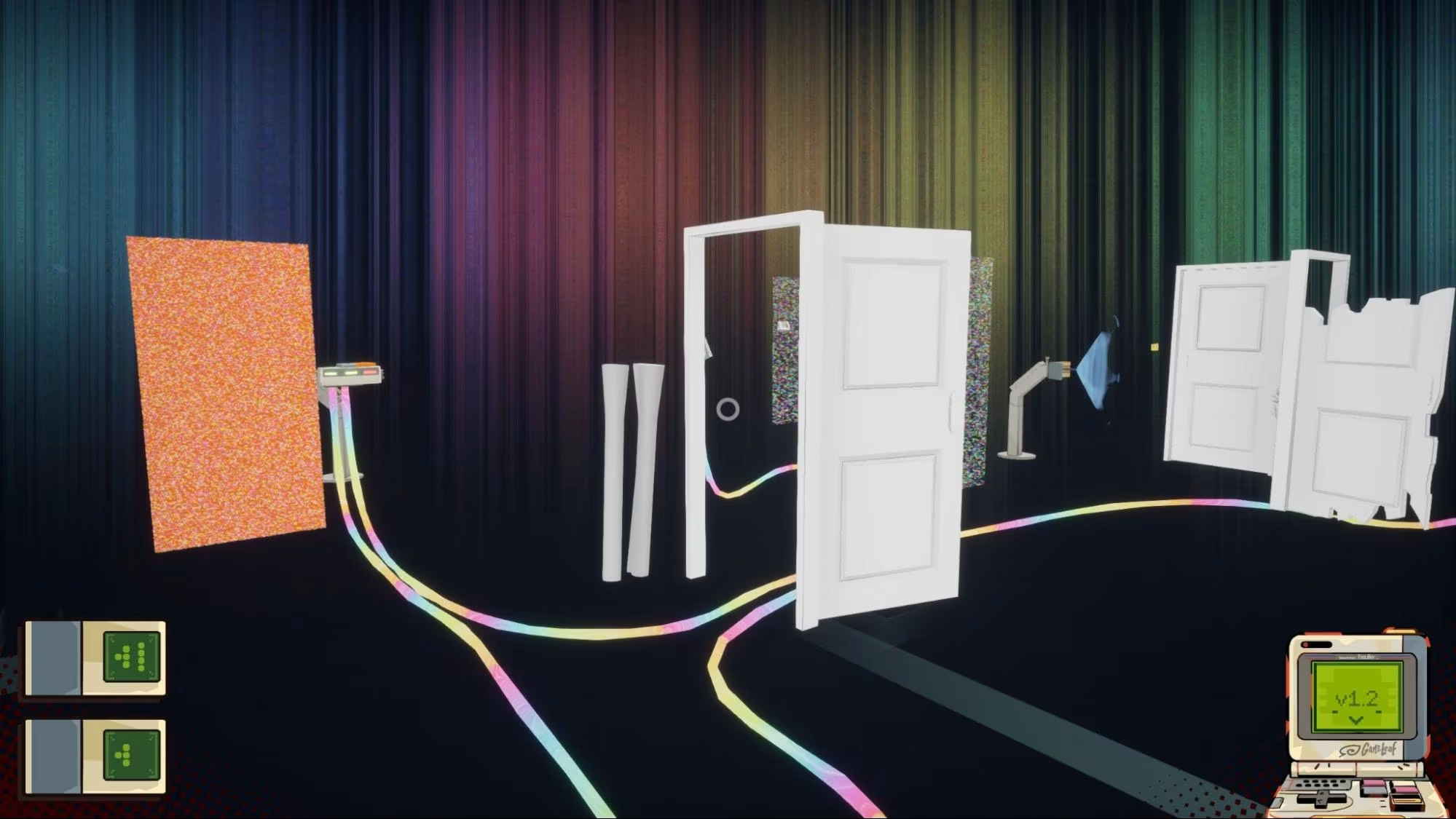
A mid-game problem, for example, requires you to make a handful of cinema screens display a cohesive floor plan. The catch is that the screens are spread across a large chunk of your apartment, and the plan you need to reference is somewhere else entirely. The task seems daunting at first, even tedious. However, once you wrap your head around what’s going on, you’ll realise the solution was in front of you all along. Experimenting with the game’s mechanics is consistently rewarding, and it feels great to finally piece them all together.
That’s what separates Looking for Fael from Blue Prince. Comparisons between the two are inevitable, but they're also misleading. Both games revolve around exploring increasingly complex spaces, yet Dogubomb's masterpiece uses its puzzles to support exploration. Looking for Fael makes puzzle-solving the entire point.
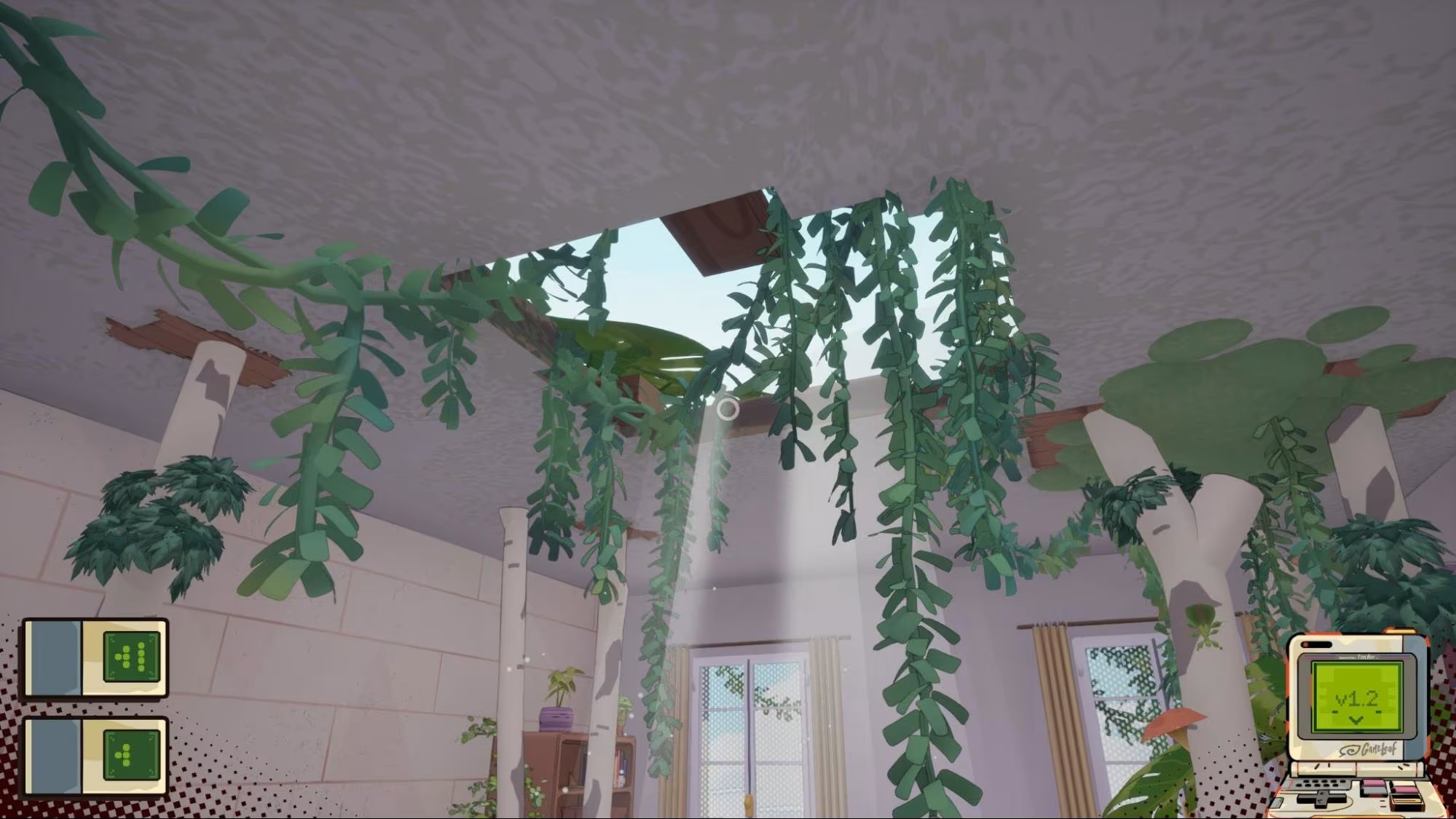
That works because the game has very little else competing for your attention. The narrative here is sparse, and even that may be overselling it. Outside of occasional audio diaries from Fael themselves, plus a cutscene at the start of the game and the ending, there’s bugger-all in the way of story here. The soundtrack is equally forgettable, and while the visuals are nice, they’re nothing to write home about. You have to want to solve Looking for Fael’s puzzles purely for the sake of the game, not because there’s a hidden hand pushing you to the next story beat.
If Looking for Fael’s puzzles weren’t exceptional, there wouldn’t be much to recommend here. Thankfully, they are. The story barely exists, and when it does, it’s little more than serviceable. The game’s presentation is pleasant more than memorable, and the soundtrack quickly fades into the background. None of that matters when your real-life desk is filled with scribbled notes, and your second screen is filled with screenshots you took of clues you found earlier. Looking for Fael understands something too many brain-teaser games have forgotten: satisfying puzzles aren’t the ones that stump you for hours, or send you to Google in search of answers. They’re the ones that make you feel brilliant when everything finally clicks.
You can subscribe to Jump Chat Roll on your favourite podcast players including:
Let us know in the comments if you enjoyed this podcast, and if there are any topics you'd like to hear us tackle in future episodes!