PC
I wasn't sure what to think when I got asked to review Hungry Horrors. Deckbuilders can get shoved my way because I went so crazy for Slay the Spire (which I will hereby call StS, and you can read my hymn of devotion opinion here).
The thing is, I tried a multitude of deckbuilders after falling in love with that game, and most have left me pretty cold. They’re either lame copies of StS, or they should have tried being lame copies because what they actually came up with was even worse. It's a game whose legacy looms over the entire genre, and no deckbuilder can escape its huge, probably very annoying shadow. I've gone from being excited to try another deckbuilder to feeling vaguely annoyed that I have to play something so obviously inferior. I make half-hearted attempts to learn its decks and synergies, then return to StS as soon as I can.
So Hungry Horrors is dealing with a jaded reviewer, which isn't fair to it at all. Let's see how it fares.
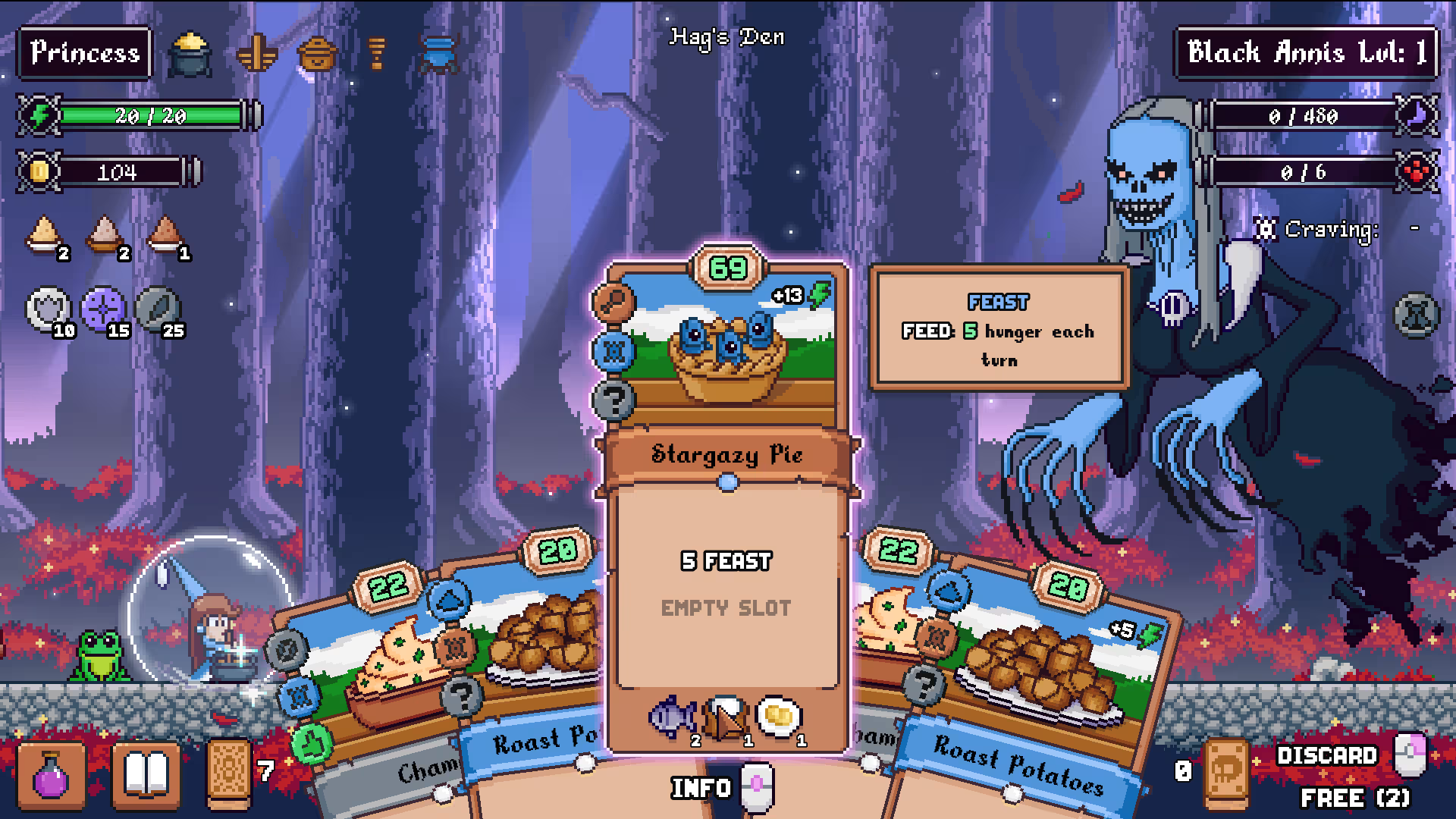
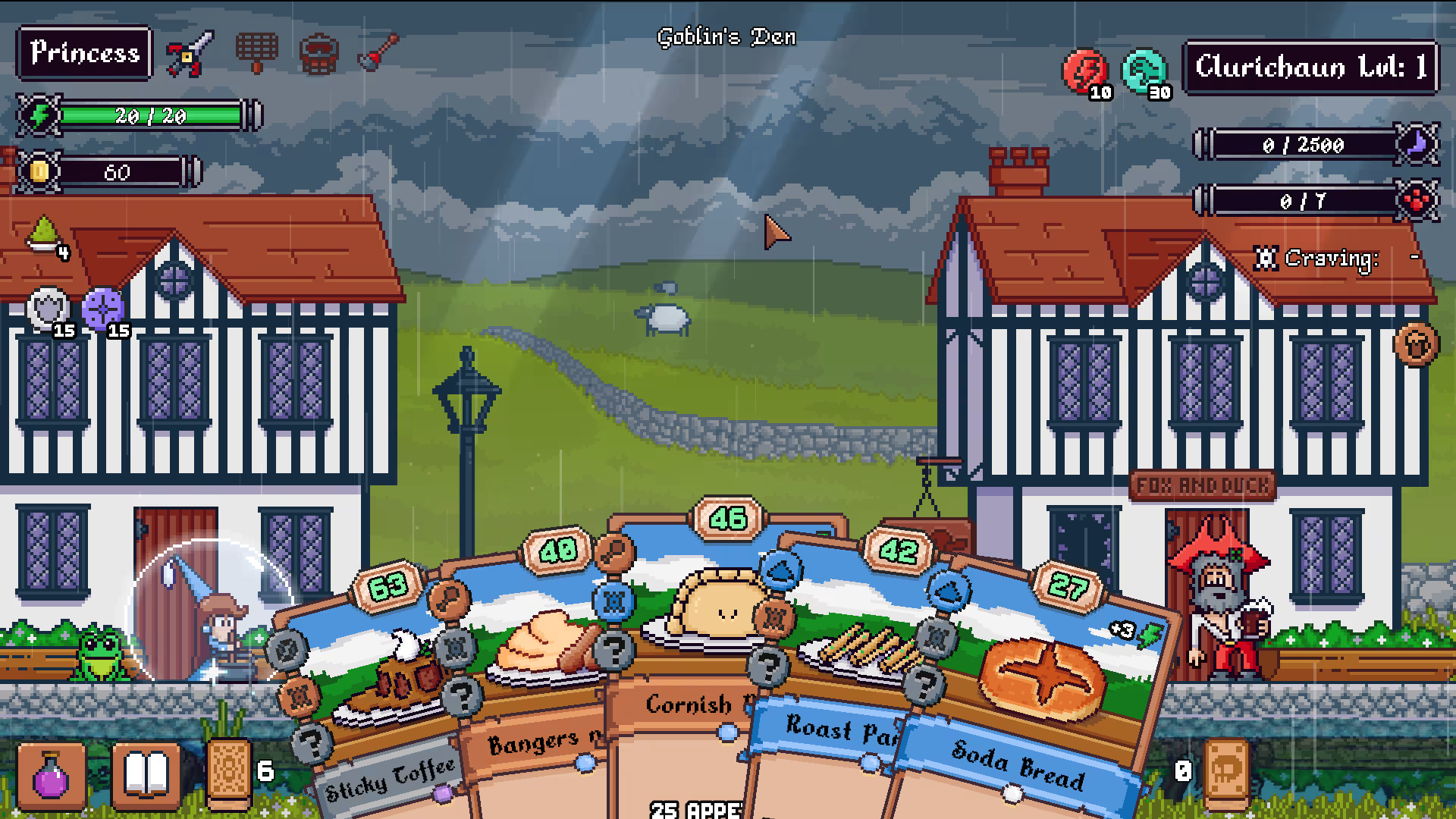
Hungry Horrors is a cutesy-looking pixelated deckbuilder, based around the rich world of mythological characters from the British Isles. The story dictates that we shouldn't kill these monsters, but feed them instead. Rather than whittling down their hit points with weapons, we fill their hunger by cooking meals from recipes and ingredients. Instead of damage, we're dealing in dishes, flavours and calorific value!
Or something.
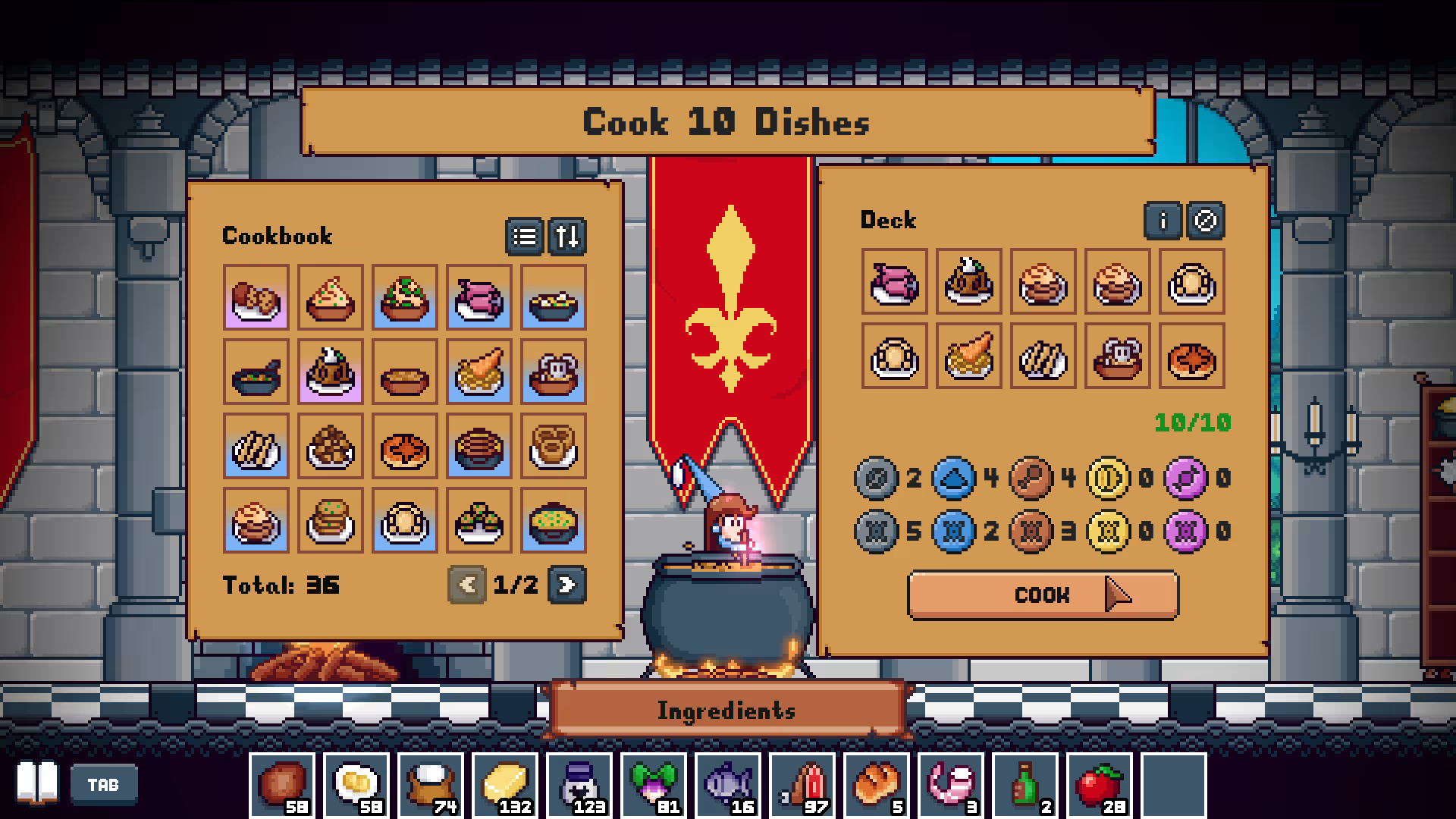
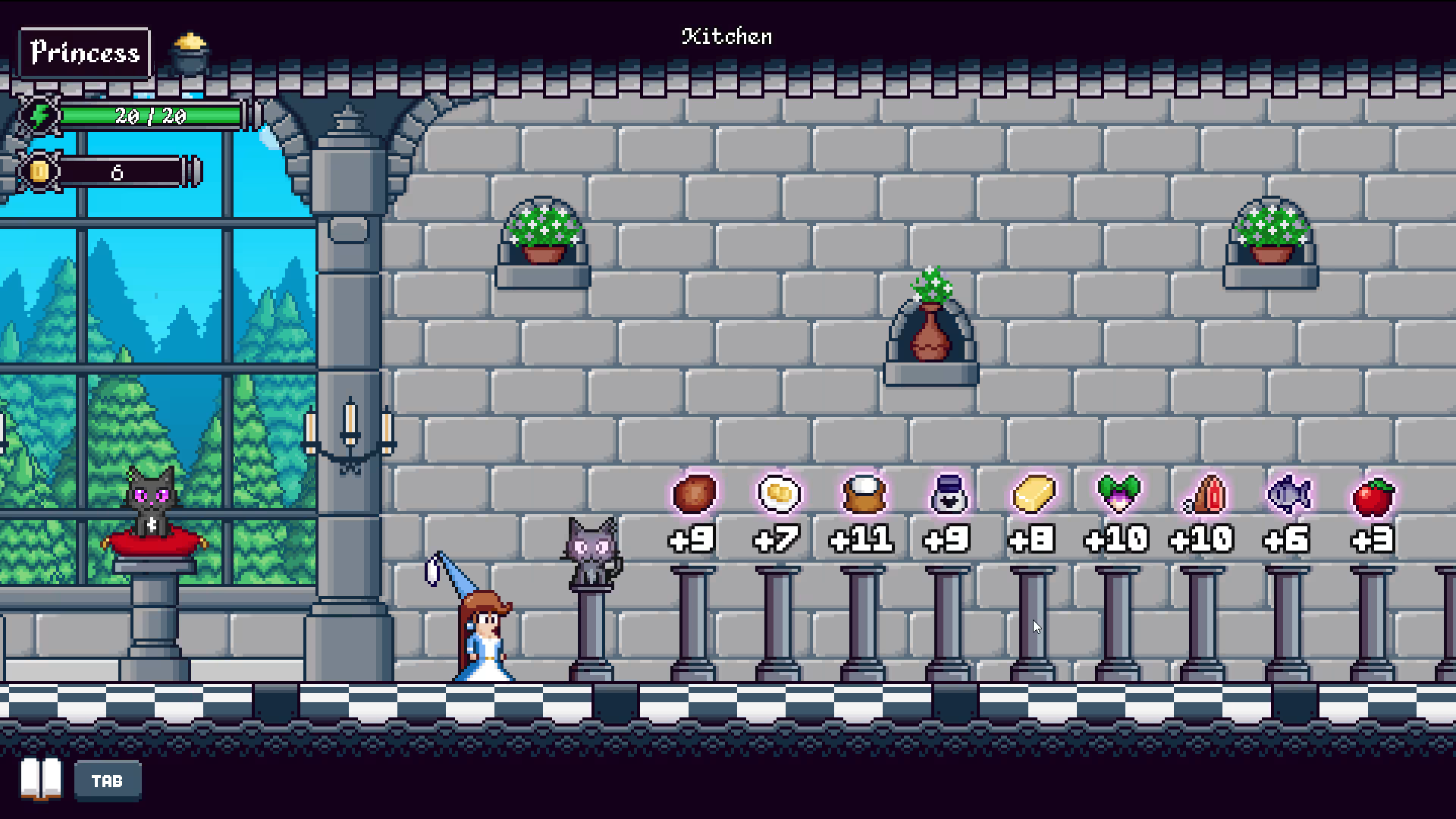
Your dishes fall into six categories: bitter, salty, savoury, sour, sweet and bland. Better still, each meal leaves its recipient craving another flavour. At the start of each run, you build a ten-card deck from your recipe book. You can only use ingredients you currently have in stock, so knowing a recipe doesn't necessarily mean you can cook it.
You need to ensure your deck is balanced and that you're not simply creating cravings you won't be able to satisfy with the next dish that you give them. This is vital because satisfying a craving adds the previous meal's score to the current one, with the resulting chain continuing to multiply. These chains quickly become essential, as later horrors need far more filling than you can provide with individual dishes.
Between meals, the horrors advance towards you, attacking, applying debuffs or buffing themselves. If they reach you, you're dead.
So much for no hit points and being all nice to them. Horrors, indeed.
Cards also have additional effects, which can activate when you use them to feed a horror or restore stamina. Every card can do either, forcing you to balance keeping yourself healthy against feeding your pursuer before it reaches you. This gives many strategic options that grow as your recipe book grows.
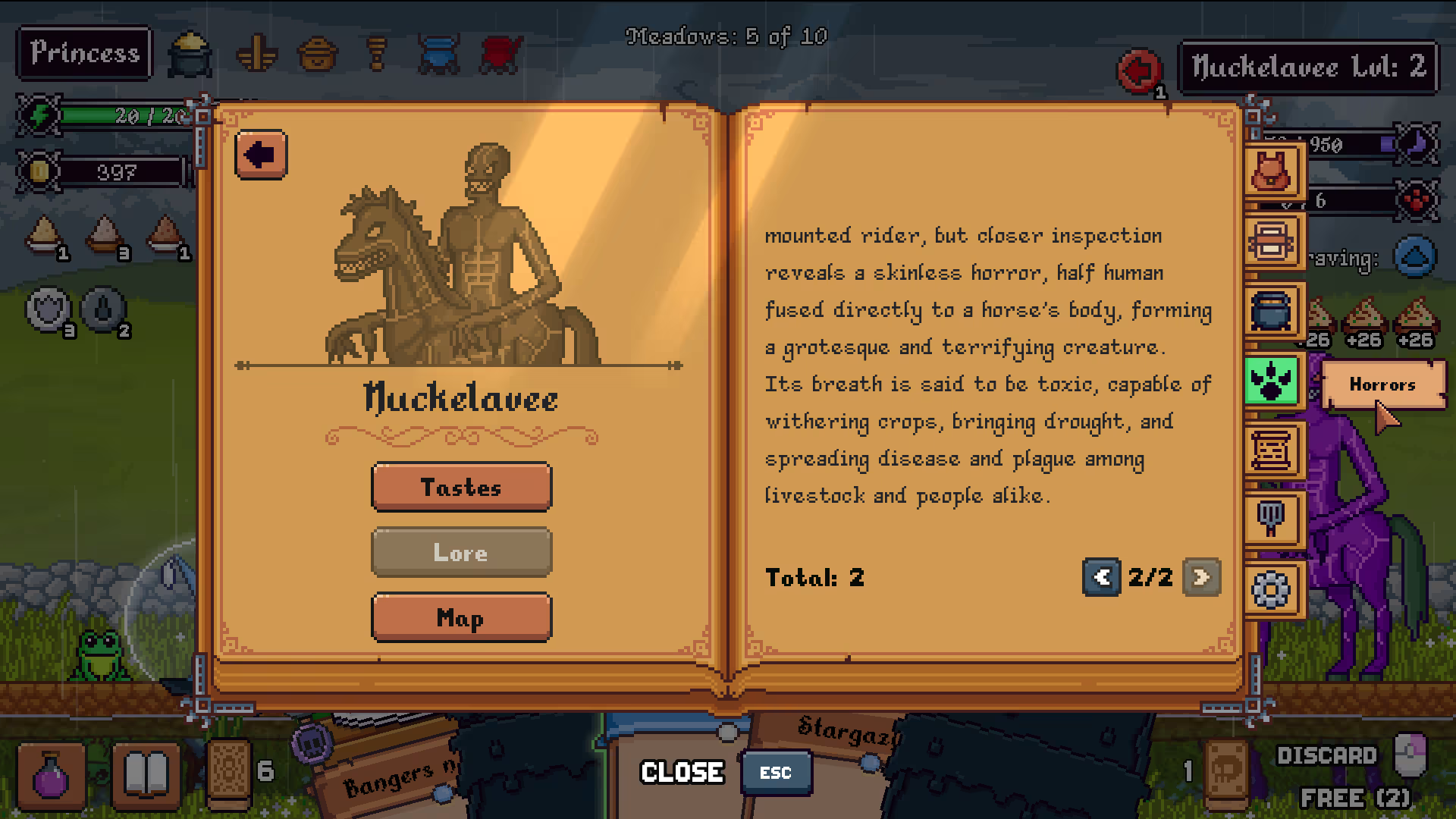
To complicate matters, and in a key and charming development, each horror you encounter has actual tastes. Every dish you give them will meet with a reaction, from loved to hated. Most dishes are liked or disliked, which affects the bonus applied to the chain in a positive or negative way. If it's loved, the bonus gets applied multiple times, which has a huge effect on your chain. If it's hated, however, your horror heaves up a huge, hairy hurl of hulking... well, I give up on that alliterative effort. Basically, it throws up, you lose your chain, and the monster gets hungrier again. It's a bit of a panic.
In fact, if it loses you a massive chain that you needed to get the huge amount of points needed to kill, I mean fill, the later bosses, then you’ll probably die. There are ways to counter it via potions, and if it happens early enough, before the chain got built, you may yet survive, but it can be impossible to win a level once falling behind, which makes the level a bit of an anti-climax. When that happens because you have no idea what a new opponent loves or hates, it can feel unfair.
The game keeps a bestiary, full of each monster's likes and dislikes, so gradually the surprises are removed, but encountering a new horror ends up an experiment whereby one misstep can spell disaster. Well, if it spells it, it's in very vomity writing. But I didn’t mind too much, because I like the idea of finding these things out, the monsters loving or hating particular dishes is a big part of the game’s charm, and it feels fun to gradually become more knowledgeable.
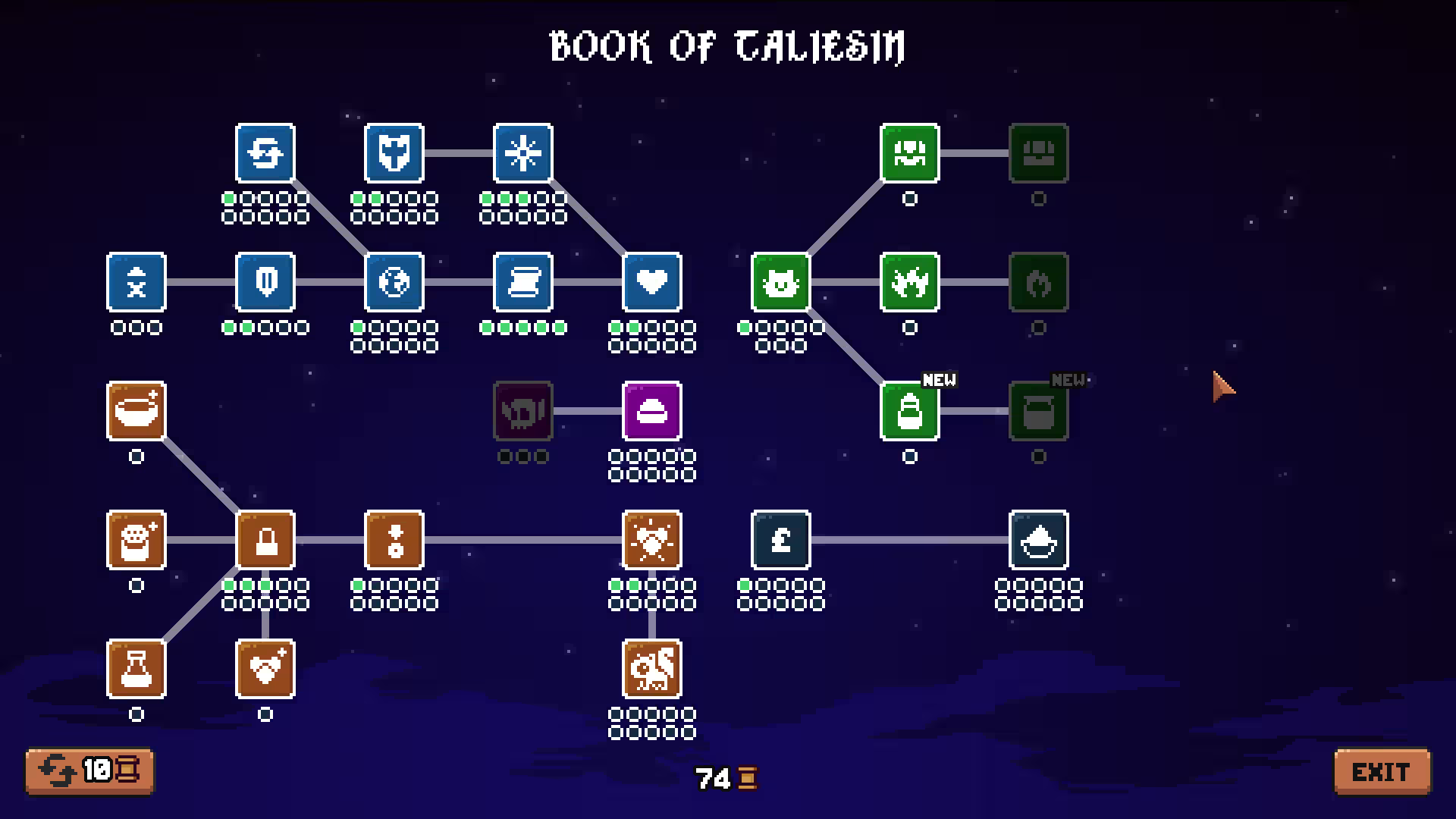
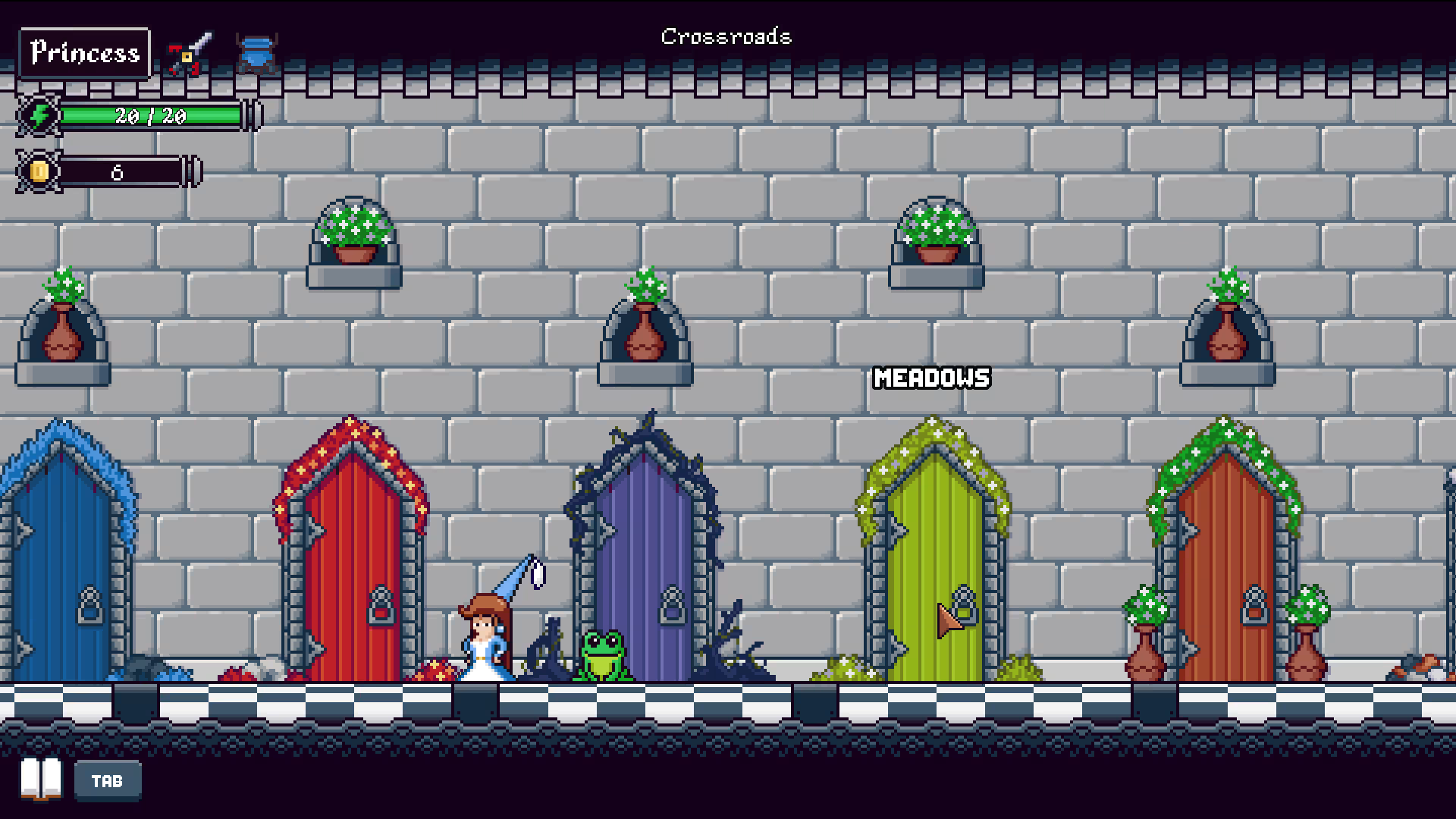
Once you've built your deck, you choose your starting cookware. These function like relics, lasting for the duration of your run and offering bonuses such as boosting certain dishes or restoring stamina when you enter a new room. Then it's time to choose an area to explore. At first, it's the caves. When you beat that, you get to try the woods, then the bog, and so on. There are a bunch of these levels, each obviously harder than the last, to cater for the fact you will have found new and more powerful recipes and buffed yourself via the roguelite methods of permanent upgrades. Every run earns you Taliesin scrolls, which you can spend on permanent upgrades to your stamina, shield, retained gold, hunger bonuses and other abilities.
Gradually then, your princess becomes stronger, your recipe collection grows, giving you more options for cards to create, and you also collect potions and seasoning that can manipulate each dish that you make. There are various other things to find and engage with, like quests and familiars, that all increase the complexity of the game in fun and manageable ways.
Drawing and discarding mid-battle is interesting. You retain unplayed cards between turns rather than discarding your entire hand, and so you have more knowledge of what your next turn will look like, allowing for combos to build, as well as taking into account the effect playing each card can have. For instance, you can have one that freezes the craving, so it won't change for the next three turns. All of this creates some genuinely head-scratching strategic decisions. Any monster can hand you your backside on a given run, sending your princess scurrying back to her cookbook to rebuild her deck, exclude hated dishes and find the right combination. When you finally smash an opponent who seemed unbeatable a few runs earlier, it feels fantastic.
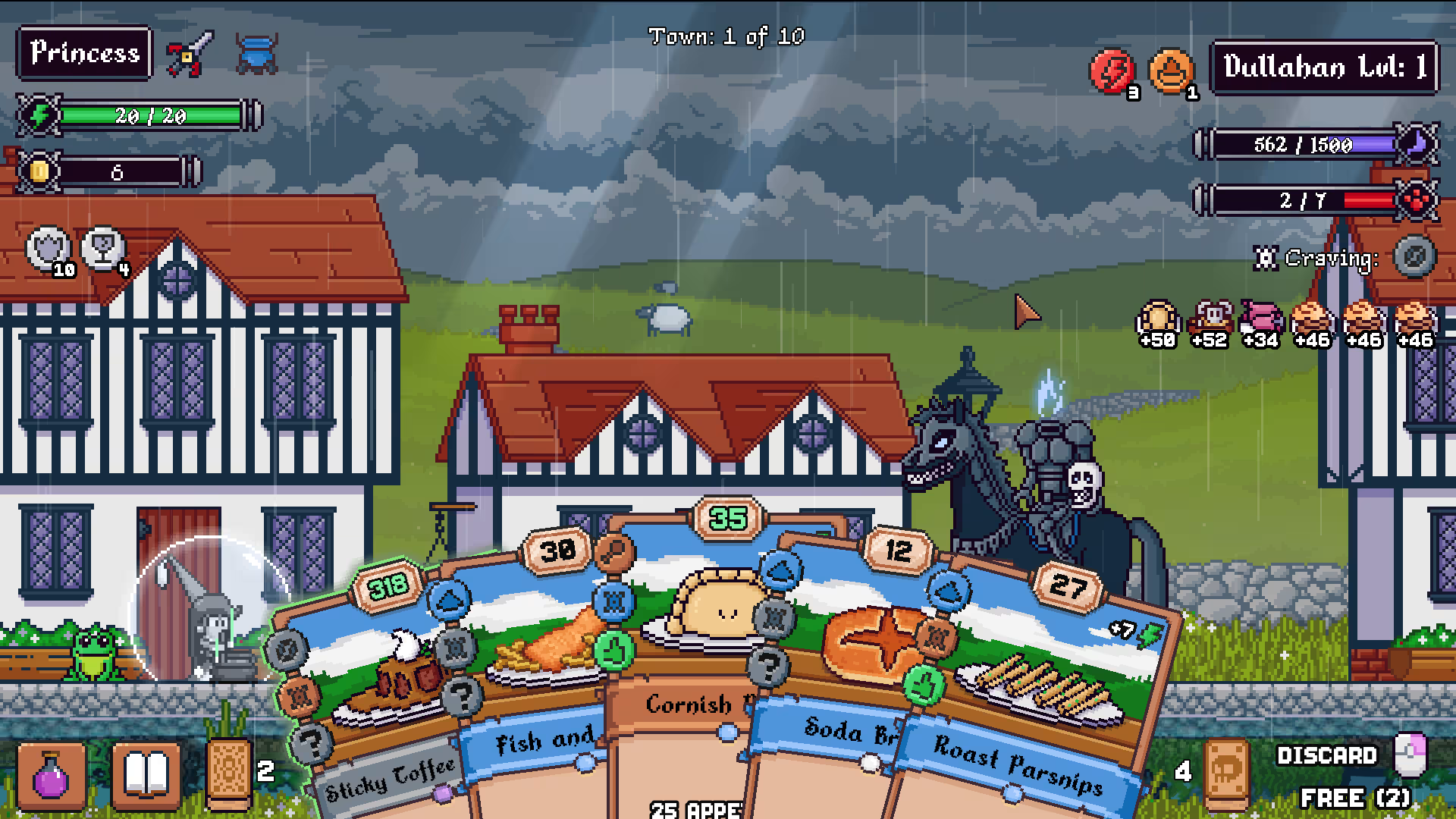
You see, when I started, the jaded feeling hit me early. It took me longer than it should have to reach certain conclusions. I tried to create a balanced deck because I hadn't realised how powerful setting the craving could be. It seemed random which craving they had next, so I just tried to make the numbers right and got rid of dishes that people hated. Then it took longer than it should have to realise that reducing the scale of the deck, by eliminating whole flavours entirely, could increase the likelihood of having the right dish to continue your flavour chain. Things suddenly clicked and I found myself romping through levels that had seemed unbeatable.
And then, like all good games, it tripped me up. I became very confident in my new tactic as it served me well, and then I came to the boss of the Town level.The Clurichaun is basically a drunken leprechaun, no doubt invented hundreds of years ago to explain to your wife that it wasn't you who drank the contents of the booze cupboard. It must have been the Clurichaun. I for one am remembering this little fella. Anyway, he came wobbling out of the pub to greet me, pint in hand, and revealed his unique trait, which completely busted my tactic. No surprise, then, that he smashed me up completely.
I went back to the drawing board, well, the cooking pot, where I mulled it over and found a new tactic, suggested by the side effects of cards, that allowed me to control his quirk. I recovered, went back through town equipped with a brand new and totally different deck, and the plan worked perfectly. This kind of deck creation and manipulation is really fun. It does play into the fact that your deck is far more manipulable than in other deck builders, as well as the fact you can create it from scratch, which seems to be a positive and a negative, as I’ll come on to shortly.
After a couple of hours feeling fairly ambivalent, I suddenly found myself enjoying the game more and more. Then it did that StS thing of keeping me up long past bedtime because I wanted "one more go". It takes a couple of hours to get to grips with the systems, but new unlocks steadily improve your chances and open up further areas to explore. I'm sure you know how these game loops work.
There’s a gentle humour running through the story, with the characters constantly trading barbs. Your princess heroine doesn't want the job; she'd rather be rescued by a prince, but she's stuck with a sarcastic cat and Merlin, whom she insults constantly. The story is fun, and it adds to the game's charm.
I don't usually go for the pixel-art style so common in indie games, but it grew on me. The monsters are particularly inventive, and clearly a lot of thought has gone into their designs. The Nuckelavee, for example, is said to spoil crops with its foul breath, so here it can spoil random dishes in your deck. Discovering how the developers have woven these myths into the mechanics is genuinely delightful. There's so much love in these horrors that they're worth meeting for themselves. It helps that the game is enormously fun, too.
I'm quite far into the game now, though I haven't quite finished it at the time of writing. I wondered whether the pace of discovery would eventually slow enough to kill the fun. Deckbuilders often keep runs fresh by randomising the cards you find, so you can't always get what you want (thanks, Mick). Hungry Horrors takes a different approach: you can build the deck you want, but you still have to work out how to use it to crack each level. My concern was that each level would become a puzzle to solve once and then forget, leaving little reason to return.
The developers are cleverer than me, though. They've already added different modes to keep things fresh once you're familiar with the game. Culinary mode, for example, introduces significant variations: dishes are destroyed when eaten, while defeated monsters drop ingredients, forcing you to keep cooking between fights. It's a fun, creative idea that addresses my concern, and further evidence that the developers are thinking about how to keep the game engaging even after you've completed the standard mode.
Hungry Horrors is well worth a look for anyone who still enjoys deckbuilders, and I know there are a lot of us out there. The developers' love for the game and the genre shines through at every turn. You can read about the real origins of each dish and monster in-game, which I found genuinely fascinating. I encountered no technical problems, and it's remarkable that a team of just two people has managed to create something this accomplished.
Where else would you find out whether a Nuckelavee really loves or hates a Cornish pasty? An important question, strangely neglected by the world’s top scientists, until now. Give this one a go and find out.
You can subscribe to Jump Chat Roll on your favourite podcast players including:
Let us know in the comments if you enjoyed this podcast, and if there are any topics you'd like to hear us tackle in future episodes!