PS5
PC
Switch 2
There is something slightly terrifying about a game advertising more than 1,000 puzzles.
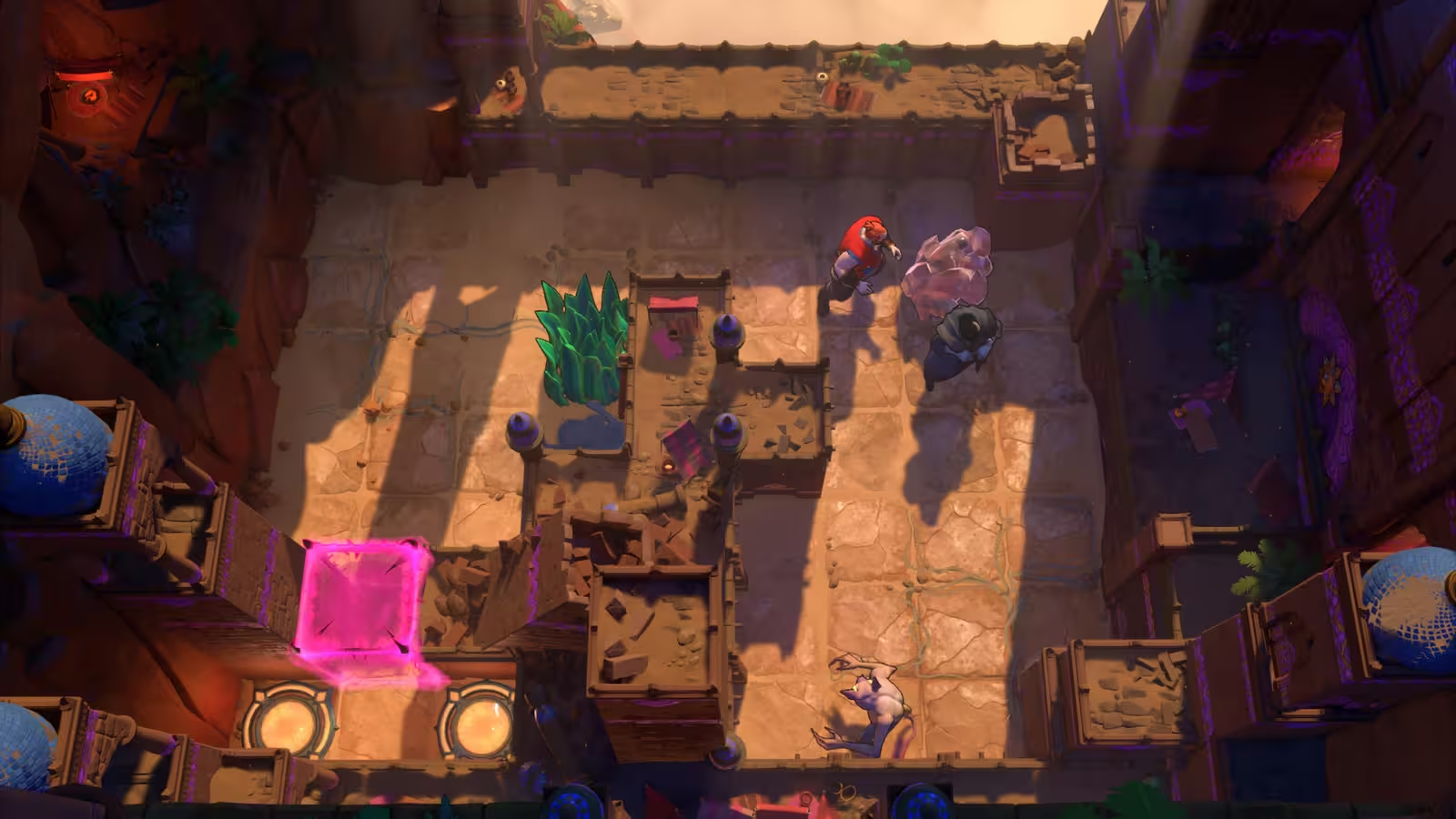
Most games would be shouting about that as a selling point. To me, Order of the Sinking Star makes it sound like a warning. Over the course of its development, Jonathan Blow and his team at Thekla have assembled an enormous puzzle adventure built around four distinct worlds, multiple playable characters and a collection of mechanics that gradually begin to overlap. It is the sort of project that makes you wonder whether the developers have any idea how many hours there are in a human lifespan.
The answer, apparently, is quite a lot.
Blow's first game since The Witness is spectacularly ambitious, and there is a lot to admire here. The individual puzzle design is often superb, the presentation is considerably more lavish than you might expect from a game whose principal activity is pushing things around a grid, and the way its disparate systems eventually begin interacting can produce some genuinely brilliant moments.
But there is a problem with having more than 1,000 puzzles. Eventually, you have to solve them.
Order of the Sinking Star begins with an assortment of deceptively simple ideas. You move characters around a grid, push objects, manipulate switches and attempt to reach predetermined goals. Anyone who has played a Sokoban-style puzzle game will recognise the basic vocabulary immediately. The brilliance — and frustration — comes from what happens when the game starts adding words to that vocabulary.
There are multiple characters, each with their own abilities and peculiarities. A warrior can manipulate objects in ways that other characters cannot. A thief can pull objects behind them, fundamentally changing how you approach the space around them. The wizard introduces teleportation and positional manipulation, allowing objects and characters to swap places. There are enemies, hazards, mirrors, beams of light and all manner of other systems that gradually expand what initially looks like a relatively straightforward collection of block-pushing puzzles.
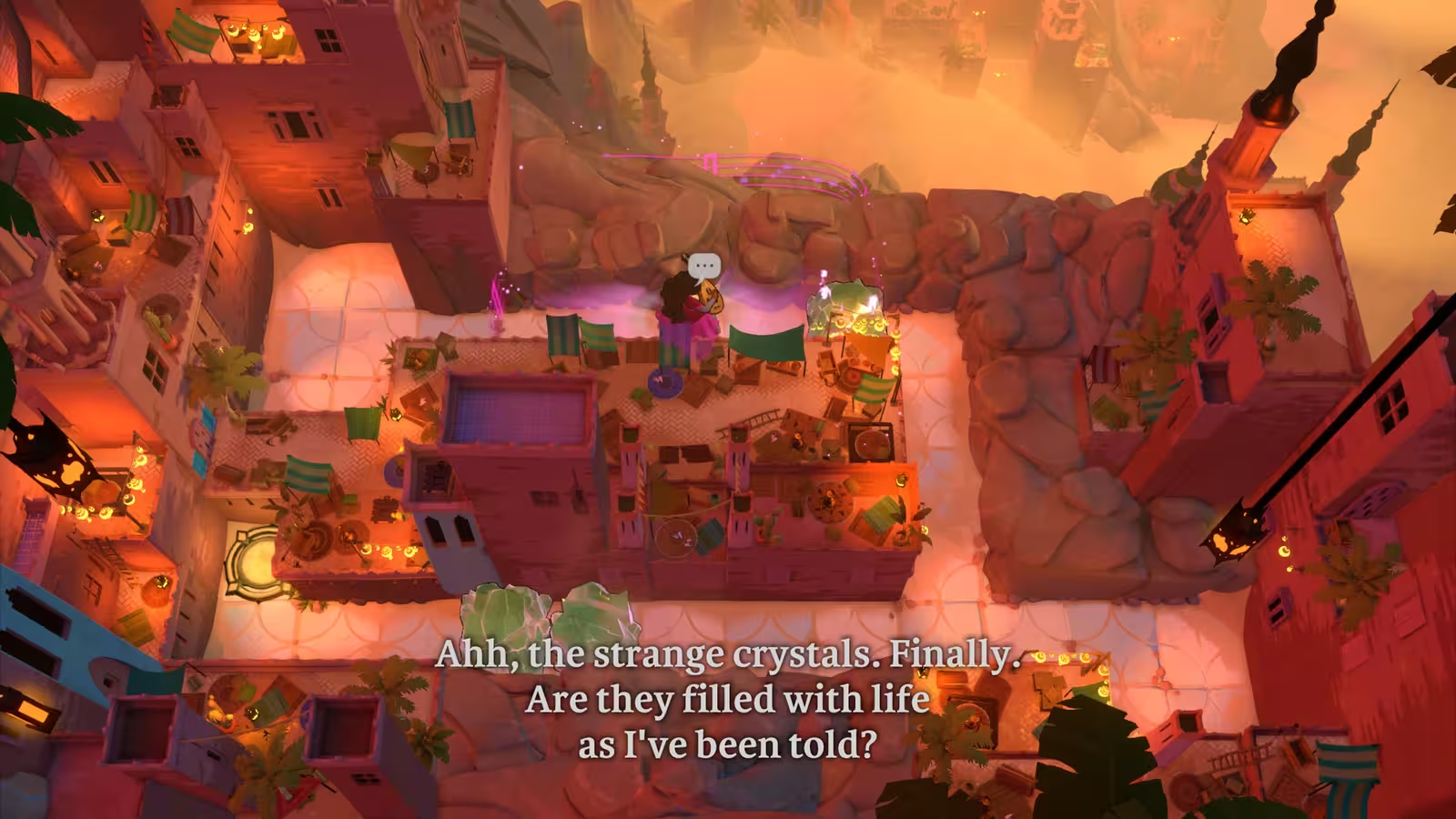
The important thing is that these mechanics aren't simply thrown at you. Order of the Sinking Star is exceptionally good at teaching you how its rules work. A new mechanic will be introduced in isolation, allowing you to understand its basic behaviour before the game starts asking you to apply that knowledge in increasingly elaborate ways. A solution that seemed obvious a few puzzles earlier suddenly becomes considerably more complicated when another character or environmental element enters the equation.
That's where the Jonathan Blow DNA becomes unmistakable. The best puzzle games make you feel as though you've discovered something rather than been taught something and Order of the Sinking Star nails this. When you finally see the solution to a particularly nasty puzzle, there's a little moment where everything snaps into focus. The board hasn't changed. The rules haven't changed. You have changed. And that is an exceptionally satisfying feeling.
The game's greatest achievement is the way its separate puzzle languages eventually begin talking to one another. Each of the four worlds establishes its own rules and mechanics before the boundaries between them gradually become less rigid. What initially feels like four separate puzzle games begins to resemble one enormous machine, with components taken from one system suddenly having implications elsewhere.
This is where the game's scale starts to make sense. On paper, four different puzzle systems and more than a thousand individual challenges sounds like content bloat of almost comical proportions. In practice, the sheer number allows Thekla to explore ideas that most puzzle games would introduce and discard after half a dozen levels. A mechanic can be taught, tested, complicated, combined and then eventually turned inside out.
There are moments where the game pulls off a particularly nasty trick and you're left staring at the screen wondering how you failed to see what was right in front of you.
Those moments are brilliant. There just aren't quite enough of them.
The problem is the space between them. Order of the Sinking Star is enormous, and that enormity can become its greatest weakness. A puzzle that takes five minutes to solve can be immensely satisfying. A hundred variations on a similar idea feels like homework.
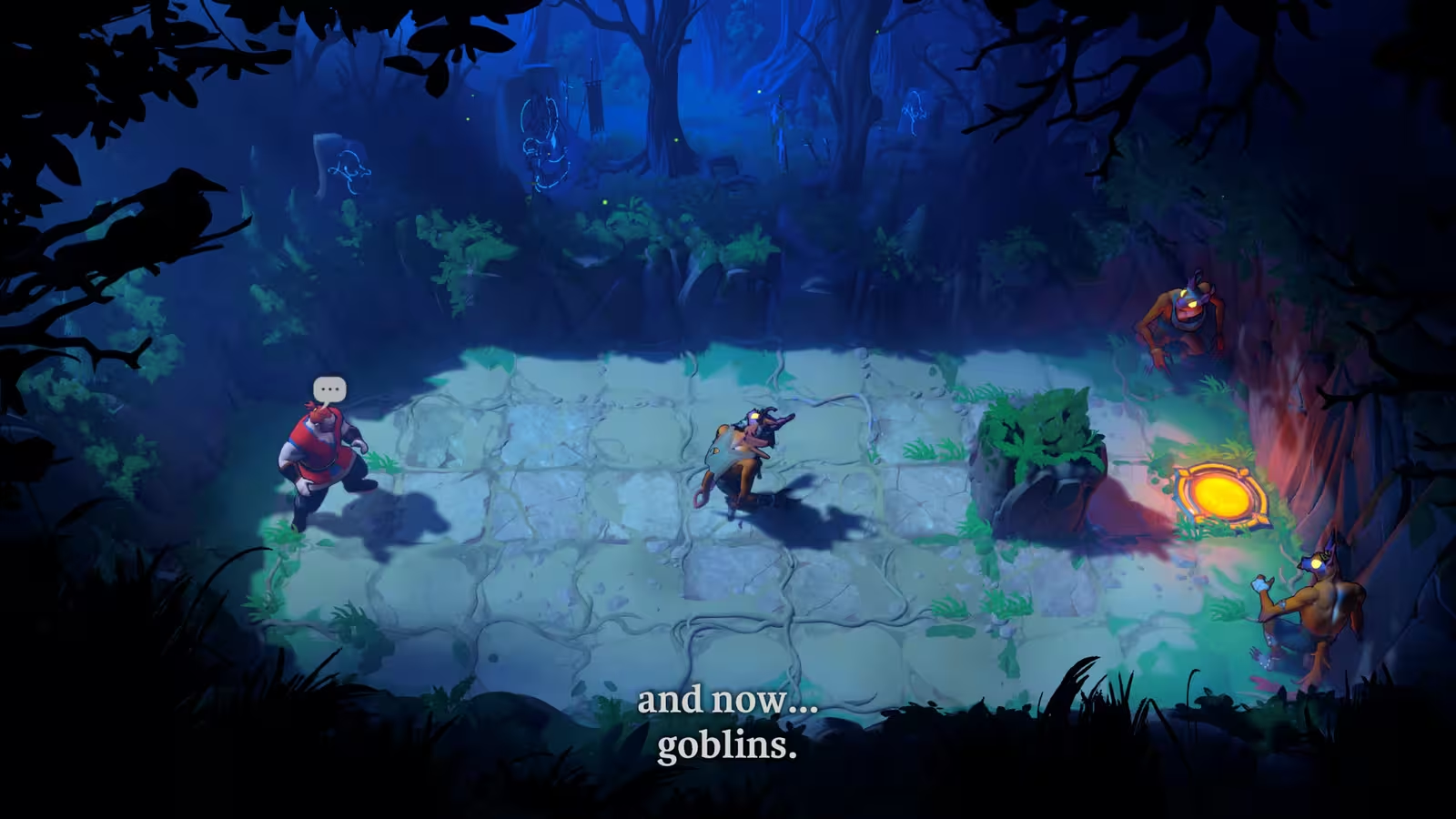
That isn't an accusation I make lightly. I like puzzle games. I enjoy being presented with a mechanic and asked to wring every possible implication from it. But there is a point where mastery starts becoming repetition, and Order of the Sinking Star occasionally crosses that line.
The game can be so thorough in exploring its mechanics that it sometimes forgets that the player has already understood them. You'll solve a puzzle, feel that satisfying click, and then be presented with another puzzle asking you to demonstrate that you've understood the click you just had. Then another. Then another. Individually, these puzzles can be beautifully designed. Collectively, they can make progress feel slower than it should.
It's the difference between discovering a language and completing a textbook. The former is exhilarating. The latter can be exhausting.
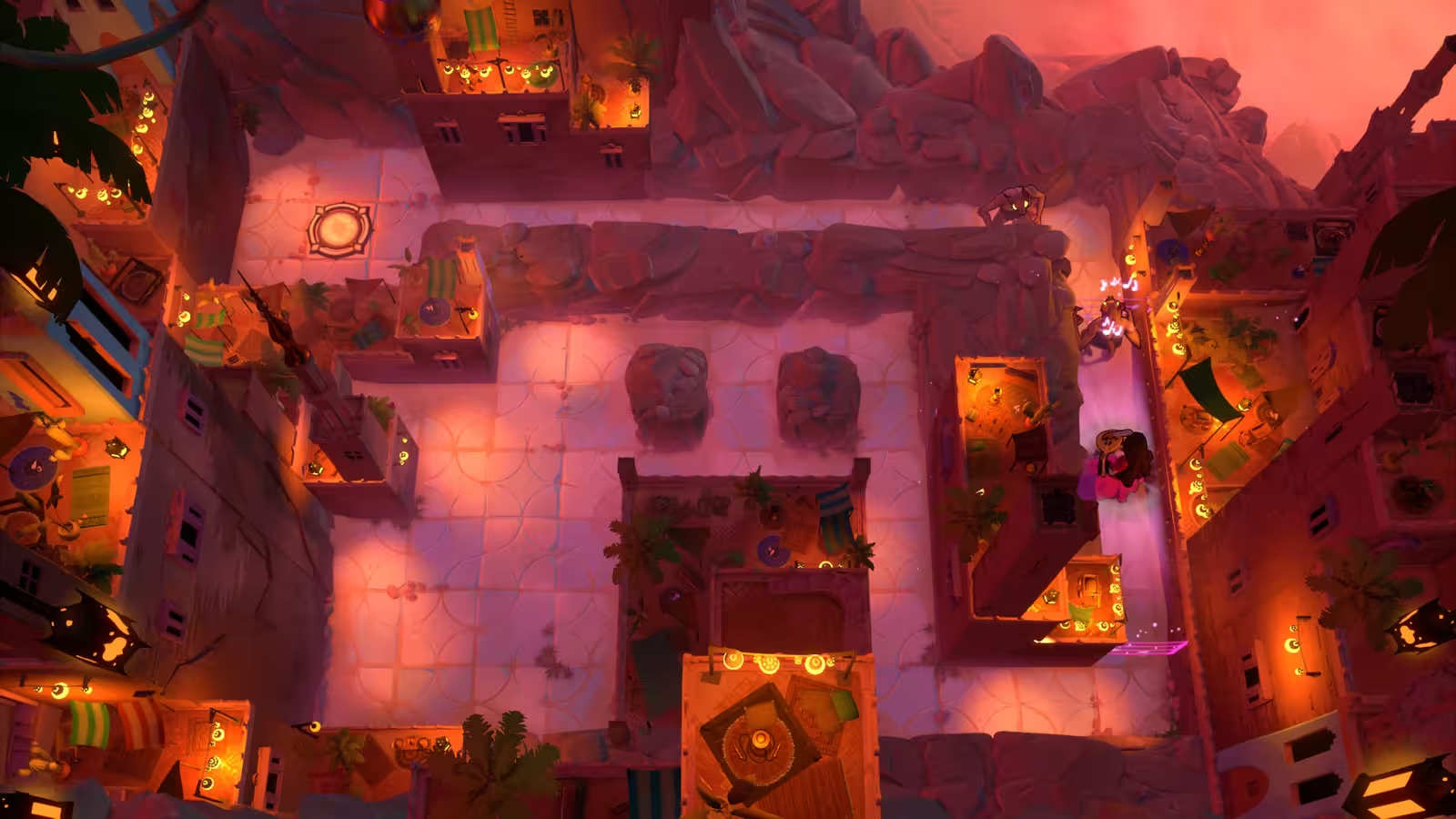
The overworld helps considerably. Rather than presenting the entire experience as a succession of isolated puzzle rooms, Order of the Sinking Star gives you a world to explore, with puzzles embedded within its environments. There's something pleasing about moving through this strange, colourful realm and discovering another challenge tucked away in a corner.
The presentation is surprisingly beautiful, too. This is a game about grids, blocks and logical systems, yet it looks considerably more expensive than that description suggests. The environments are colourful and distinctive, the character designs are charming, and there is a real sense of place to the different worlds. The contrast between the abstract nature of the puzzles and the more whimsical fantasy setting works remarkably well. It also gives the game something that The Witness deliberately avoided: characters.
Unfortunately, this is where the game is less successful. There is a story here. There are heroes, a strange world, supernatural forces and a narrative that attempts to give context to the enormous puzzle adventure surrounding it. The various characters provide a degree of personality, and there are moments where the strange fantasy setting becomes genuinely intriguing.
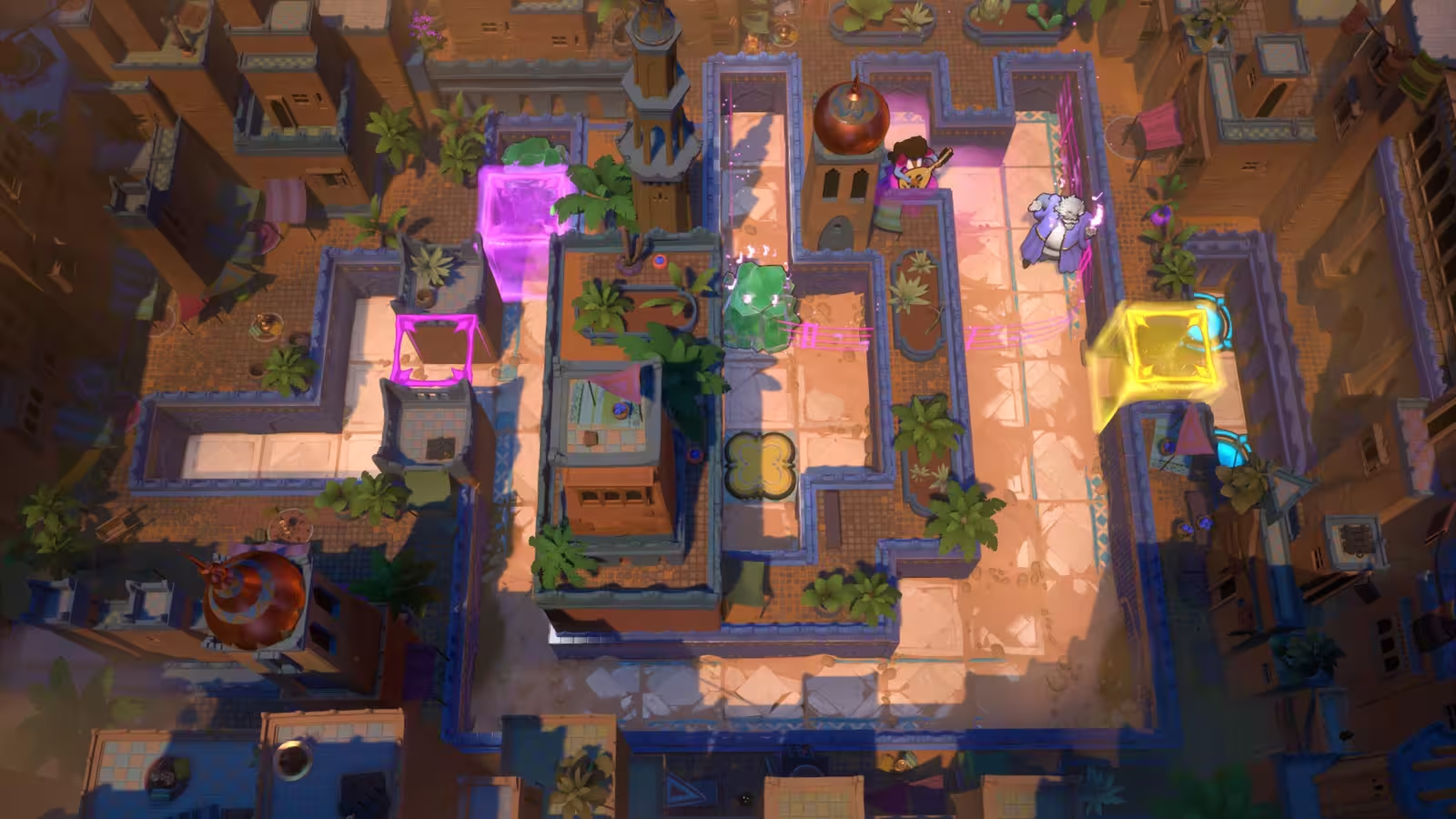
But I rarely found myself caring about the story as much as I cared about the puzzles. The dialogue can feel oddly detached from the activity you're actually performing. You're supposedly on a grand adventure through a mysterious world, yet much of your time is spent moving blocks around a tiny grid while characters occasionally explain what is happening. The two sides of the game don't always feel as though they're pulling in the same direction.
That's a shame because the scale of the world suggests something more substantial. There are flashes of something interesting beneath the surface, but Order of the Sinking Star is ultimately much more successful as a puzzle construction kit than as a narrative adventure. When the story and mechanics align, the result is compelling. When they don't, the dialogue becomes something to click through before getting back to the thing you actually came here to do.
Fortunately, getting back to the puzzles is rarely a hardship. The controls are responsive, and the ability to undo moves is essential. You're going to make mistakes. Lots of them. Some puzzles can be ruined by a single misplaced object, and being able to rewind your actions keeps experimentation from becoming punishment.
That experimentation is important because the game expects you to fail. There is no shame in trying something, discovering that it doesn't work and rewinding to the previous step. In fact, some of the best solutions emerge from deliberately breaking the puzzle and seeing what happens. The game encourages that kind of curiosity, even if its enormous quantity of challenges means the cumulative effect can become draining.
And there is the elephant in the room.
One thousand puzzles.
Maybe more.
The number is impressive, but it shouldn't automatically be considered a virtue. Quantity is only valuable when the material being counted is worth experiencing. Fortunately, a good proportion of Order of the Sinking Star is genuinely excellent, and the game contains enough clever ideas to justify its extraordinary ambition.
But I couldn't escape the feeling that I'd occasionally rather have been given fewer puzzles and more time to appreciate the really exceptional ones.
The best puzzle games leave you staring at a solution for several minutes after the penny drops. Order of the Sinking Star sometimes gives you that feeling and then immediately asks you to do it again. And again. And again.
There is a strange irony in that. A game this interested in the intellectual joy of discovery can become less exciting precisely because it has so much discovery to offer.
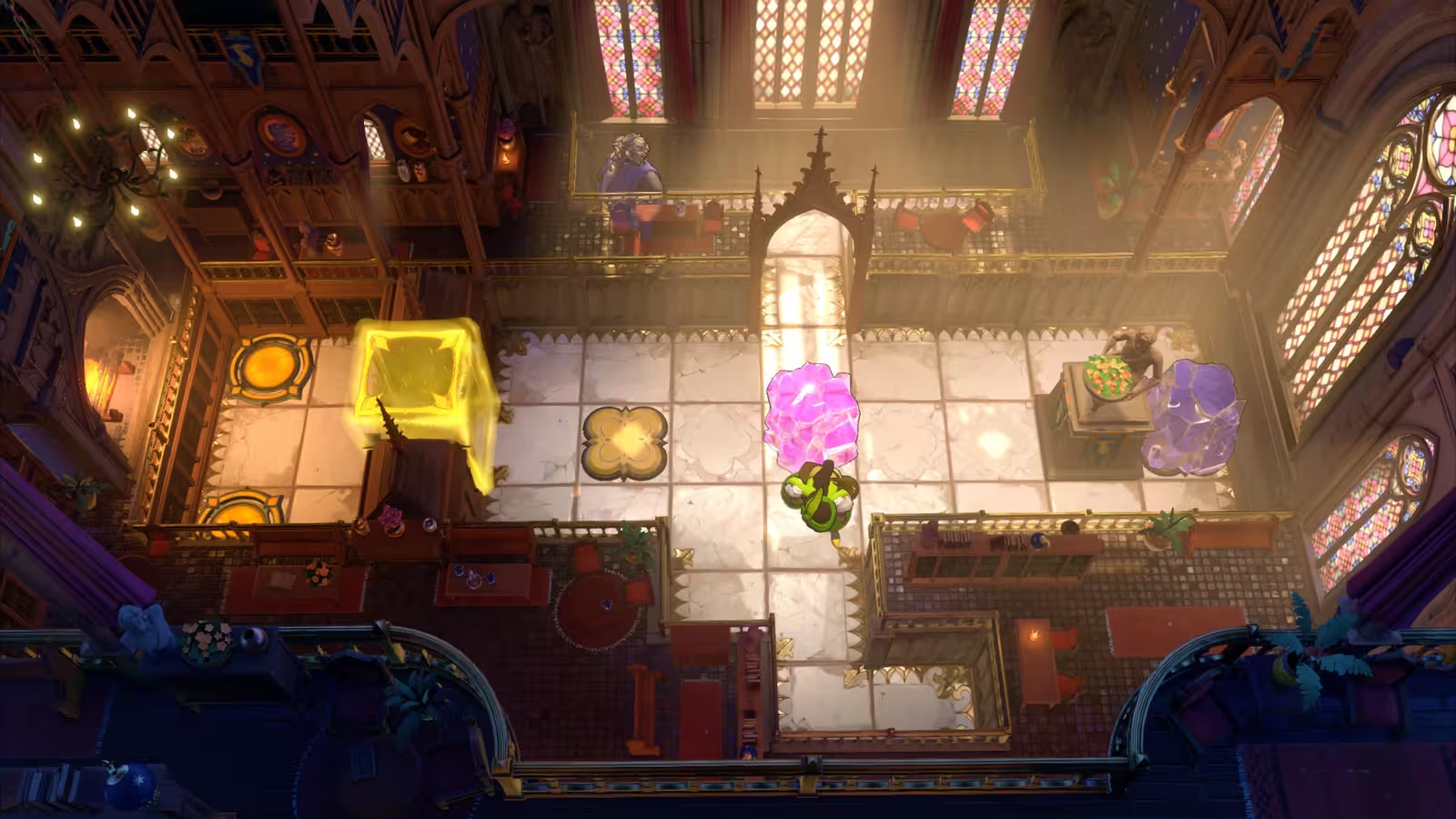
Still, when it works, it really works.
There are puzzles here that made me put the controller down, stare at the screen and mentally reconstruct the entire board. There are combinations of mechanics that initially seem impossible until you realise that one character's ability completely changes how another system behaves. There are moments where something introduced hours earlier suddenly becomes relevant again, and you realise that the game has been teaching you a language without you consciously noticing.
Those are the moments that justify the whole enormous undertaking. Almost. Almost.
Order of the Sinking Star is an extraordinary piece of puzzle design wrapped inside a game that occasionally struggles under the weight of its own ambition. Its mechanics are inventive, its presentation is gorgeous, and its interconnected systems can produce some of the most satisfying brainteasers you’ll play this year. But the sheer volume of content dilutes some of that brilliance, while the story rarely manages to make the adventure feel as compelling as the puzzles themselves.
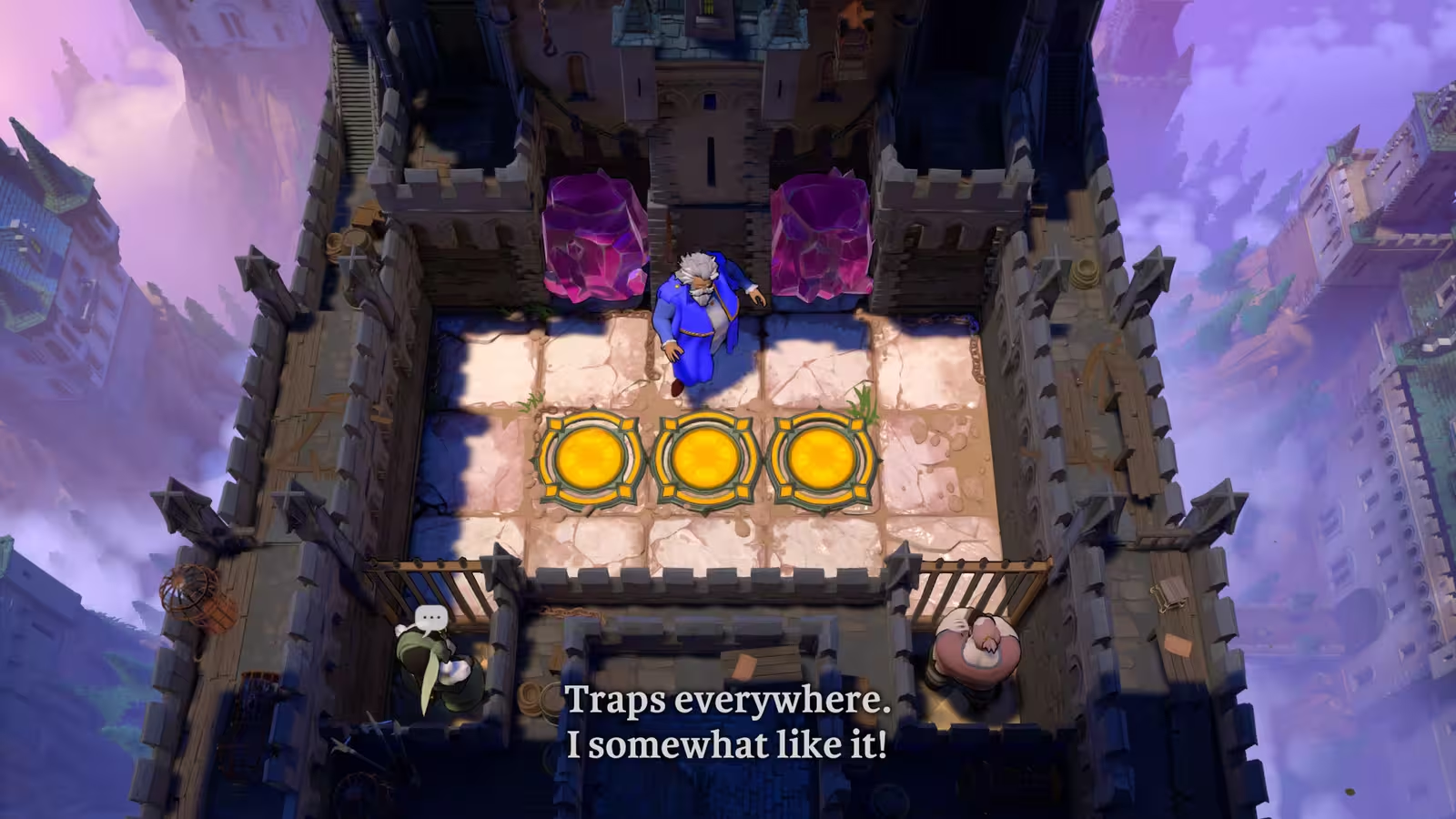
This is a game for people who want to get their teeth into something enormous. Really enormous. You could spend dozens upon dozens of hours here and still have puzzles waiting for you. Some players will look at that prospect and start rubbing their hands together. Others will immediately experience the sensation of being handed a university dissertation with a controller attached.
I'm somewhere in between.
I admire Order of the Sinking Star enormously. I admire the craftsmanship, the ambition and the sheer bloody-mindedness of making this many handcrafted puzzles and then finding ways to make their mechanics intersect. But admiration and enjoyment aren't always the same thing. I can honestly say I don’t know if I was truly having fun ploughing the hours I did into the game, or whether I was just impressed. I was completing levels, sure. And the variation between the types of puzzle mixed things up in the way that The Witness didn’t.
But did I enjoy myself? I’m still struggling to answer that question.
You can subscribe to Jump Chat Roll on your favourite podcast players including:
Let us know in the comments if you enjoyed this podcast, and if there are any topics you'd like to hear us tackle in future episodes!