PS5
PS4
Mobile
Nikola Tesla was a man whose ideas were often decades ahead of their time. A pioneer of alternating current and wireless electricity, he spent much of his life trying to persuade the world that his extraordinary inventions were worth pursuing. It seems fitting, then, that a game about exploring his abandoned laboratory should be full of complicated machinery, baffling contraptions and the occasional moment where you wonder whether the person who designed them was having a laugh.
The House of Tesla: Definitive Edition takes us to Wardenclyffe Tower, Tesla’s experimental facility in New York, where a series of mechanical puzzles stand between you and the secrets of the inventor’s grand ambitions. Developed by Blue Brain Games, the studio behind The House of Da Vinci trilogy, it follows a familiar formula: explore beautifully realised environments, inspect suspicious-looking objects and fiddle with increasingly elaborate mechanisms until something clicks.

When it works, there’s plenty to enjoy. Unfortunately, a promising start gives way to a frustrating fourth chapter before the game eventually rediscovers its spark.
The early chapters make a promising impression. There’s an immediate appeal to exploring Tesla’s workshop, with its industrial machinery, intricate devices and mysterious equipment scattered throughout the environment. The setting lends itself naturally to this sort of puzzle adventure, and the developers clearly enjoy giving ordinary objects an extraordinary amount of moving parts.
You’ll examine contraptions, manipulate components and work out how seemingly unrelated pieces fit together. Some puzzles are pleasingly intuitive, rewarding careful observation and a willingness to experiment. Others require a little more lateral thinking, and there’s a satisfying moment when a solution finally reveals itself after several minutes of fiddling.
That feeling is the reason games like this work. You’re given a problem, a collection of clues and a set of objects that appear to have been assembled by someone who really, really likes gears. The solution is yours to discover, and the best puzzles make you feel clever for finding it.
There are some genuinely enjoyable examples here, particularly in the opening chapters, where the game introduces its ideas at a reasonable pace. It gives you time to understand the rules before asking you to apply them in more complicated situations. The puzzles feel approachable without being entirely toothless, and I was happy to spend time examining a mechanism to work out how it functioned.
The sound design also deserves credit. Mechanical clicks, clunks and other satisfying little noises give the devices a tangible quality. When a component slides into place or a mechanism finally activates, the audio helps sell the sensation of having physically manipulated something. It’s a small detail, but an important one in a game that relies so heavily on the pleasure of interacting with elaborate machinery.
Sadly, the interface doesn't always share that enthusiasm.
Puzzle games of this sort depend on precise interactions. You need to be able to inspect objects, manipulate their components and move between different views without feeling as though you're fighting the controls. The House of Tesla regularly makes that more awkward than it should be.
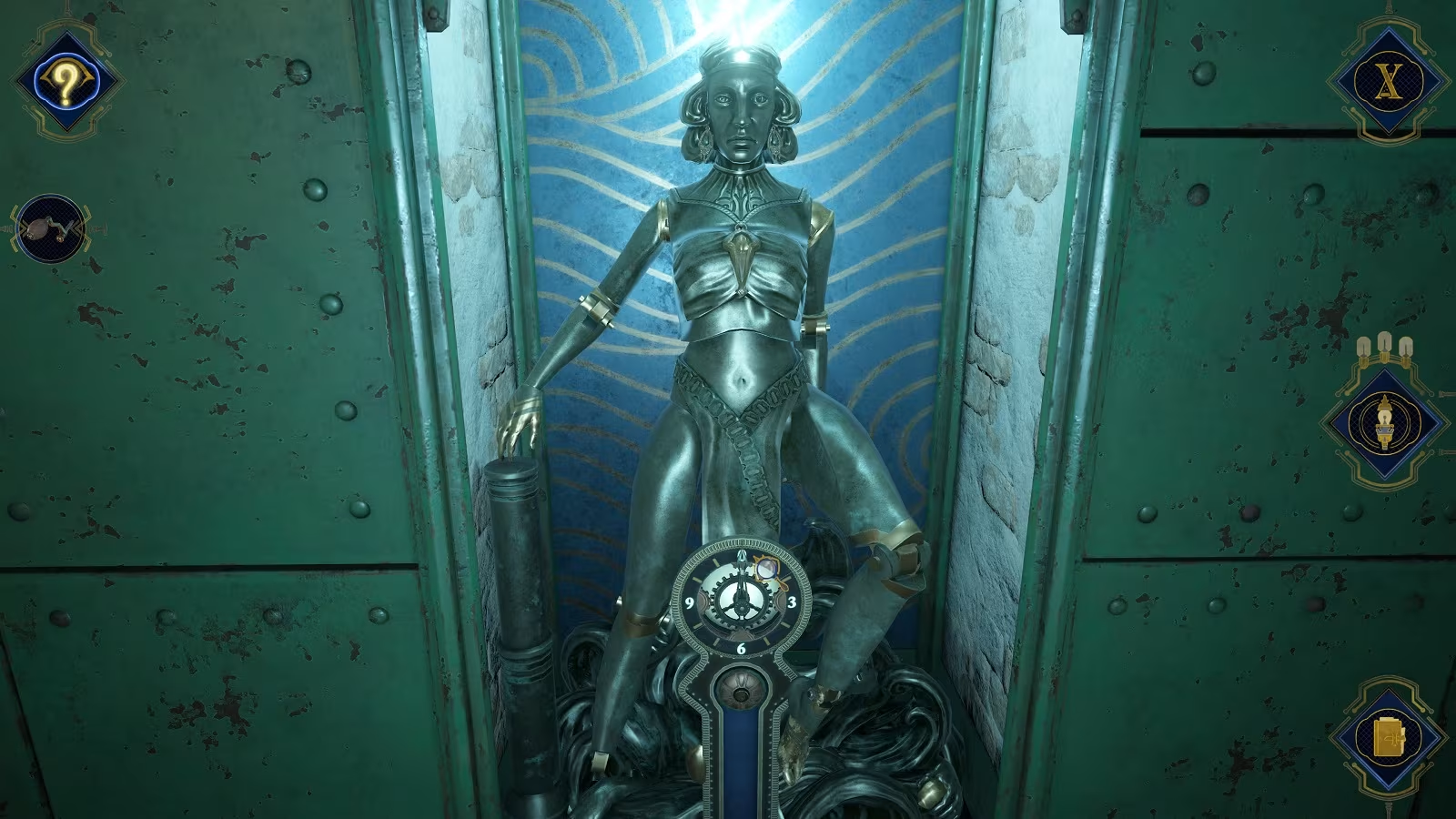
Moving around the environment and interacting with objects can feel clunky, while the transitions into and out of close-up views interrupt the flow. When you're trying to solve a puzzle, the last thing you want is to be distracted by the process of actually operating it. There's a fine line between making a machine feel intricate and making the player feel as though they're wrestling with the interface.
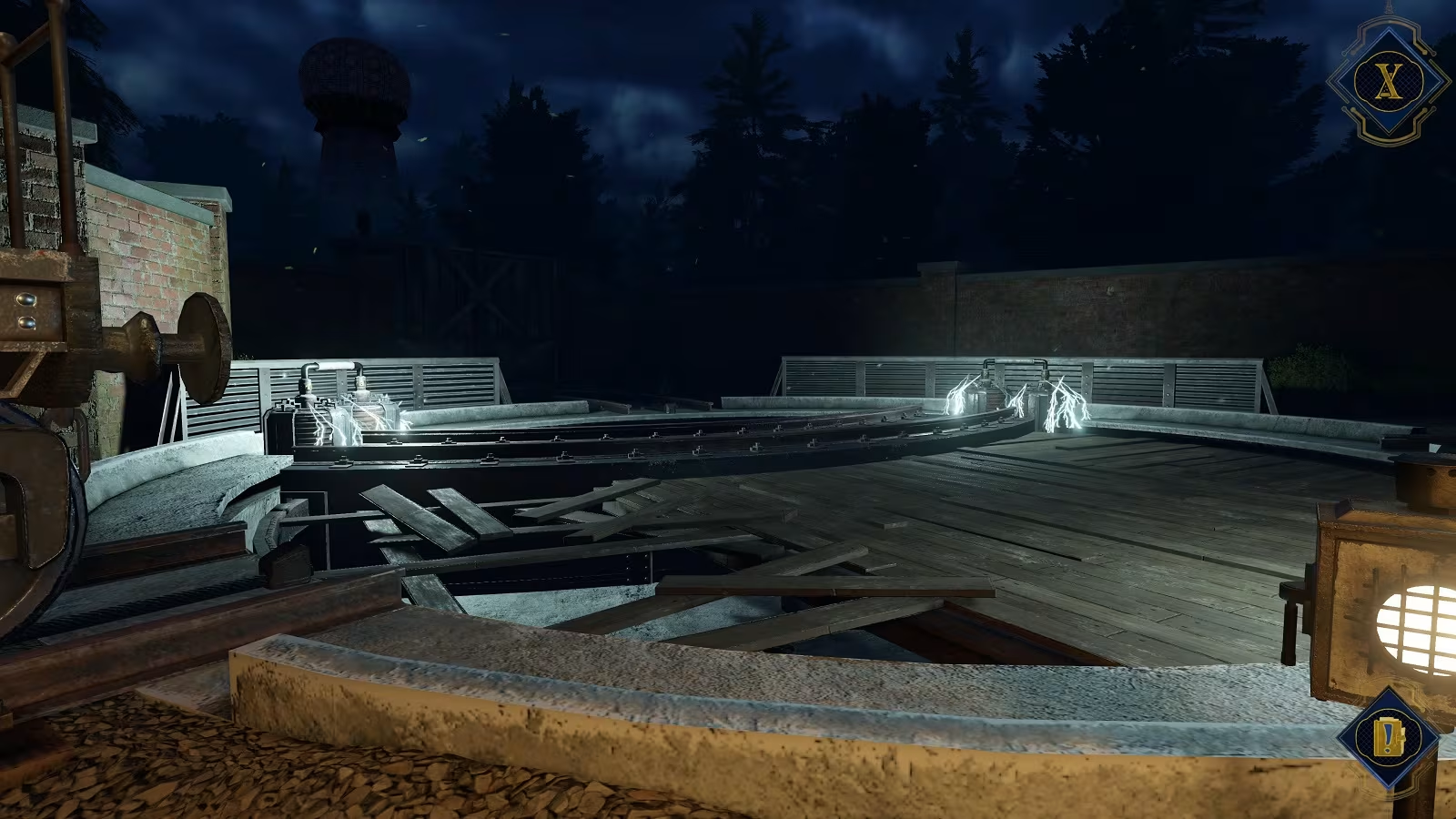
Unfortunately, the game occasionally crosses it. When you have a reasonable idea of what needs to be done, having to fight the controls can turn a satisfying puzzle into an exercise in patience.
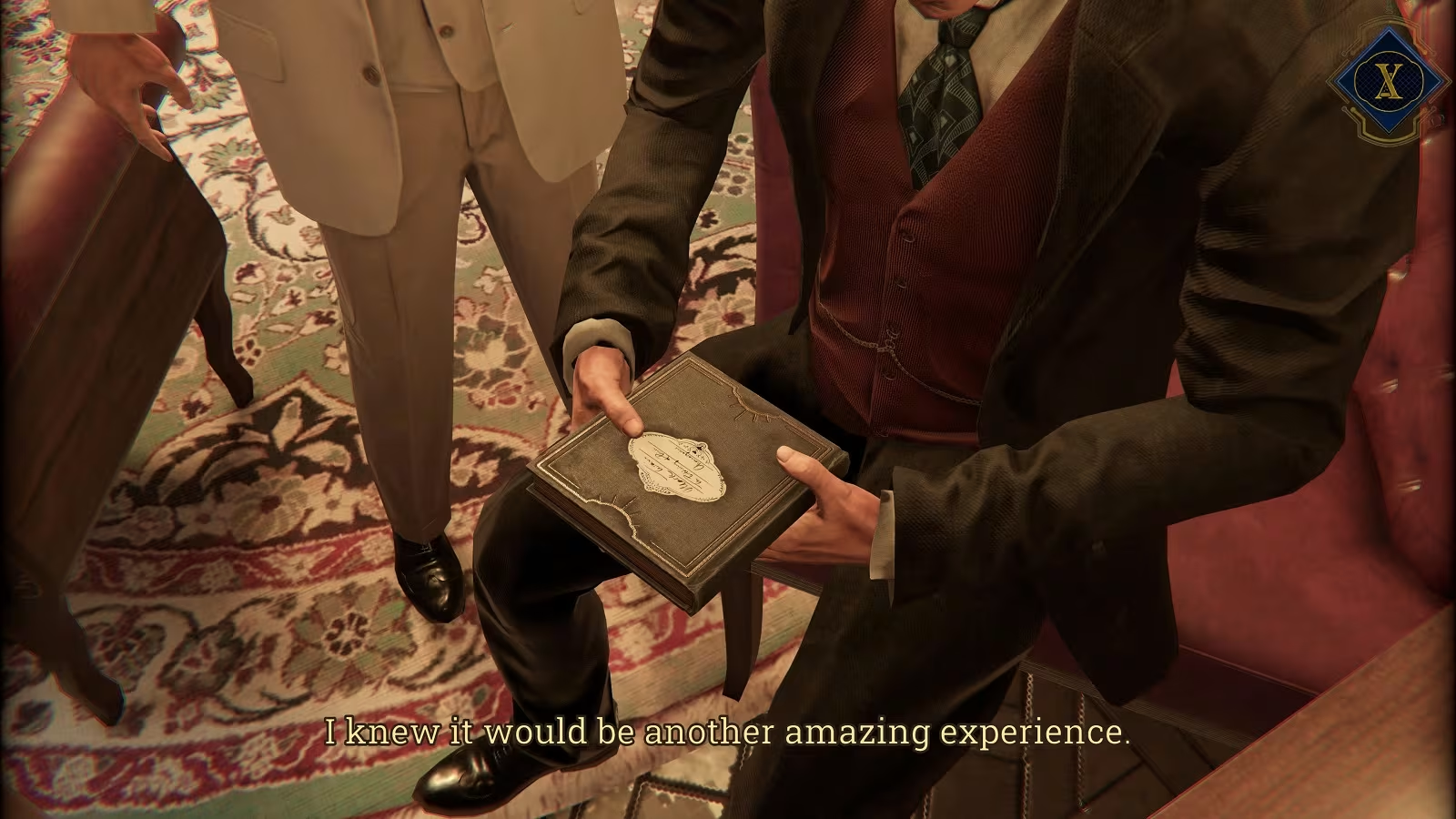
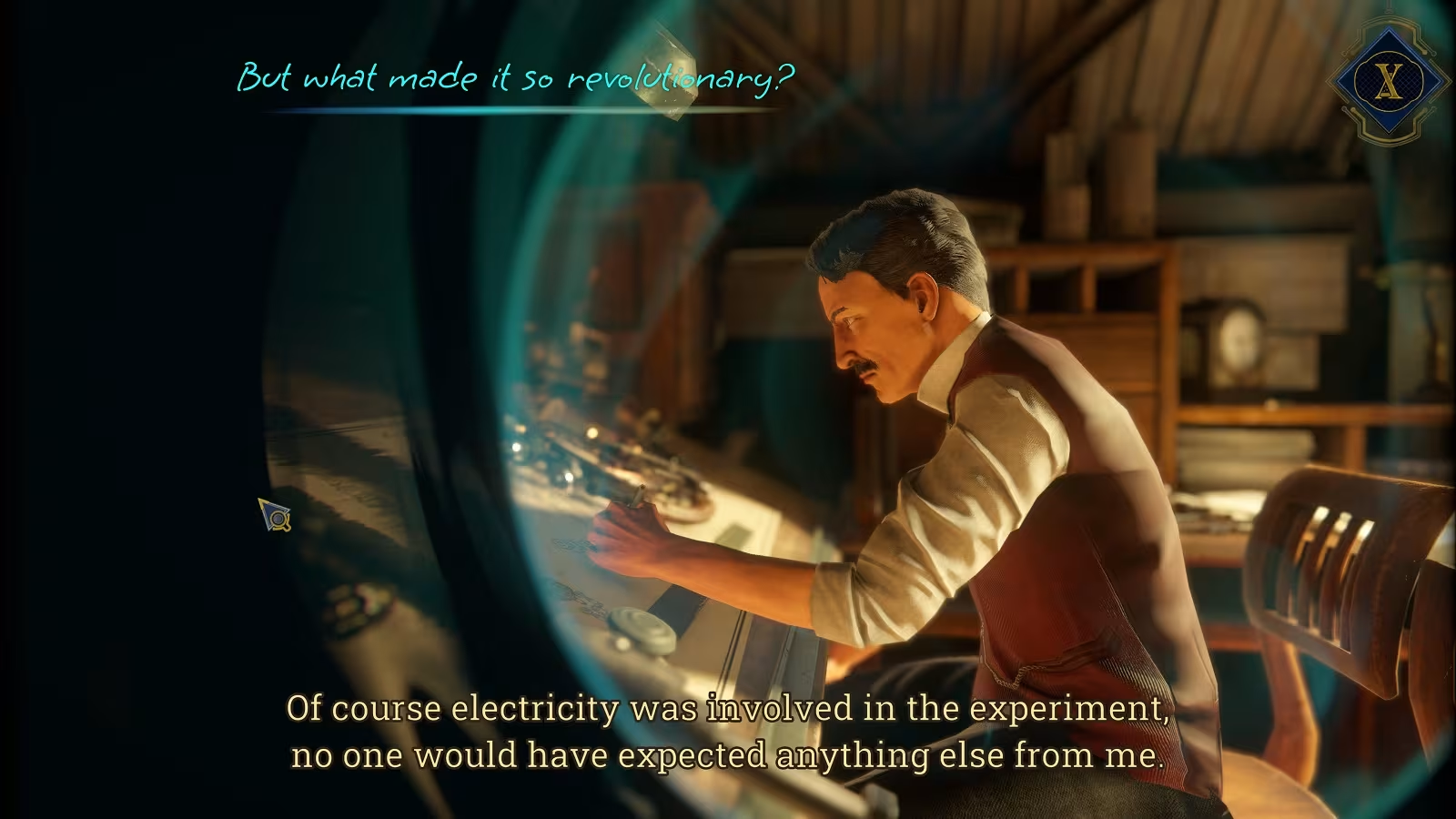
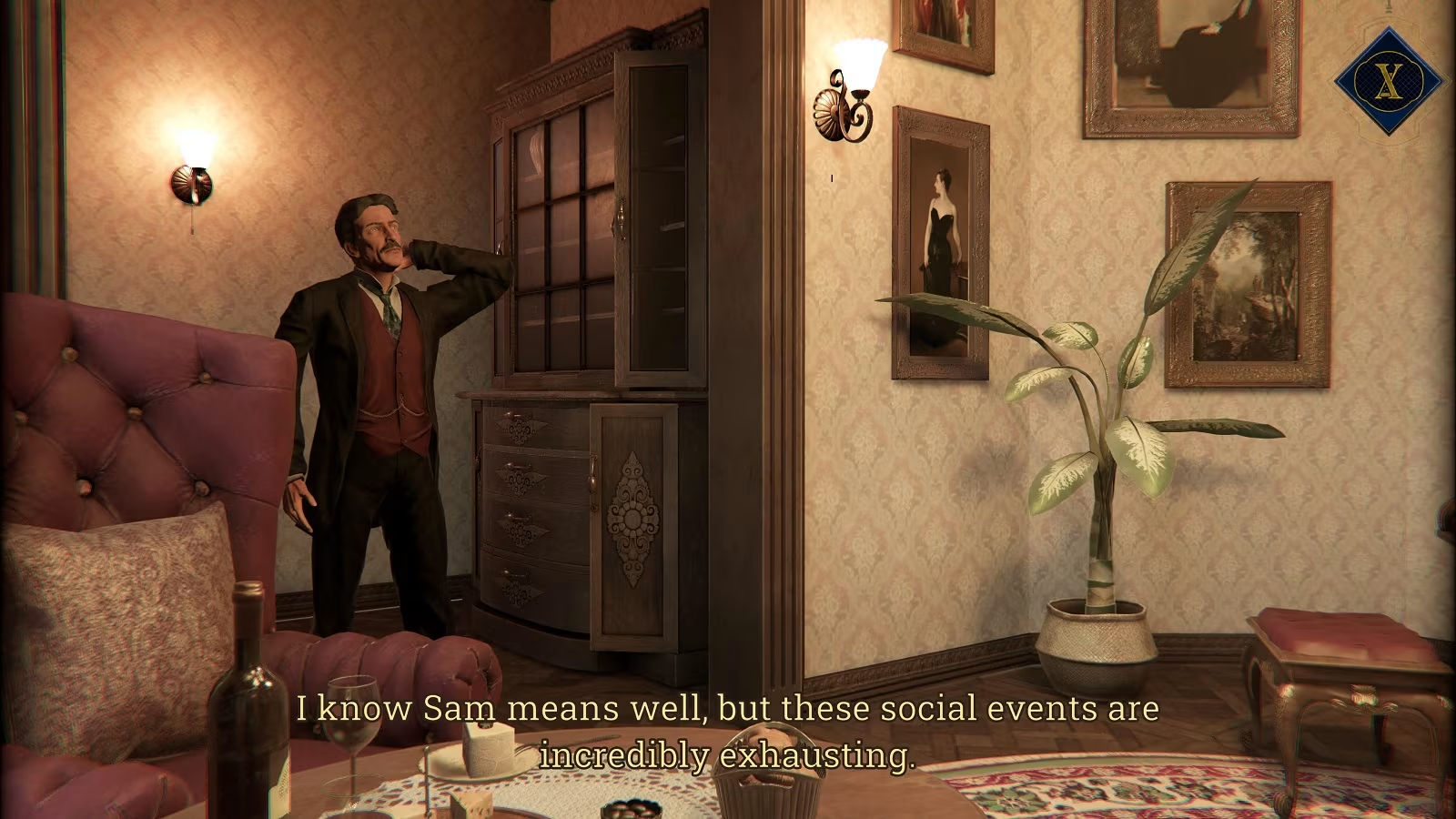
The presentation doesn't help matters much when the game steps away from the puzzles. The House of Tesla attempts to provide a narrative framework for your exploration, with cutscenes and dialogue filling in the background to Tesla's work. The trouble is that I found these sequences dull, with voice acting that frequently struggles to give the material much life.

Tesla is the only voiced character and appears to have acquired a Canadian accent along the way. His lines are delivered with all the verve of a man reading out his electricity bill. It's difficult to invest in the story when the performances do so little to draw you in, particularly when the writing is busy explaining the significance of events that haven't made much of an impression in the first place.
Tesla himself is an inherently fascinating figure. His ambitions, eccentricities and complicated relationship with the world around him offer plenty of material for an engaging historical mystery. Yet the game rarely makes me feel particularly invested in the people or narrative surrounding its puzzles. I was far more interested in figuring out how a contraption worked than in hearing another conversation about what it all meant.
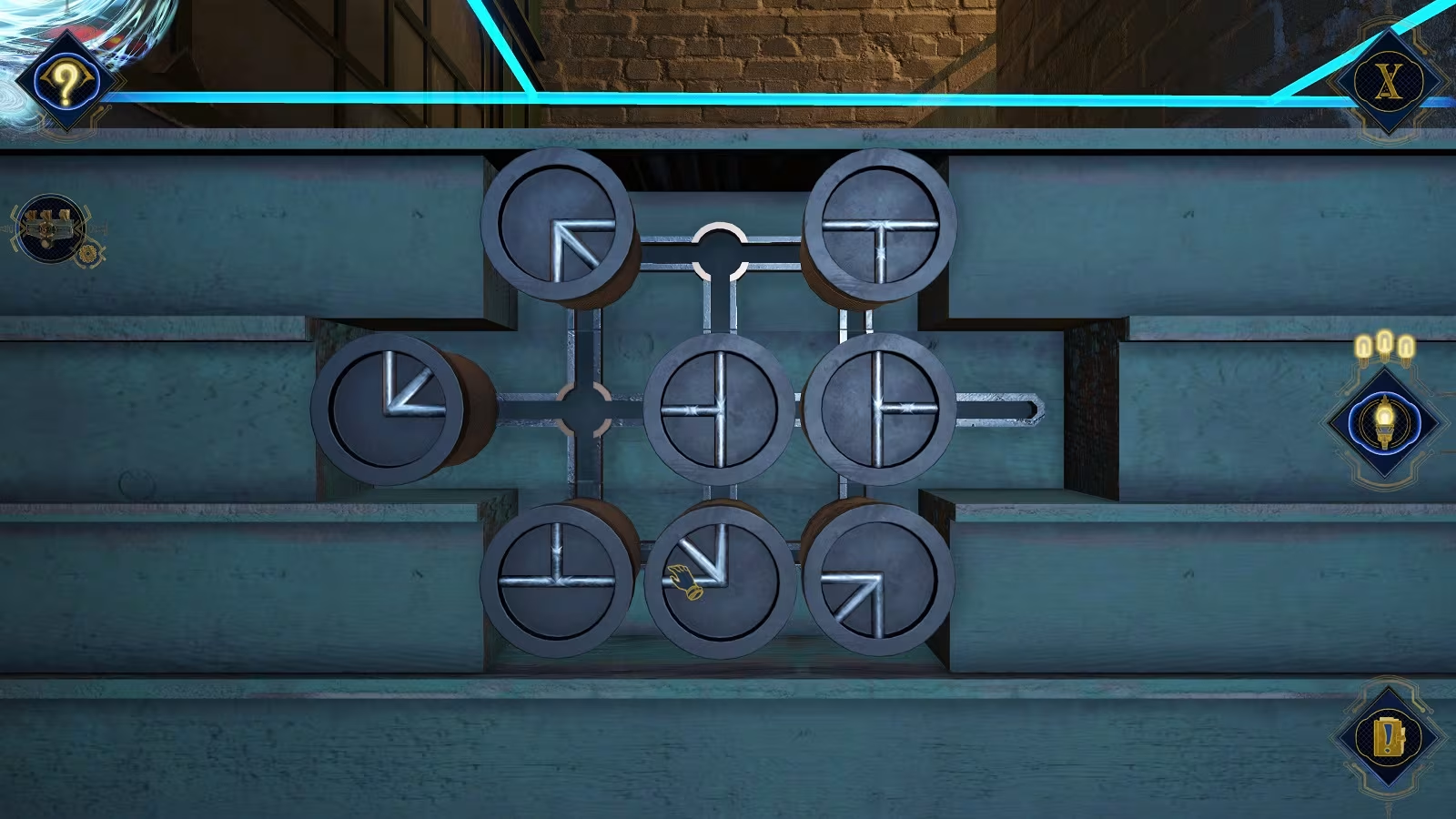
That might be enough if the puzzles maintained their early momentum. However, chapter four introduces a noticeable difficulty spike, and it's where my enjoyment began to wane. Challenge is hardly a problem in itself. A good puzzle adventure should push you, and the satisfaction of solving something difficult is often greater than the pleasure of breezing through a sequence of simple tasks. But difficulty needs to feel earned. The best puzzles give you enough information to reason your way towards a solution, even if the answer isn't immediately obvious.

In chapter four, I increasingly found myself staring at puzzles that felt more laborious than stimulating. The difficulty ramps up, but the additional challenge doesn't always translate into greater satisfaction. Instead of enjoying the process of working something out, I was often left trying combinations and hoping that the correct sequence would eventually reveal itself.
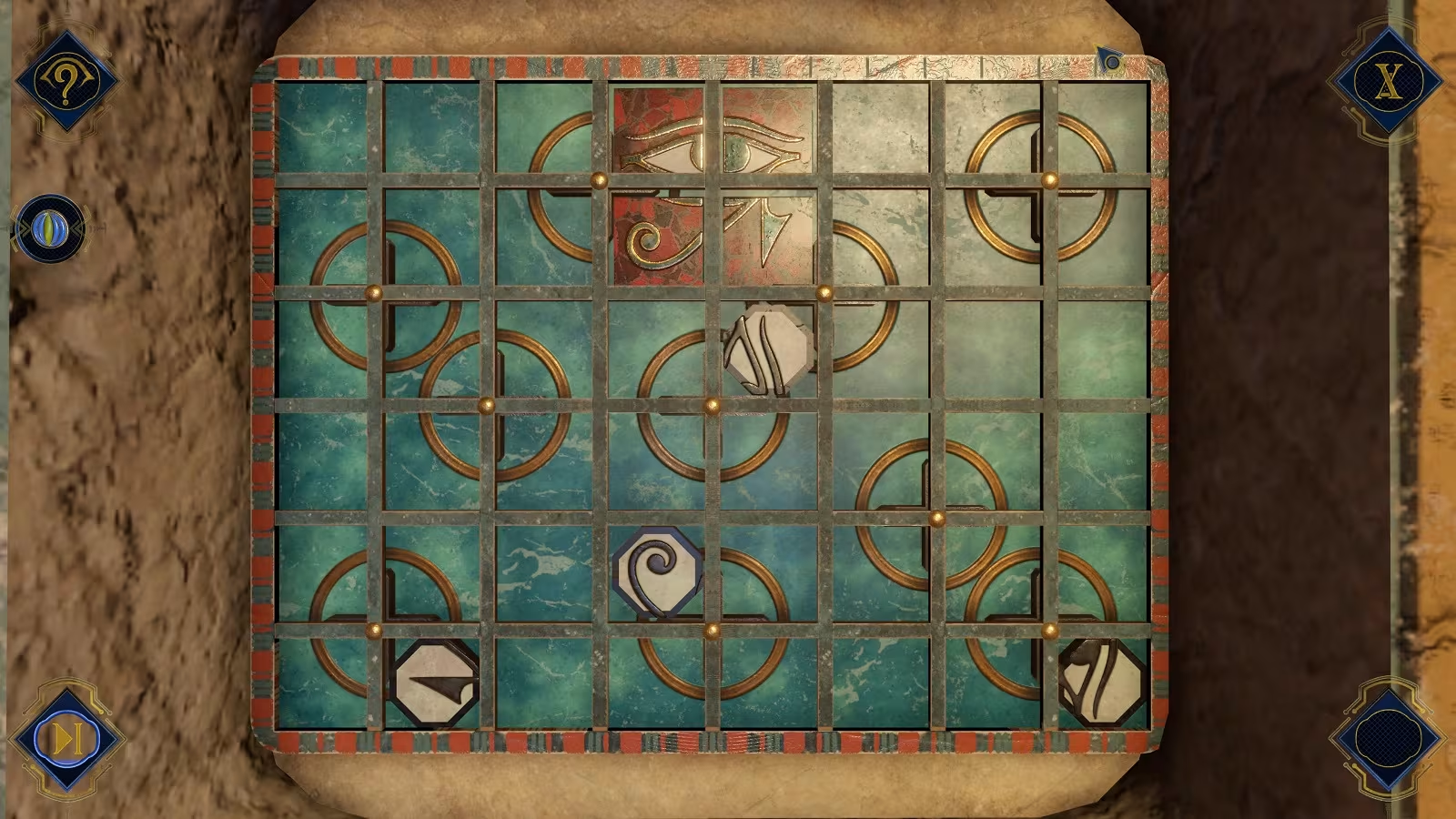
A recurring issue is the game's reliance on manipulating light or moving blocks and other pieces around a static frame. These mechanics can work perfectly well in moderation, but they become tiresome when they're stretched across too many similar challenges. After a while, the novelty wears off. You're still moving things around, still searching for the right alignment, still attempting to make the same basic idea produce a different result.
There are only so many times I can become excited about arranging pieces on a board before I start wondering whether Tesla might have benefited from hiring someone to organise his workshop.
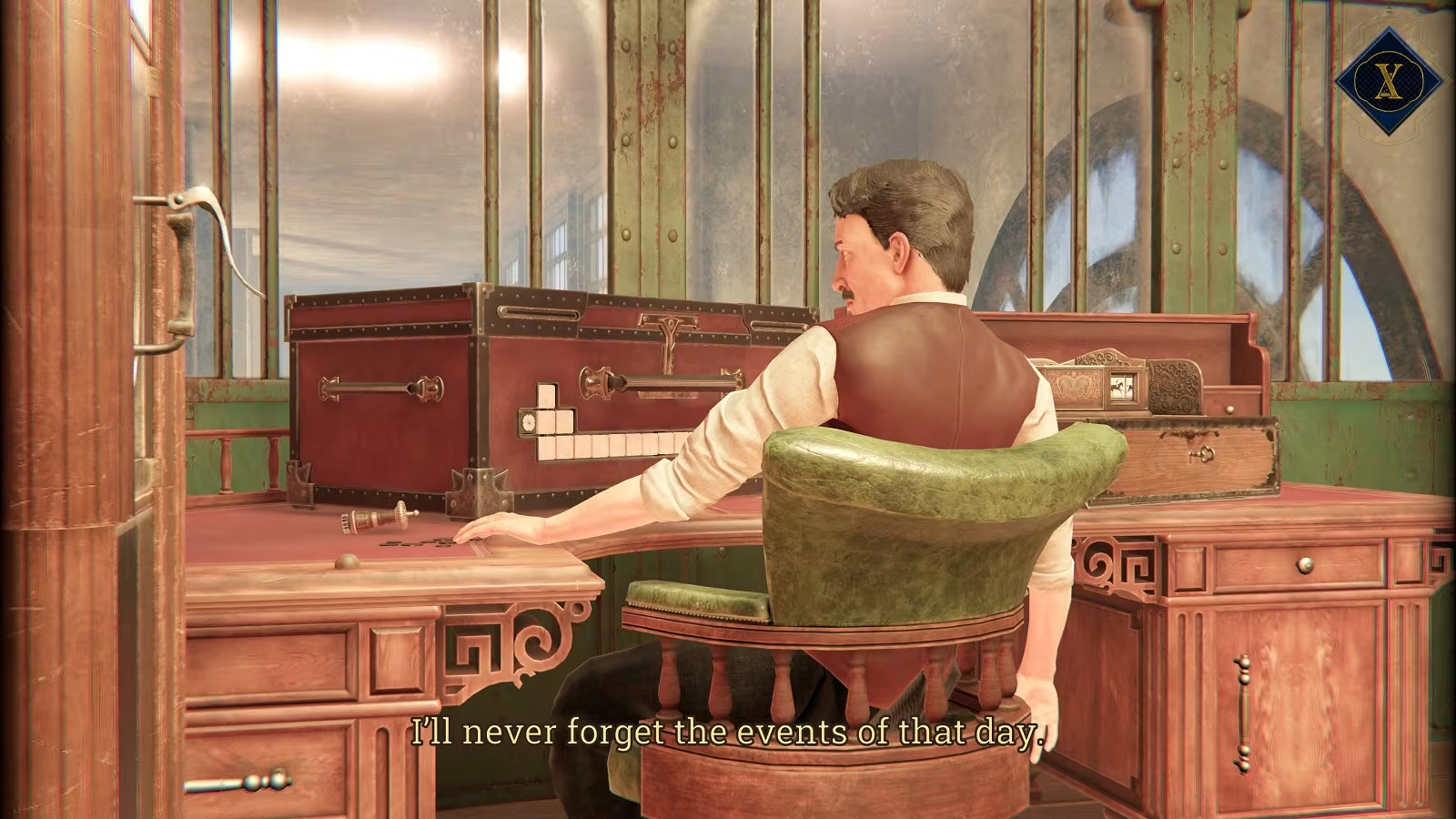
The problem isn't that every puzzle should introduce an entirely new mechanic. Repetition can be useful when it develops an idea or tests your understanding in a fresh way. Here, however, some of the challenges feel as though they're extending a concept beyond the point where it remains interesting. The increased difficulty becomes another obstacle to overcome rather than an invitation to think differently.
Thankfully, chapter five is a more enjoyable proposition. The game finds some of its momentum again, offering a welcome reminder of what makes its better puzzles work. The final chapter doesn't erase the frustrations that came before it, but it does provide a more satisfying stretch of problem-solving and helps the adventure finish on a stronger footing.
It pulls the game back from becoming a frustrating proposition. A difficult chapter can be a worthwhile hurdle if the game rewards your persistence, and the return to more engaging puzzles makes it easier to appreciate the craft behind the overall experience. The final stretch gave me more reasons to keep playing than chapter four had.

The atmosphere of Wardenclyffe provides a strong backdrop, the mechanical details are often lovely to examine, and the more successful puzzles demonstrate that Blue Brain Games understands the appeal of this genre. When a challenge is clearly presented and its solution follows logically from the information available, The House of Tesla can be a rewarding little adventure.
It's just a shame that the experience is so uneven along the way.
The Definitive Edition represents a revised version of the original game, with changes to its chapters, puzzles and presentation intended to improve the overall experience. There is a worthwhile foundation here, and the game's stronger moments show what it can achieve. The interface remains cumbersome, the narrative struggles to hold my attention, and chapter four leans too heavily on fiddly manipulation. However, the enjoyable opening and stronger final chapter make the journey more rewarding than its weakest stretch suggests.
Ultimately, The House of Tesla: Definitive Edition is a decent puzzle adventure with flashes of genuine ingenuity. Its early challenges are enjoyable, its sound effects lend the machinery a pleasing sense of physicality, and the setting is a natural fit for a game about ingenious inventions. The clunky controls and lifeless cutscenes are persistent irritations, while the uneven difficulty curve occasionally makes progress feel like work. Yet there is enough here to keep puzzle enthusiasts engaged, particularly when the game hits its stride.
Tesla spent years trying to bring his vision of wireless power to life. I spent a fair amount of time trying to bring his machinery to life, too. At least, by the final chapter, I was enjoying the process again.
You can subscribe to Jump Chat Roll on your favourite podcast players including:
Let us know in the comments if you enjoyed this podcast, and if there are any topics you'd like to hear us tackle in future episodes!