
PS5
PC
PS4
Switch
Switch 2
Xbox One
Xbox Series
There’s a particular sort of magic to a good Jackbox game. Give a group of friends a handful of phones, a shared screen and a ridiculous premise, and within minutes you’ll have people arguing over nonsense, laughing at jokes that probably shouldn’t be repeated outside the room, and discovering things about one another that might have been better left undiscovered. It’s a simple formula, but one that Jackbox Games has spent years refining.
The Jackbox Party Pack 12 brings five new games to the table, each offering a different take on the familiar party-game format. There’s word association, frantic team trivia, photo manipulation, greeting-card comedy and a debate game that gives everyone an opportunity to express an opinion they almost certainly don't believe. As ever, the quality varies, but there are some genuine highlights here.
Unfortunately, there’s also one game that feels as though it was invited along because the pack needed a fifth. Let’s dive in.
MegaPals
This is the standout, and it's not particularly close. The premise is wonderfully simple: see how closely you and your friends think alike by responding to prompts with as many words as you can manage. The first round gives everyone 45 seconds to submit their answers to a question such as “What's a thing you always put off?” or “Happy ___ Day!” The game then reveals where players have made matching suggestions, with points awarded for shared answers and friendships ranked according to how often people find themselves on the same wavelength.
It's a deceptively effective idea. The funniest moments often come from discovering that someone else has arrived at precisely the same answer as you, particularly when the connection is obscure enough to make you question whether you've been spending too much time together. Equally, the occasions when nobody agrees can be just as entertaining. There's a lovely balance between trying to predict what your friends will say and simply following your own stream of consciousness.
The second round builds on this by taking the unmatched answers and allowing everyone to like their favourites. The most popular suggestion becomes the next prompt, meaning the group effectively creates its own chain of word associations. It's a neat way of turning the players into the source of the entertainment, with each round potentially heading somewhere completely unexpected.
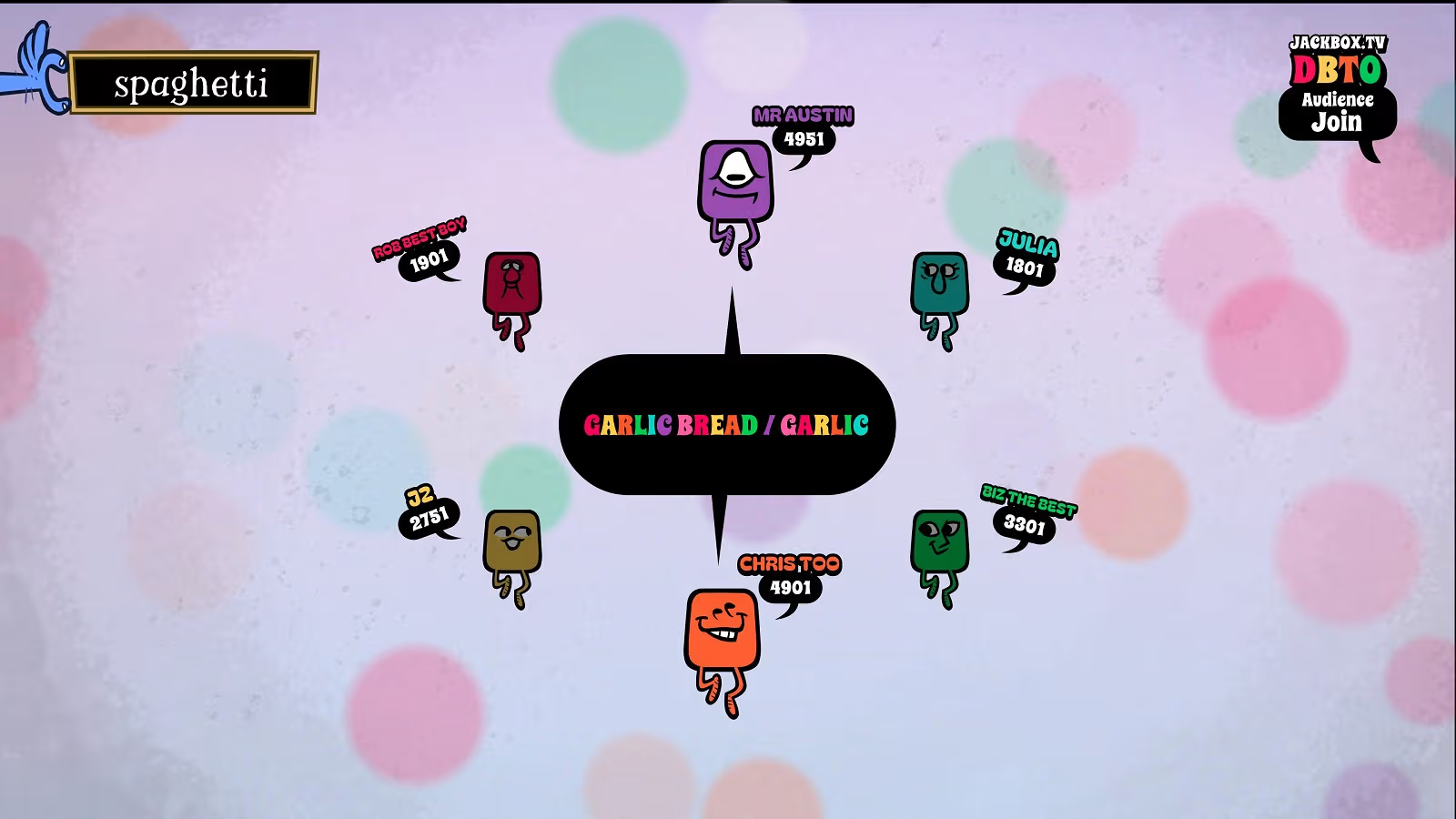
The final round gets a little more personal, asking questions about individual players and rewarding those who can anticipate their preferences. If you're the subject of a prompt, you can also select your favourite incoming answers to strengthen particular friendships. By the end, the two players who've made the most matches together are crowned the Kings of Friendship. It's a silly concept, but one that gives the game a surprisingly satisfying sense of progression.
If there’s one criticism, it’s that since each player is assigned a colour at the start of the game, it’s pretty obvious whose words you’re looking at on your screen. The more unsporting players may use that to ignore genuinely good submissions from the player in the lead — a simple rotation of colours to anonymise things would make this pretty much bulletproof.
Minor quibble aside, MegaPals has the sort of appeal that could keep it in regular rotation. Its reliance on the personalities and shared experiences of the people playing means that the results should feel different from one group to another. It's easy to understand, quick to get going and capable of producing the sort of spontaneous comedy that makes the best Jackbox games so enjoyable. If you're buying Party Pack 12 for one game, this is the one I'd point you towards.
Idol Factions
Idol Factions takes a rather different approach, swapping individual wordplay for a frantic team-based trivia challenge. Players are split into two teams, each tasked with sorting a stream of answers into three seemingly unrelated categories. You might be asked to distinguish between Beatles songs, romantic comedies and TV dating shows, for example. So far, so straightforward. The twist is that this isn't simply a case of selecting the right answer from a list.
Instead, players occupy different positions on a shared board, with some standing near the category destinations and others positioned to help pass answers along. As words appear, you need to work together to get them to the right place, communicating with teammates and moving around the board to direct each answer. Correctly sorted words cause your team's stone avatar to grow, providing a rather pleasing visual indication of how well you're doing.
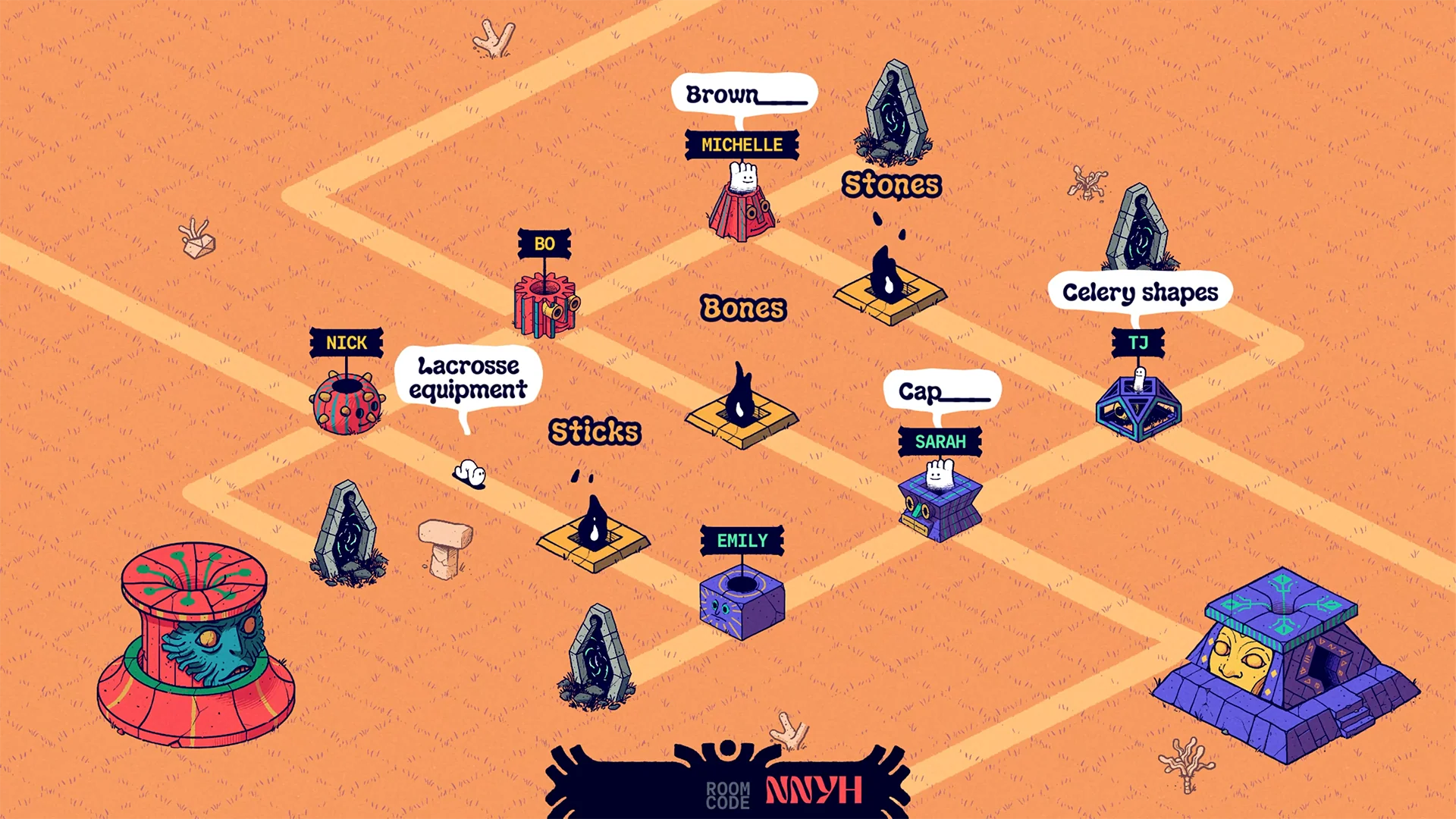
Then things get properly chaotic. Portals allow you to send answers over to the opposing team, potentially leaving them with something they don't know how to categorise. Even better, bombs periodically appear, complete with a countdown that gives you a limited amount of time to send them through a portal and create a distraction for your rivals. Suddenly, you're juggling trivia, navigation, communication and the occasional explosive delivery, all while trying to keep the other team from getting ahead.
The rounds also become progressively faster, giving everyone less time to work out where things need to go. It's a wonderfully frantic setup, and one that makes Idol Factions feel considerably more involved than a conventional quiz. You need to know your stuff, but you also need to communicate effectively and keep track of what's happening around you. It can be chaotic to the point of confusion, particularly when everyone is shouting instructions at once, but that's also where much of the fun comes from.
There's enough variety in the categories and enough going on with the board mechanics to make this feel like something worth revisiting. The combination of teamwork, competition and tactical sabotage gives it legs beyond the initial novelty. It might not have the immediate accessibility of MegaPals, but once everyone understands what's going on, it's a lot of fun.
We Forgot a Card
We Forgot a Card is another promising addition, built around creating ridiculous greeting cards for increasingly unusual occasions. Each round starts with a category or event, after which players choose a card design and write their own message. There's room to play things straight or lean into the absurdity, with the finished creations bringing together the visual design and whatever questionable prose you've managed to come up with.
The cards are then presented for everyone to judge, with players effectively signing the ones they think deserve to win. It's a familiar Jackbox approach, encouraging people to come up with the funniest possible combination rather than simply rewarding the most obvious joke. The format also gives you a little more to work with than a straightforward fill-in-the-blank exercise.
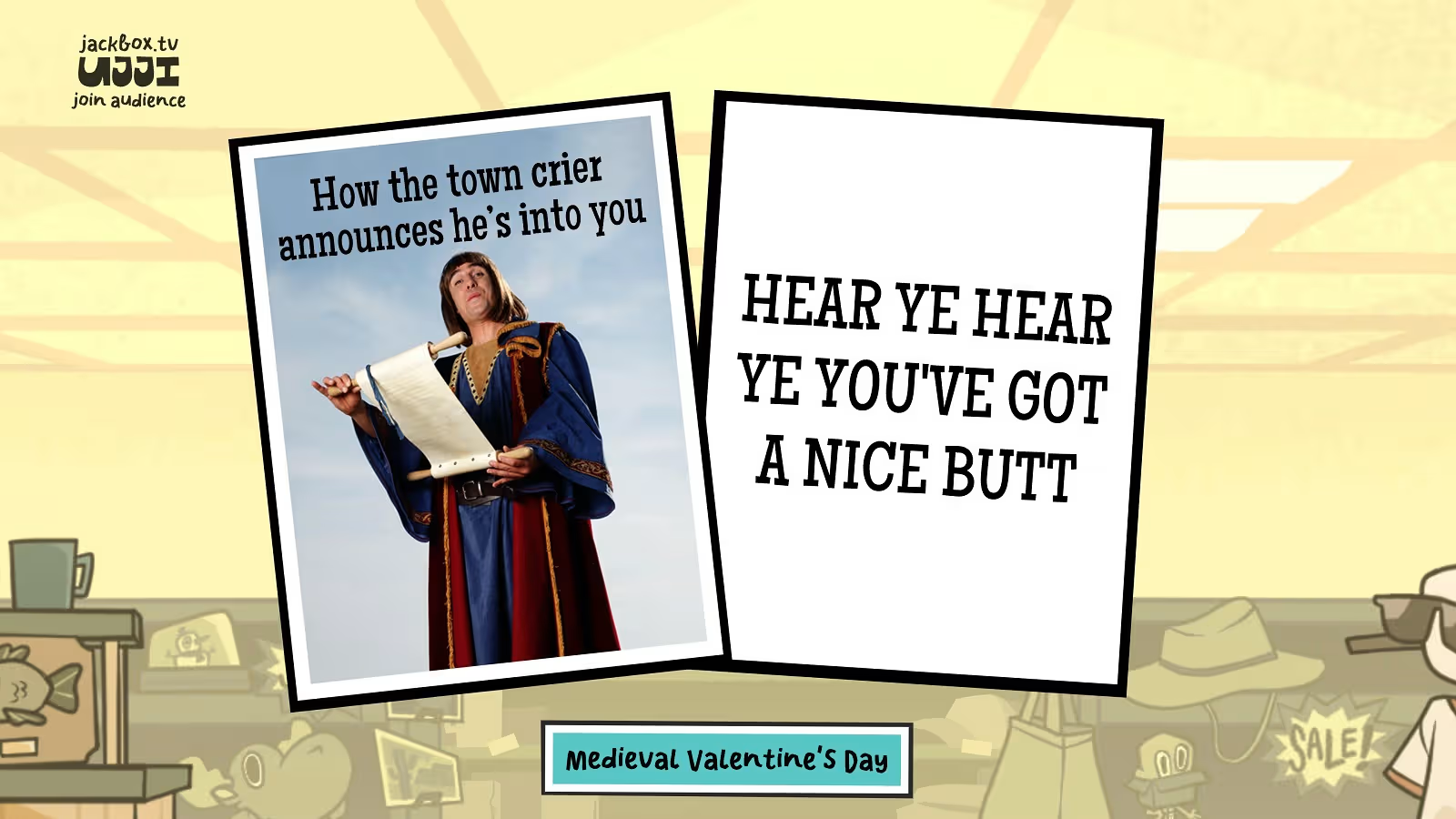
The final round adds another layer, asking players to pair their creations with a plushie and write the line it delivers when its voice-box string is pulled. It's a daft little addition that fits the tone nicely, and the option to purchase some of the finished cards in real life is an amusing touch. There's something rather appealing about the idea of sending someone a greeting card that was born out of a Jackbox session.
I think there's potential for this to be a great game, although I'm not entirely convinced it gets there consistently. The basic idea is sound, and the combination of card design, joke-writing and the final plushie round gives it a decent amount of variety. It feels like the sort of game that could become a firm favourite once everyone has settled into its rhythm and discovered what works best. Whether it will reach that point depends rather heavily on the group, but I came away feeling there was something here worth persevering with.
Hyperface
Hyperface, meanwhile, is a more immediate source of amusement. Players are given prompts and tasked with creating an appropriate reaction image using either a selfie or one of the supplied stock photographs. You can then manipulate the image using a collection of editing tools, smudging, stretching, squashing and drawing over faces until they resemble something that might be found in a particularly unpleasant corner of the internet.
The results are presented for everyone to compare and vote on, with the funniest interpretation taking the points. There's no need to be particularly artistic, which is just as well given the standard of some of the creations, and the ability to use stock photographs means nobody has to volunteer their own face for public humiliation. In the final round, you can even revisit an earlier creation and edit it further, or start again with a fresh image.
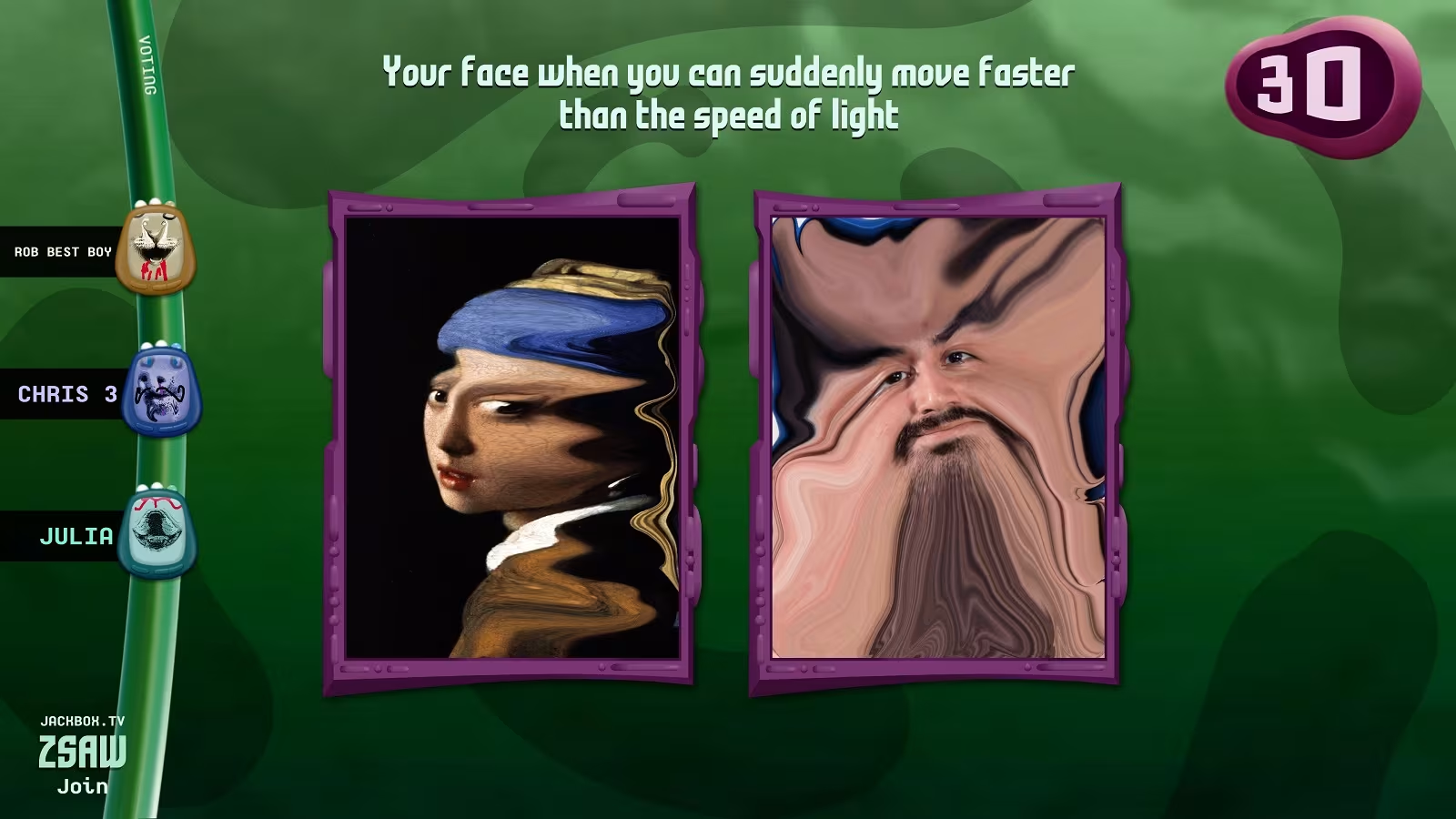
It's a fun concept, and the freedom to manipulate photographs in increasingly ridiculous ways makes for some memorable results. The humour comes from the combination of the original prompt and whatever horrors players manage to produce in response. It's particularly enjoyable when someone takes a relatively ordinary photograph and turns it into something entirely unrecognisable.
The problem is that I'm less convinced about its staying power. It delivers some good laughs, particularly when everyone is getting creative and the images are suitably ridiculous, but the novelty could wear off relatively quickly. There's only so much mileage to be had from distorting a collection of faces before the process starts to feel familiar. It's entertaining in the short term, and certainly worth a few rounds, but I'm not yet persuaded that it will become a regular fixture on game night.
Debate and Switch
Then there's Debate and Switch. The idea is to get players arguing for or against a series of ridiculous propositions in a town-hall setting. Players submit their own topics, with examples including suggestions such as putting photographs of food on every menu or having a particularly terrifying school mascot. Two players then go head-to-head, each trying to persuade the rest of the group to support their position. The audience indicates its preference by moving to one side or the other, while spectators can also submit comments that appear as speech bubbles for the debaters to use or ignore.
After the initial debate, the game throws another complication into the mix: players can change a single word in the original topic, forcing the contestants to adapt their arguments on the fly. A debate about needing more spiders might suddenly become one about needing hotter spiders. It's an opportunity for the discussion to descend into even greater absurdity, and theoretically gives the game a second wind.
In practice, I found it pretty dire. The concept sounds like an ideal vehicle for the sort of ridiculous arguments Jackbox does so well, but the actual experience never quite comes together. Other “out loud” games such as Talking Points or Fakin’ It offer better execution of a similar concept. Much of the entertainment depends on the willingness and ability of the players to improvise convincing arguments, and while that can certainly work with the right group, the format doesn't give you much else to fall back on. The word-switching mechanic occasionally creates an amusing change of direction, but it doesn't do enough to rescue the underlying experience.
Compared with the invention and personality on display elsewhere in the pack, Debate and Switch comes across as filler: a game that's there to make up the numbers rather than something that gives you a compelling reason to gather everyone around the screen.
***
That inconsistency is the biggest issue with Party Pack 12. Jackbox collections have always depended on variety, and it's inevitable that some games will land better than others. Not every entry needs to become a new Quiplash or Tee K.O., but it should at least offer something that makes you want to play it again. Here, the gap between the best and worst games is particularly noticeable.
Thankfully, MegaPals is an excellent centrepiece, while Idol Factions offers a different kind of party-game chaos with plenty of room to develop. We Forgot a Card has the foundations of something special, and Hyperface is a fun diversion even if its long-term appeal remains uncertain. Debate and Switch, however, is difficult to recommend, and its presence stops the collection from feeling as consistently entertaining as it might have been.
The Jackbox Party Pack 12 is therefore a mixed bag, but one with enough good ideas to justify a place at the next gathering. I'd happily play MegaPals again, I'm keen to spend more time with Idol Factions, and I'd like to see whether We Forgot a Card can fulfil its promise. That's a decent return, even if one of the five games might be better left in the box.
You can subscribe to Jump Chat Roll on your favourite podcast players including:
Let us know in the comments if you enjoyed this podcast, and if there are any topics you'd like to hear us tackle in future episodes!