
PC
For a medium built around interactivity, video games spend an awful lot of time asking you to sit back and watch things happen. When a title has good dialogue and an interesting story, there’s nothing wrong with that. When a game’s story is forgettable and characters sound like two Sims screwing, though, a lack of interactivity can be a major problem. Theropods sidesteps that by having no dialogue and an interesting story. It doesn’t work perfectly, but it’s the sort of game you’ll remember after its credits roll precisely because it lacks traditional narrative.
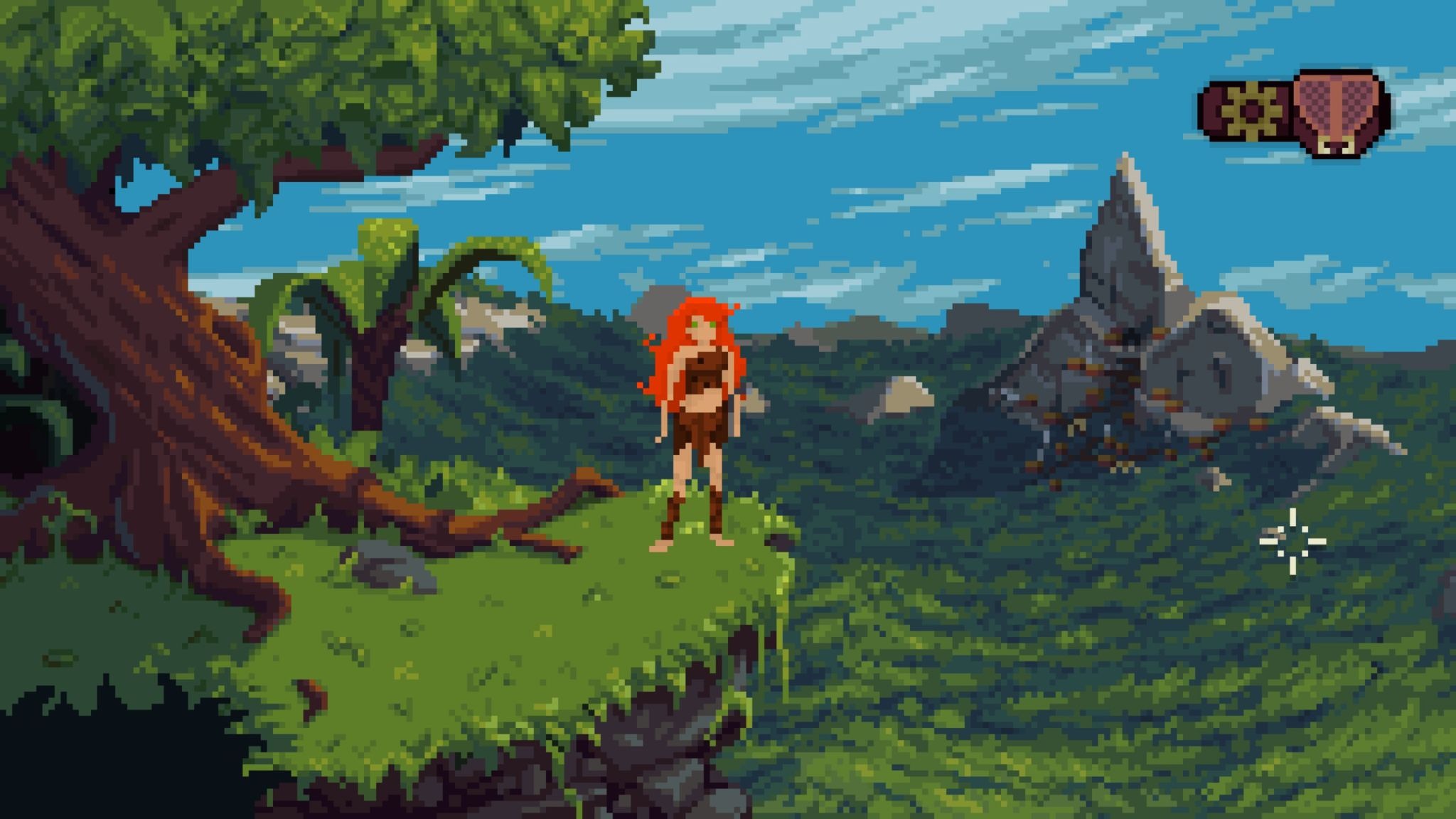
Like its name suggests, Theropods is set in the age of dinosaurs. That’s how the game gets away with having no dialogue, and part of what makes it interesting. You play as a cavewoman who, after her village is destroyed by raiders, goes on a typical revenge quest. There’s a big baddie you need to take down, prehistoric beasts to avoid, and even a time traveler. There are also a ton of logic puzzles, plenty of visual symbolism, and some genuinely fantastic music.
Look, Theropods isn’t Shakespeare. You can beat the game in under two hours, and you probably already have a good idea of how its story ends, spaceman who came traveling aside. That doesn’t mean it isn’t unique, though. Or bad. Without NPCs narrating their every thought or a giant glossary of backstory to skim through, it’s up to you to figure out what the game is about. There’s no secret narrator or pile of lore entries to fill in the blanks. And that makes Theropods work far better than it should.
Both its narrative and gameplay could’ve been entirely forgettable. The former plays out predictably. The latter is a typical mashup of point-and-click sections, puzzles, and QTE-esque sequences thrown in for good measure. Stripping away dialogue and button prompts makes both surprisingly engaging. Coming up with a solution to something you’ve done a thousand times before in other video games, or watching an evil character be evil, isn’t inherently interesting. Having to understand what’s happening without someone explaining it to you makes those familiar ideas feel a little less familiar.
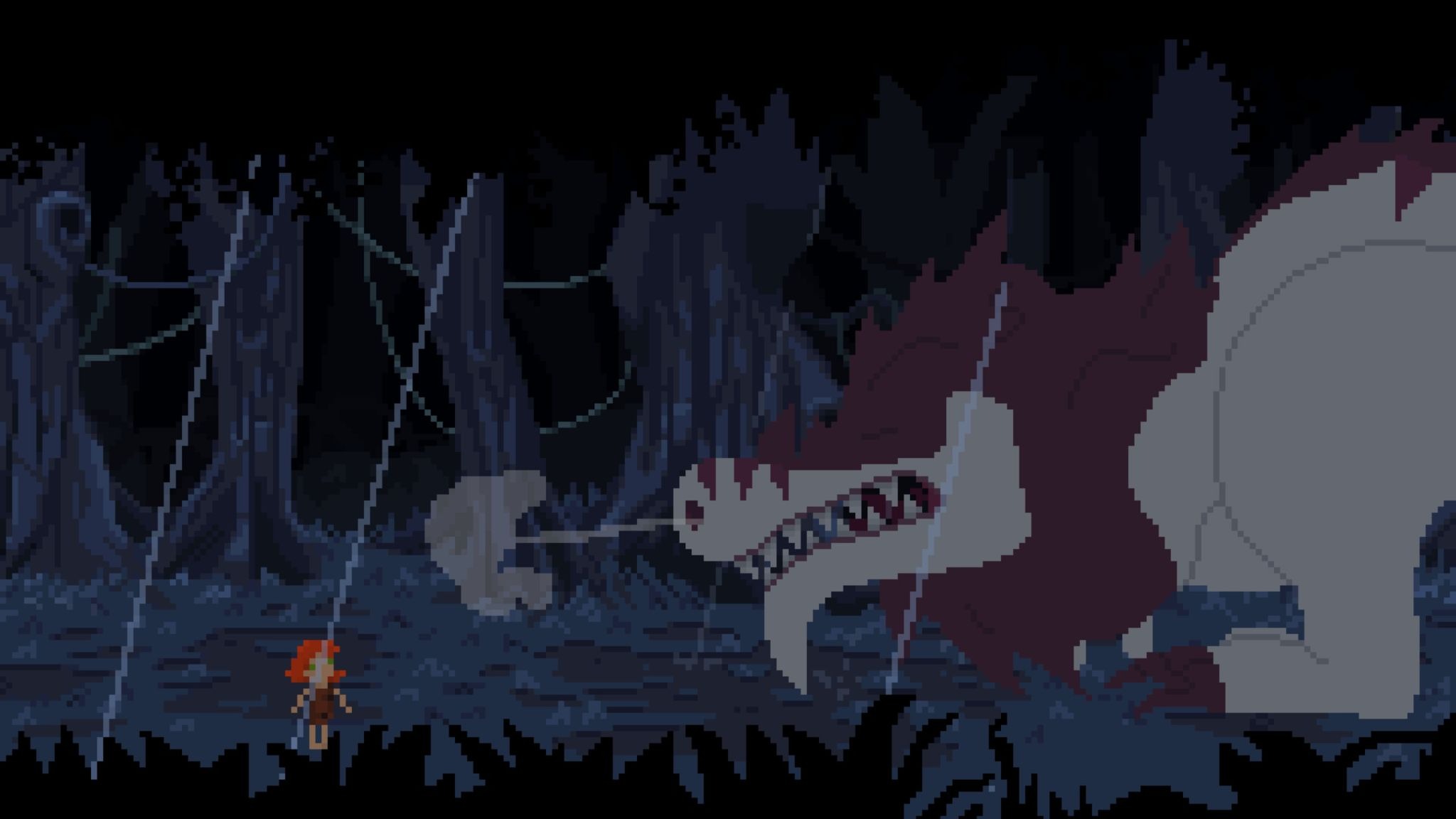
That all works to Theropods’ benefit. Its short runtime and visuals do not. The game has exactly two problems. The first is that it simply isn’t long enough to be anything more than an interesting concept. There’s no time for its story or characters to develop much beyond their initial premise. That’s not a deal breaker, as there’s nothing wrong with a short game, especially one built around such a strong concept. It does hurt the experience, though.
Its visuals are the game’s other problem. Like everything else about the title, they aren’t inherently bad. The cute pixel art frequently works to the game’s detriment. Figuring out which object you need to solve a puzzle can be difficult, not because the puzzle itself is particularly challenging, but because you’re sometimes left wondering what the hell is actually in your inventory. A stick, for example, looks remarkably similar to a spear, which also looks like a torch. That ambiguity leads to a lot of random clicking to see what works instead of actually deducing the solution. It’s seldom actively frustrating, but it does take some of the satisfaction out of solving a puzzle.
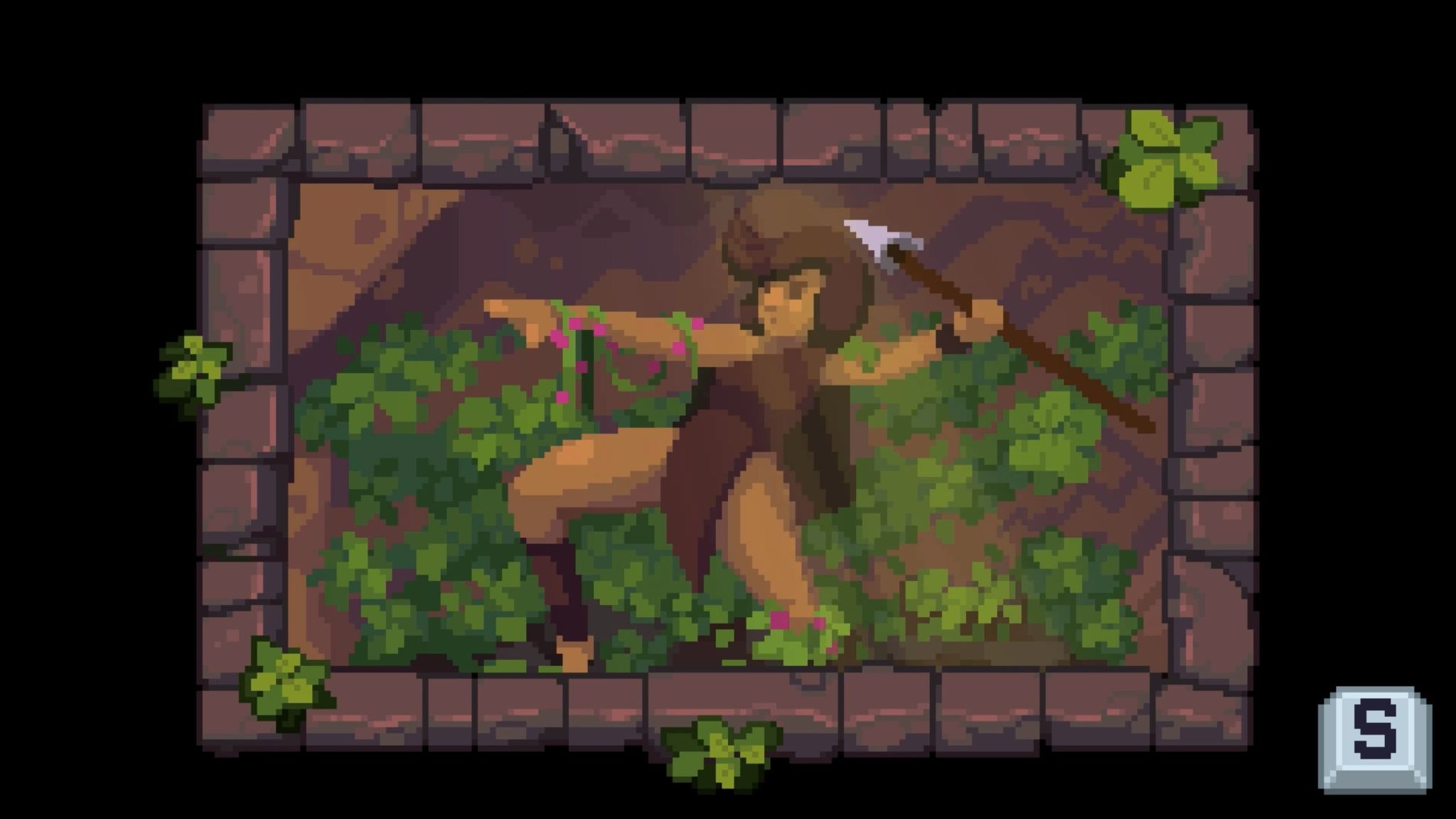
Theropods is still noteworthy, though. It’s not a great game, and it certainly isn’t the best point-and-click on the market. What makes it interesting is what it leaves out: one of the most fundamental parts of video game storytelling. The result is an enjoyable title that’s too short, occasionally undermined by its visuals, and built around an idea the medium largely abandoned years ago. You might play Theropods for its premise, but you’ll remember it because the absence of a core mechanic really does work.
You can subscribe to Jump Chat Roll on your favourite podcast players including:
Let us know in the comments if you enjoyed this podcast, and if there are any topics you'd like to hear us tackle in future episodes!