
PC
There are few things more quintessentially British than a Victorian gentleman with a questionable grasp of scientific experimentation, a penchant for terrible decisions and an unfortunate tendency to turn into a dog. It's a premise that sounds like it was conceived after several pints in a particularly questionable public house, but Tall Story Games has turned it into one of the most thoroughly entertaining point-and-click adventures in recent memory. Heir of the Dog is an affectionate love letter to the genre's golden age, packed with wonderfully daft humour, inventive puzzles and an absurdly likeable cast of characters. It's also considerably more intelligent than its canine-centric premise might suggest.
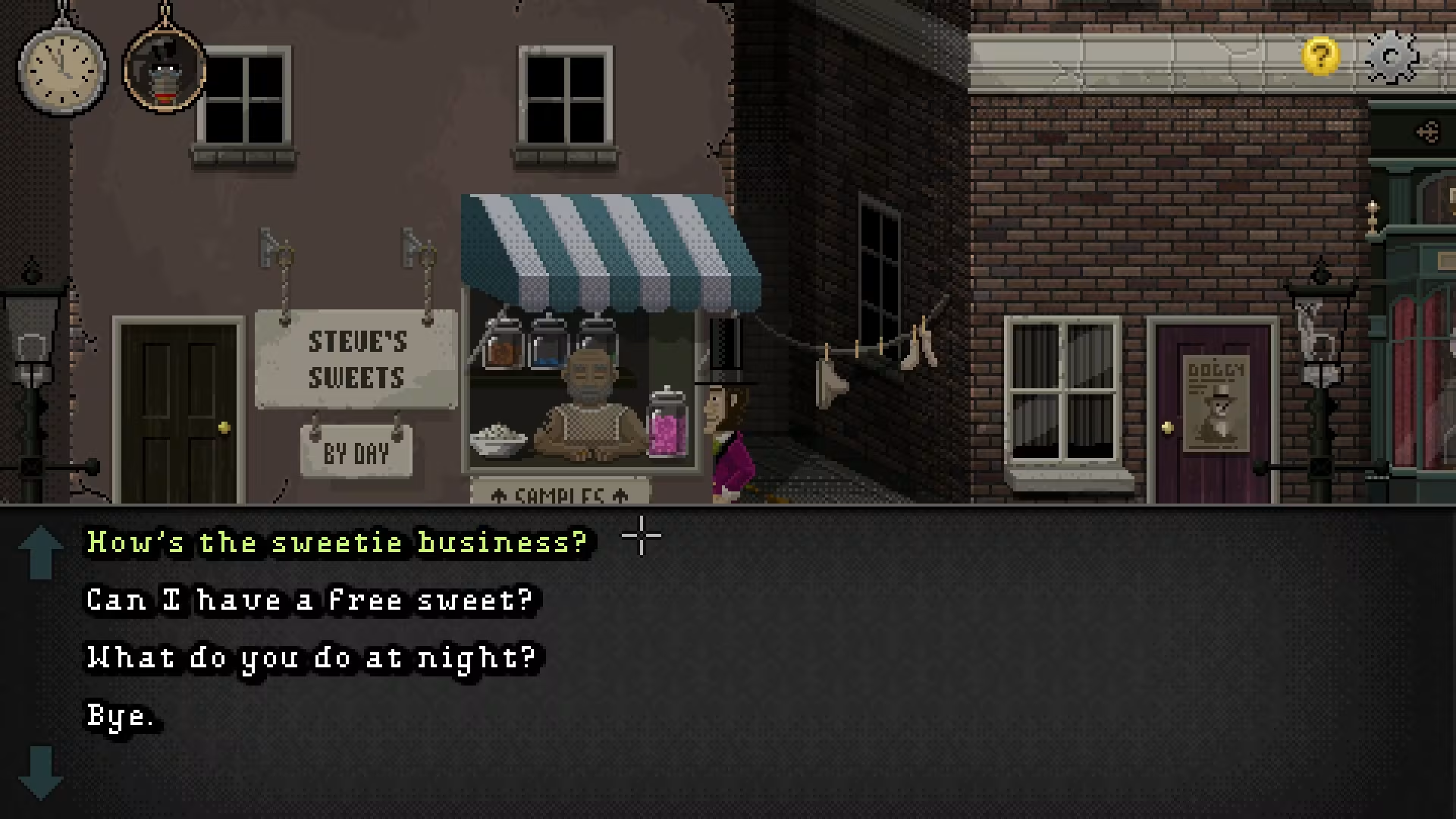
Set in 1859 London, Heir of the Dog follows Cummerbund Bandersnatch, a thoroughly privileged gentleman whose uncle has mysteriously disappeared following an explosion at his laboratory. Naturally, rather than exercising even the slightest degree of caution, Cummerbund decides to investigate, discovers his uncle's experimental formula and promptly drinks it. What follows is a rather unfortunate transformation into a monstrous, hairy beast, with the effects of the concoction eventually progressing into something considerably more canine.
Inspired by Robert Louis Stevenson's Strange Case of Dr Jekyll and Mr Hyde, there's an obvious literary reference underpinning the madness, although Tall Story Games is considerably more interested in extracting comedy from the situation than delivering a sombre exploration of duality. Cummerbund's predicament soon becomes entangled in a much larger mystery involving London's missing dog population, a secret society, the royal family and an assortment of eccentric characters who wouldn't look out of place in a particularly surreal episode of Blackadder.
It's gloriously silly stuff, but there's a surprising amount of substance beneath the fur. The transformation mechanic provides the foundation for much of the adventure. Cummerbund alternates between his human and canine forms depending on the time of day, with the ability to advance time using his trusty pocket watch. Each form has its own advantages and restrictions, with human Cummerbund able to converse with the city's inhabitants while his canine counterpart has to rely on his nose, his strength and considerably less conventional methods of communication.
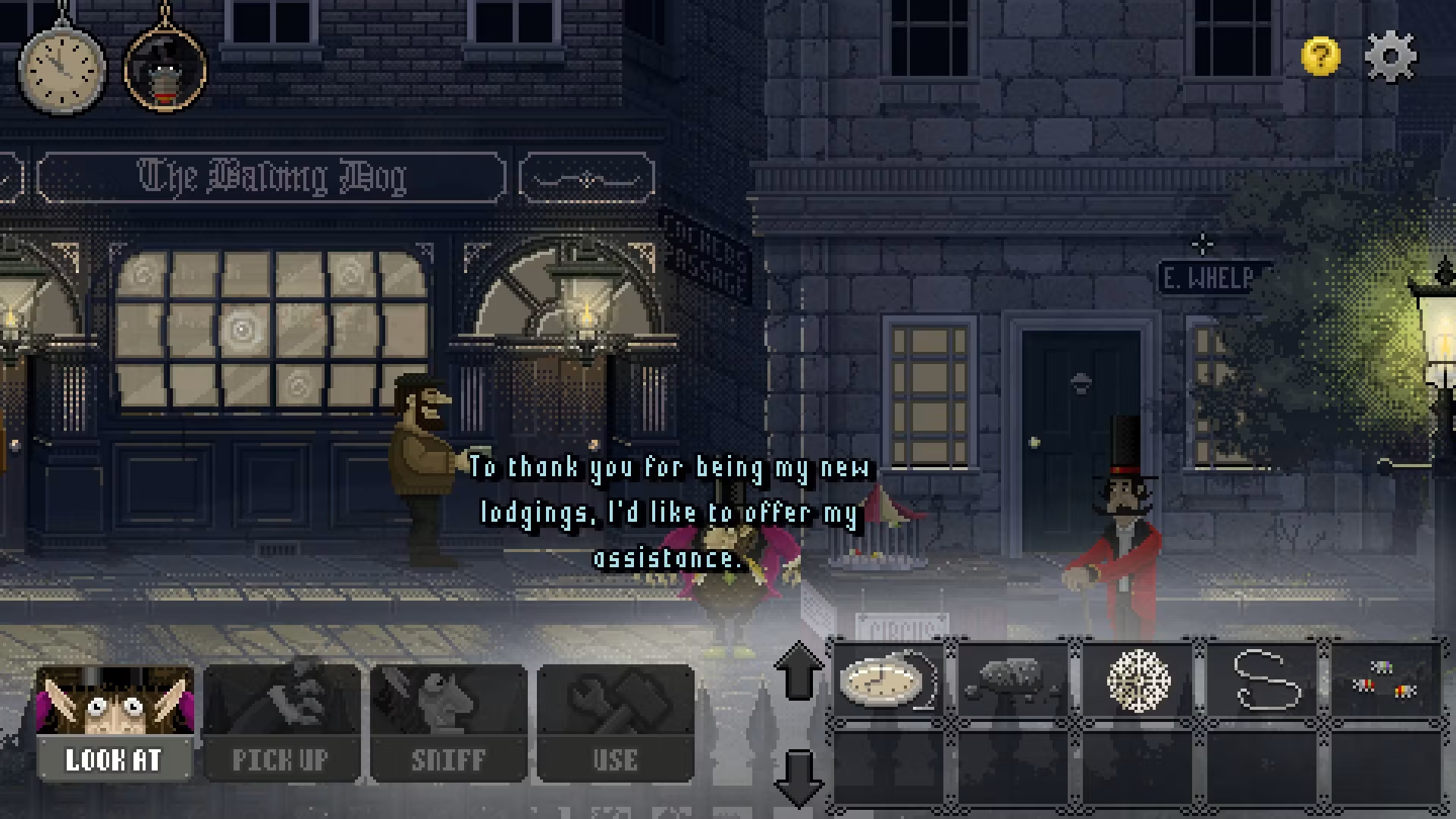
The distinction isn't merely cosmetic. Different characters, locations and interactions become accessible depending on which form you're inhabiting, meaning that seemingly exhausted environments can reveal entirely new opportunities when the clock strikes eight. A shop that's perfectly accessible during the day might be closed at night, while certain characters are considerably more approachable when you're a dog. Switching between forms becomes an essential part of solving the game's puzzles, encouraging you to consider the environment from two very different perspectives.
It's an elegantly implemented idea that gives the traditional point-and-click formula an additional layer of complexity without overcomplicating things. There's something particularly satisfying about recognising that an obstacle you've been staring at for ten minutes might be considerably less problematic when you're four-legged and covered in fur.
The gameplay itself is an unapologetically old-school affair. Those familiar with the likes of Monkey Island and Day of the Tentacle will immediately recognise the interface, with a selection of verbs allowing you to look at, pick up, talk to or use objects throughout the environment. In canine form, the Talk command is replaced by Sniff, which is exactly as ridiculous and occasionally useful as it sounds.
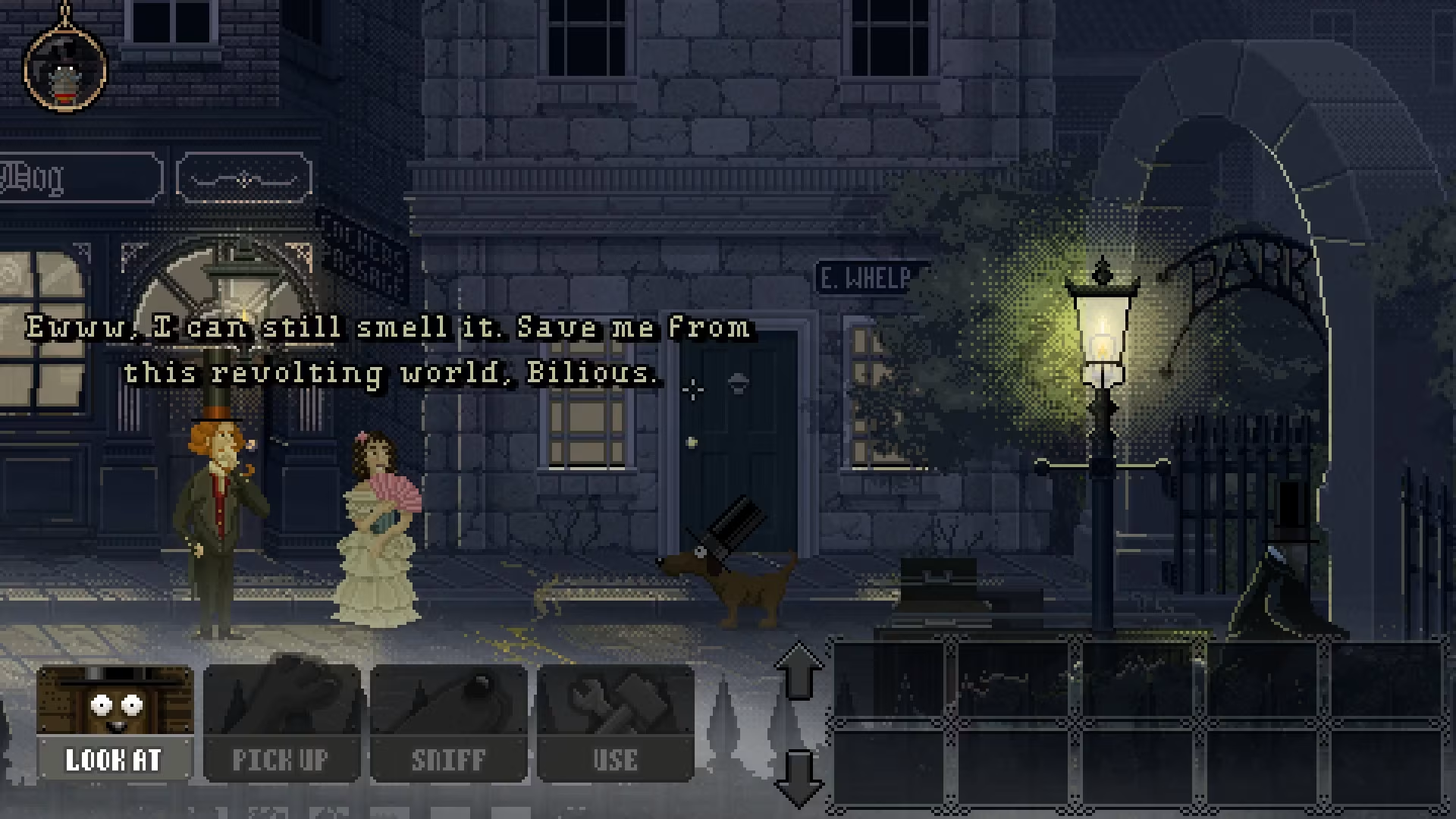
Inventory management and item combinations form the backbone of the experience, although Tall Story Games has thankfully resisted the temptation to fill Cummerbund's top hat with an endless assortment of seemingly unrelated objects. The inventory remains manageable, and the game generally does a decent job of removing items once they've served their purpose.
More importantly, there's a real sense of satisfaction to be found in its puzzles. Heir of the Dog rarely resorts to the sort of nonsensical moon logic that has historically given the genre something of a reputation. Solutions generally make sense once you've discovered the necessary clues, even if getting there occasionally requires a little lateral thinking.
Some of the standout moments involve deciphering clues and manipulating the environment rather than simply combining two objects and hoping for the best. Navigating a hot-air balloon through London's infamous pea-souper fog, for example, requires you to interpret wind-current maps at different altitudes to reach your destination. It's an excellent change of pace, transforming what could have been a straightforward travel sequence into a genuinely engaging navigational puzzle. Elsewhere, gaining entry to an eel-tugging competition involves deciphering a sequence of animal symbols using clues scattered around the environment. It's the sort of puzzle that makes you feel rather pleased with yourself when everything finally clicks into place.
There's also a wonderfully inventive late-game sequence involving a flea circus, alongside a particularly entertaining prison-break scenario that makes excellent use of the game's supporting canine cast. These moments demonstrate an admirable willingness to experiment with the established formula, ensuring that the adventure doesn't simply become an increasingly convoluted exercise in finding the right object to shove into the right receptacle.
Indeed, the writing is arguably Heir of the Dog's greatest achievement. British humour is notoriously difficult to get right in video games, particularly when developers confuse an abundance of puns with actual comedy. Tall Story Games understands that the best jokes are often those delivered with complete sincerity, and there's a wonderfully dry sensibility running throughout the adventure.

The dialogue is packed with double entendres, ridiculous observations and wonderfully understated exchanges. Even the game's more juvenile moments generally feel deliberate rather than desperate, with visual gags and environmental details frequently providing as much entertainment as the dialogue itself. There's an impressive amount of attention paid to the reactions Cummerbund receives when attempting particularly questionable actions, too. Experimentation is actively encouraged, with the game often rewarding your most ridiculous ideas with bespoke responses rather than the usual dismissive message.
It's this attention to detail that makes the world feel so wonderfully alive. Characters aren't simply there to dispense information or provide another obstacle to overcome; they're eccentric personalities with their own peculiarities, motivations and occasionally questionable priorities. The street urchins are particularly memorable, while the various Londoners encountered throughout the adventure provide a constant source of entertainment.
Full voice acting is another significant contributor to the experience. Every character receives a performance, and the cast does an excellent job of bringing the game's distinctly British sensibilities to life. Cummerbund's upper-class pomposity is particularly well delivered, while the supporting characters have enough personality to ensure that even relatively minor encounters remain entertaining. The performances also demonstrate a welcome understanding of comedic timing, allowing the writing to breathe rather than hammering every punchline into submission.
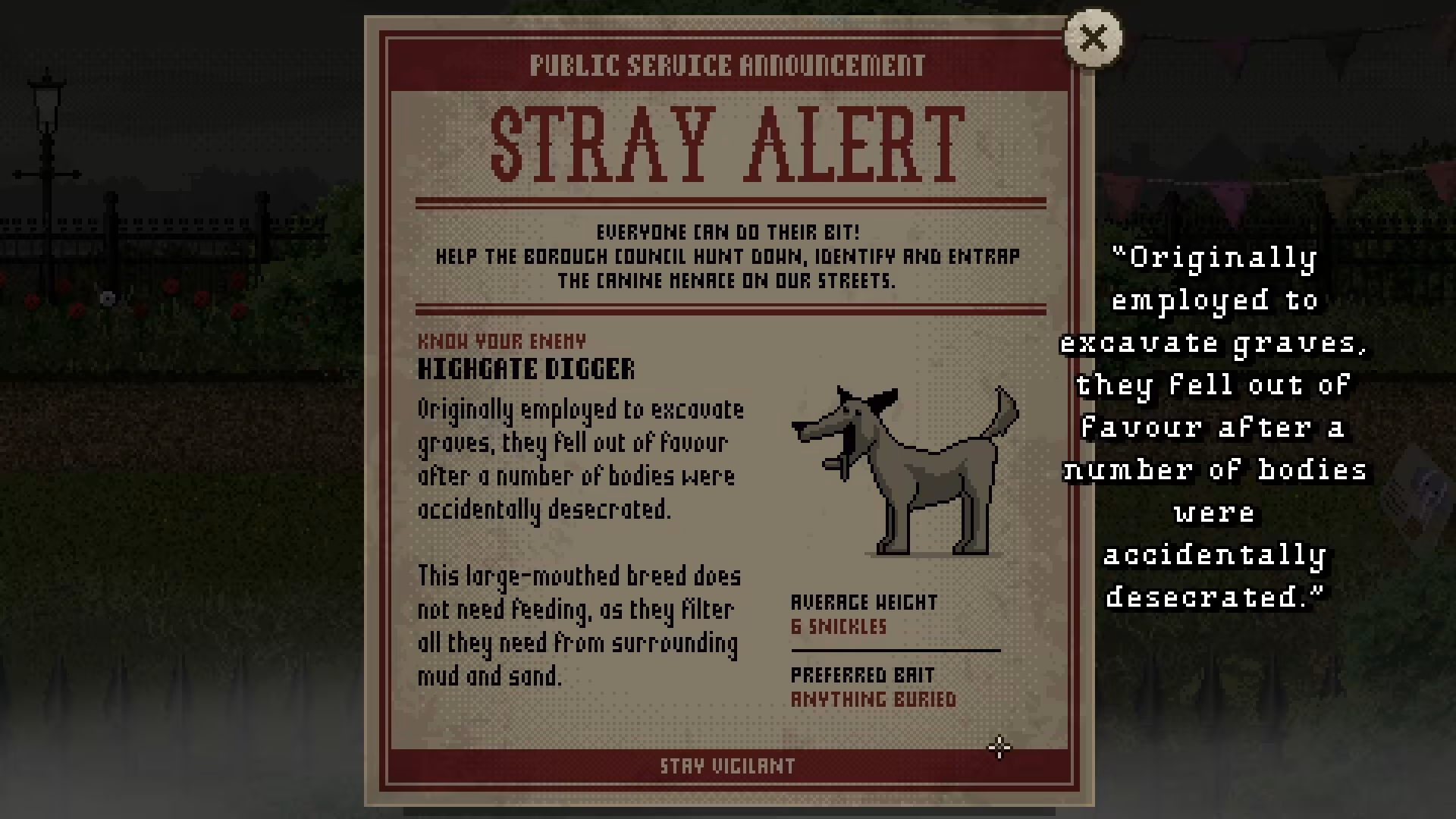
Visually, Heir of the Dog embraces a traditional pixel-art aesthetic that should feel immediately familiar to anyone who grew up playing LucasArts adventures. Victorian London is rendered in a suitably murky palette of browns and greys, with plenty of environmental detail and little visual touches that reward closer inspection. It isn't particularly ambitious from a technical perspective, but the artwork is consistently attractive, expressive and full of character.
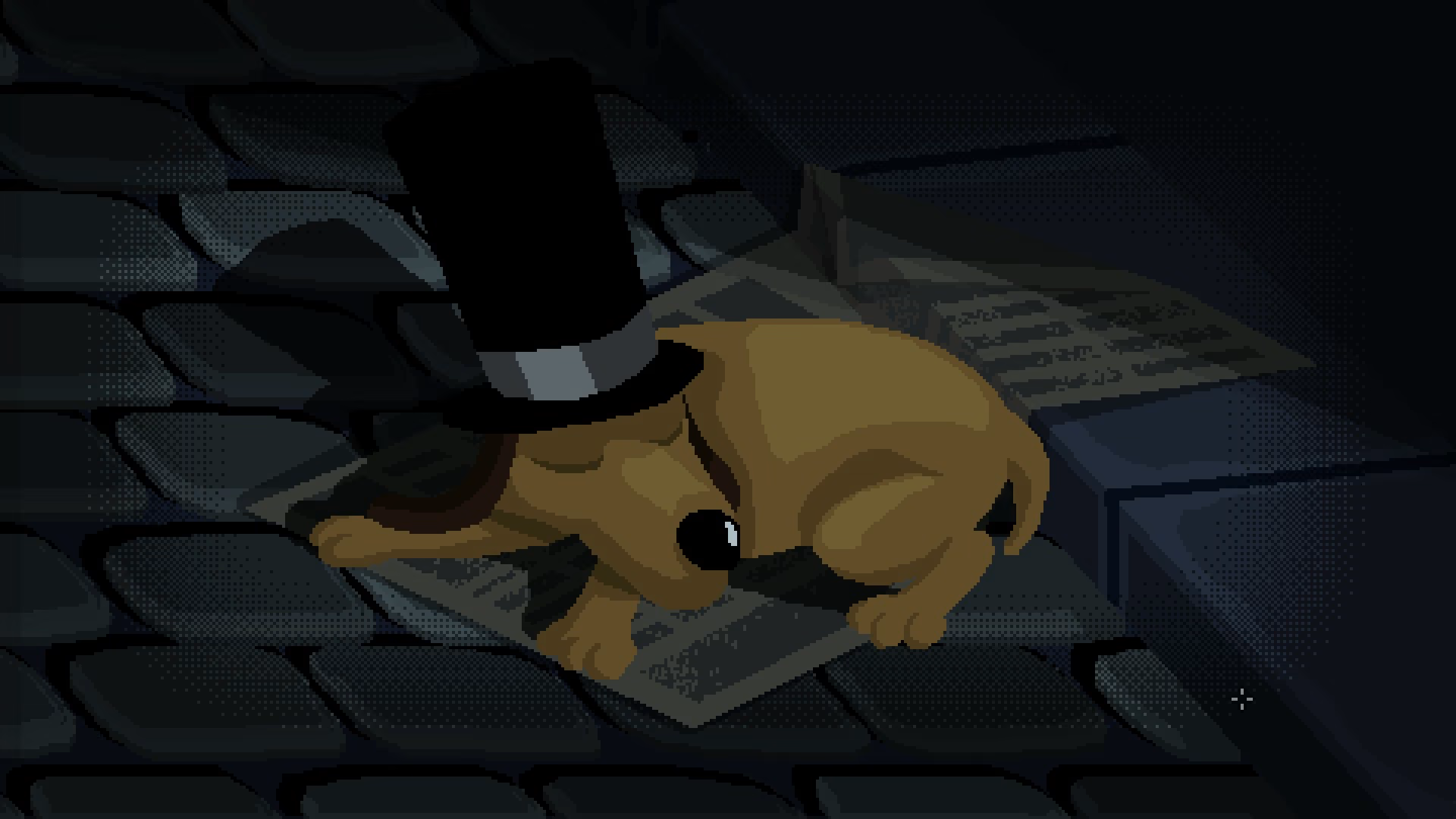
The animations deserve particular recognition, too. Cummerbund's expressions change depending on the selected interaction, while the various characters and environments are filled with small movements that give the world an additional sense of personality. It's clear that considerable care has gone into making even the most seemingly insignificant elements feel worthwhile.
That isn't to say everything is quite as polished as it could be. The opening hours take a little while to establish the adventure's broader direction, and some of the dialogue can become rather long-winded. While the voice acting is consistently entertaining, having to exhaust multiple conversation options to discover the one piece of information needed to progress can occasionally interrupt the pacing. There's also a particularly irritating sequence involving a quiz about dog breeds and some rather peculiar measurement conversions. The information required isn't always easy to keep track of, and the lack of a more comprehensive hint system means that the occasional bout of frustration is inevitable.
A handful of puzzles also rely on interactions that aren't immediately obvious, while the occasional pixel hunt can leave you wondering whether you've overlooked something or whether the game simply hasn't communicated its expectations particularly well. These are relatively minor blemishes, but they're worth acknowledging in an adventure that otherwise demonstrates such an impressive understanding of the genre.
Fortunately, Heir of the Dog becomes increasingly rewarding as it progresses. What begins as a collection of eccentric characters and ridiculous situations gradually develops into a more involving mystery, with a supporting cast that's surprisingly easy to become invested in. By the time Cummerbund's canine companions take centre stage, you're genuinely rooting for them. That's quite an achievement for a game featuring competitive eel wrestling.
Heir of the Dog is a wonderful reminder of why point-and-click adventures remain so appealing. Its inventive puzzles, excellent writing and encouragement to experiment make exploring every corner of its world a pleasure, even when the occasional obtuse solution tests your patience. Tall Story Games has expanded its original freeware adventure into something considerably more ambitious without losing its irreverent charm. If you've been missing the days of Monkey Island-style adventures, this is one worth getting your paws on. It's a howling success.
You can subscribe to Jump Chat Roll on your favourite podcast players including:
Let us know in the comments if you enjoyed this podcast, and if there are any topics you'd like to hear us tackle in future episodes!