PS5
PC
Xbox Series
Don’t Nod has made a career out of building games that live or die on emotional investment. Sometimes that means a bruising supernatural drama, sometimes a devastating coming-of-age story, and sometimes, as with Aphelion, it means strapping two astronauts to the front of a gorgeous, frozen planet and asking you to care deeply about their survival before the game has fully earned it. That is both the central strength and the recurring problem here: Aphelion wants to be an intimate sci-fi odyssey about love, duty, and endurance, but it often feels like it is in a hurry to reach the next moody beat while forgetting to make the journey especially compelling.

There’s no denying the pitch is strong. By 2060, Earth is effectively done for, and a mission to Persephone becomes humanity’s best shot at finding somewhere else to live. Ariane and Thomas are established as capable, emotionally connected astronauts rather than stock action heroes, and the game leans heavily on that bond as the engine for everything that follows. When Aphelion is working, it works because it understands that a science-fiction disaster story is only as good as the people trying to survive it. The problem is that it rarely trusts that idea enough to let it breathe. Instead, it keeps nudging you through a sequence of familiar beats, and the result is a story that feels well-intentioned, occasionally affecting, but not quite as sharp as it clearly wants to be.
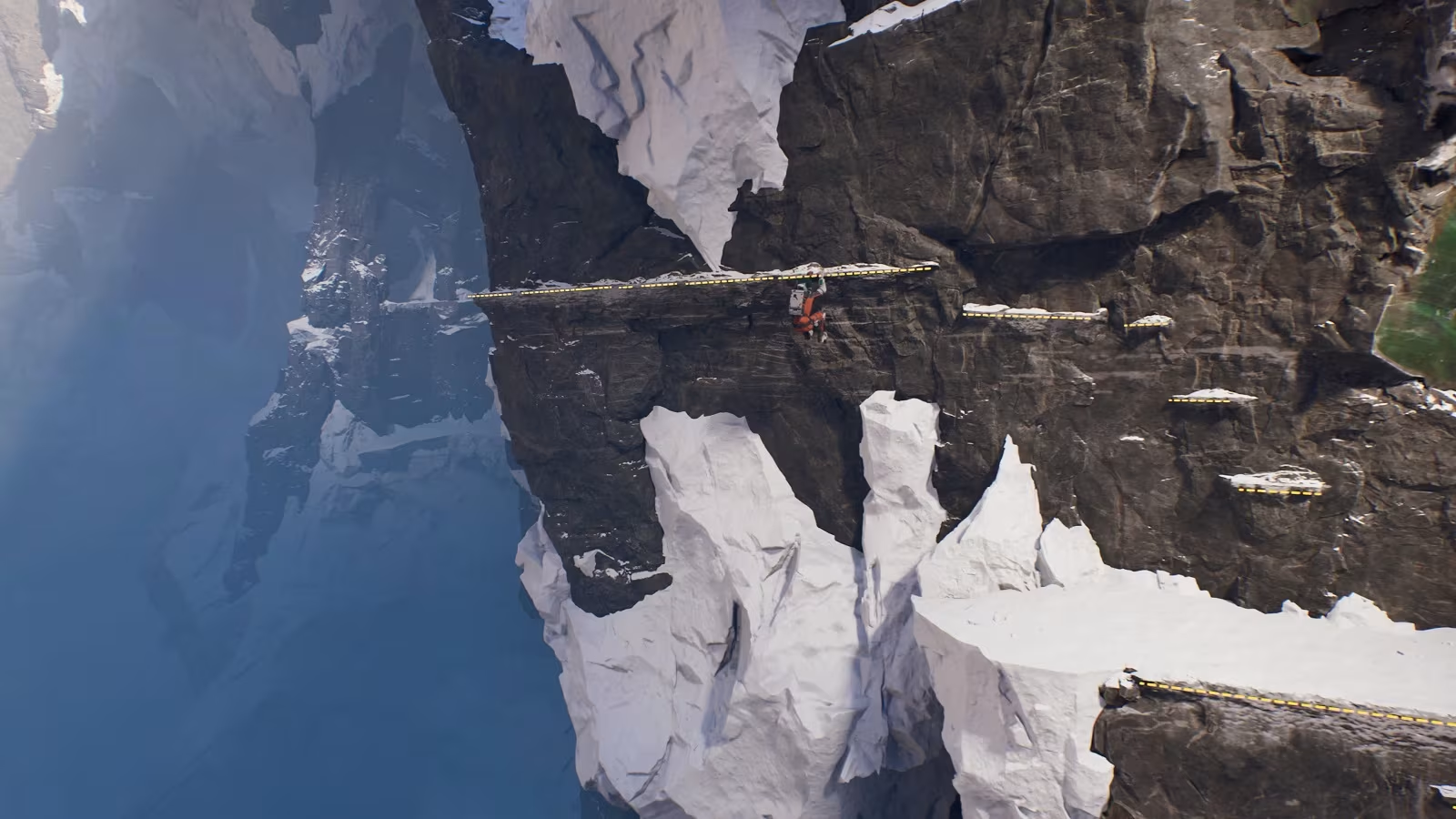
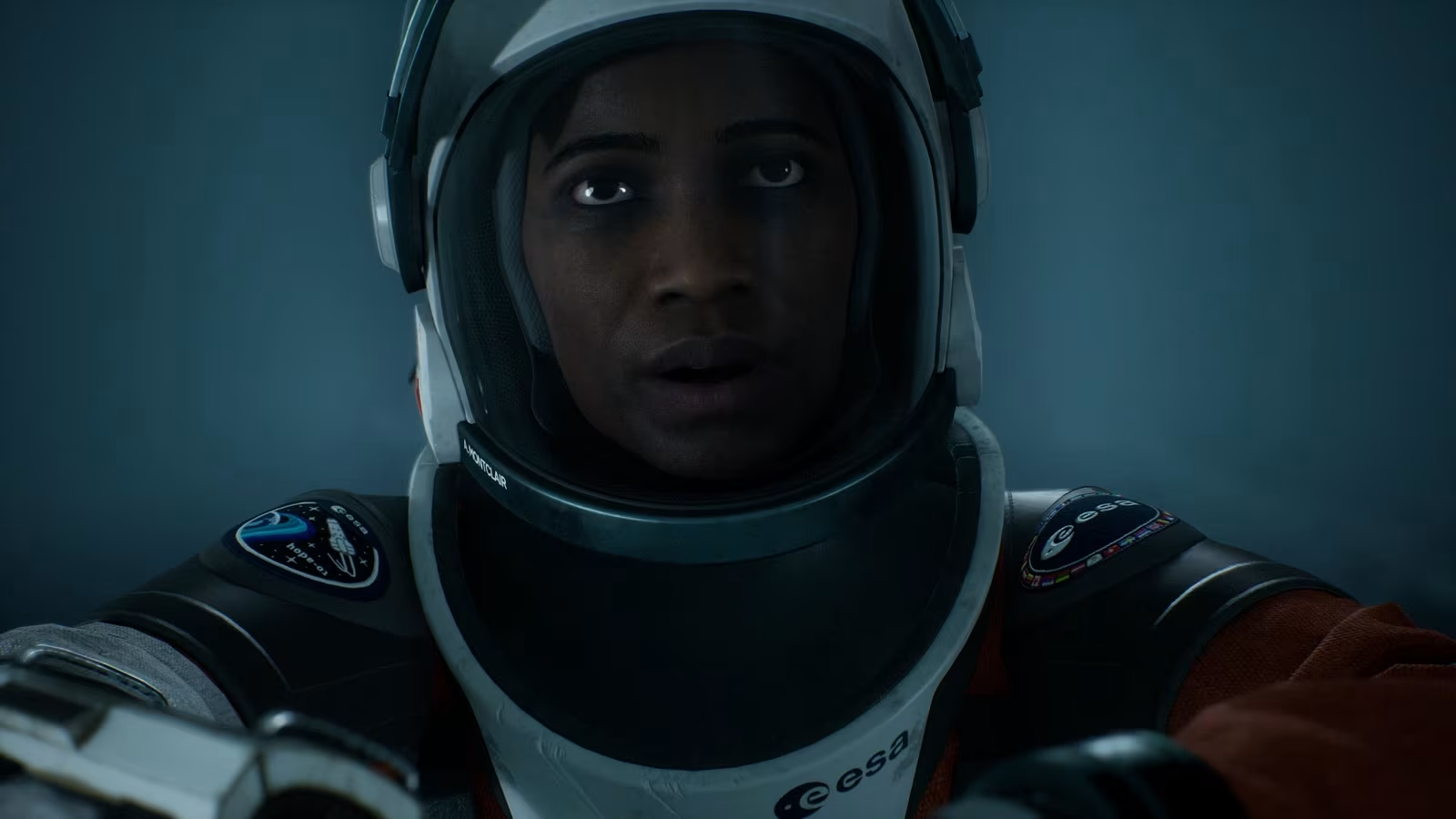
What does consistently land is the presentation. Aphelion looks expensive in the right places: the icy landscapes, the lonely vastness, the shimmer of alien light on hard surfaces, the faces doing a lot of the emotional heavy lifting in near isolation. The aesthetic, animation, and audio are the game’s strongest assets, and there’s a real sense of scale to Persephone, even when the gameplay is funneling you through narrow paths and very obvious “please move here now” level design. The atmosphere is persuasive. If you’re willing to meet the game halfway, it can absolutely make you feel stranded in the best way: alone, exposed, and just a little bit scared of what might be under the ice.
The issue is that Aphelion often treats atmosphere as a substitute for interaction. For a title built around traversal, stealth, and exploration, I found the moment-to-moment play disappointingly thin. There are numerous issues here: clunky climbing, over-reliance on linear progression, limited variety, and a sense that the game is asking for precision while not always providing clean enough control to make that precision satisfying. That frustration matters because Aphelion is not a game that can afford to be mechanically sloppy. Its whole structure depends on momentum. When that momentum stalls, the seams start to show, and I became much more aware of how much of the experience is just walking, clambering, waiting, or edging past something the game wanted me to fear without really letting me engage with it.

There’s a fine line between tension and tedium, and Aphelion walks it in heavy boots. The stealth sections, in particular, feel like they are borrowing prestige from better games rather than building a system of their own. I could see the shape of the intended experience — danger, scarcity, vulnerability, careful movement — but the execution too often reduced that fantasy to friction. One could argue that the design heightens isolation, or conversely that it undercuts the pace with clunky platforming and unnecessary oxygen-management headaches. Both readings make sense. Aphelion is at its best when it makes you feel small. It is at its worst when it makes you feel like the controls are fighting you for the privilege.
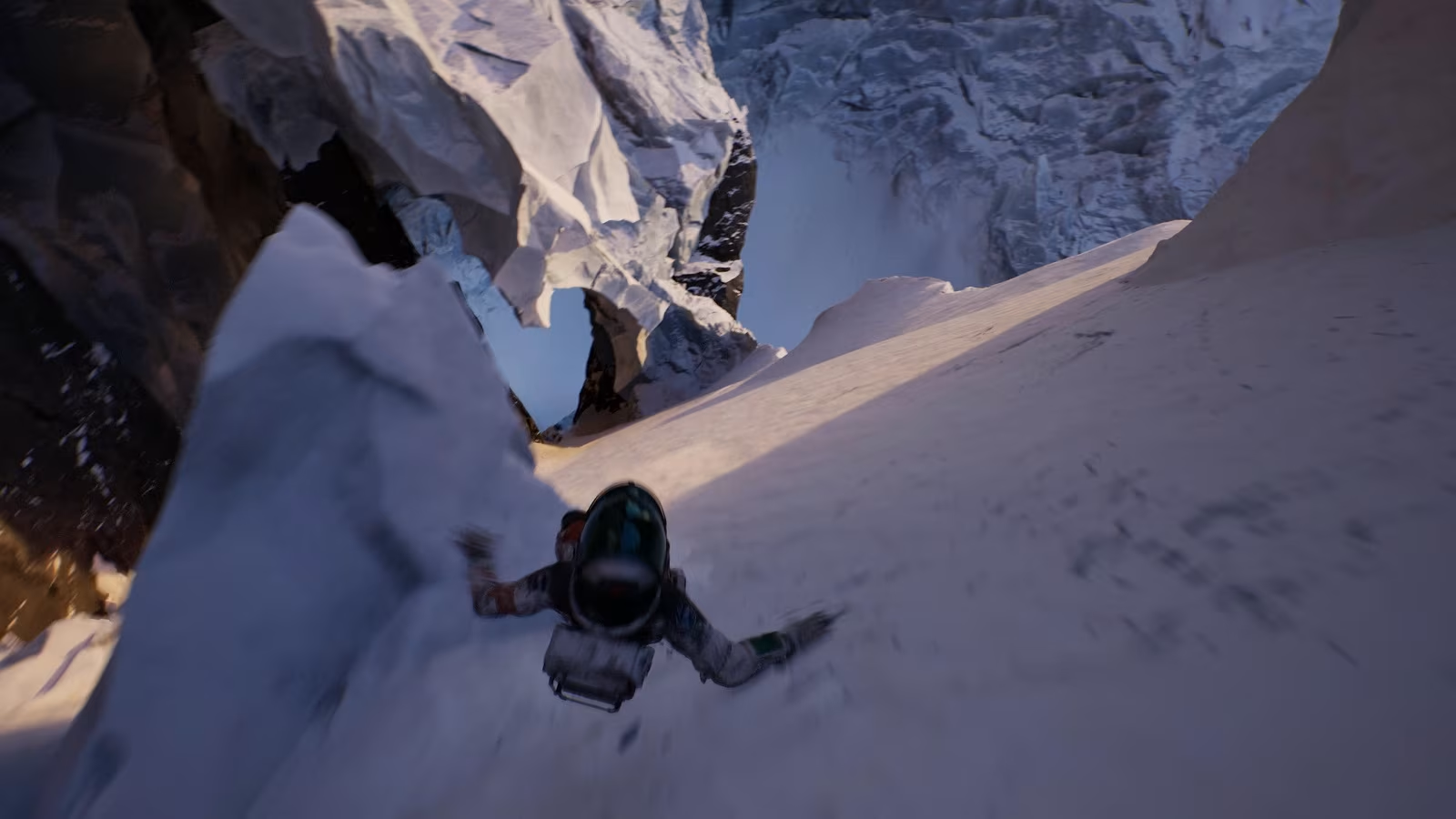
There’s a version of Aphelion that could have been genuinely special if it had trusted either its narrative or its mechanics a bit more. As it stands, it’s a strong example of a game with real craft in the obvious places, and real hesitation in the ones that matter most over the long haul. Thomas spends most of the game with an injury which presents gameplay-wise as little more than a slower avatar. Despite being impaled in the torso at the start, he can still stagger around, rip down metal bridges to create pathways, and do pretty much everything Ariane can do… but more leisurely. Despite this, the writing has enough sincerity to get by, the performances are strong enough to carry scenes that might otherwise drift, and the art direction is doing a lot of the emotional work that the gameplay isn’t.
Yet, Aphelion never quite becomes more than the sum of those parts. It’s not a disaster. It’s not even close. It’s just frustratingly close to being the better, leaner, more focused sci-fi adventure it clearly imagines itself to be.
By the time the credits rolled, I was left with a game that felt complete, but not fully realised. It hit the beats it sets out to hit, delivered the experience it promised, and did so with a level of polish that’s hard to fault. But it never quite pushed beyond that baseline. For a studio known for taking risks — narratively, structurally, emotionally — that’s perhaps the most surprising thing of all.
Aphelion is worth playing if you are here for mood, character, and a premium-looking sci-fi mystery. If you want strong mechanical variety, elegant traversal, or a game that respects your time a little more, it is likely to leave you cold in more ways than one.
You can subscribe to Jump Chat Roll on your favourite podcast players including:
Let us know in the comments if you enjoyed this podcast, and if there are any topics you'd like to hear us tackle in future episodes!