PS5
PC
Xbox Series
Well this is a new experience. I’m writing a review of a game where most people likely to play it have already formed an opinion — and, in the political spirit of the times, taken sides in a 50-50 split, with vitriol reserved for anyone who disagrees.
Crimson Desert has been the subject of breathless excitement for quite some time before its launch, with every screenshot or clip of shared game footage being scrutinised, and trailers released by its own YouTube channel racking up millions of views. I know that, because I was among the breathless. Some of that is down to my questionable cardiovascular health — I wake up breathless most mornings anyway, or whenever I walk up a flight of stairs — but also because the game looked incredible. Like everyone else I wondered: could it possibly deliver on what it promised?
Because what it promised was everything.
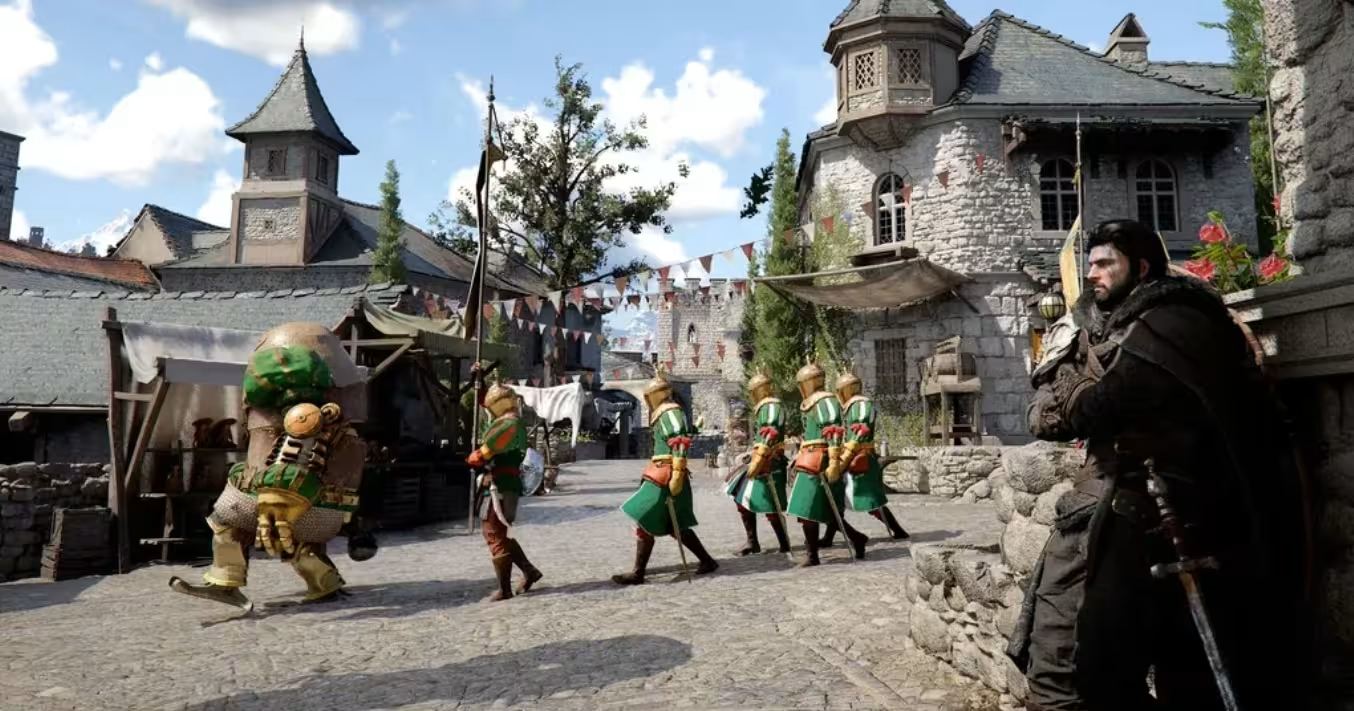
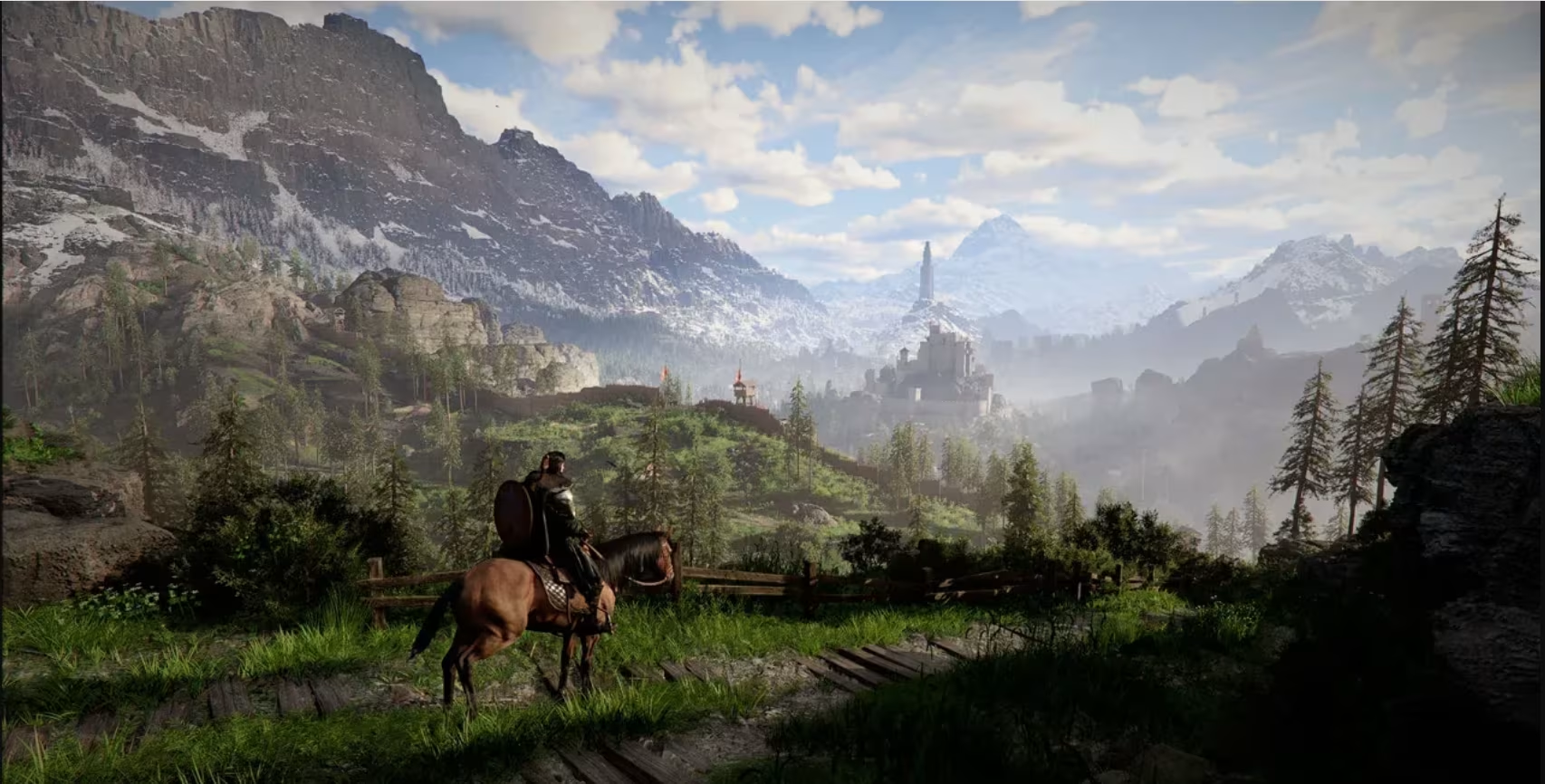
Whatever you have ever enjoyed about an open world RPG appeared to be in here. Sword fights with weighty combat, meaningful armour, meaty hits, arrows flying, gorgeous graphics, impossible draw distances, quest boards with comical side quests, intriguing story developments, crafting, fishing, portals to far off worlds, climbing, flying, solving puzzles with magic… the list goes on. Pages of it. Webpages. Discussion boards. A clip where the hero rides his horse off a cliff, jumps off, and then some kind of black cloud of magic wings appears and he flies over the beautifully drawn world beneath him, where the hero can literally go anywhere, do anything, and in impossible style.
It really did promise everything.
Remember those Evony: The King’s Return ads? It promised everything to every viewer of its ubiquitous adverts. And if you ever downloaded it, it was something else entirely. Basic, boring. It delivered almost none of its promise. Many assumed Crimson Desert would follow suit. No game could possibly juggle this many ideas and hold together.
Pearl Abyss, known for the unofficial prequel to this game, Black Desert Online, had some pedigree — but nothing on this scale.
So, did they manage it?
Well, yes and no.
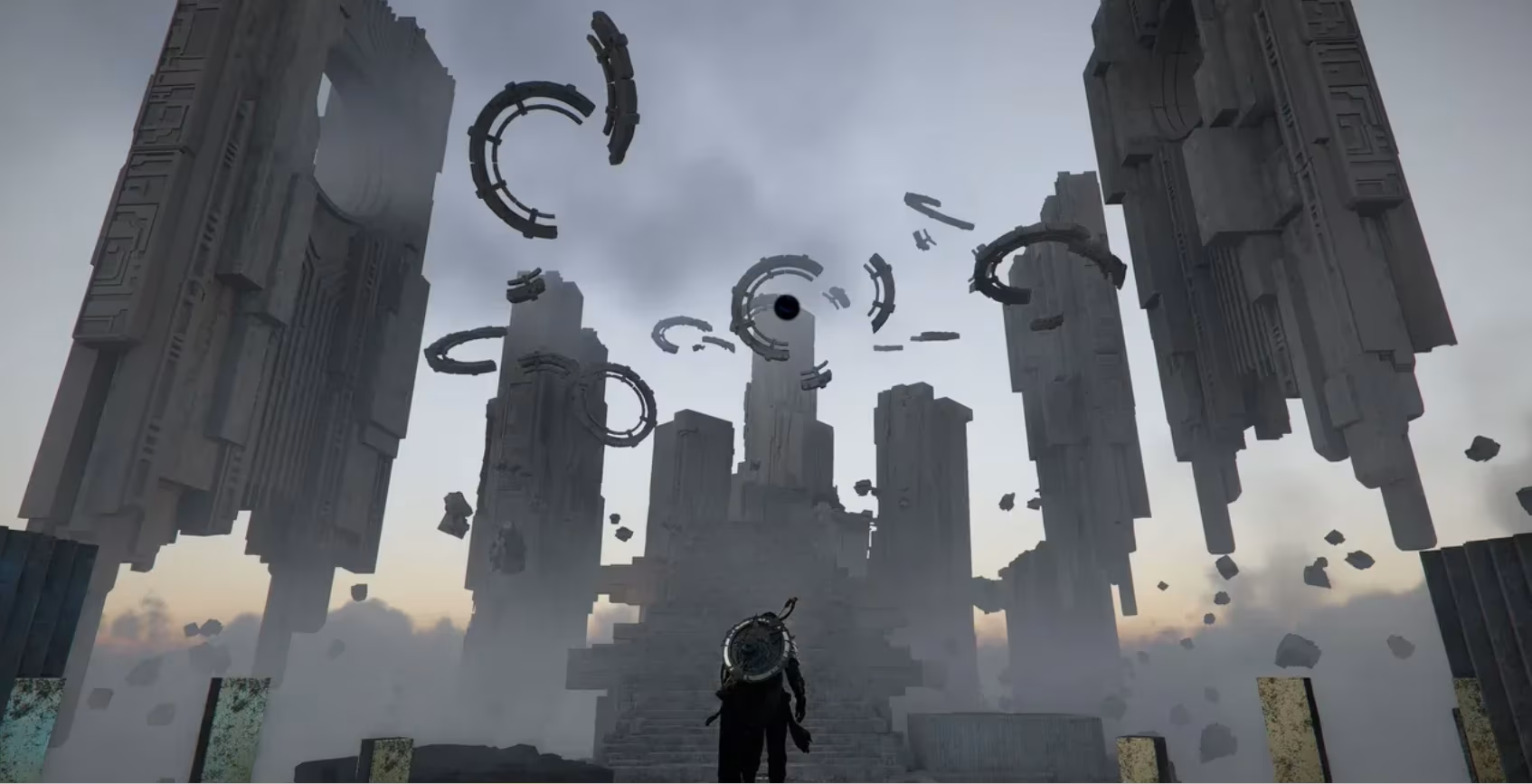
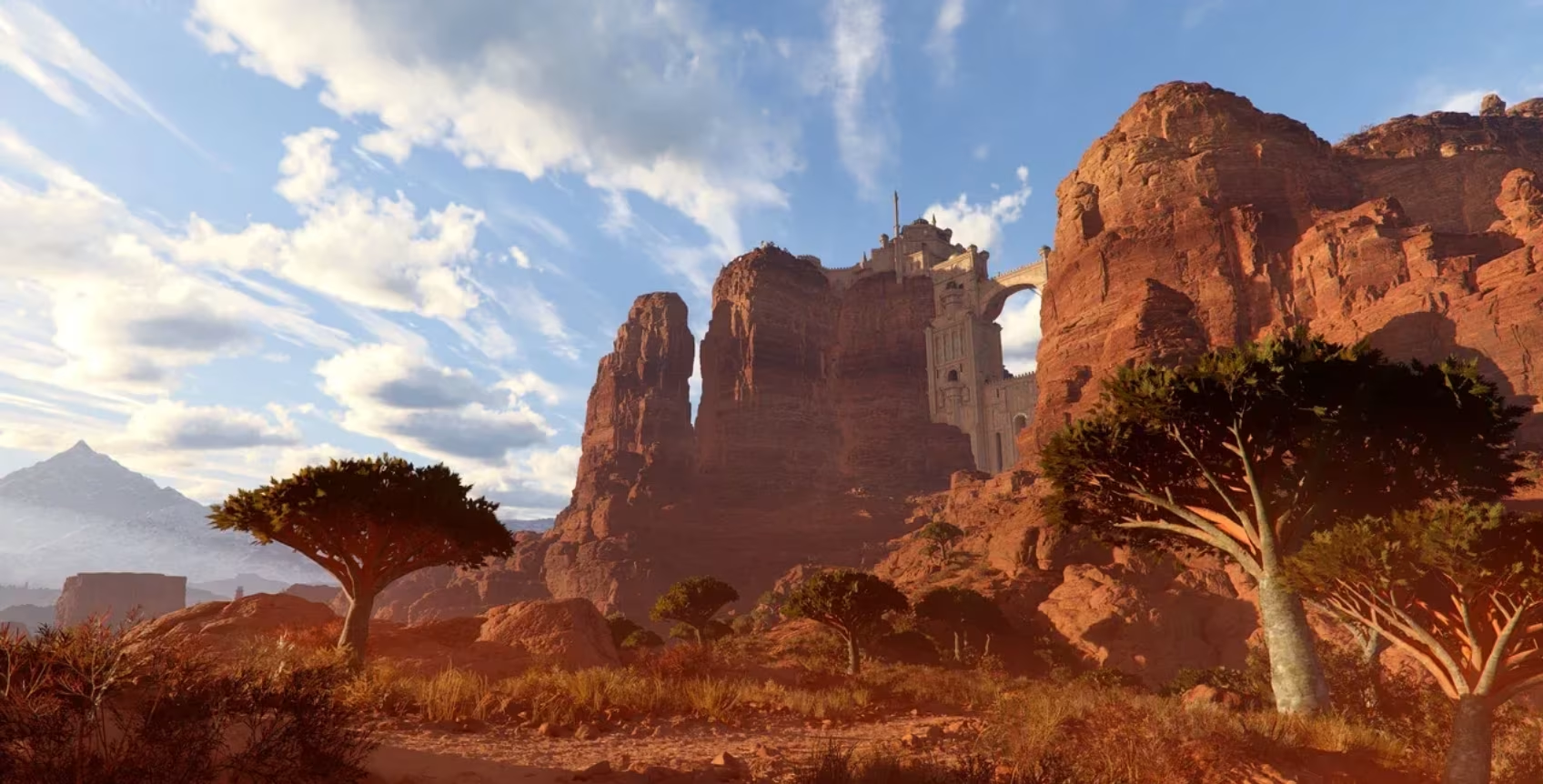
Yes, you can do everything they promised. And more. You can summon your horse, ride it off a cliff, deploy magic wings, and glide across the world. You can fish, fight, explore, craft, take portals, and constantly stumble into new activities in a huge expansive world.
But on a base PlayStation that world often looks far from what was advertised. It doesn’t need to match a top-end PC — but it should at least resemble high-end PS5 titles. Early on, it doesn’t come close. Blocky figures, poor animation, dull cutscenes, and some of the worst voice acting I’ve seen in years. It’s deeply disappointing.
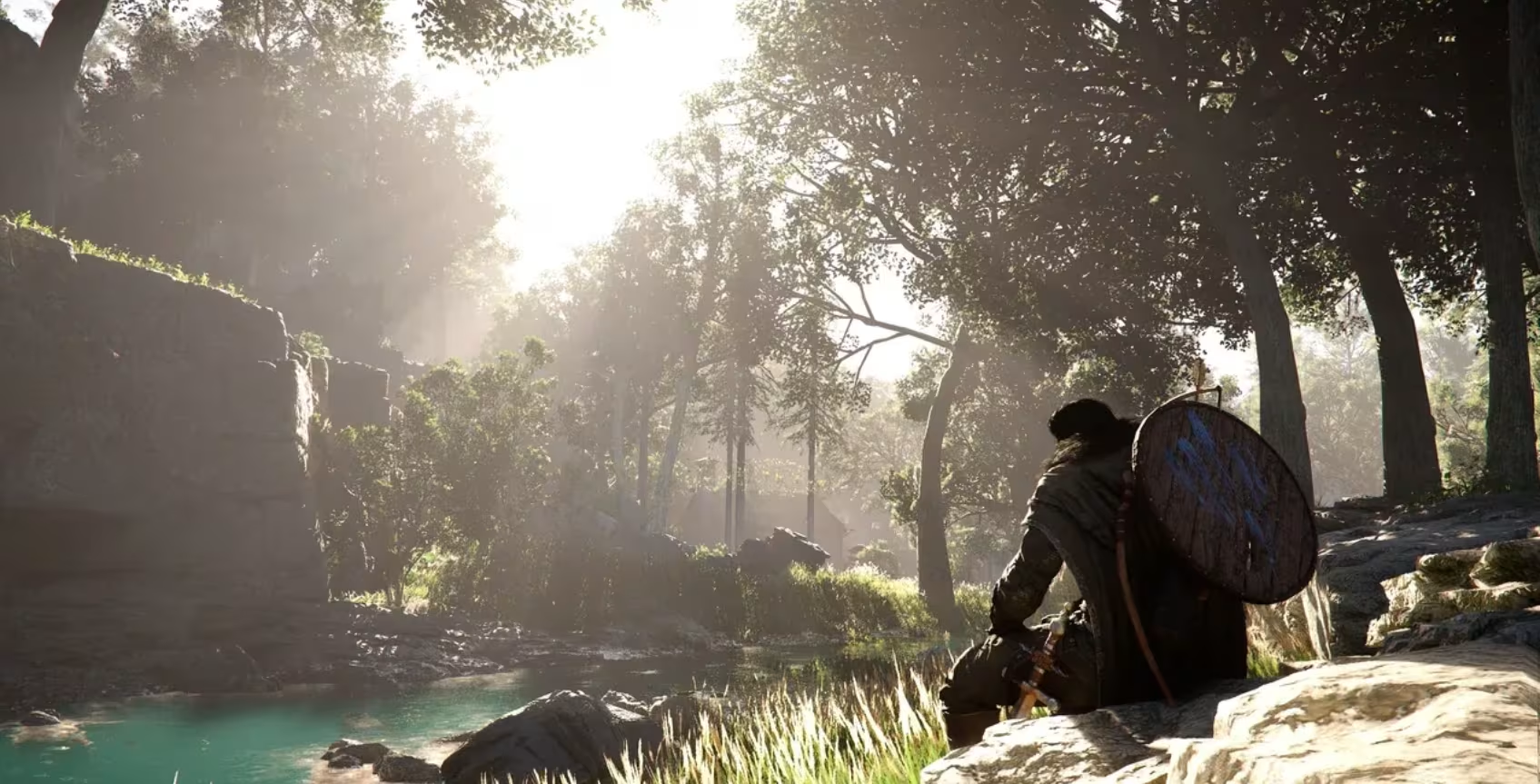
Then, after a wave of patches and the tutorial phase, things improve. The visuals stabilise. The experience becomes more consistent. It’s a moving target—one that made reviewing the game feel like trying to hit something that kept changing shape.
And yet, even once it settles, the core problem remains.
Everything is here—but none of it feels meaningful.
This Frankenstein’s monster of mechanics — stitched together from the best ideas in gaming — ends up proving that more isn’t always better.
Following a character on horseback through a conversation can work brilliantly—if the writing supports it, as in Red Dead Redemption. Here, it doesn’t. Your protagonist is dull, surrounded by overacting NPCs, delivering dialogue that sounds like it was written by a hard-of-hearing Guy Ritchie fan. You last about twelve seconds before reaching for the skip button.
If fast-forwarding were a microtransaction, I’d have paid for it. Gladly. Repeatedly. Possibly to the point of homelessness.
Flying? You get it because someone gives it to you. Why? Doesn’t matter. It’s cool, so it’s included. Alec Newman, the voice actor, reportedly had to fight for years just to get a backstory for the character — and that near the end of development, they agreed. When you hear that, you know you’re in trouble. But after playing this game, the only bit of the story I have trouble believing is that they listened to him.
Quests come and go, and offer nothing in the way of intrigue or fulfilment. Finish a quest? Great, but instead of setting off anew into the world, free as a bird, a new quest starts, and there is simply no explanation for suddenly walking for half a mile straight to a crying child to find out why they’re crying. If an NPC speaks to you, they throw their arms around constantly while the voice actor attempts to find some way of making the inane nonsense interesting. And failing, either because the dialogue is recycled crap from other games, completely out of place in the world you now find yourself in, or because they can’t act. Or both.
The controls have also become a strange badge of honour. People defend them as something to “learn,” rather than acknowledging how unintuitive they are. The fault, apparently, lies with the player—not the design.
The world itself is vast, but hollow. Not because it lacks content, but because it lacks intent. Everything is included because it existed somewhere else first. It’s magpie design — collecting shiny ideas without understanding why they worked.
There’s no cohesion. No identity. Just scale.
Much has been said about AI being used in development — and whether or not that’s true, the result feels exactly like the warning signs people feared. It didn’t take the confessions of the studio to make me believe that AI was used in its creation, but they might have to work harder to convince me that any actual people were involved.. It’s a game assembled from patterns rather than purpose. Impressive in scope, but empty in meaning.
There’s a film, Synecdoche, New York, where Caden Cotard is given a lifetime grant to create art, and proceeds to build an ever-expanding replica of his own life inside a vast warehouse. He hires actors to play everyone he knows, then actors to play those actors, the project spiralling into something so limitless it becomes devoid of meaning. Meanwhile, his wife follows her own path, making paintings smaller and smaller, until they require a microscope just to be seen.
I recognise something of myself in Caden’s instinct; the belief that limitation is the enemy of art. I’ve always believed that more freedom makes better games. That a fully open, living world would be the ultimate RPG.
After playing this, I’m starting to think that’s the worst idea imaginable.
Players don’t just need freedom. They need intent. They need a reason for the world to exist, for their actions to matter.
After hours in Crimson Desert, I still don’t know what that reason is.
And yet—people will still buy it. Many already have, and plenty of them love it. There’s a lot to do, even if much of it feels inconsequential. For some players, that’s enough.
But for me, I would trade 99% of this game’s scope for a single, clear vision. Something original. Something purposeful. Something that justifies its existence beyond stitching together other games’ ideas and throwing them at the wall.
You can subscribe to Jump Chat Roll on your favourite podcast players including:
Let us know in the comments if you enjoyed this podcast, and if there are any topics you'd like to hear us tackle in future episodes!