
PC
I never thought I would play multiple Disco Elysium clones in my lifetime. ZA/UM’s award-winning CRPG redefined its genre, and depending on who you ask, the AA games scene as a whole. The title’s success is in large part due to its swaths of fantastic writing, and for reasons that should be obvious, that’s not easy to replicate. Surprisingly, though, a few developers have tried — and succeeded. In 2022 there was Citizen Sleeper. Earlier this year, Esoteric Ebb arrived. Now there’s Aether & Iron. It uses more-or-less the same gameplay systems as its contemporaries, a setting with a similar vibe, and has great graphics. Most importantly, though, its dialogue and characters are second to none. The title likely won’t have the same gigantic impact on the industry that Disco Elysium did. But it’s still a fantastic experience.
As is usually the case with Disco-likes, in Aether & Iron, you play as a washed up smuggler named Gia. Unlike Harry Du Bois or The Cleric, she doesn’t have any voices in her head nor a too-smart sidekick. But her goal — and consequently yours — is the same as it always is. You’re thrown into a decopunk 1930s New York that looks a lot like Rapture, and tasked with saving it from the powers that be. That involves doing what you usually do in these sorts of games. Your first few missions are small potatoes, but as the title progresses, you have to investigate conspiracies and take on increasingly dangerous enemies.
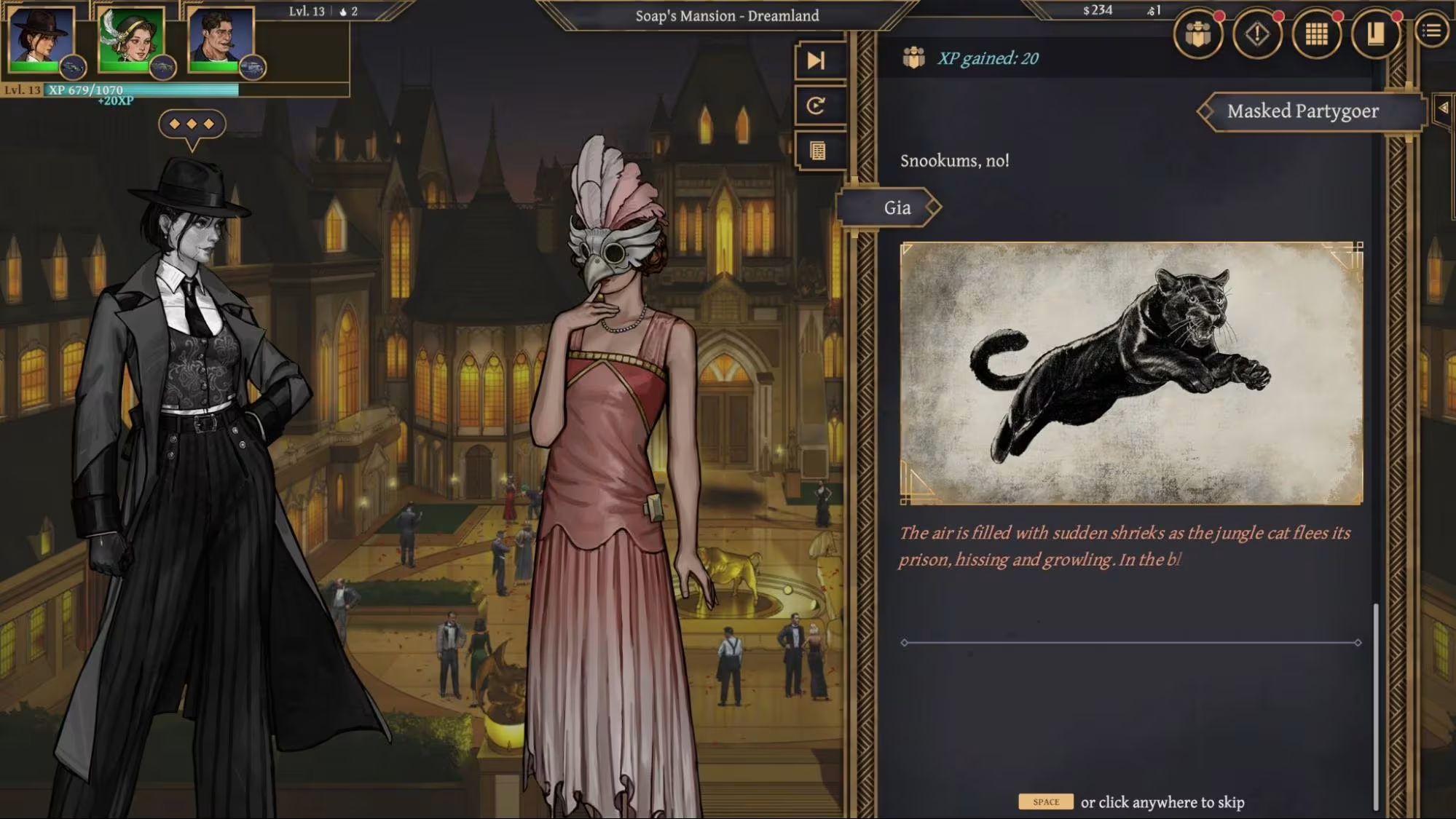
Aether & Iron won’t win any awards for its overarching story. It’s by no means bad, but it’s a lot more blunt than many of its competitors. In the game’s alt history version of the financial capital of the world, the world is powered by aether. It’s a substance that fuels everything from cars to guns to the generators that allow entire boroughs to float above the ocean. Unsurprisingly, it’s also controlled by the ultra rich who literally look down on the citizens they supply with the stuff. Taking them to task in Aether & Iron is a mostly predictable affair. It involves all of the twists, turns, factions and betrayals that you’d expect, and very few that you won’t. Its developers clearly have something to say about capitalism and crime, and they do so well but without any nuance. It’s like Bioshock, just set in a floating dystopia instead of an underwater one (or a floating one run by racists).
Having a cliche story should be a death sentence for a title whose gameplay involves a lot of dice rolls. But, narrative-wise, Aether & Iron isn’t just saved by its writing. It’s the best element of the game, and some of the best I’ve ever read or listened to. Like with the game’s plot, none of its chunks of text or the characters that spew it out are groundbreaking. The title is filled with the expected cast of cops, crimelords, union organizers and work-a-day mobsters. Your main companions are a too-tough mechanic, a naive scientist, a zealous movie star and a soft-on-the-inside dock worker. Gia herself is little more than a Han Solo type, sans the dumb last name and with the same depressing backstory.
But almost every word they utter is fantastic. You can practically smell the cheap cigarettes and stale whiskey coming off Aether and Iron’s characters. The game nails the grimy atmosphere that L.A. Noire was chasing 15 years ago, with dialogue that feels pulled straight from a Depression-era dime-store novel. Its visuals and music sell the setting perfectly, turning what might have been a forgettable story into a world you want to live in — or at least one that might have you calling people “toots” and “broad” in real life.
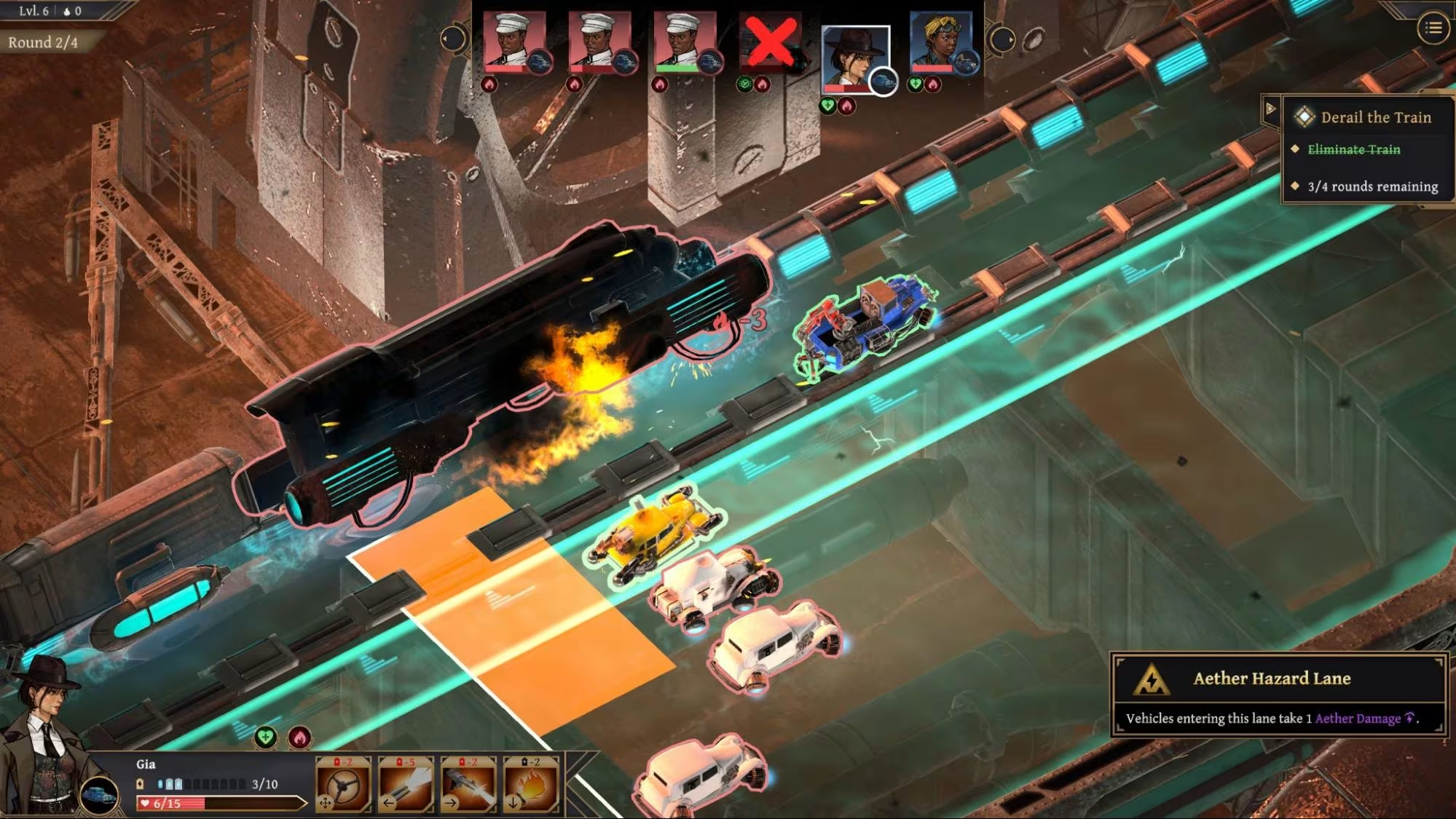
The fact that Aether & Iron has actual gameplay makes it worth playing, too. Unlike a lot of CRPGs, the title includes a toned-down version of Baldur’s Gate 3’s mechanics. Although the bulk of the 10-to-15 hour experience takes place in dialogue menus with lots of skill checks, you’re frequently forced to duke it out with your enemies. It’s a mostly simplistic affair. You move your party’s cars around linear road-themed arenas, and take turns with other ne’er-do-wells to deal damage. You can upgrade your combat abilities with the expected sets of equipment and skills, too. It’s a perfectly serviceable system that works well for what it is, and adds some appreciated, if unnecessary, variety to the overall experience.
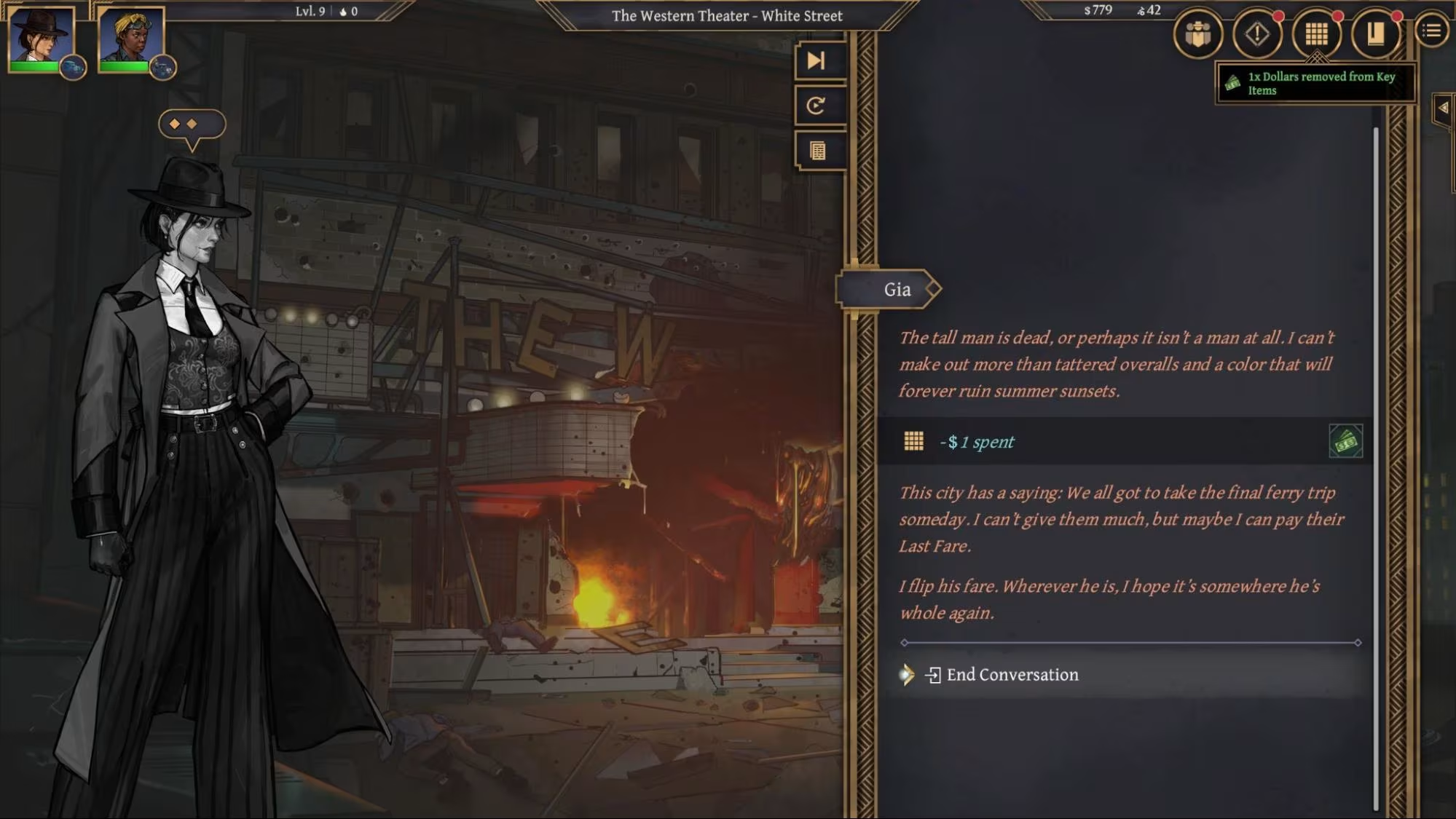
With all that said, it may seem strange to recommend Aether & Iron. Its narrative is cliche, and not in a self-aware way. The title’s gameplay is similarly only okay, and it doesn’t do much that the titans of the industry haven’t done before. Aether & Iron’s writing cannot be understated, though. It’s not only the best part of a generally mediocre game, but one that’s almost unparalleled in the industry. It succeeds at doing what Bioshock and L.A. Noire (arguably) failed to achieve during the earlier days of gaming. Aether & Iron makes you want to don a fedora, buy a .38 stub nose revolver, and chain smoke Lucky Strikes while contemplating the effects of greed and corruption on the world. There’s not a ton of nuance to that train of thought, nor is there much in the game. Sometimes subtext isn’t needed, though, just a great vibe. And Aether & Iron has that in spades.
You can subscribe to Jump Chat Roll on your favourite podcast players including:
Let us know in the comments if you enjoyed this podcast, and if there are any topics you'd like to hear us tackle in future episodes!