
PS5
PC
Xbox Series
I’m going to start this review by talking about Dragonkin’s obvious inspiration. My son and I had a love-hate relationship with Diablo 3. He loved it. I hated it. For him, it was a beautifully made dungeon crawler, full of exciting loot, where levelling up your combat abilities and your equipment gradually turned you into a death machine, against beautifully designed enemies — a AAA playground where you could hone your skills and feel like a total badass.
For me, it was a hideously repetitive hack’n’slash where you spent more time in your inventory sifting through mountains of useless loot than actually fighting. You were so overpowered that enemies died the moment they appeared on screen, making their design and story largely irrelevant. A demon might appear, hovering above a pentagram — intricately designed, full of implied backstory — only to begin, “Finally, you have come. I have waited a thousand yea-” before being instantly obliterated by your overpowered death ray. Whatever story it had to tell didn’t matter, because you’d never hear it.
Repeat that experience a million times and strip away every other interesting facet of game design, and that’s what playing Diablo 3 was to me. Apart from the occasional enemy that didn’t die instantly — in which case, you did. You were essentially a god, right up until you weren’t. I took its popularity as some kind of end-of-times indicator that we didn’t deserve thoughtful game design or interesting stories.
We also tried Diablo 4 at my son’s behest. It didn’t change my opinion, but it probably nudged him closer to mine. We stopped playing it fairly quickly. He hasn’t gone back to it since — though I’m fairly sure he snuck in a few Diablo 3 sessions when I wasn’t looking.
So. Here comes Dragonkin: The Banished. In its defence, it’s a local co-op game, and there aren’t nearly enough of those. I love nothing more than playing co-op with my son—levelling up characters in ways that feel personal while exploring a world together. Can Dragonkin deliver?
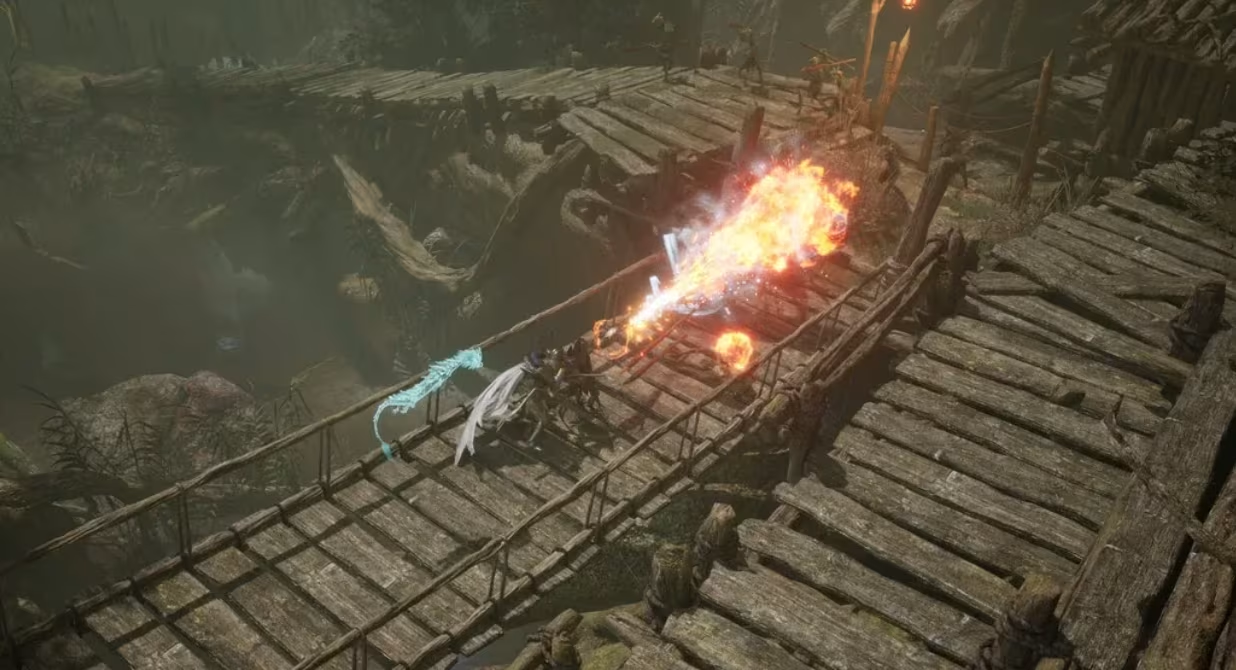
When we fire it up, and hack through the intro, it’s immediately clear: this is a Diablo clone. Almost to the point where it’s hard to tell them apart, aside from this being AA rather than AAA. Not promising.
But as we choose our characters and start smashing through enemies, differences begin to emerge.
First, the combat is slightly more engaging. It still throws hordes of enemies at you, many of whom die quickly, but it feels more balanced. We had to heal more often, and there was at least some sense of how a fight was going before one of us suddenly dropped dead.
Second — and this is a big one — the skill system is far more interesting. Abilities are assigned via a hex-based “Ancestral Grid,” where skills interact depending on how they’re positioned relative to one another. It’s initially confusing, but becomes intuitive over time, offering a genuinely engaging way to customise your character.
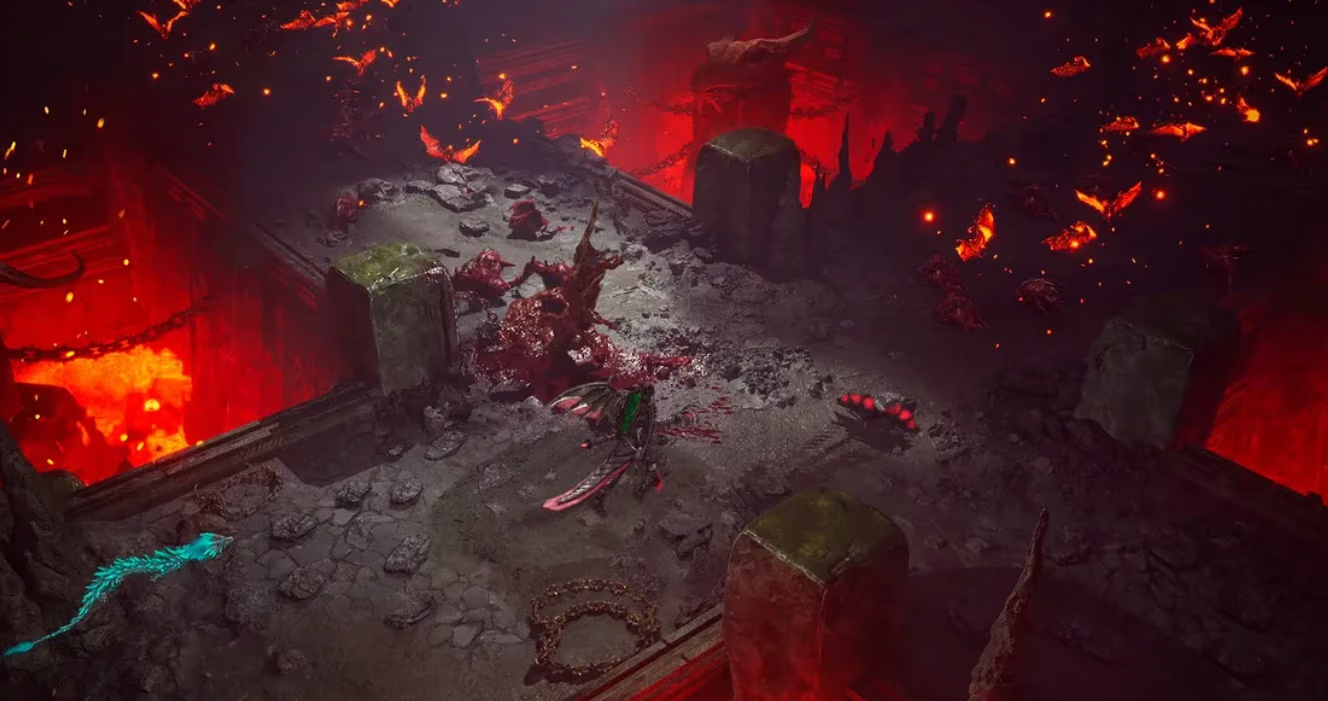
Third, there’s a central hub city that you can upgrade. It’s not full base-building—you don’t control layout or aesthetics—but it adds an extra layer of progression that the genre doesn’t always bother with.
That’s a recurring feeling while playing Dragonkin: it offers more than this sort of game usually does. The story is nothing special, but it’s serviceable. Wandering the world, battling enemies alongside your wyrmling — a small dragon companion that occasionally proves useful — feels more engaging than Diablo ever did, at least to me.
You’ve got the usual archetypes: melee (knight or barbarian), magic, and a rogue-style ranged character, which I gravitated toward. Firing off bow shots, laying traps, and raining arrows from afar is satisfying, even if none of it is particularly groundbreaking. Combat can become visually chaotic, with the screen filled with enemies and damage numbers, but to the game’s credit, it runs smoothly throughout.
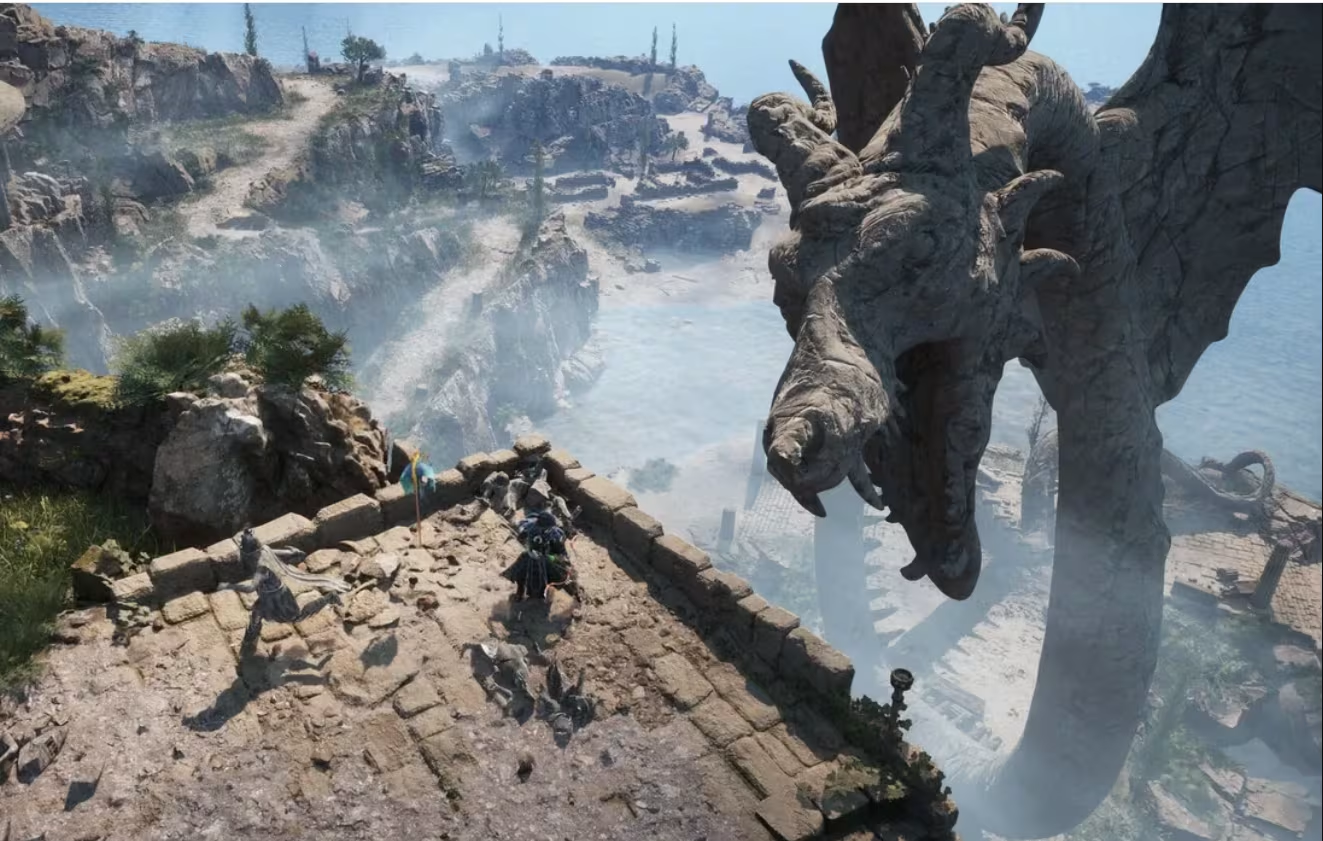
The story is clichéd and predictable, but that’s par for the course. The gameplay is repetitive, too—but again, that’s the genre. What Dragonkin does well is add just enough depth to make that repetition feel worthwhile. There’s a sense of progression and personalisation that kept me more engaged than I expected after those first few hours.
There is so much I feel I’ve yet to discover too, especially with the other character classes, which seem to offer genuinely different playstyles. Within the inherently repetitive loop of hack-and-slash gameplay, Dragonkin manages to introduce enough variety to keep things interesting.
Your opinion of Diablo will heavily influence whether this appeals to you. If, like me, you’ve grown weary of that formula, Dragonkin is at least worth a look. Its progression systems and added layers may surprise you.
Most of this review has been aimed at sceptics. If you already enjoy this style of game, then I have no hesitation in recommending it. You’ll likely have a great time. Even those who find the genre repetitive may find something here that clicks.
You can subscribe to Jump Chat Roll on your favourite podcast players including:
Let us know in the comments if you enjoyed this podcast, and if there are any topics you'd like to hear us tackle in future episodes!