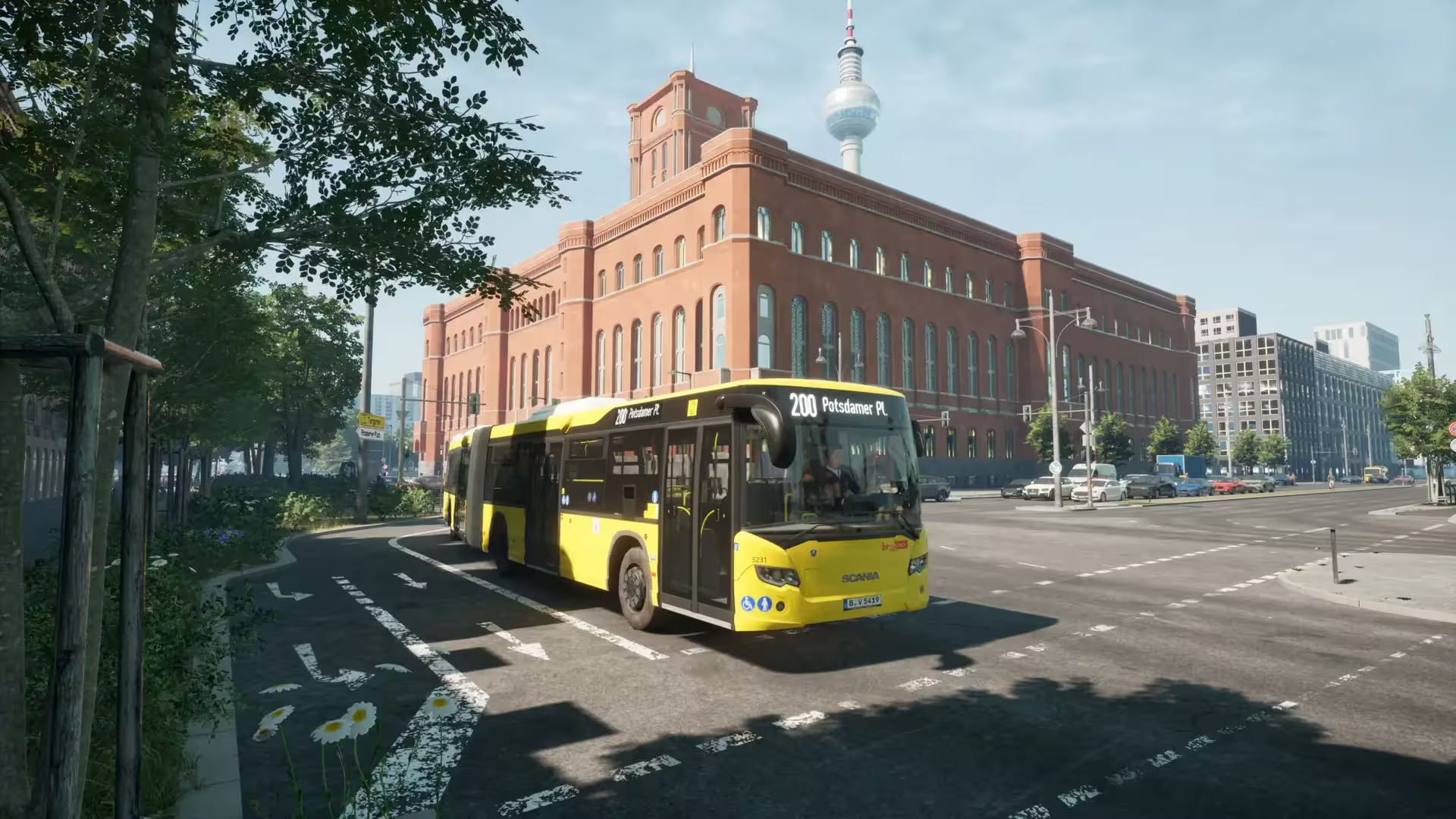
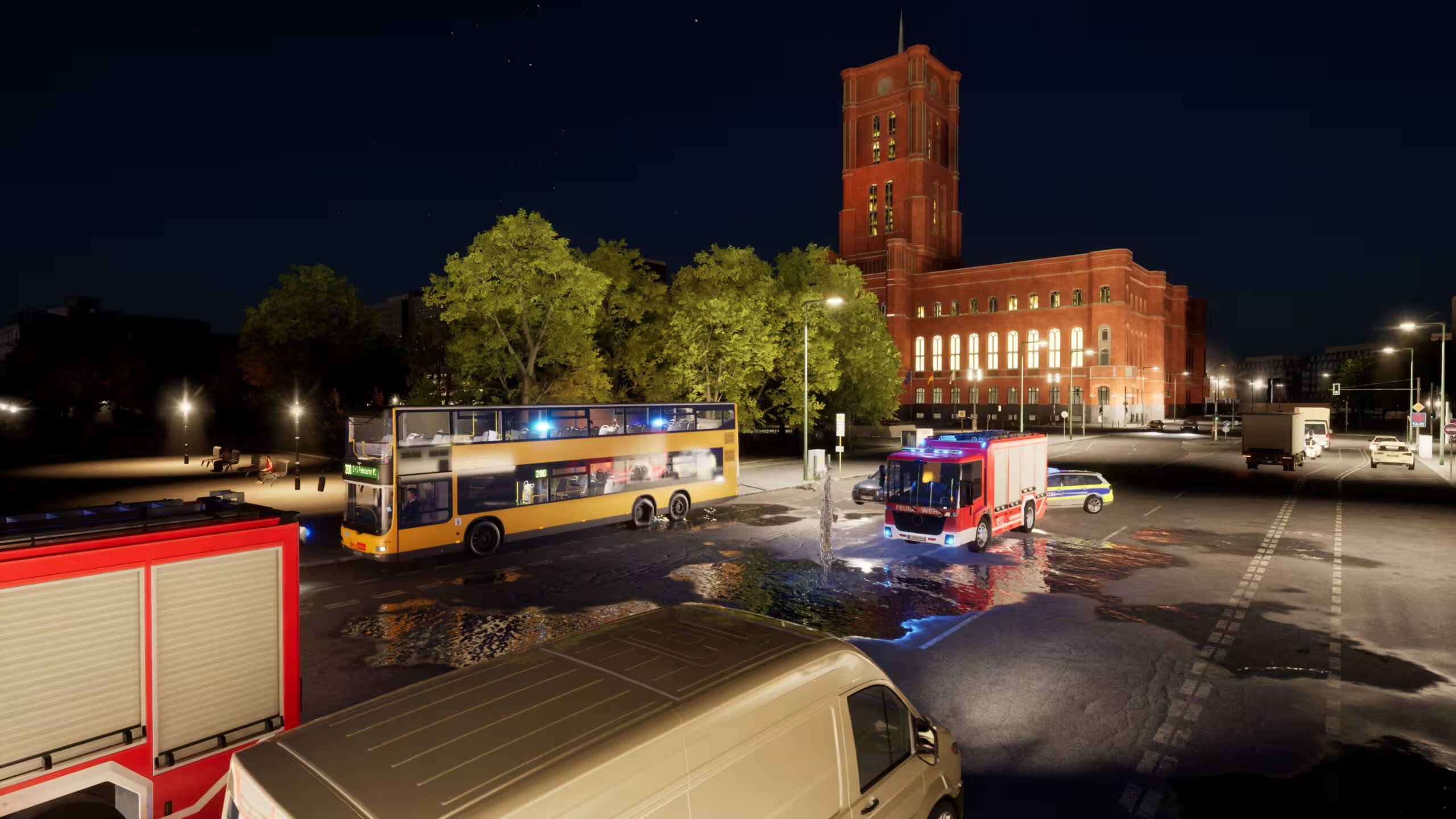
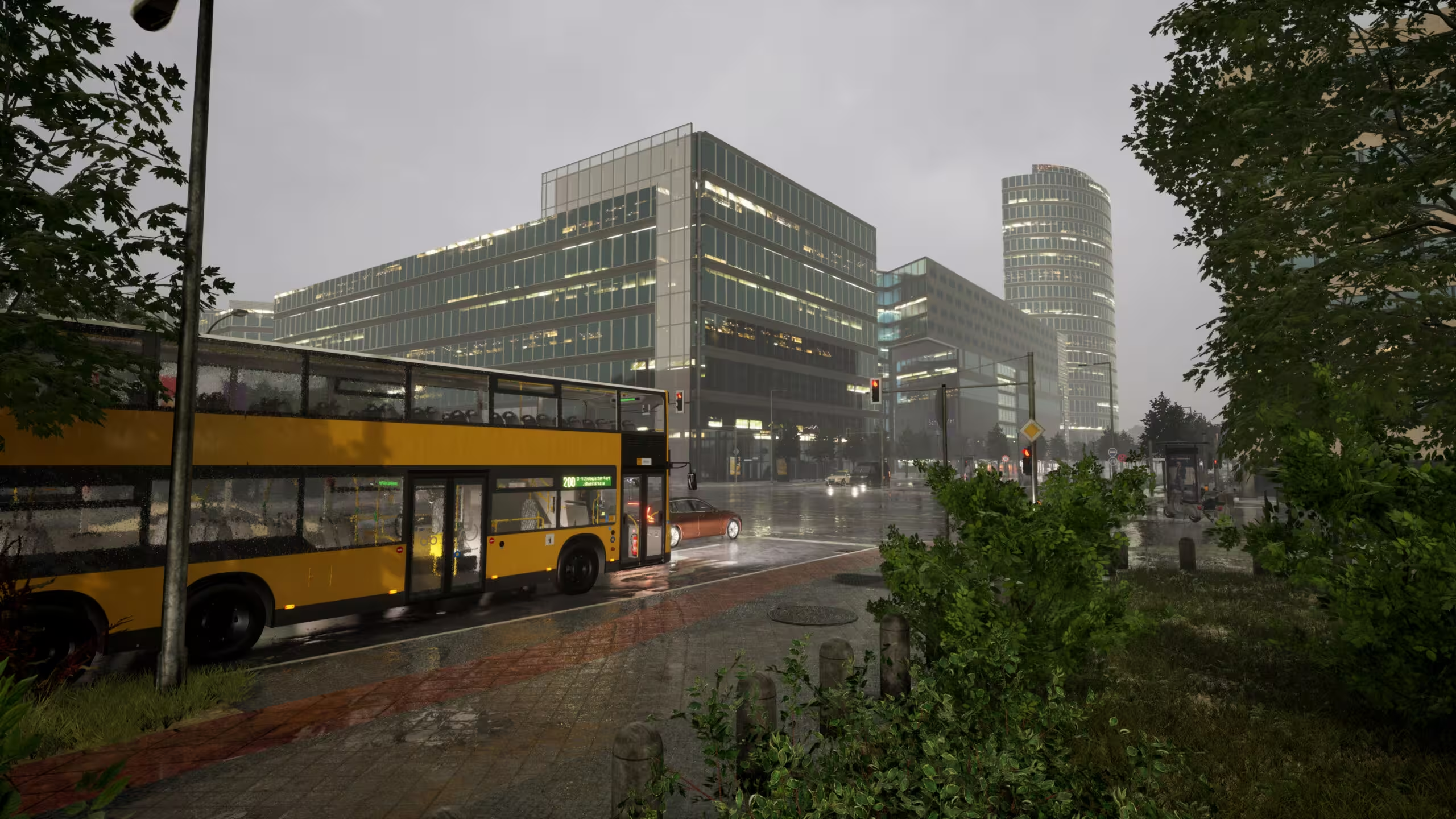
Imagine cruising past the iconic Brandenburg Gate in a hulking 18-metre Scania Citywide articulated bus. The weather around you is perfectly synchronised to the actual, real-world conditions currently happening outside your window in Berlin. The live, interactive radio station – Flashbass.FM – is humming in the background, playing a relaxing mix of music and moderation. Suddenly, you're forced to slam on the brakes. A blaring fire engine cuts across the intersection, rushing to one of the over 100 dynamic traffic accidents generated in real-time across the map. As you wait for the intersection to clear, you use your in-game mobile phone to report a speed camera to the radio studio, and moments later, the live moderator broadcasts your warning to other drivers.
This isn't just a scripted set piece; it's the meticulous, living world of The Bus, an ambitious vehicle simulator that officially released its highly anticipated 1.0 version on March 26, 2026. Bringing the urban sprawl to the masses, the game successfully launched simultaneously across PC, PlayStation 5, and Xbox Series X|S.
For years, the simulation genre has thrived on the mundane made magnificent. But with The Bus, the developers at TML-Studios are pushing the boundaries of what a public transit simulator can be. They have offered players a truly staggering proposition: a completely realistic 1:1 scale recreation of the German capital.
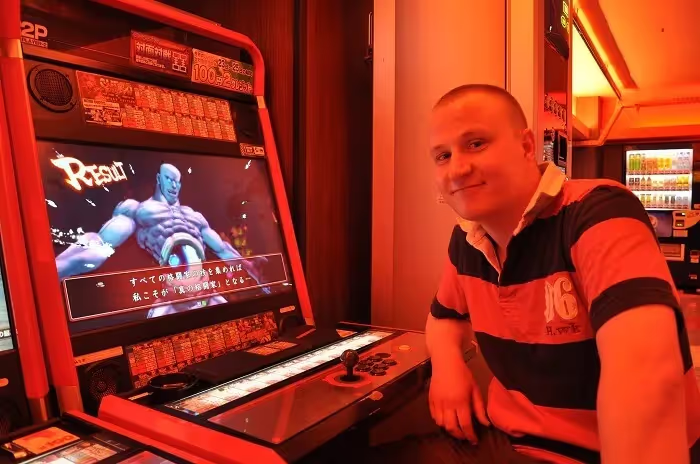
"Why Berlin? Authentic and with lots of variety in the traffic and places," explains Maurice Freund, the Marketing & Community Manager at TML-Studios. "It's a great city to start with a bus simulator".
Mapping the Metropolis: Why Berlin was the Ultimate Canvas
To understand the sheer magnitude of this project, we have to look at the studio behind the wheel. Based in Erfurt, Germany, TML-Studios is an independent outfit that has been crafting creative PC games and 3D real-time simulations since 2004. This team is no stranger to the virtual road. They built their reputation on popular genre staples like Tourist Bus Simulator, Fernbus Simulator, and the underground World of Subways series. They even have prior experience with intricate city-transit maps, having previously developed dedicated bus simulators for New York and Munich.
Yet, The Bus represents their magnum opus. The team wanted to build an authentic 1:1 scale city from the ground up, and as the capital, Berlin offered the perfect mix of iconic landmarks and complex traffic patterns.
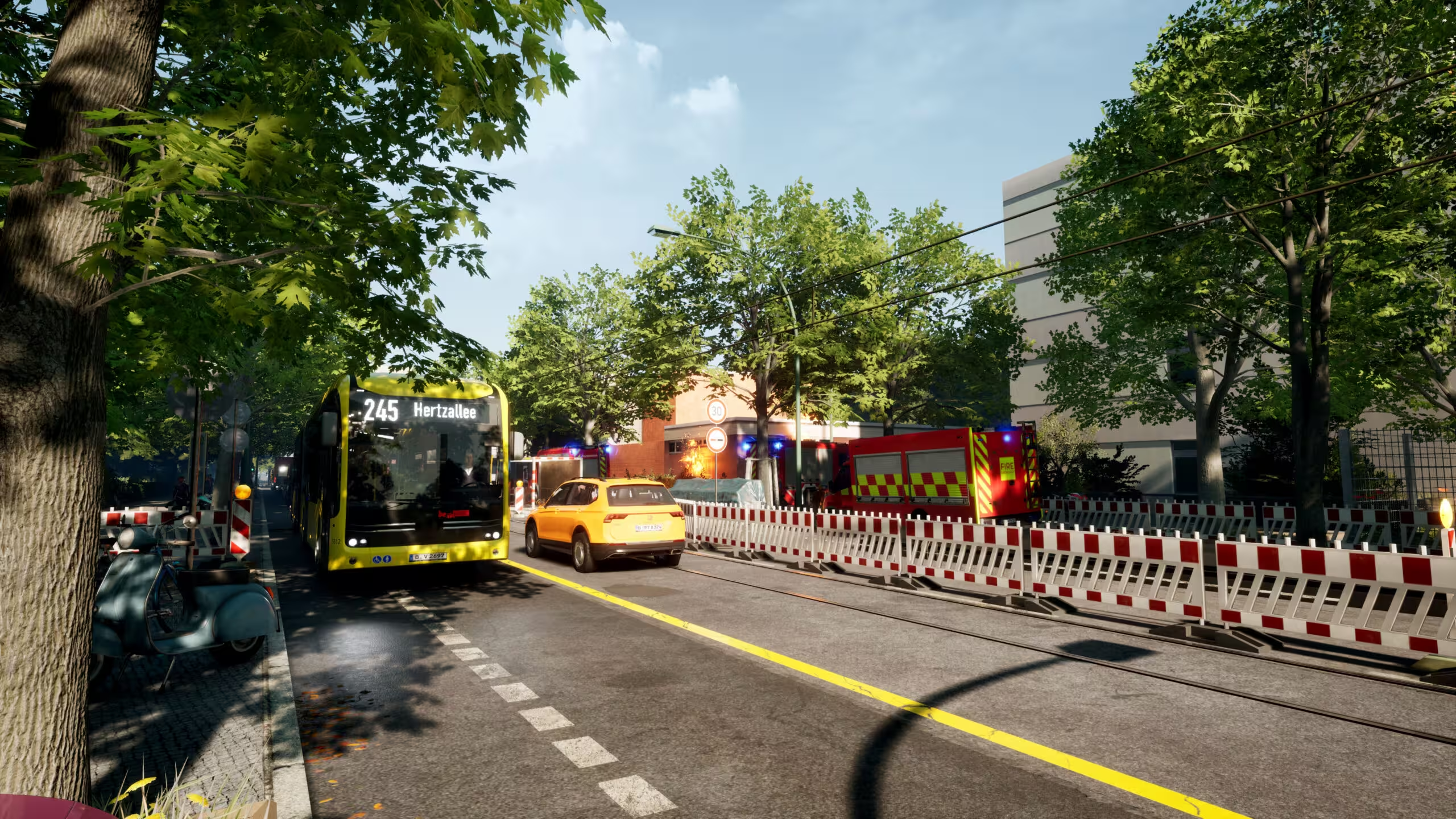
The sheer scale of the project necessitated a methodical approach. Since its Early Access launch on Steam in March 2021, the game has evolved through three massive developmental phases. Phase 1 laid the groundwork, introducing the TXL line and core mechanics like passenger boarding and ticket sales. Phase 2 vastly expanded the city's network, bringing in lines 100, 200, 300, 245, and 123, while introducing robust modding tools. Finally, Phase 3 brought the highly anticipated Economy mode, beta multiplayer, and AI-driven trams to the ecosystem. Today, players can navigate nine meticulously mapped routes – including the N100, 142, and 147 – servicing over 200 bus stops.
The Bus is designed to accommodate every type of transit enthusiast. The game features three distinct control schemes. You can choose the hyper-realism of 'Realistic' mode, where you must manually start the engine, kneel the bus, and manage the doors. Alternatively, 'Arcade' mode automates complex tasks, opening the doors automatically so you can simply focus on the joy of driving. A third 'Custom' mode allows players to fine-tune the mechanics, complemented by in-game tips to help novice drivers learn the ropes.
The Fleet and the Framework: Game Modes and Licensed Buses
But The Bus isn't just about driving; it's about building an empire. The newly integrated Economy Mode allows players to start their own transit company, hire and fire staff, acquire route contracts, and manage a growing fleet of vehicles.
And what a fleet it is. The vehicular roster spans both traditional diesel and cutting-edge electric engines, featuring highly detailed models in multiple configurations, such as two-door, three-door, and four-door variants. Players can pilot the hulking MAN Lion's City double-decker, the VDL Citea, the Scania Citywide, or battery-electric marvels like the Mercedes-Benz eCitaro and the Solaris Urbino IV (featured in-game as the Galaxis).
For PC players, the experience goes even further. A robust multiplayer mode allows drivers to collaborate online, sharing routes and timetables across the vast Berlin map. You can even stop your vehicle, exit the bus, and explore famous landmarks like the Brandenburg Gate or Kulturforum on foot, completely free from the constraints of your route.
Coupled with a comprehensive modding editor available via the Epic Games Store, the community has already begun crafting custom map content and repaints, mapping entirely new fictional and real-world cities across Germany and Poland.
The ‘Goldilocks Solution’: Balancing Realism and Playability
What makes this massive virtual undertaking so astonishing is that the core team working on The Bus consists of fewer than 20 people. Building a simulator of this magnitude with a small crew – while simultaneously operating and maintaining the studio's other live games – is an incredibly delicate balancing act.
The studio relies heavily on community feedback, but navigating the passionate demands of simulation fans is no easy feat. 'As developing a simulator, it makes it tough to ensure the community is happy as everyone has a different view, but it needs to be right,' Freund admits. The team is constantly analysing feedback to improve the experience. 'We often get counter requests, so we need to find the Goldilocks solution'.
Part of that solution was a massive technical leap: upgrading the game's architecture from Unreal Engine 4 to Unreal Engine 5 in December 2022. This pivot not only enhanced the game's underlying systems – such as converting to Unreal's seamless World Partition system for better performance – but it allowed the indie team to pull off another major reveal: bringing the game's console development completely in-house.
Previously relying on external teams for console ports, working in Unreal Engine 5 made it incredibly efficient for TML-Studios to maintain both PC and console versions simultaneously, allowing them to quickly squash bugs across all platforms.
Hitting the simultaneous PC, PlayStation 5, and Xbox Series X|S release was a monumental milestone. While modding and multiplayer remain exclusive to the PC, the core 1:1 Berlin experience and the deep Economy mode are fully intact on consoles. The ambition of a 1:1 Berlin created a significant hurdle when it came to console hardware. Bringing such a dense, asset-heavy world to the living room meant the team effectively ‘maxed out what we could on the PS5’ during the optimisation phase. This wasn’t just a matter of sliding scale bars in a menu; it sparked an internal debate over how to balance the simulation’s complexity with the fluidity players expect. Rather than stripping back the city's detail, the developers focused on refining the engine to ensure there were ‘no specific compromises’ made to the core experience, regardless of whether a player chooses to prioritise frame rate or visual fidelity.
Beyond the Brandenburg Gate: The Future of The Bus
With the 1.0 launch now in the rearview mirror, the studio is already looking toward the future. A highly anticipated Hamburg City DLC, developed by Halycon Media, is confirmed to be rolling out to all platforms shortly, bringing authentic routes like Line 6 and Line 17 to the game. Post-launch updates will continue to rely heavily on the community feedback that shaped the Early Access period.
Despite the studio's massive growth and claiming the 2021 German Developer Award for 'Most Wanted' game, the team's philosophy remains surprisingly grounded. There are no corporate sales quotas hanging over their heads; the motivation is entirely player-driven.
"We have no number goals," Freund says warmly. "Our main goal is to make a great product and make people happy."
In an industry often dominated by towering budgets and massive studios, The Bus stands as a testament to the power of a small team's unwavering dedication. It’s a love letter to the city of Berlin, a triumph of community collaboration, and a reminder that sometimes, the best adventures are found on your daily commute.
You can subscribe to Jump Chat Roll on your favourite podcast players including:
Let us know in the comments if you enjoyed this podcast, and if there are any topics you'd like to hear us tackle in future episodes!