PC
The Last Case of John Morley has all the ingredients for a cosy noir evening: a grizzled PI, a decades‑old murder, a crumbling English manor and just enough fog to give Sherlock’s lawyers ideas. On paper, it should be right up there with the best indie detective hits. In practice, it’s a functional but deeply rough mystery adventure that feels like it shipped two drafts too early. The atmosphere and core premise just about carry it over the line, but everything wrapped around them is hamstrung by clunky design, sloppy presentation, and a finale that face‑plants so hard it retroactively sours the case.
You are John Morley, a private investigator fresh out of hospital after his last job sent him over a waterfall. Back in his dingy office, he’s approached by Lady Margaret Fordside, who wants him to reopen the 20‑year‑old murder of her daughter Elodie at Bloomsbury Manor. The original investigation blamed faceless burglars. Margaret, and now Morley, don’t buy it. It’s a tried and trusted hook - old money, buried secrets, and an abandoned estate. For the first thirty minutes or so, wandering through the darkened halls with only a weak lantern and Morley’s narration for company, it feels like you might be onto a low-budget gem.

The trouble is that once you start actually playing, the illusion unravels almost immediately. Conversations are unskippable, no matter how slowly they’re delivered. There’s no fast-forward, no “hold to skip”, nothing. Given how slight the overall story is, it’s hard not to suspect this is a conscious choice to pad the runtime rather than an oversight. In a game that leans so heavily on reams of environmental text about dry psychiatric topics, locking you into every single word quickly becomes boring.
That overreliance on text would be easier to forgive if the writing and presentation were consistently sharp. They’re not. Throughout the game you’ll find handwritten notes and documents riddled with typos, dropped letters, and words simply chopped off midway through a line. In isolation that’s a minor irritation. In a detective game — where you’re primed to scrutinise every scrap of writing for clues — it’s disastrous. It breaks immersion and makes the whole production feel sloppy in exactly the places that should be most polished.
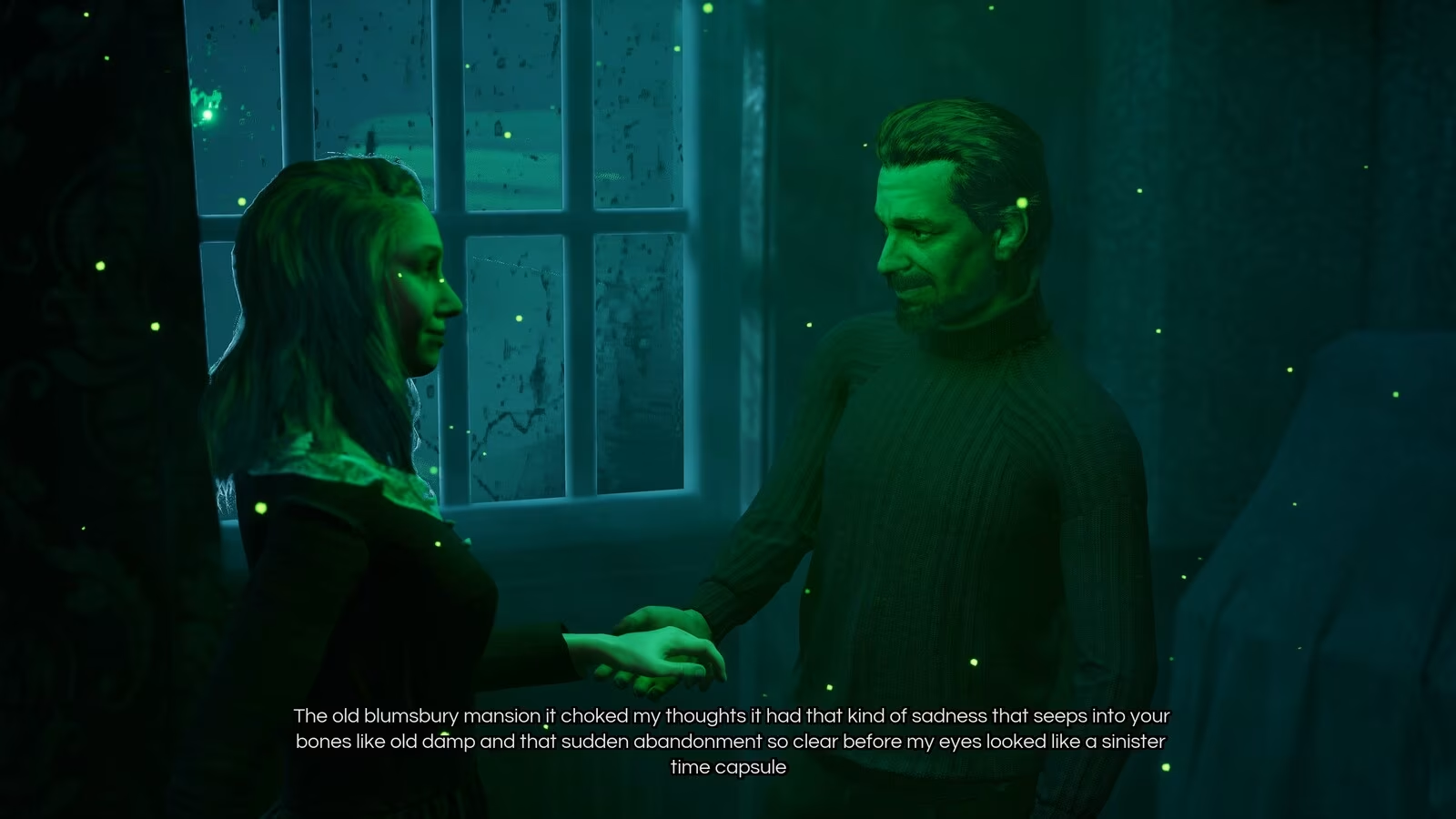
The same lack of care bleeds into the voice work and animation. Characters occasionally keep mouthing long after the recorded line has finished, leaving you staring at silent chewing while the scene waits to move on. The voice acting never rises above passable. Margaret looks about 70 but is played by someone who sounds like she is barely into her 20s. Worse, there was at least one line of Morley’s which was undoubtedly a placeholder performance which never got picked up by QA. Some of the other acting sounds like the halting cadence of a table read. When a game is trying to sell you on its cinematic storytelling, this stuff matters.
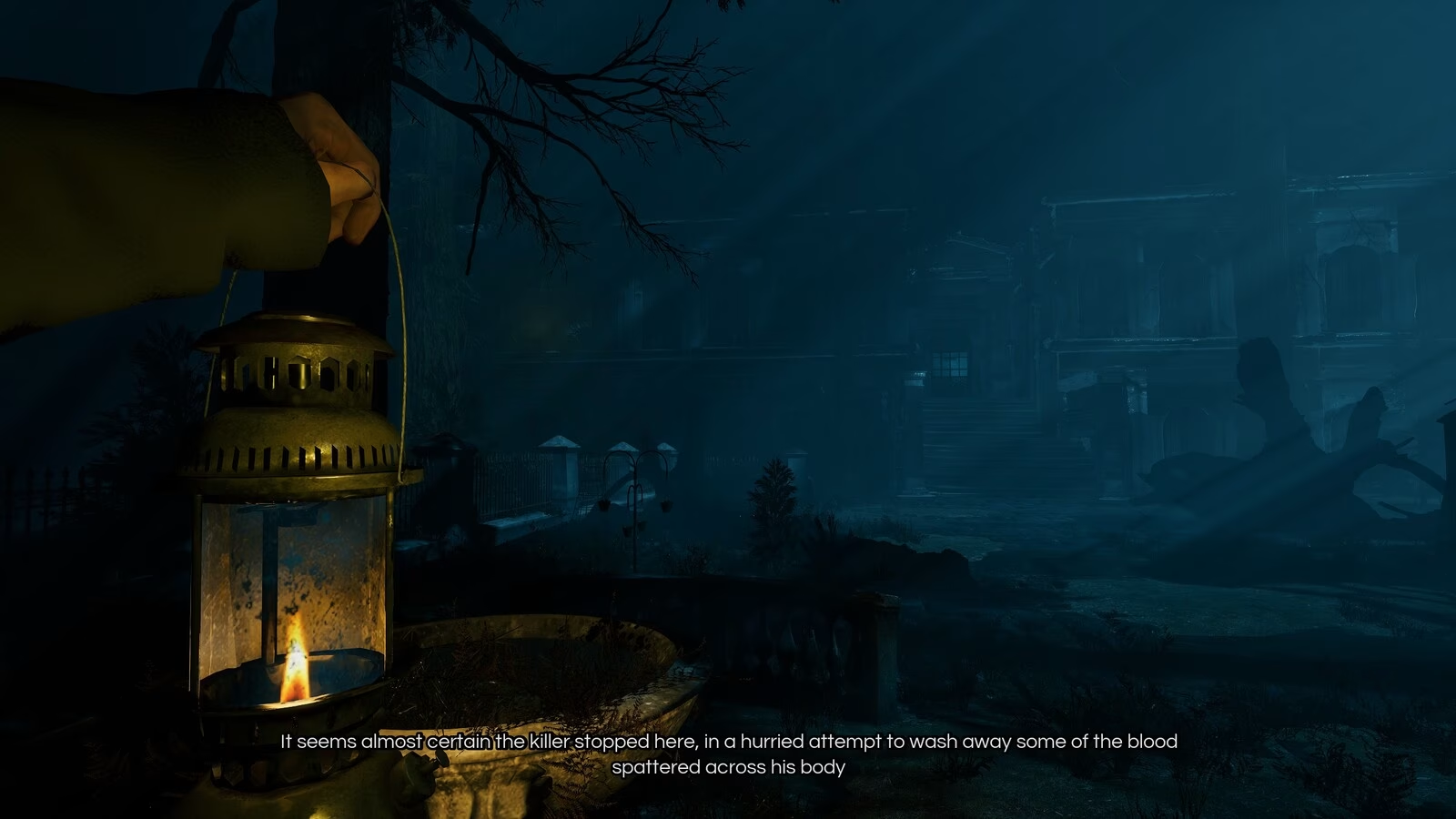
Moment‑to‑moment play is the usual first‑person adventure mix of wandering, prodding at hotspots, and solving light puzzles. There’s nothing egregiously wrong with the basic loop: you poke around rooms, collect keys and codes, trigger little reconstruction vignettes as Morley “visualises” what happened. There are a couple of fun puzzles, including one with paintings which felt very escape room-esque. But for every neat environmental detail, there’s an equal and opposite bit of jank. Doors will happily open into you and refuse to budge until you back awkwardly away from them, which is funny the first time and teeth‑grinding by the tenth. Navigation in tight spaces is clumsy in general; add collision issues on top and you start to feel like the real antagonist here is the building’s fire safety design. The entire second half of the game is so gloomy and so repetitive, you’ll come away with eye strain and a bad mood, rather than feeling like a seasoned PI.
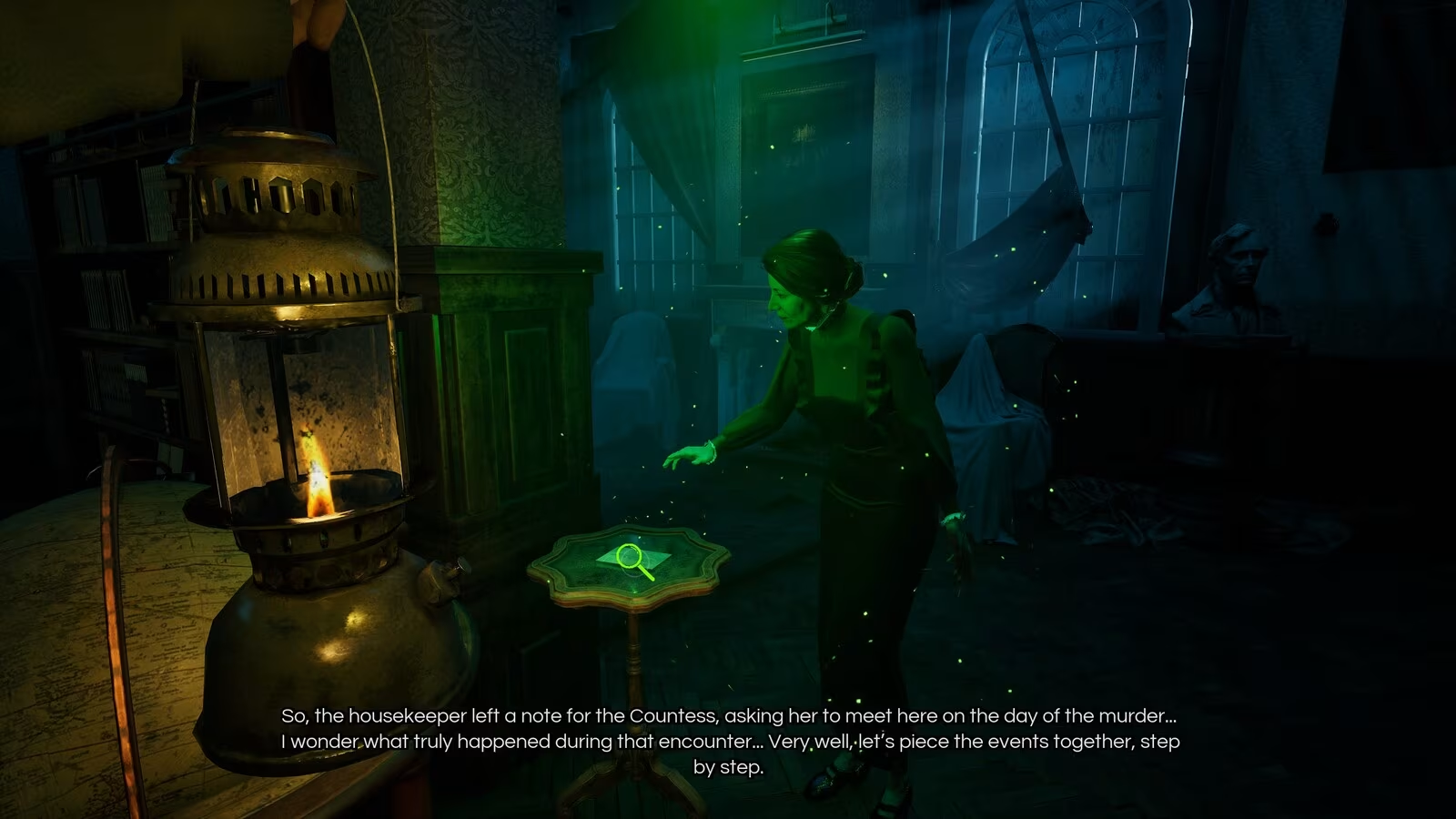
Worse, the game seems convinced that volume equals depth. You’re constantly funneled into reading page after page of text — diaries, logs, medical notes, reports — many of which repeat the same information in slightly different phrasings. Some of it does add welcome colour, but a lot feels like filler for filler’s sake. Without a proper in‑game notebook or a way to quickly revisit key documents, you end up either alt‑tabbing to jot things down, or trusting your memory as you try to recall where a particular door is sealed with a combination lock, and on which floor of a location that door is, given the identikit nature of the blocked paths you need to overcome. In a tighter, more disciplined script, this kind of off-book sleuthing could have been compelling. Here, it starts to feel like busywork masquerading as world‑building.
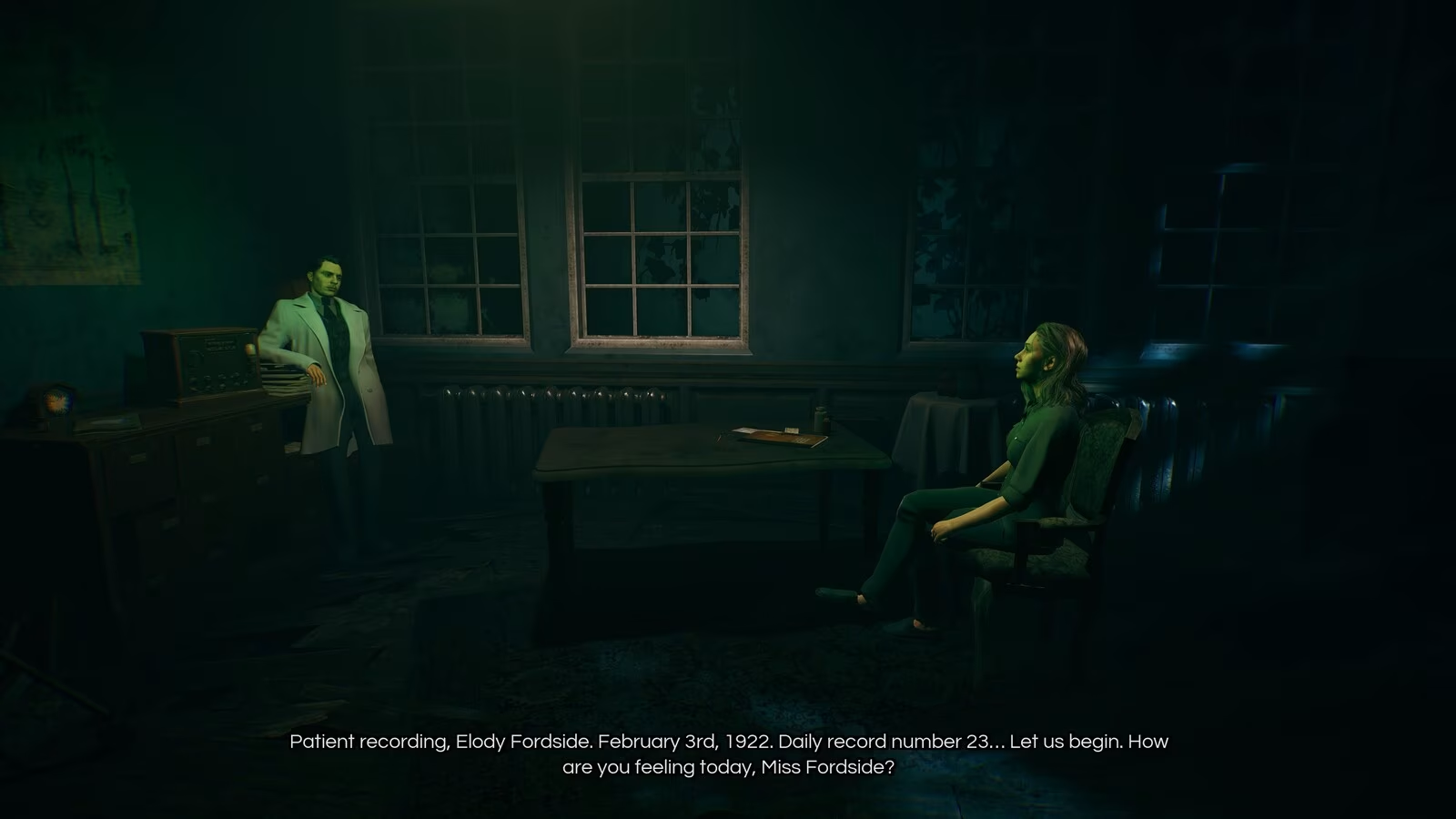
There are glimpses of the game it wants to be. A couple of crime‑scene reconstructions have a satisfying little click when you realise how a piece of evidence recontextualises a room. The sound design in the manor and asylum carries a decent sense of unease, with creaks and distant rattles hinting at movement just out of sight. If you’re looking for jump scares though, the game offered up a single moment involving a door and a coat stand. This isn’t a horror, although there are some unpleasant things touched on. For a smaller studio, the overall visual mood is respectable: shafts of light cutting dusty corridors, shapeless figures at the edge of perception, spaces that feel genuinely abandoned rather than simply empty. If you meet it halfway, the atmosphere can get under your skin.
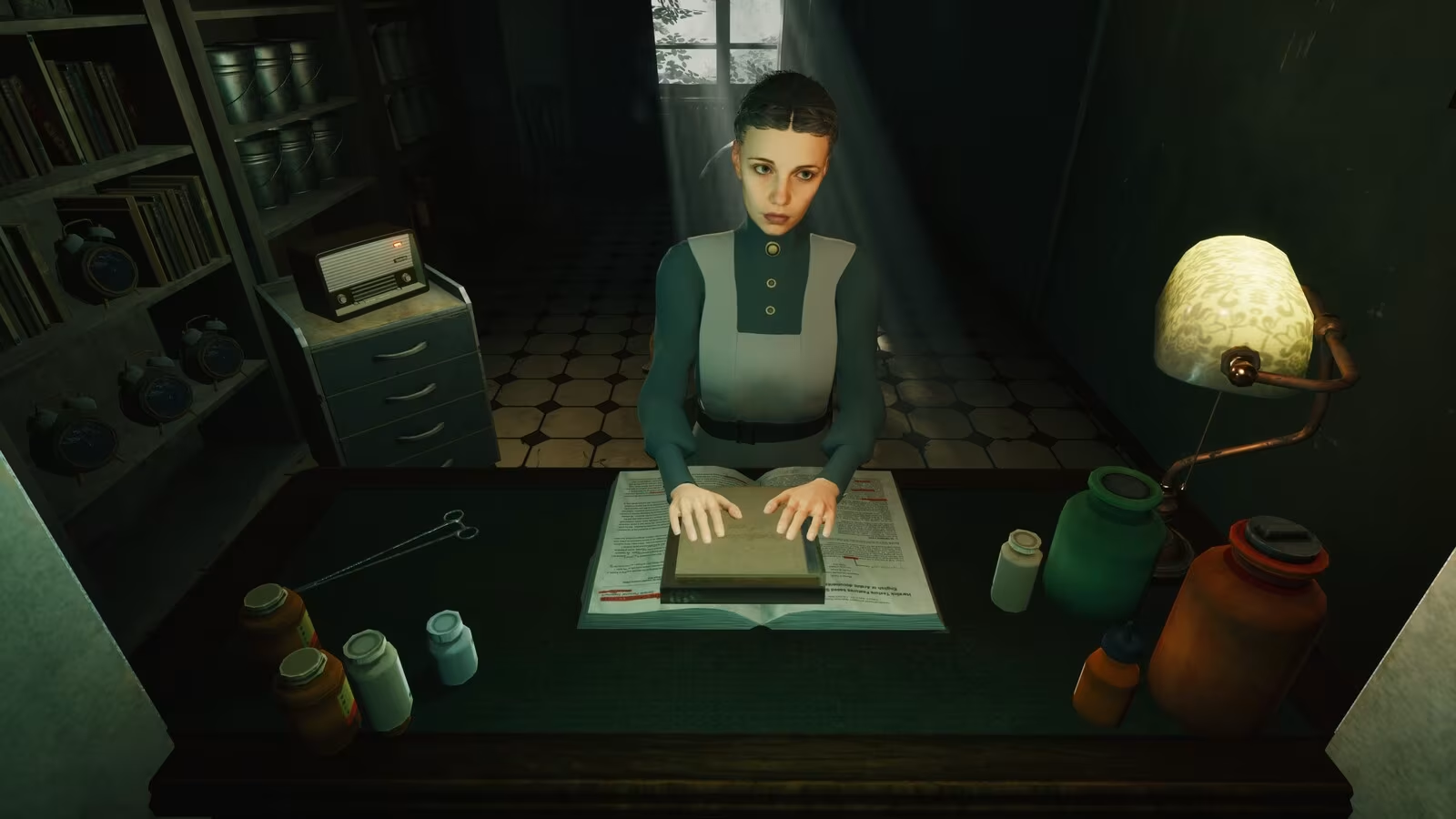
Unfortunately, all of that is undermined by how often the game trips over its own feet. The pacing sags badly in the middle stretch, as you’re marched through one similar‑looking area after another, hunting the same kinds of items and reading yet more dull notes that could comfortably have been condensed. There’s no real sense of deduction — the game won’t let you truly misinterpret evidence; in fact, there’s little to no detective work involved. You’re essentially walking around a room, clicking on hotspots in order to clear a linear checklist before you trigger the next scene. For a detective story, that’s a cardinal sin.
And then there’s the ending. Without spoiling specifics, the final scene attempts a big rug pull which the script simply hasn’t earned. The preceding hours do plant a few seeds, but the way the conclusion is staged and explained makes almost no internal sense, raising more questions than it answers and not in the satisfying “lingering ambiguity” way. When your last impression of a narrative adventure is bafflement rather than reflection, it’s a problem.
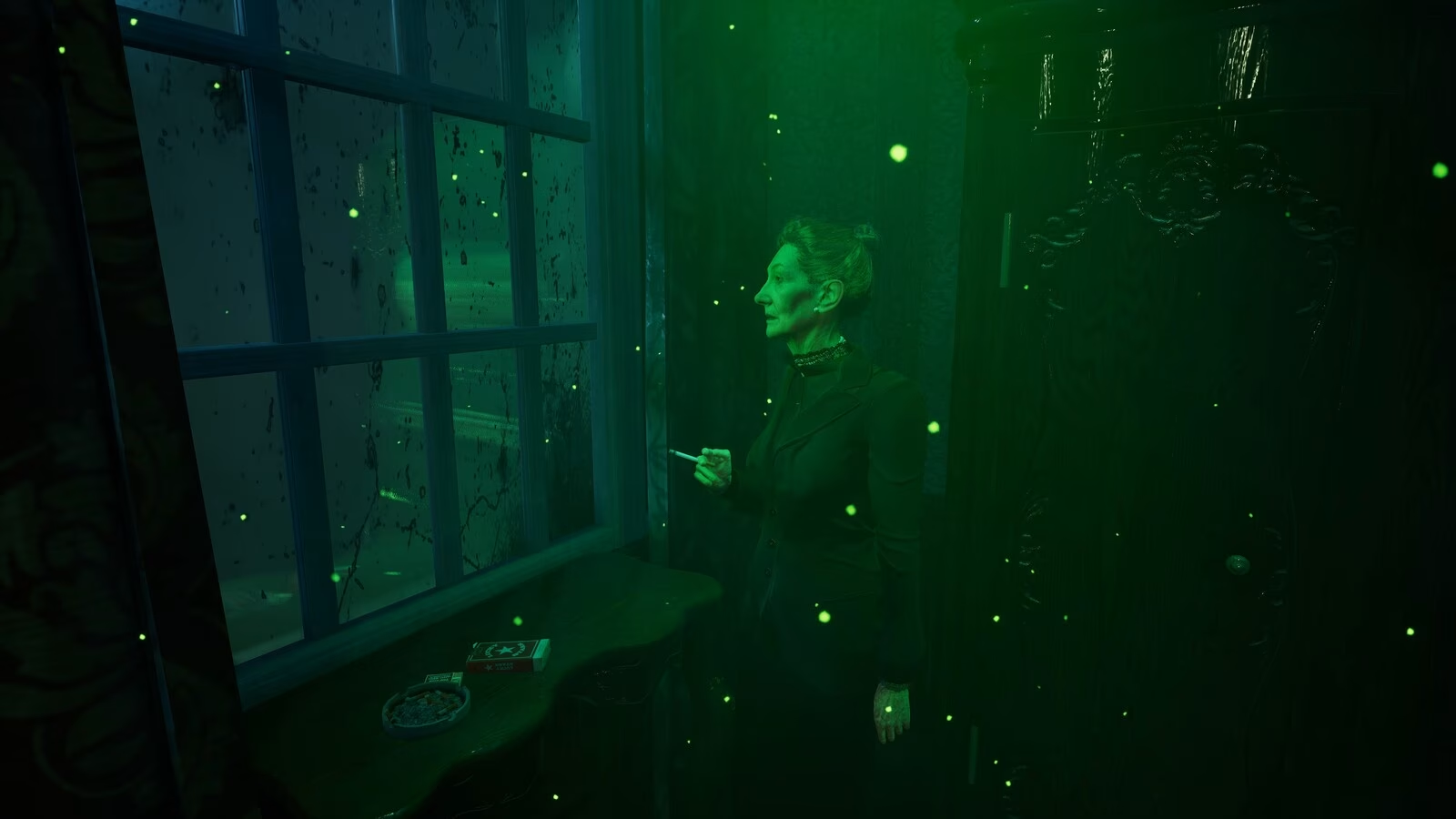
On PC, at least, performance is broadly fine. It runs smoothly on modest hardware, loads quickly, and doesn’t crash to the desktop every half hour. But that’s faint praise when the issues are so squarely in design, writing and basic presentation. There’s a decent two‑hour short story buried in here somewhere, wrapped in enough bloat and rough edges to stretch it closer to three and test your patience along the way.
The Last Case of John Morley isn’t a disaster; the core mystery and atmosphere are good enough that genre die‑hards might wring some enjoyment from it. But between unskippable dialogue, sloppy text, questionable VO, physical jank and a nonsensical finale, it’s hard to recommend to anyone who isn’t absolutely starved of a new noir fix.
You can subscribe to Jump Chat Roll on your favourite podcast players including:
Let us know in the comments if you enjoyed this podcast, and if there are any topics you'd like to hear us tackle in future episodes!