
PC
Back when smartphones had moved on from the basics of Snake to smashing pigs in the face with furious birds, one developer began to realise the true potential of the device. It didn’t have to be limited to high score-chasing arcade experiences — though that’s where its life began. Before the App Store collapsed under the weight of gacha economies and live-service sludge, a handful of developers treated phones as a genuinely new creative space. Simogo was the most interesting of the lot. They wanted more. More depth, more narrative, more quirkiness.
Over the course of five years, the studio released seven games, each distinct from the last. Acclaimed by critics yet quietly destined for obscurity, Simogo eventually faced the reality that modern hardware would render much of this work unplayable. Rather than let it fade away, the studio took affirmative action to preserve its archive. The result is the Simogo Legacy Collection, which transposes those pioneering mobile games into a more robust PC wrapper, ensuring that later generations can experience some of the most influential titles from a decade and a half ago.
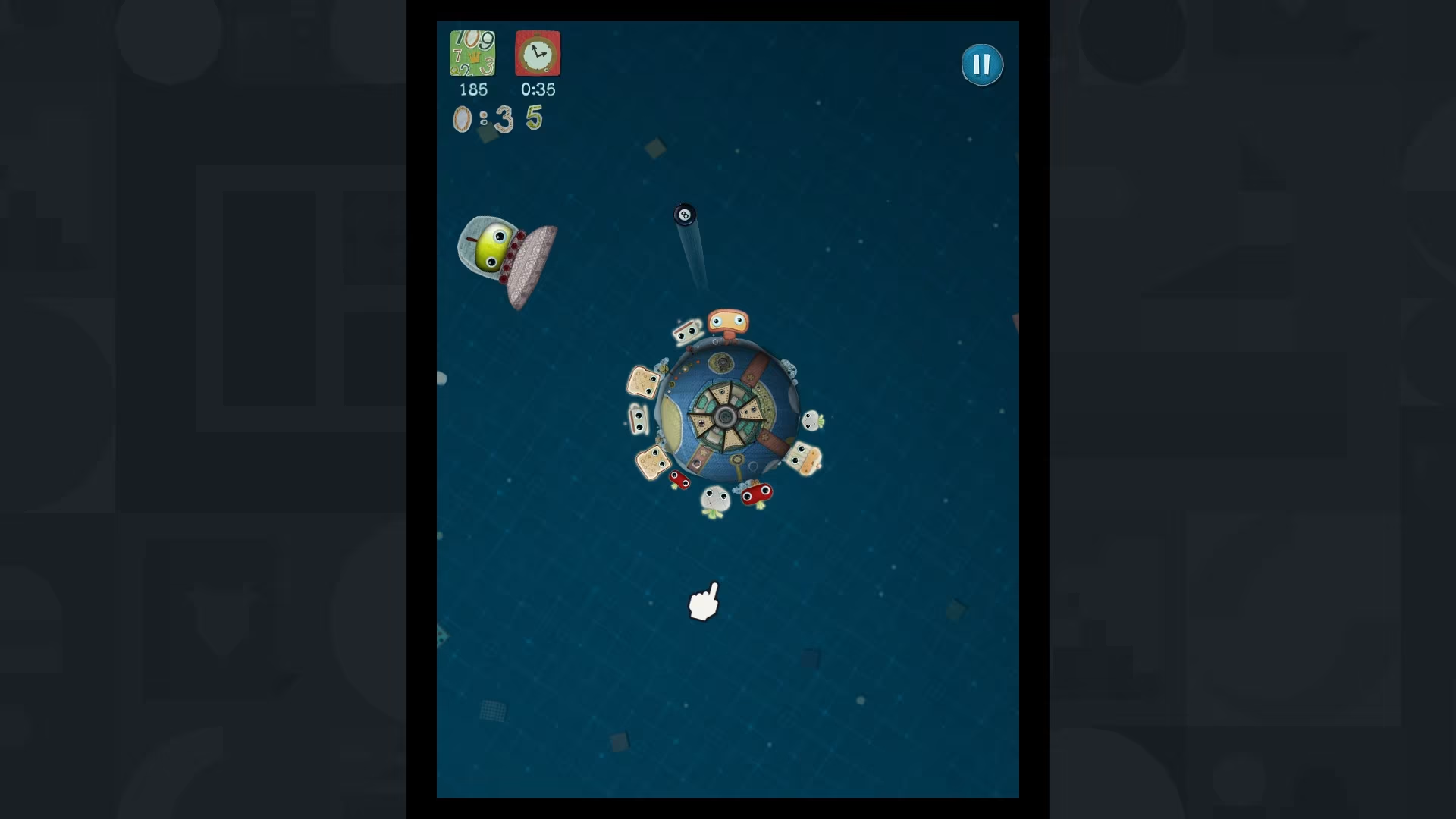
The arcade entries are the most throwaway, but they aren’t without their charms. It starts with Kosmo Spin, and appropriately so. This is Simogo at their most playful and least pretentious — a bright, kinetic arcade game built around spinning planets, quick reflexes, and score chasing. It’s charming, mechanically light, and clearly rooted in classic mobile sensibilities. There’s no narrative ambition here, no structural experimentation, just a developer finding its feet and learning how digital motion can feel good under your fingers. In hindsight, it reads like a sketchbook exercise — important less for what it is than for what comes next.
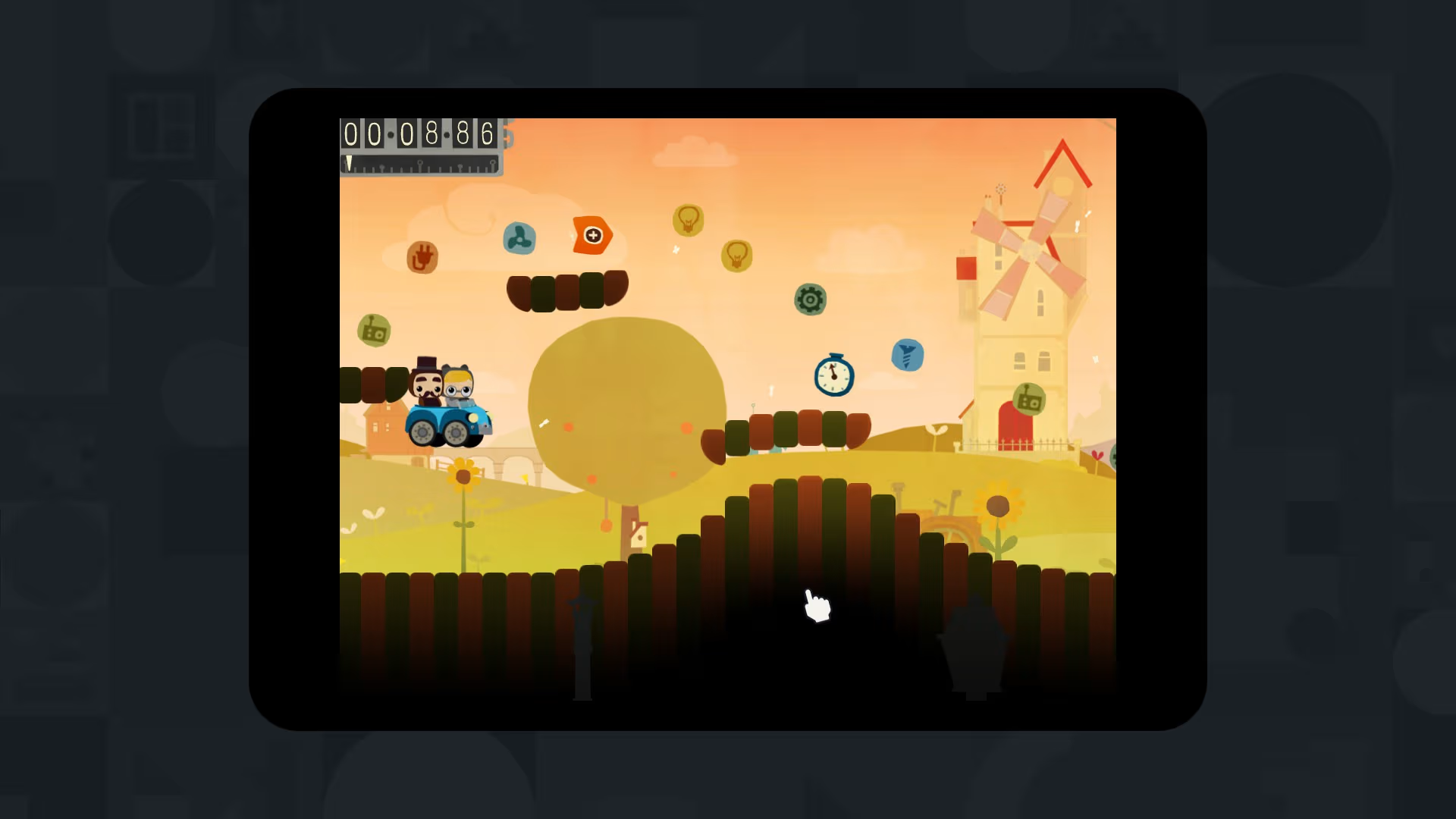
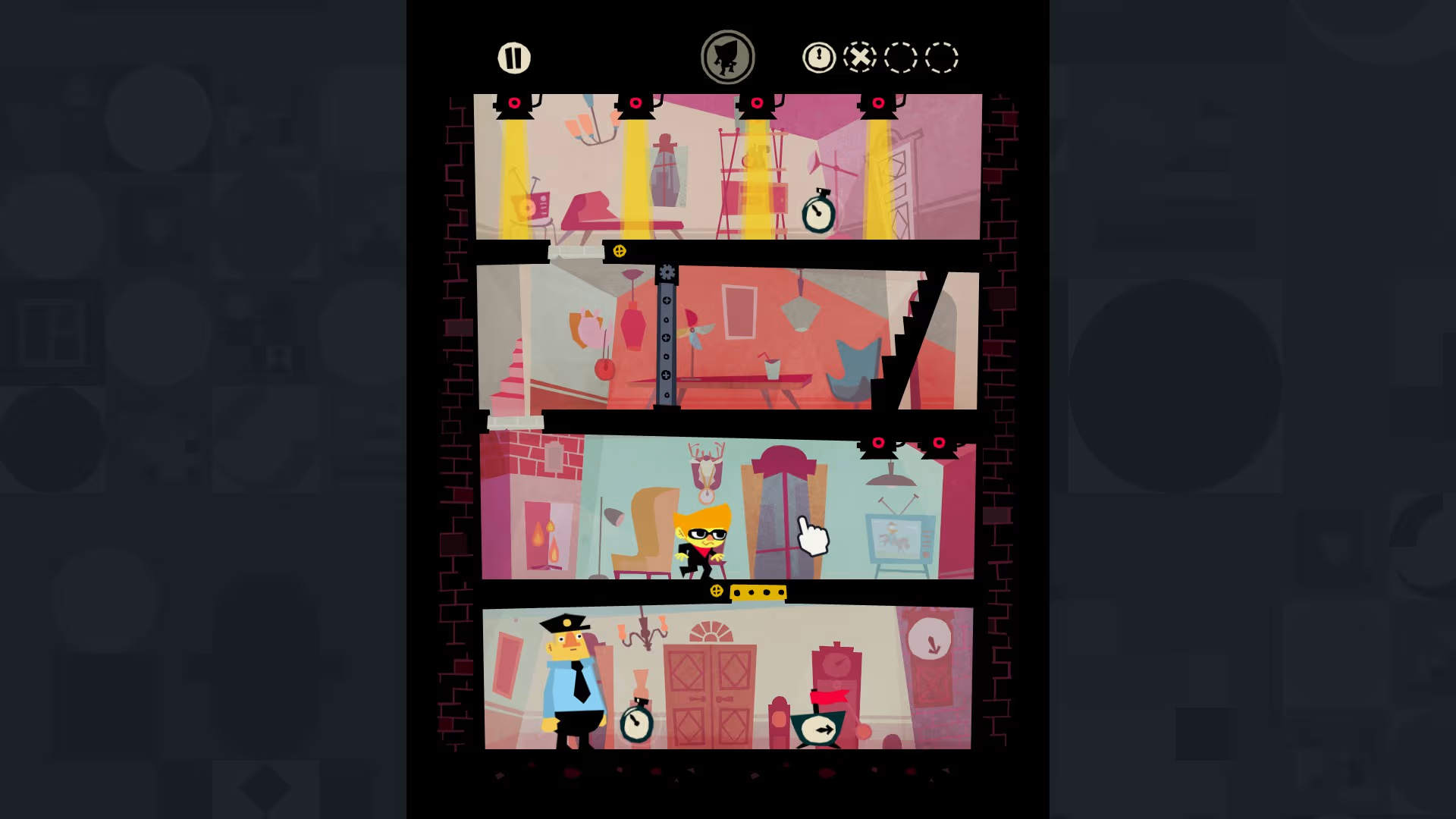
That next step is Bumpy Road, which builds on similar score-driven foundations but introduces a stronger sense of identity. Its physics-driven movement and precarious balancing act hint at Simogo’s growing interest in tension and fragility, even within ostensibly simple systems. Beat Sneak Bandit follows, and it’s here that the studio’s voice starts to sharpen. Rhythm, timing, and stealth combine into something far more deliberate than a typical mobile distraction, and even now it stands as one of the better examples of touch-led design from the era.
The main criticism of these arcade-focused games is that a 27” monitor can’t substitute for the tactility of a touchscreen phone. The immersion is just out of reach, and while the translation of the games overall is slick, the essence of mobile play, that “one more go” feeling, has been diluted. Yet, it doesn’t matter because these are mere amuse-bouches to the main course: weird meta-narratives and folksy, haunting stories.
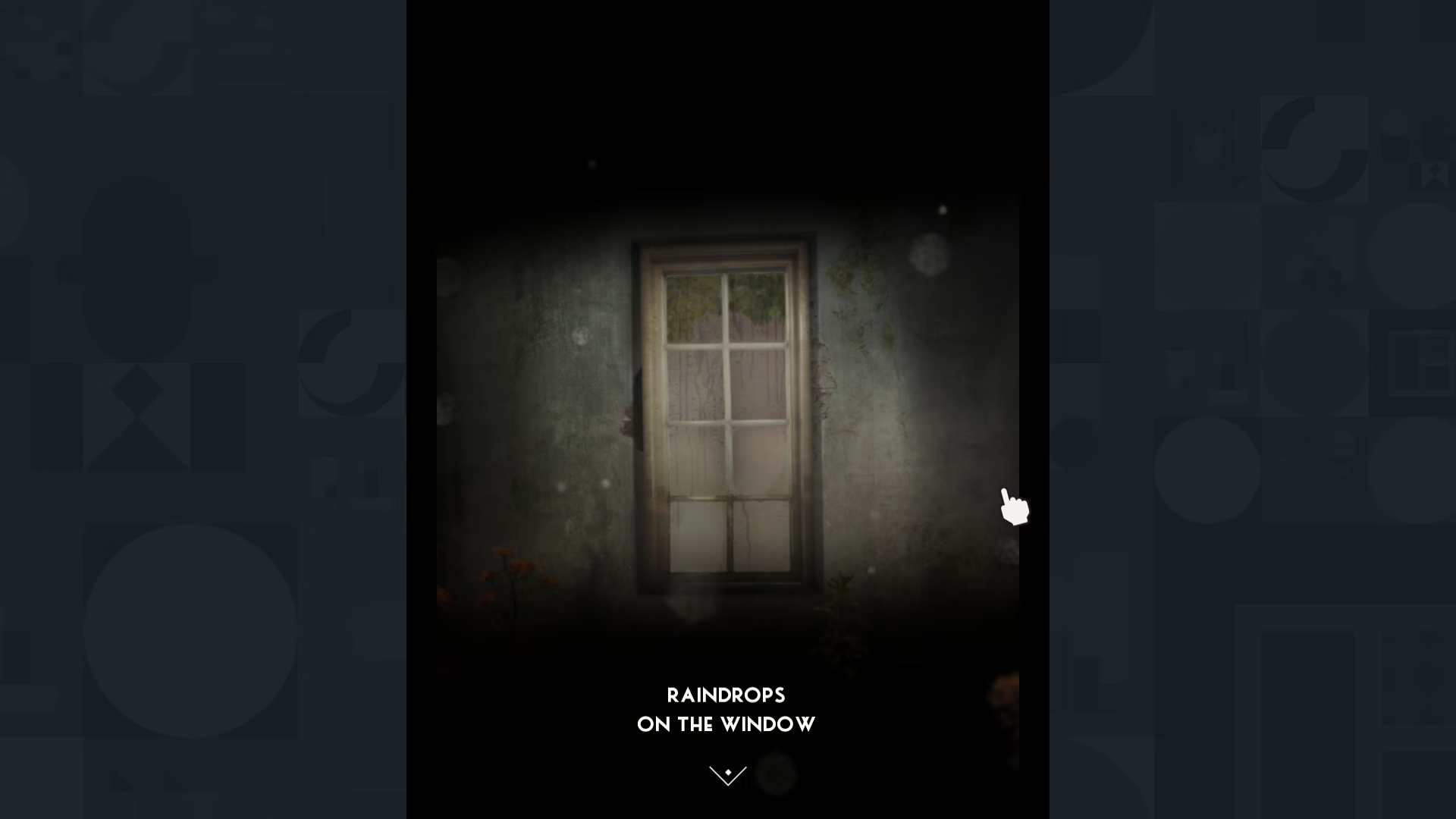
Year Walk was my first experience of Simogo’s output on PC, when the port was released back in 2014. Played for the most part on a purely horizontal and vertical plane, your nameless, voiceless protagonist will wander the forest from east to west and from north to south, searching each area of the map for clues as to how to proceed. It still holds up as a wonderfully unnerving experience, where part of the joy — or terror — of the game is experiencing changes within familiar locales. The subject matter, whilst fictional, doesn’t stray from unpleasantries such as drowning, child murder, and other nightmarish visions; playing Year Walk with the lights off at night is most definitely recommended for those with hardy constitutions. As with any game that wants to effectively mess with your psyche, the aural accompaniment needs to be perfectly pitched and here is no exception. The ambient soundtrack not only sets the eerie mood as you wander through the frosty, barren landscape, but also offers interactivity via some music-driven puzzles. The spot effects are equally important, providing the right level of squelching and chittering to match the blood and screams.
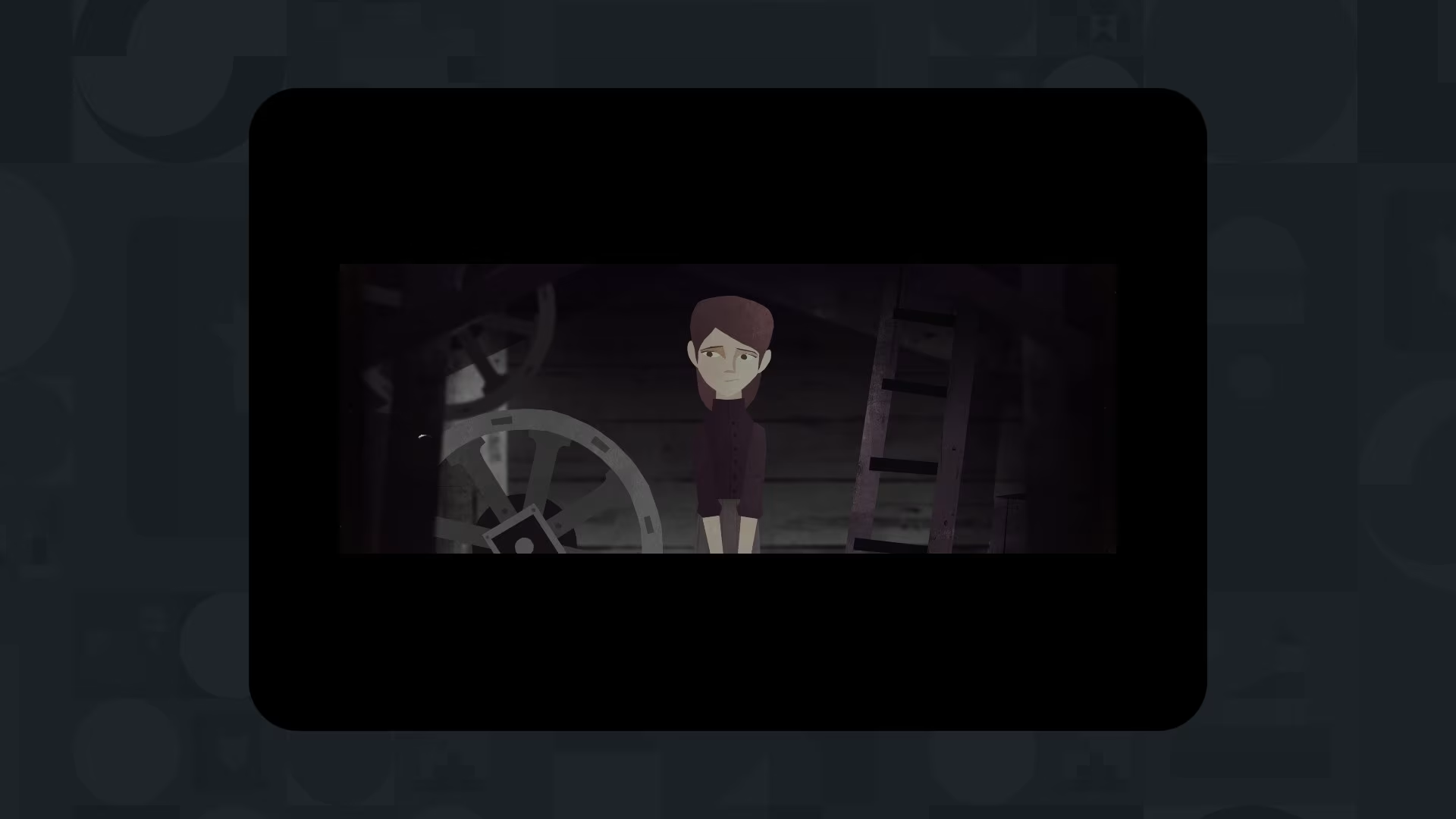
Built around Swedish folklore and an atmosphere of quiet dread, Year Walk abandons arcade immediacy in favour of slow discovery and interpretive storytelling. It trusts the player to observe, listen, and connect fragments without guidance, using sound design and implication rather than spectacle. Playing it today, removed from the novelty of its original platform, only reinforces how confident it is. It's a fully formed narrative experience that just happened to debut on phones.
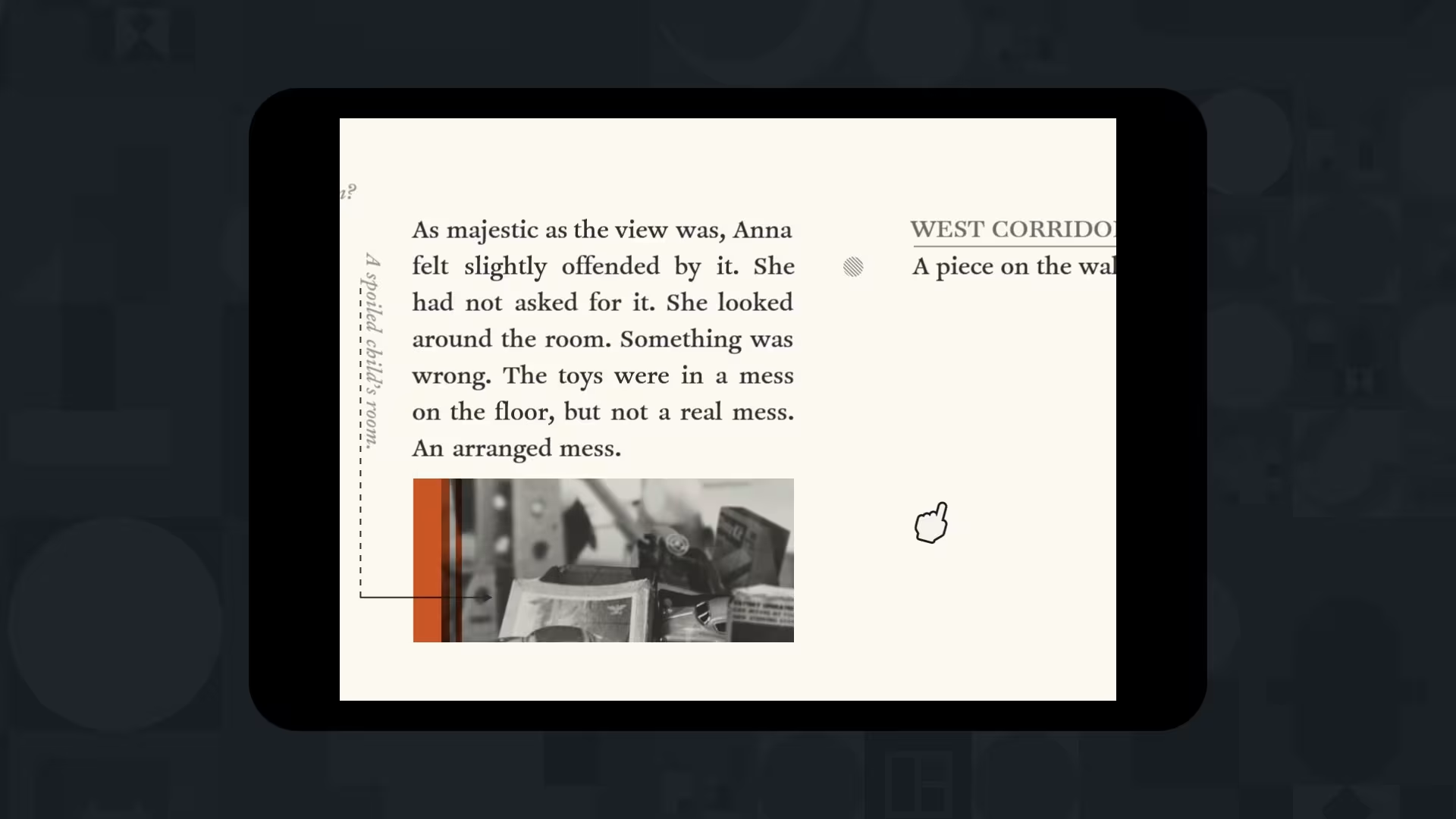
From there, Simogo stops worrying about conventions altogether. Device 6 remains the centrepiece of the collection and the clearest expression of the studio’s philosophy. A narrative that unfolds through typography, spatial audio, page rotation, and physical interaction, it is inseparable from its form. Even on PC, where some of the tactile intimacy is inevitably softened, its design remains startlingly precise. Few games before or since have been so committed to the idea that presentation is the story. Even now, the experience refuses to settle; I’m still unpacking what I’d just played, and what it was quietly asking of me once the credits rolled.
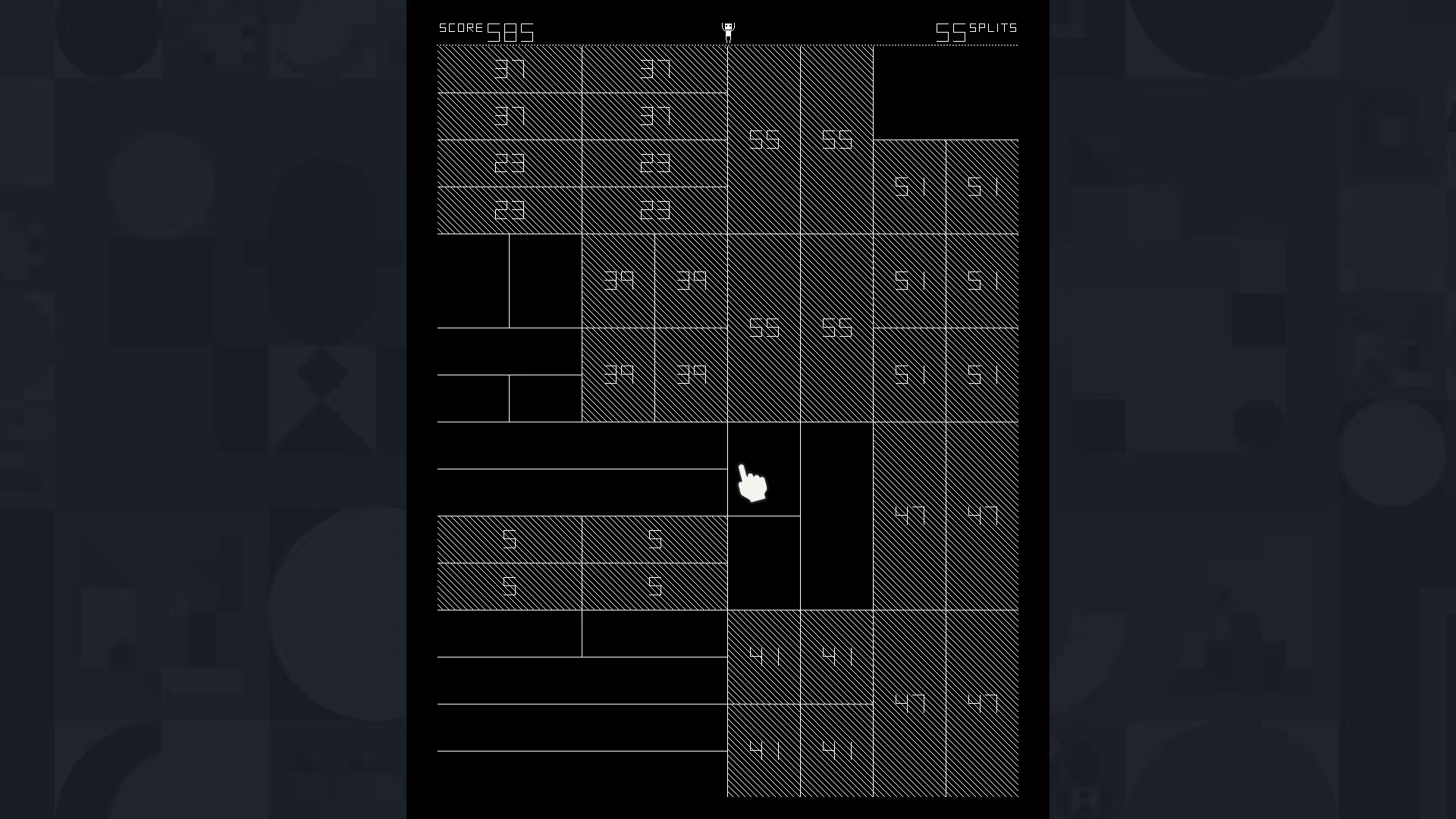
The Sailor’s Dream and SPL-T round out the latter half of the collection, and they occupy more introspective, experimental spaces. The Sailor’s Dream is gentle and melancholy, less interested in challenge than in tone and memory — a piece about distance, longing, and things left unsaid. SPL-T, meanwhile, leans into symmetry, perception, and puzzle abstraction, feeling colder and more mechanical but no less deliberate. Neither will be universally loved, but both underline Simogo’s refusal to chase popularity over curiosity.
As a PC release, the Simogo Legacy Collection is appropriately restrained. The interface is clean, performance is solid, and the games are presented with minimal interference. Some experiences — particularly Device 6 — lose a fraction of their original tactility without native touch input, but these compromises are handled sensibly. This is not a remaster designed to modernise or embellish, but an archive which wears that role proudly.
What makes the collection compelling isn’t that every game here has aged perfectly. Some feel slight. Some are rougher than memory might suggest. But taken together, they tell a story about a studio that consistently chose curiosity over comfort, and about a moment in gaming history that now feels almost alien in its optimism.
The Simogo Legacy Collection isn’t nostalgia bait, and it isn’t trying to convert newcomers into mobile evangelists. It’s a preservation effort and creative timeline, charting the progress from playful arcade beginnings to some of the most distinctive narrative design of the previous decade. Not every piece is essential. But as a whole, it’s invaluable.
You can subscribe to Jump Chat Roll on your favourite podcast players including:
Let us know in the comments if you enjoyed this podcast, and if there are any topics you'd like to hear us tackle in future episodes!