Good television, not a playable cutscene
The second season of Amazon’s Fallout is out, and the reviews are in. It is, unsurprisingly to everyone who watched the first season, fantastic. The show’s characters, plot, music and pacing are all second-to-none. It appeals to both fans of Bethesda’s game franchise, and people whose only exposure to the IP is the show itself. Fallout Season Two doesn’t set a new bar for television as a whole, but is the best adaptation of a video game to the small screen. It’s a fun take on one of the oldest series in the gaming industry that avoids the missteps adaptations so often make. The show has already been renewed for a third season, and it has the potential to become just as popular as the Fallout games themselves. So, besides the show’s obvious technical competence, what makes it better than almost every other show based on a video game?
The answer to that question is actually pretty simple, at least on the surface. Amazon’s Fallout isn’t a one-for-one adaptation of a video game. Its second season, and to a lesser extent its first, uses the setting of Bethesda’s games, rather than directly adapting them. It shares familiar factions, includes a handful of cameos, and retains the same darkly humorous tone that skewers contemporary anxieties without tipping into self-parody. That’s largely where the overlap ends. The show exists as a separate entity to the games, expanding their worlds rather than replaying their stories. It’s essentially the inverse of Star Wars Jedi: Fallen Order’s relationship with Disney’s films: respectful of the source, but confident enough to carve out its own space in the IP. If you’ve played that game and loved the original two trilogies, you’ll know that’s a compliment.
Obviously, credit where credit’s due, Amazon’s Fallout is no doubt successful because of its core elements. The show’s casting is almost perfect, its pacing is solid, and its storyline is exceptionally well-written. It’s a polished and refined show. And anyone who doesn’t love Walton Goggins is probably a mutant, just not in a good way. All that can be said for any number of other series, obviously, even ones based on video games. Cyberpunk: Edgerunners is great, and so is Peacock's Twisted Metal. Fallout sets itself apart with its production values. Unlike the nerd-y Netflix adaptation, or the obscure Peacock one, though, Fallout is a legitimately great piece of television. It both literally and figuratively ranks with the best pieces of media produced by any of the major streaming companies.
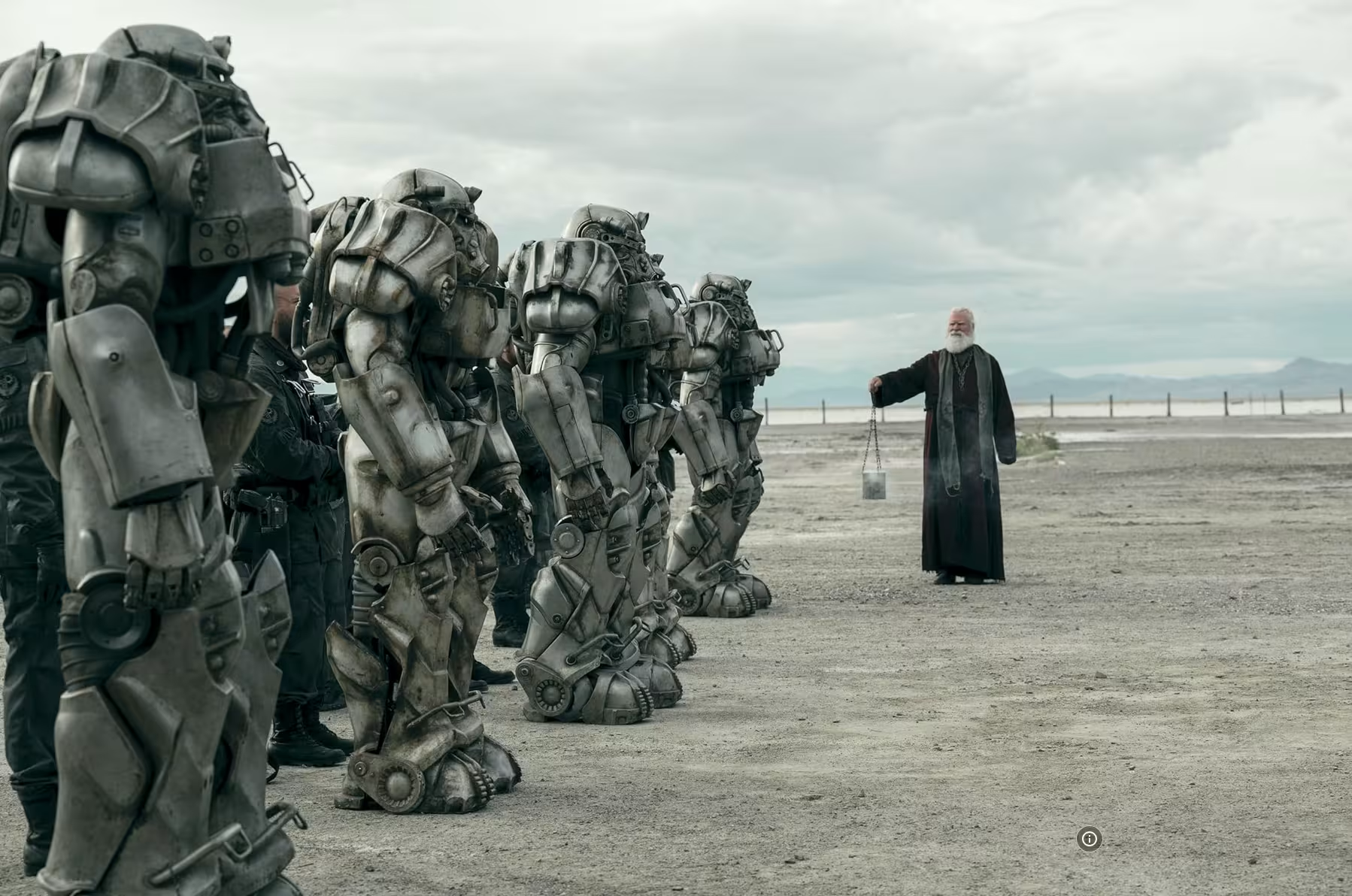
However, that’s not what makes the show special. See, video games, surprisingly, don’t usually directly translate well to the small screen. Unlike books or films, games are little more than playable television shows (or the other way around, depending on how you think about it). They both usually last 10-odd hours, and are broken into one-hour-long chapters. Both have equal screentime dedicated to action and dialogue largely because of that. And because they already occupy the same narrative space, direct adaptations rarely offer anything meaningfully new.
Depending on what you’re watching or playing, they tend to require about the same amount of mental energy, too. So if you’re a video game aficionado, there’s not a lot of reasons for you to watch a show that directly copies everything about your favourite title. You’ve already seen its events play out once, and there’s not a lot a show can do to improve upon them. The opposite is true for those who prefer to binge their entertainment.
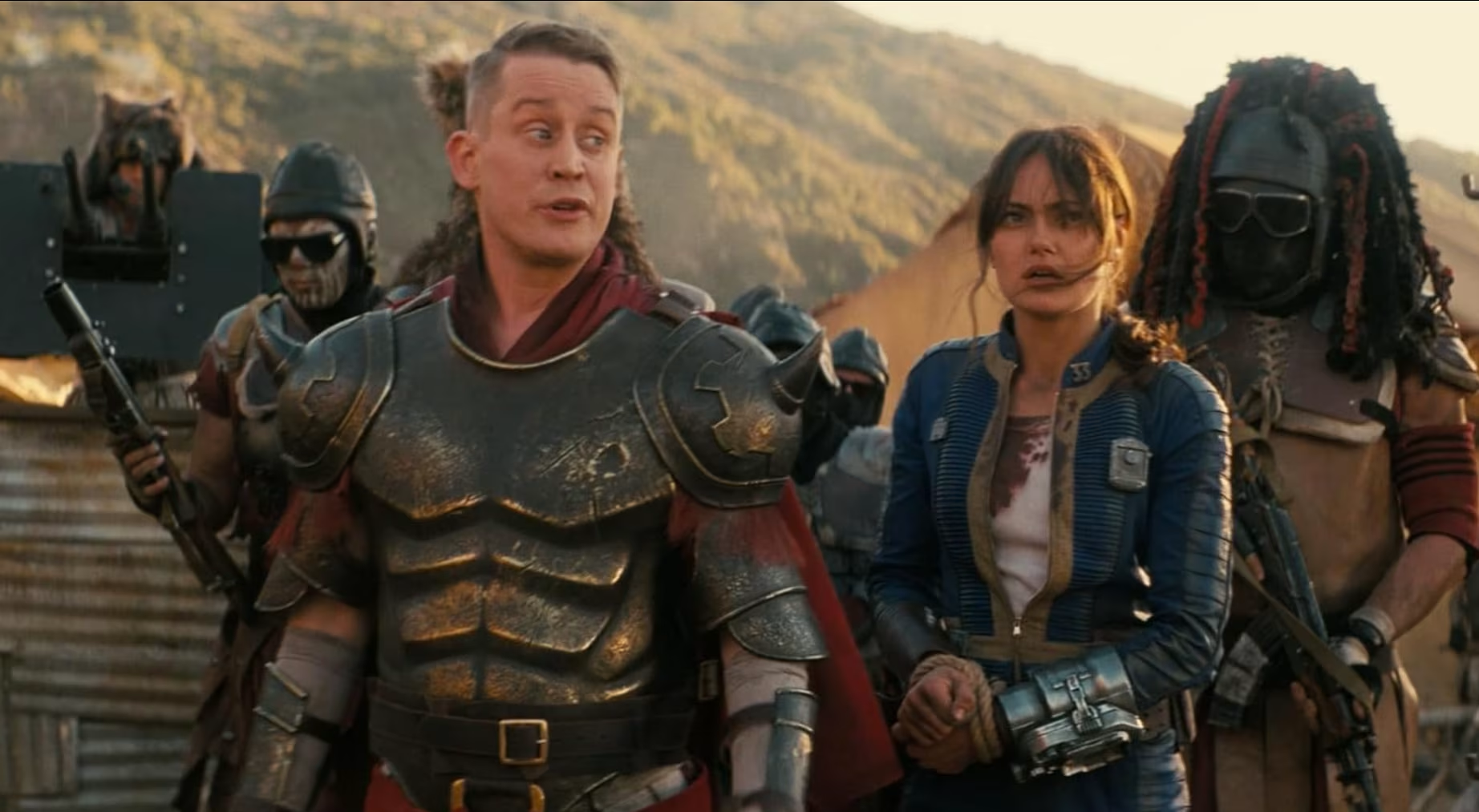
The first season of HBO’s The Last of Us is a good example of this. It was, just like Amazon’s show, solid to say the least. But it was a direct adaptation of The Last of Us Part I. The show made a couple of controversial changes, however, they weren’t big enough to really matter. So there wasn’t any real reason for gamers to watch it, beyond curiosity and comparison.
On the other hand, anyone who did watch it and wasn’t already a gamer had no incentive to buy a console. The show wasn’t exactly one-note in the traditional sense of the phrase, but it wasn’t innovative, either. As a result, it never quite establishes itself as a franchise in its own right, even setting aside how divisive its second season proved to be. The same can be said for the one other unmentioned big video game that was turned into a show. Netflix’s The Witcher similarly can’t do anything that its inspiration already didn’t — which is why it’ll end once it runs out of source material next season.
Amazon’s Fallout doesn’t have that limitation, though. Nor is it only appealing to gamers or people who simply enjoy good television. Again, Fallout isn’t simply a recreation of the game series. It has its own storyline, characters, and even world. Even if you’ve spent thousands of hours in New Vegas or the Vaults, it’s easy to enjoy Lucy Maclean/Maximus/Cooper Howard’s respective journeys across The Wasteland. They all flesh out what happened before and after the bombs dropped without showcasing non-canon events. Their stories are just as enjoyable, if not more so than the very best quests the Fallout games have to offer. If you’ve never played those titles (looking at you, editor), you can still easily watch the show and appreciate it. Then you can install Fallout: New Vegas, spend a dozen hours modding it, and have even more fun in the universe.
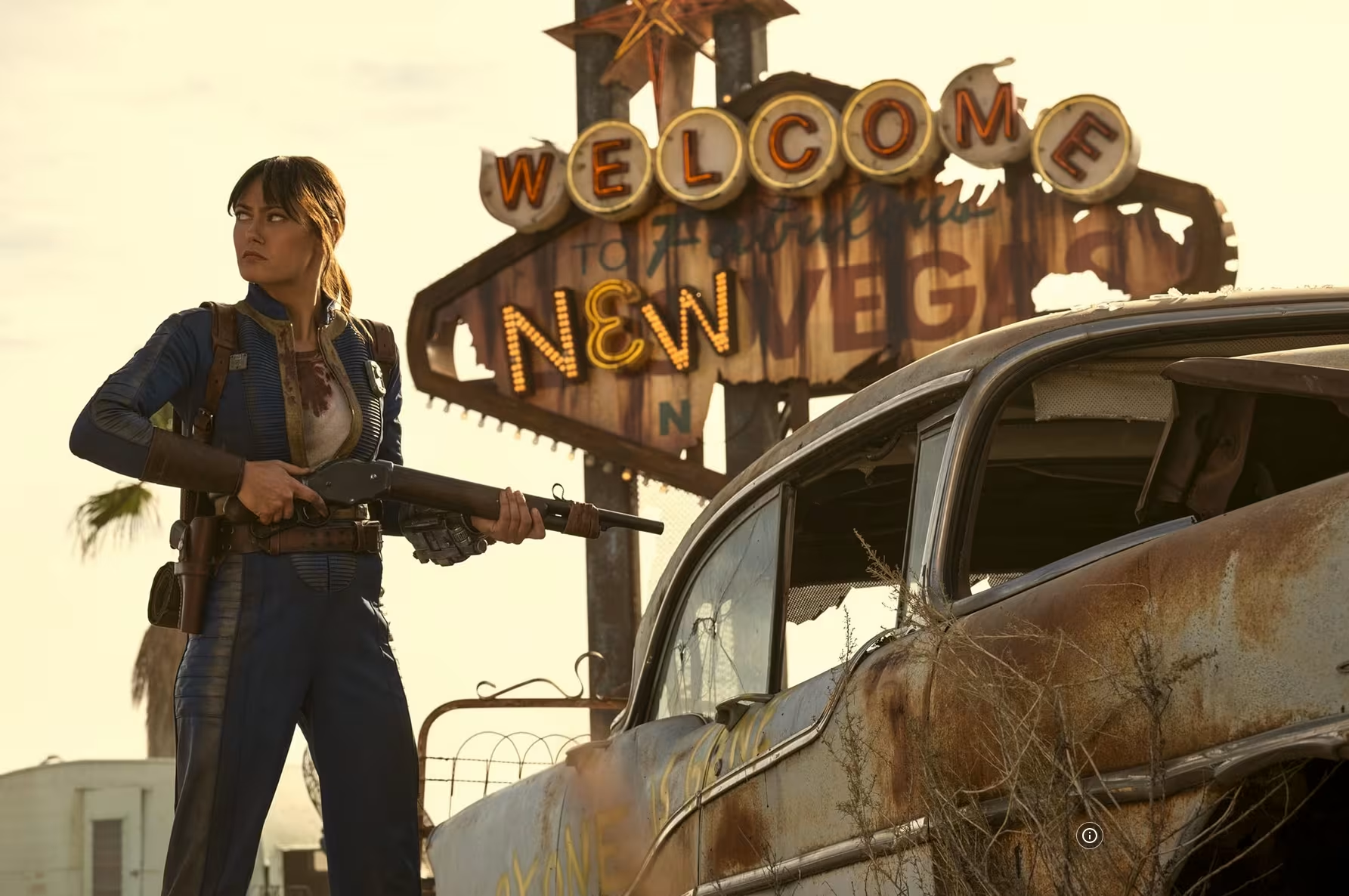
And when the story of Amazon’s Fallout hopefully reaches its natural conclusion next season, its showrunners can simply create another set of characters and continue showcasing The Wasteland. That’s the magic of the show. It isn’t a direct adaptation of a video game. Instead, it’s an exceptionally well-written piece of (probably fan) fiction. While its success is undoubtedly helped by its substantial budget, strong cast, and high production values, Fallout ultimately succeeds because it understands its source material and builds on it. You don’t have to like Fallout to enjoy Amazon’s series, and if you already know every corner of New Vegas, you won’t get bored watching new characters explore familiar territory. This is what adaptation looks like when it has the confidence to move forward, not sideways.
You can subscribe to Jump Chat Roll on your favourite podcast players including:
Let us know in the comments if you enjoyed this podcast, and if there are any topics you'd like to hear us tackle in future episodes!