PC
Mobile
There are few game series quite as committed to making the mundane feel as deeply unsettling as Rusty Lake. For more than a decade, the studio has perfected a particular brand of point-and-click horror in which the most innocuous of household objects can become instruments of murder, portals to another dimension, or simply something you need to arrange in precisely the right order before a talking corpse gets annoyed with you. Servant of the Lake takes that philosophy and applies it to one of the least glamorous jobs imaginable: domestic service.
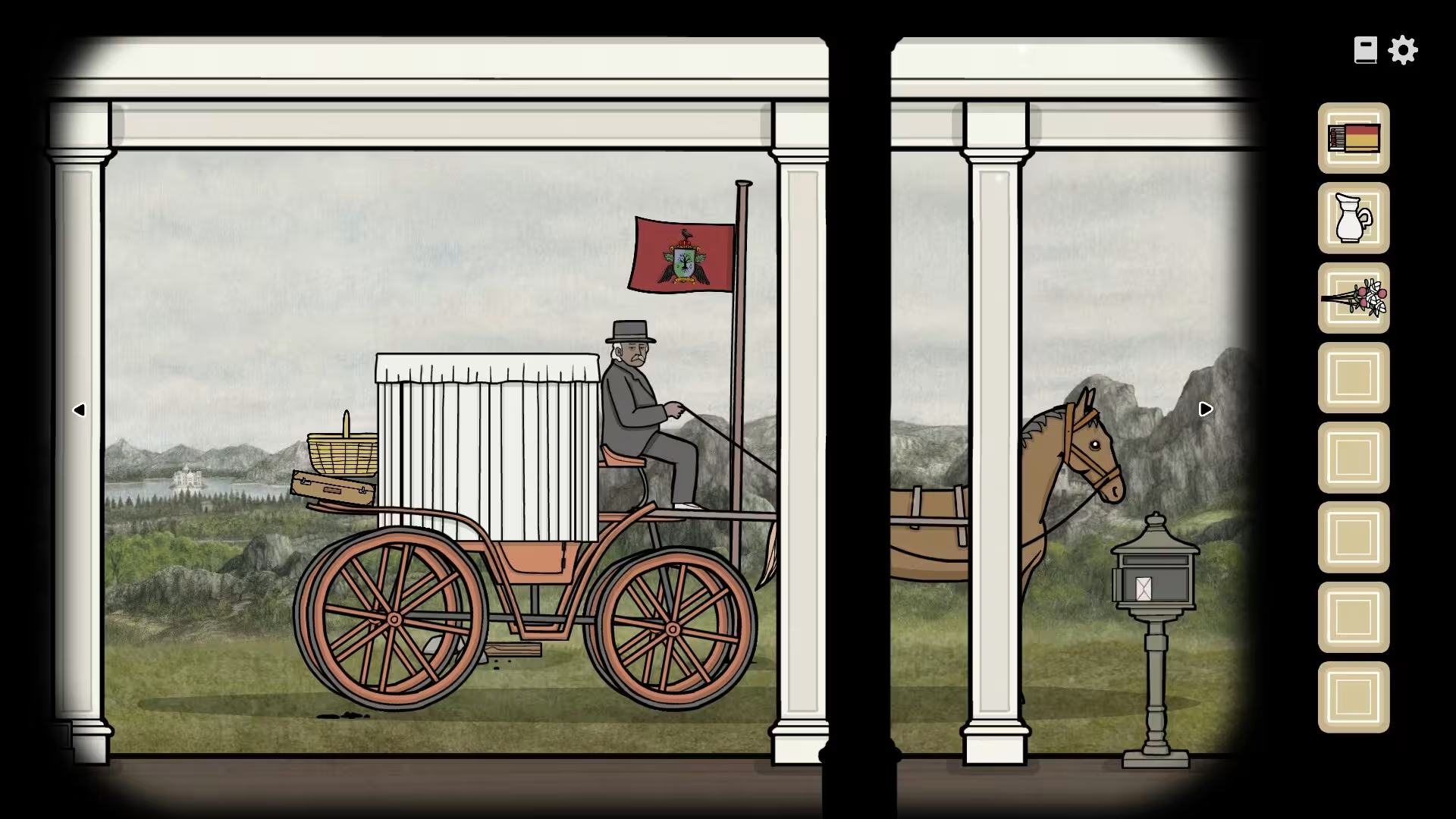
Welcome to the Vanderboom house. There's laundry to do. Breakfast needs preparing. Portraits need straightening. Rooms need cleaning. Guests need attending to. And, because this is Rusty Lake, there's also a spot of alchemy, some questionable medical experimentation, and the small matter of trying to survive the weekend.
It is, in other words, business as usual.
Servant of the Lake is set decades before the events of Rusty Lake: Roots, returning to the Vanderboom estate during the period when Aldous and William Vanderboom are still young men and their mysterious sister Alexandra remains part of the family story. Rusty Lake has described the game as a return to the house specifically to flesh out these characters, whose roles in the creation of the elixir were previously only hinted at.
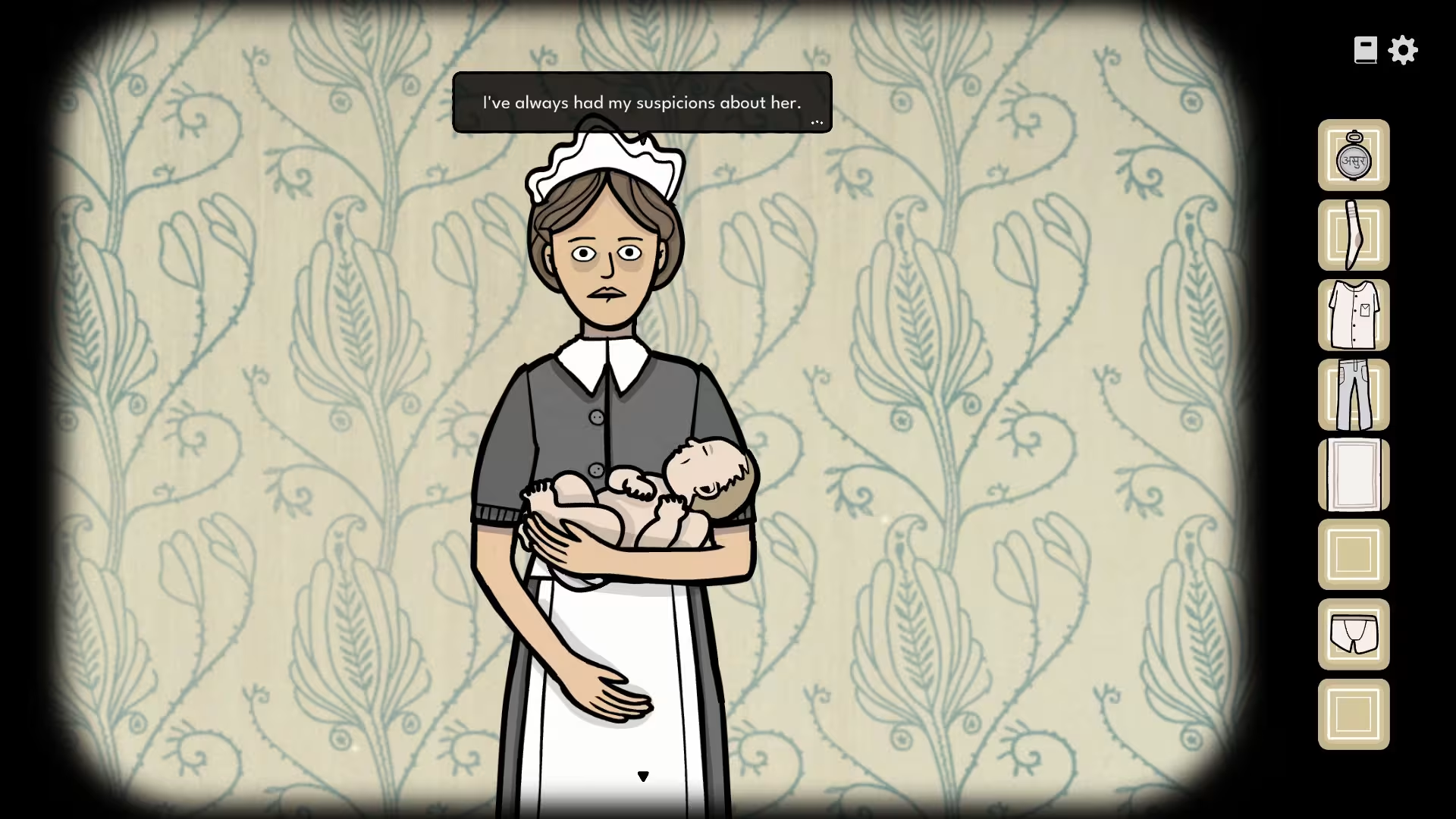
That makes this something of a treat for anyone who has spent years trying to assemble the increasingly bizarre jigsaw puzzle that is Rusty Lake's lore. For newcomers, meanwhile, it works surprisingly well as a self-contained weekend of supernatural housekeeping. You don't need to have memorised every branch of the Vanderboom family tree to understand that something is deeply, profoundly wrong with these people. You just need to be willing to make breakfast for them.
The setup is wonderfully simple. You arrive at the Vanderboom estate as an unnamed servant, given a list of duties that gradually become stranger as the weekend progresses. The family expects you to keep the house running, prepare for visitors and assist with various tasks. Initially, that means doing things that wouldn't look out of place in a particularly demanding period drama. Then the Rusty Lake weirdness starts creeping in.
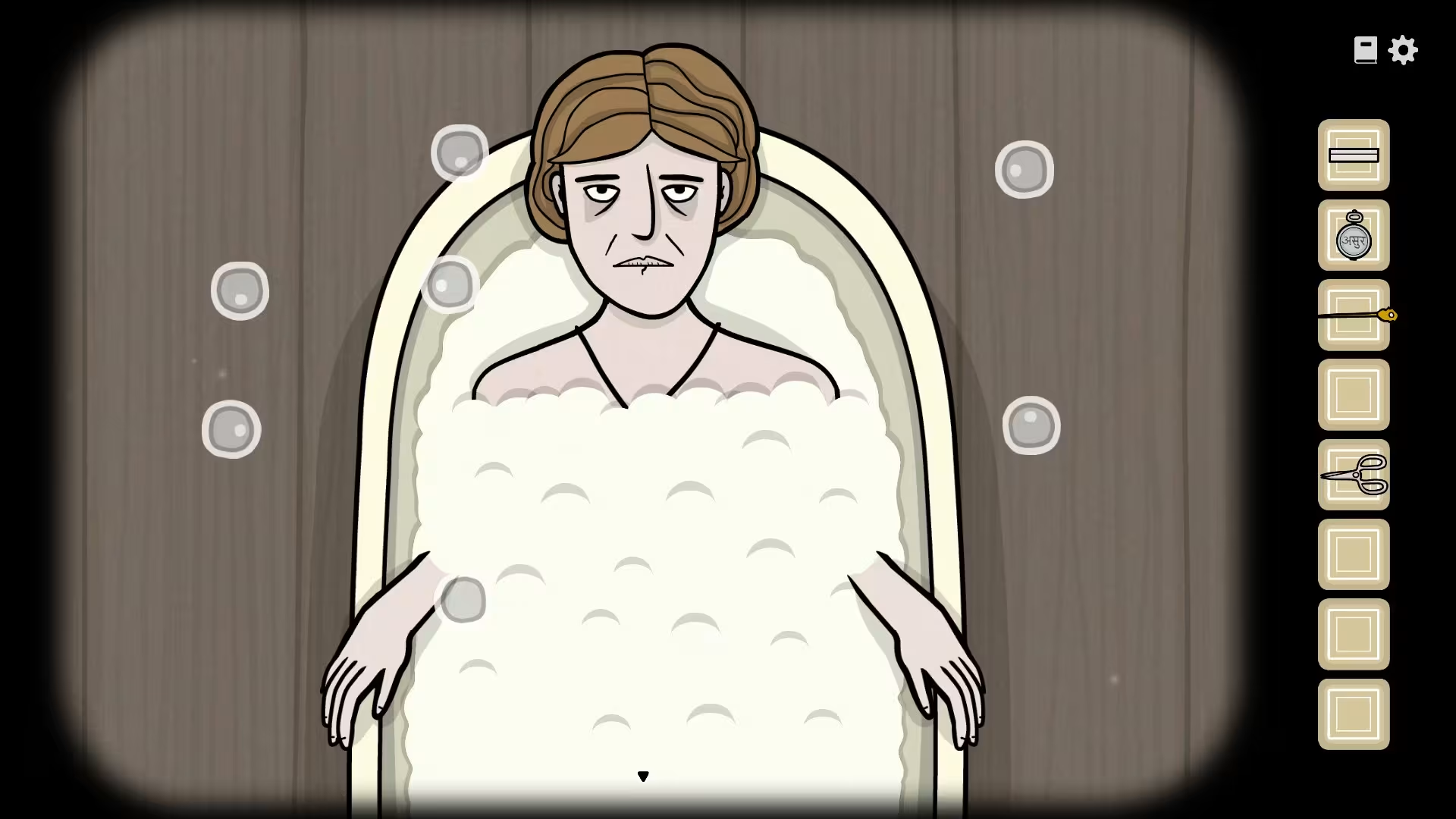
A breakfast tray becomes a puzzle. Waking someone up becomes an investigation. Laundry becomes an exercise in pattern recognition. A simple household chore can suddenly require knowledge of an obscure mechanism hidden elsewhere in the house. Eventually, the domestic routine gives way to the family's alchemical ambitions, and the line between servant and unwilling participant becomes increasingly blurred.
It's an excellent structure because it gives the game a sense of progression without ever needing to announce it. One minute you're worrying about whether you've put the right things on the breakfast table. The next you're staring at something that looks like it belongs in a medieval laboratory and wondering which of your household implements could possibly have been designed to operate it.
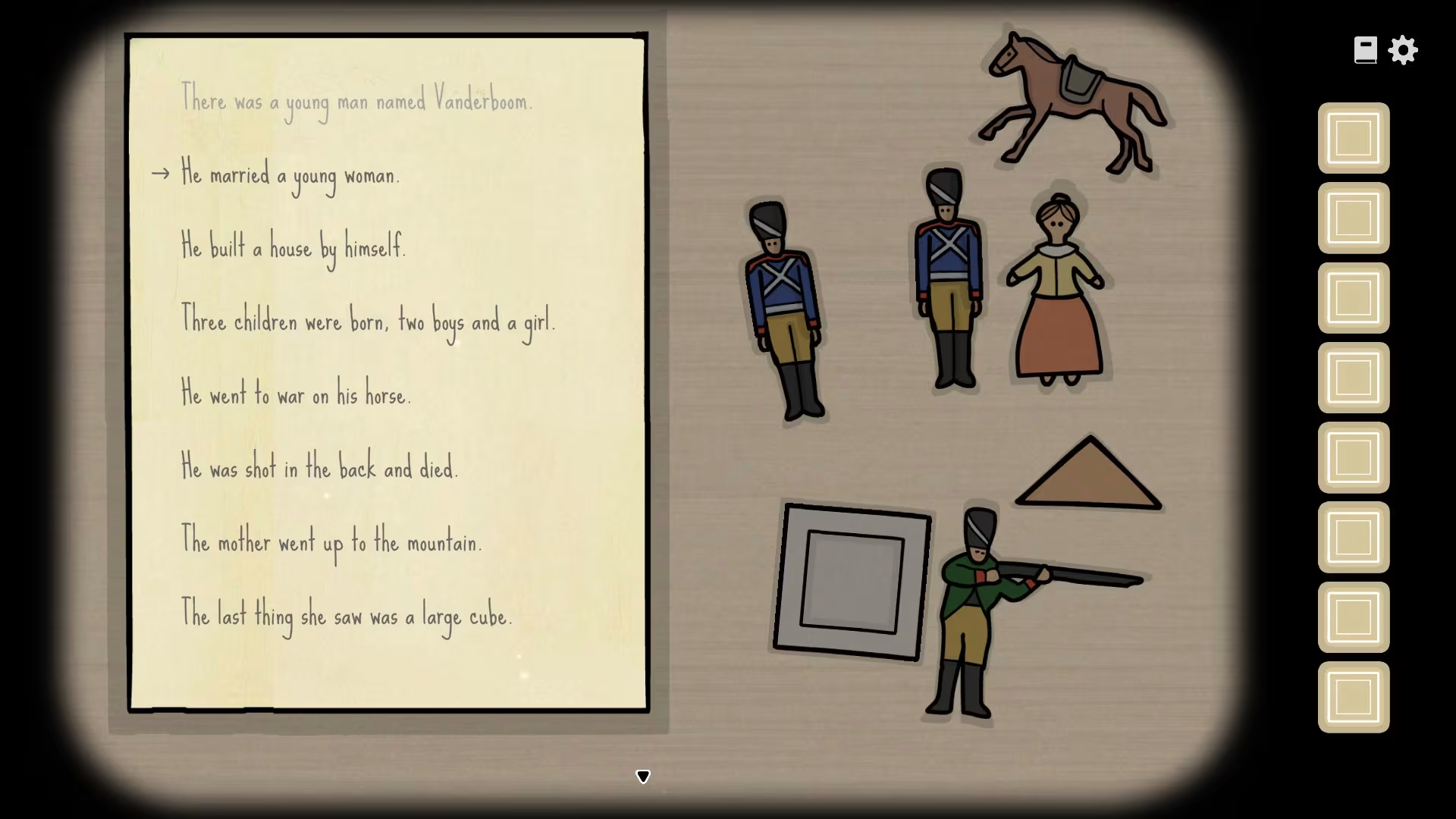
The puzzles remain the heart of the experience, as they should. Rusty Lake aficionados will appreciate that point-and-click puzzles in this world don't need elaborate interfaces or complicated rules to be satisfying. They need curiosity. They need just enough information to make you think you understand something, followed by another piece of information that makes you question whether you understood it at all.
Servant of the Lake is very good at this.
The early puzzles are deliberately straightforward, establishing the vocabulary you'll need later. You learn to inspect objects, recognise patterns, manipulate mechanisms and pay attention to visual clues. The game rarely throws an enormous wall of nonsense at you and expects you to somehow work backwards towards a solution. Instead, its puzzles generally unfold through observation. And when you solve one, there's that familiar Rusty Lake satisfaction: the quiet little click in your brain when a collection of seemingly unrelated objects suddenly makes sense.
Some of the best puzzles involve taking information from one part of the house and applying it somewhere completely different. The mansion becomes a giant interconnected machine, with rooms effectively serving as pieces of a larger puzzle box. You aren't simply solving individual challenges; you're learning how the Vanderbooms think. Which is occasionally terrifying.
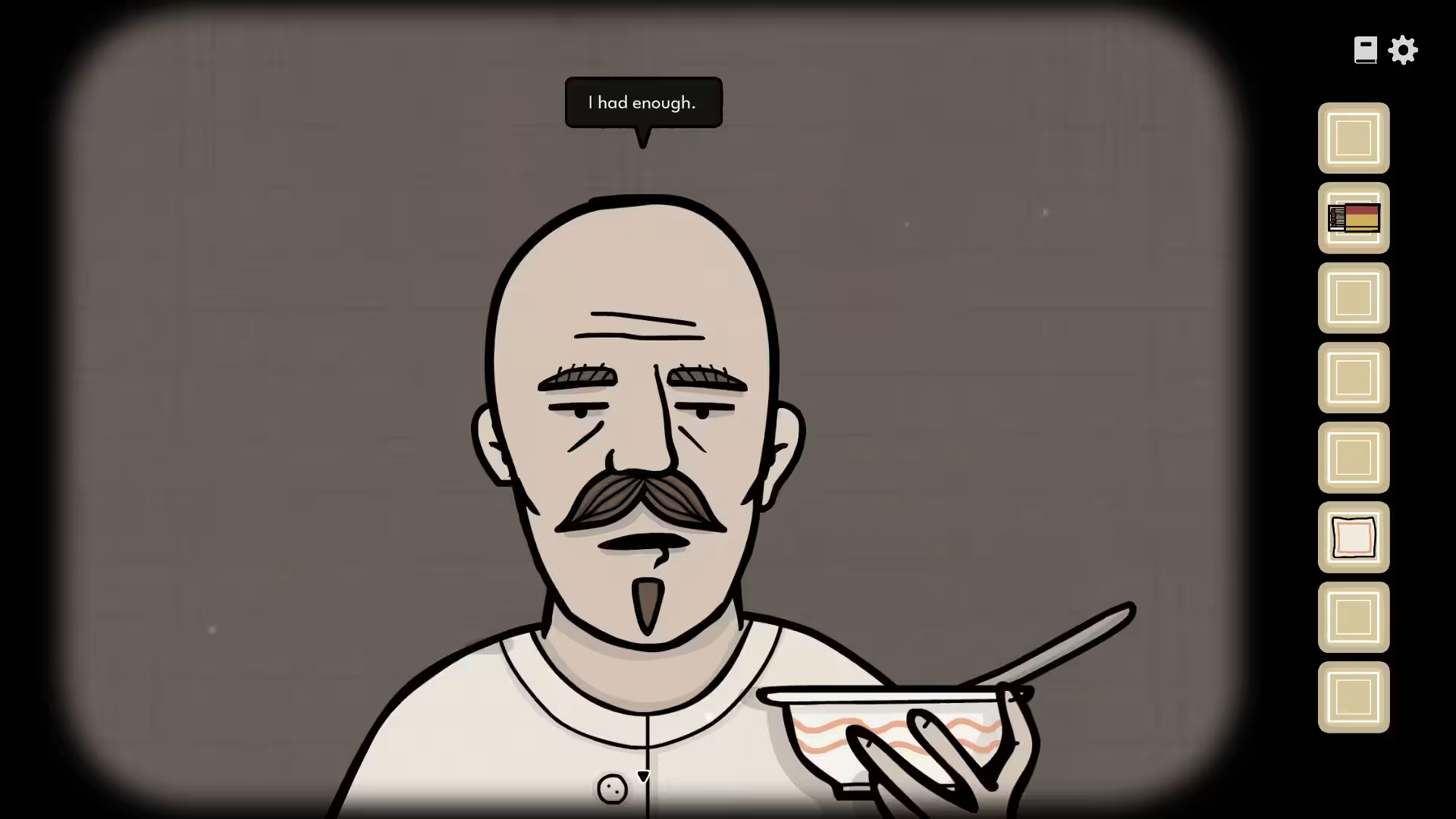
The game is also much more story-focused than some previous Rusty Lake experiences. That will divide players. The series has traditionally been at its best when it gives you a handful of strange images, a cryptic object and just enough information to make your imagination do most of the work. Servant of the Lake is considerably more forthcoming. There are more narrative sequences, more character interaction and more moments where the game explicitly shows you what's happening rather than leaving you to reconstruct it from fragments.
However, that comes with a trade-off.
Some of the mystery is inevitably lost when you're shown something that an older Rusty Lake game might have left lurking at the edge of the frame. I occasionally missed that feeling of staring at an image and wondering whether I'd just seen something horrifying or had simply misunderstood what was happening. There is a particular pleasure to Rusty Lake's older games in not quite knowing what you've witnessed. Servant of the Lake is more interested in making sure you know.
Fortunately, the story it chooses to tell is compelling enough to justify the additional attention. Aldous and William are fascinating precisely because the game doesn't simply treat them as mysterious names from Roots. They feel like actual people, albeit people whose understanding of life, death and enlightenment would probably get them barred from most respectable medical institutions. Alexandra's presence adds another dimension to the family dynamic, and the three characters give the narrative a much stronger emotional centre than some of the more abstract entries in the series.
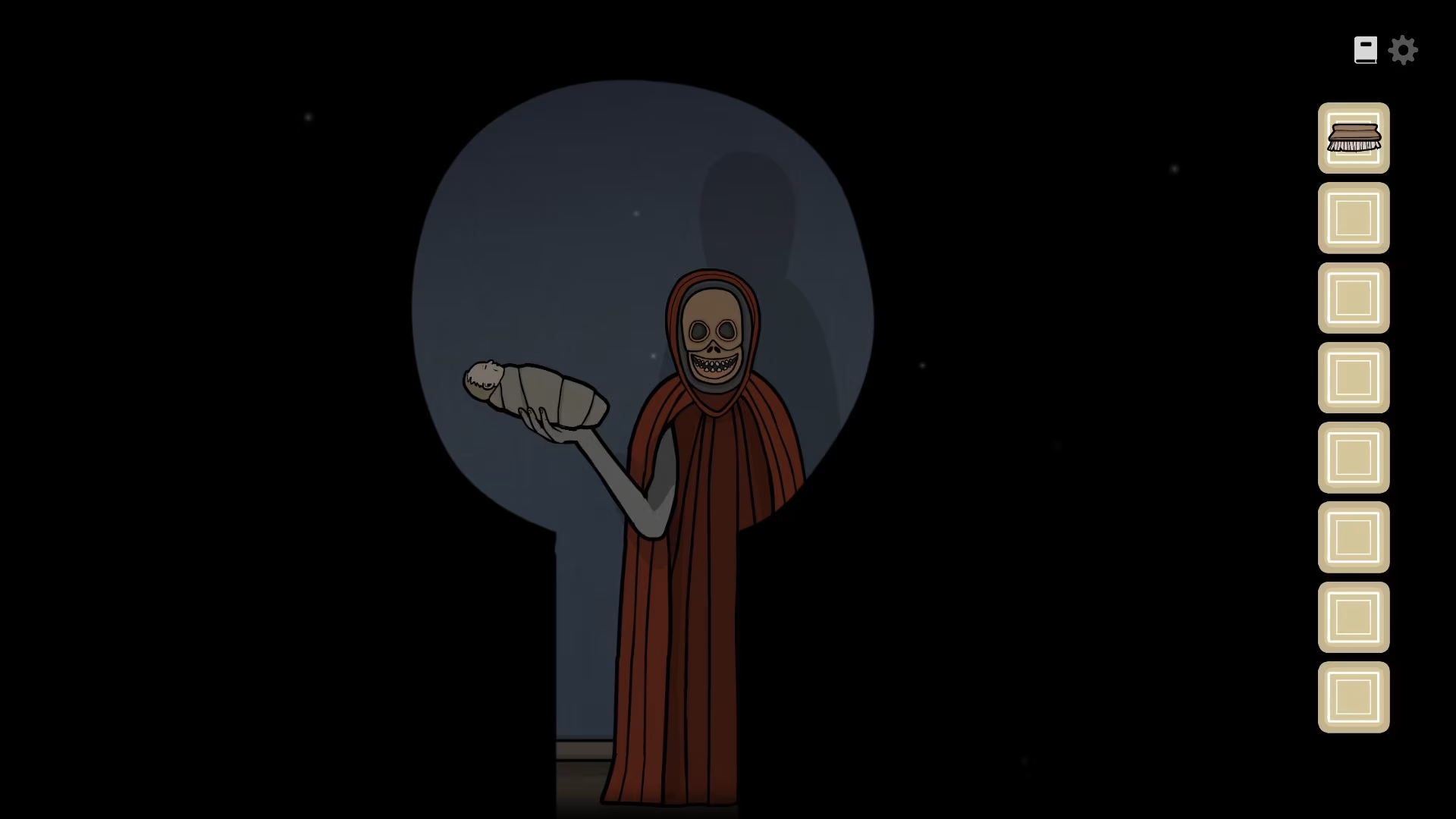
The relationship between the Vanderboom siblings is where Servant of the Lake really earns its place in the canon. You begin to understand why the family became what it did. The elixir isn't simply some supernatural MacGuffin anymore. Its pursuit becomes part of a wider story about ambition, family, obsession and the horrifying consequences of believing you can manipulate the fundamental rules of existence.
And, naturally, the servant gets caught in the middle of it. That perspective is clever. You're an outsider looking in, close enough to observe the family but sufficiently removed that their behaviour becomes increasingly disturbing. You're doing their laundry while simultaneously discovering things that should probably have you running for the nearest carriage.
Instead, you carry on cleaning. That's Rusty Lake in a nutshell.
The presentation remains as distinctive as ever. The hand-drawn environments retain the slightly grotesque, theatrical quality that has defined the series from the beginning. There is something wonderfully tactile about the Vanderboom house: the faded wallpaper, wooden furniture, paintings, cupboards and strange contraptions all feel like objects from a forgotten children's book that someone has subsequently filled with nightmares.
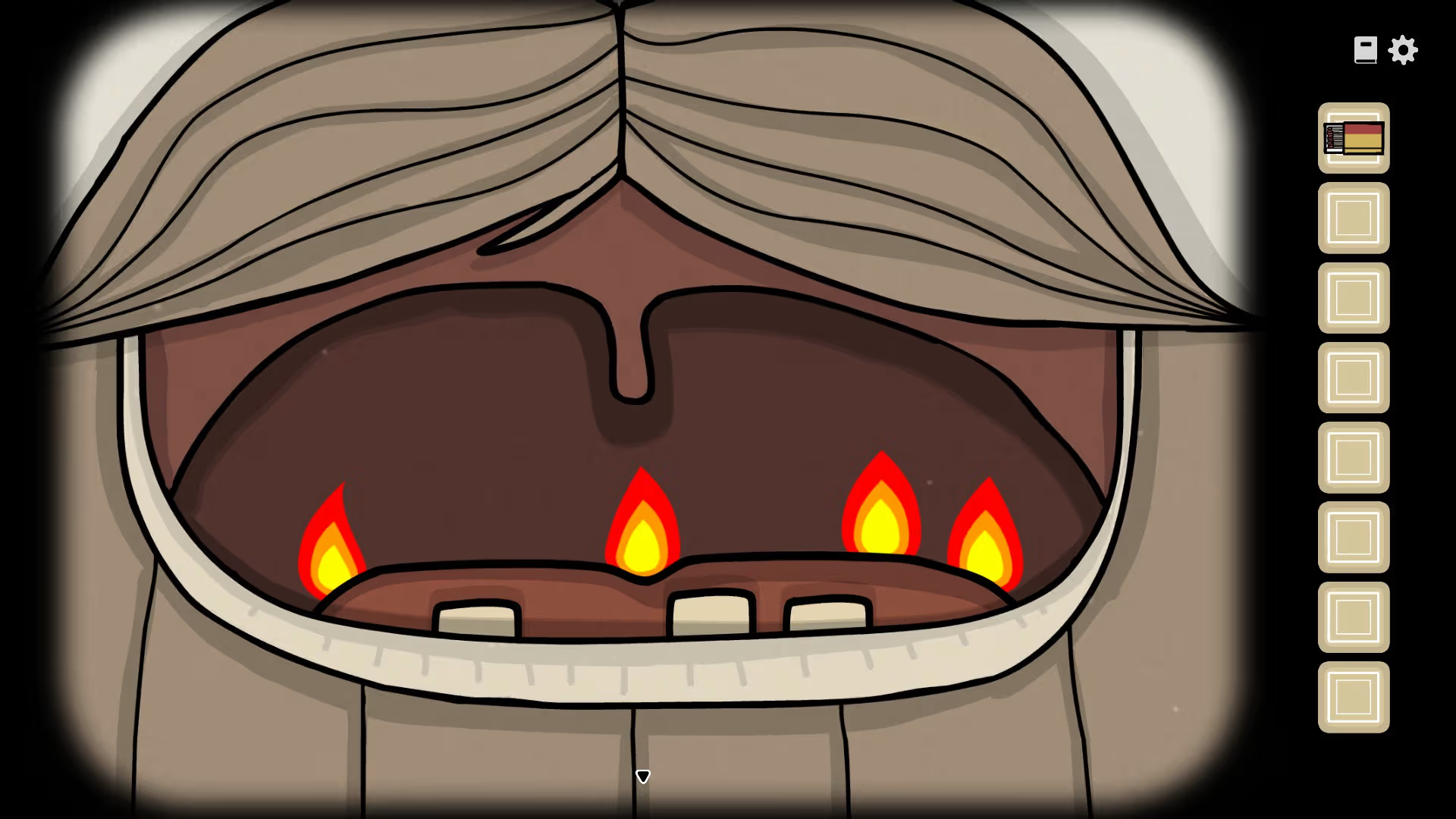
The decision to return to the Vanderboom estate also means the visual design benefits from familiarity. You've seen versions of these spaces before. You know that a seemingly innocent room probably has something terrible hiding inside it. You know that a portrait isn't merely a portrait. You know that if a character looks directly at you for slightly too long, something has probably gone catastrophically wrong. That knowledge becomes part of the atmosphere.
The animation has also taken a noticeable step forward. There are more substantial story sequences and character performances than in many previous games, giving the cast considerably more room to express themselves. William in particular makes an impression, helped enormously by an excellent voice performance that gives him a warmth and eccentricity that could easily have been lost beneath the series' deliberately strange presentation.
The soundtrack is superb. Victor Butzelaar's score has always been an important part of Rusty Lake's identity, but here it does an especially good job of connecting the domestic and the sinister. Gentle melodies can accompany the most mundane tasks before gradually giving way to something considerably more ominous. Familiar musical motifs returning from earlier entries are particularly effective for long-time fans, occasionally producing the sort of little shiver that only happens when a piece of a decade-old gaming memory suddenly reappears.
It helps that the game is willing to let its soundscape breathe. A creaking floorboard. A distant noise. The sudden absence of music. A voice that sounds just a little too calm given what is happening on screen. Horror doesn't require constant screaming, and the game soundtracks the game's more disturbing elements beautifully.
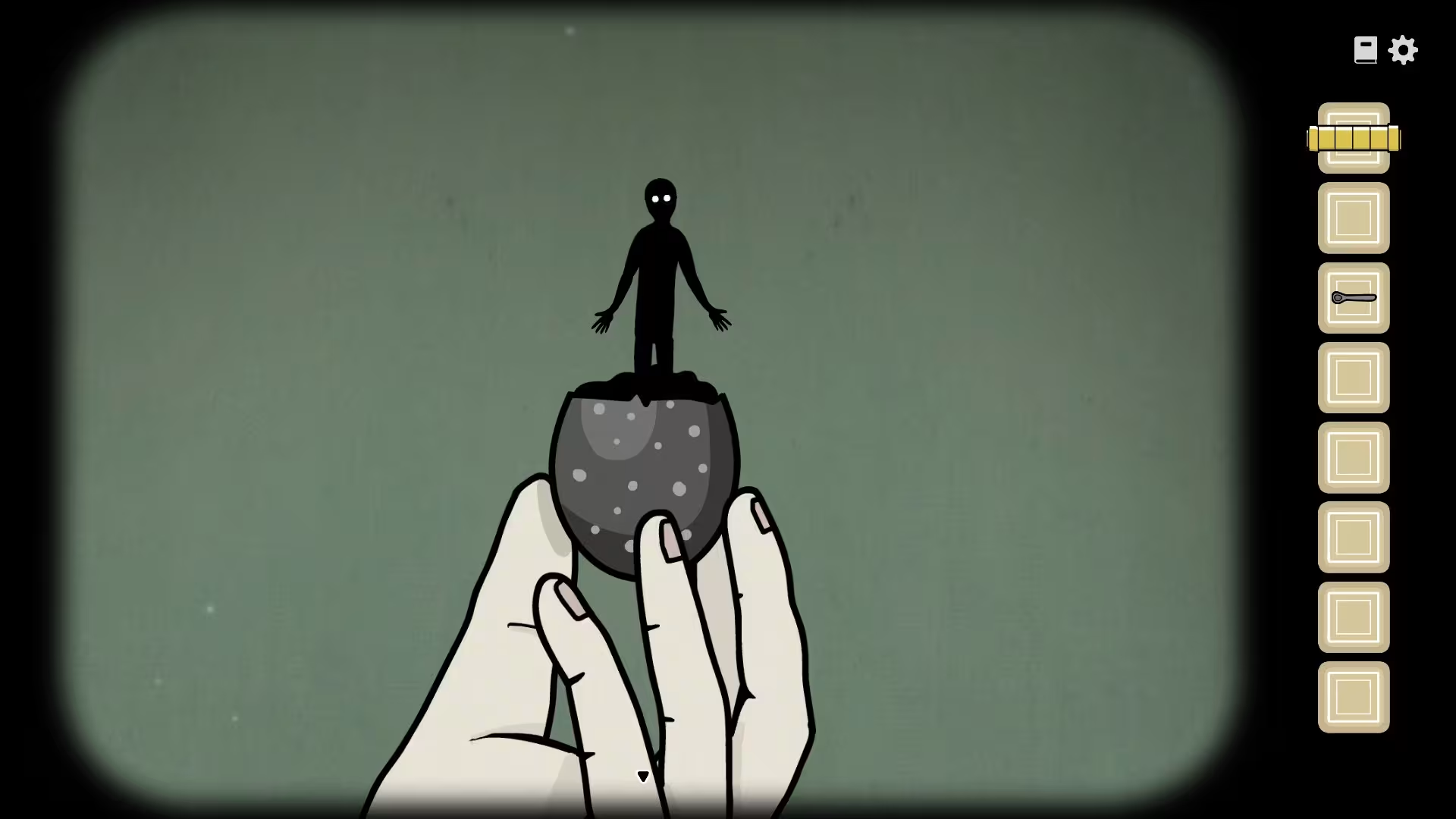
The problem is that Servant of the Lake occasionally overplays its hand. There are a lot of narrative animations. A lot of transitions. A lot of moments where control is taken away to show you something that, previously, you might have discovered yourself. None of these sequences are particularly bad, but they interrupt the wonderfully peculiar rhythm of solving a puzzle, exploring a room, discovering something strange and then trying to work out what on earth it means. For a series built around player curiosity, that's an important distinction. The game can sometimes feel like it's explaining the joke after you've already understood it.
The puzzles themselves also aren't quite as demanding as I might have hoped. That's not to say they're poor; far from it. But after waiting this long for another substantial Rusty Lake adventure, I occasionally found myself wishing the game would push me harder. There were only a handful of moments where I felt genuinely stuck, and most of the time the solution arrived after a moment of reflection and before frustration had a chance to set in. The difficulty is certainly gentler than some earlier entries.
That's partly a consequence of the game's increased narrative focus. You're being moved through a story rather than simply dropped into a puzzle box and left to fend for yourself. The three-day structure gives the experience a pleasing sense of momentum, but it also means there are fewer opportunities for the game to become completely opaque. I found myself conflicted about that. I enjoyed the story more than I expected to, but I missed the feeling of being completely lost in Rusty Lake's particular brand of madness.
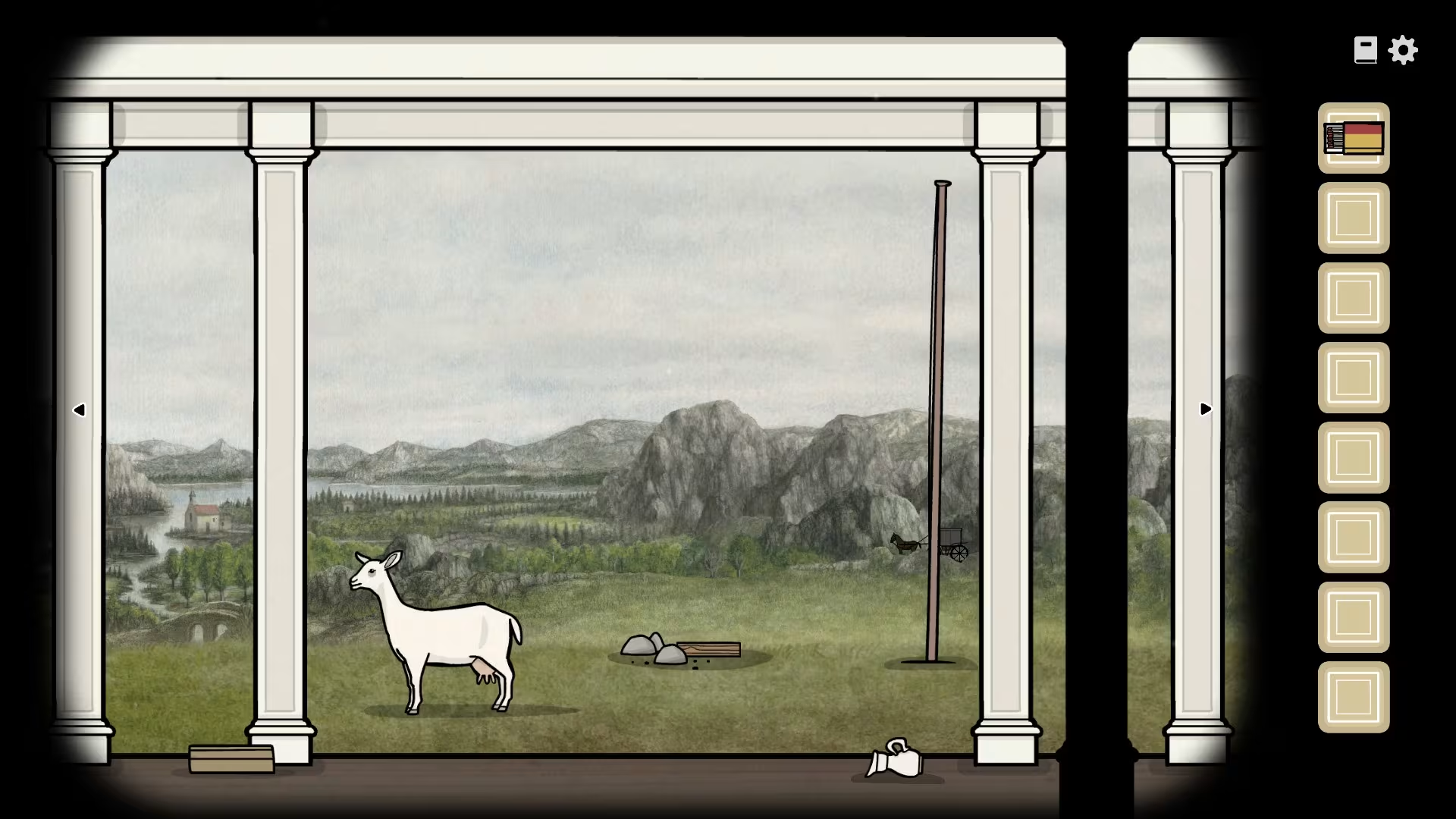
There is, however, an excellent new addition for anyone who struggles to keep track of the game's increasingly elaborate visual clues: a notebook that allows you to make your own drawings and notes. It's a small addition, but a welcome one, particularly given how many puzzles rely on remembering patterns or information encountered earlier.
And then there's the matter of the game's length. A first playthrough takes roughly four to five hours, with additional secrets and hidden objectives providing reasons to return. I think that's about right for this kind of adventure. Any longer and the deliberately confined setting might have begun to feel stretched. Any shorter and the expanded story would probably have suffered.
The issue isn't that Servant of the Lake is too short. It's that I wanted more. More time with the Vanderbooms. More bizarre chores. More puzzles. More opportunities to poke around a room that clearly contains something awful but hasn't yet revealed precisely what.
That's a good problem to have. Because for all my reservations about the increased storytelling and slightly softer puzzle design, Servant of the Lake remains recognisably, wonderfully Rusty Lake. It has that particular sensation of stepping through a door into a world where the rules are subtly different. It knows that a family photograph can be more frightening than a monster. It knows that a simple household task can become an existential crisis if you give the wrong person the wrong object. It can make you laugh at something grotesque and then make you feel uncomfortable about having laughed at it.
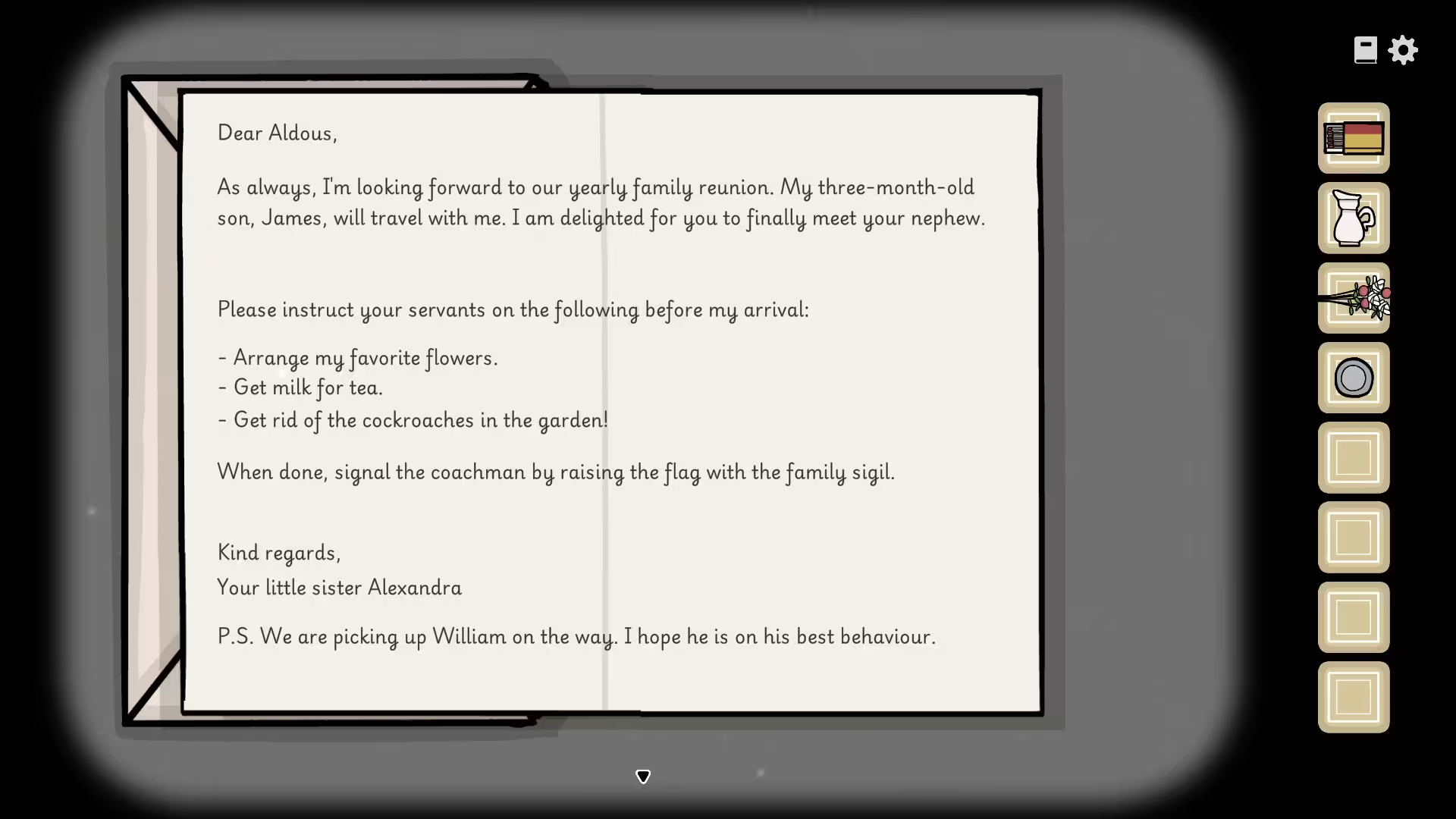
Most importantly, it continues to make the Vanderboom family fascinating. After years of scattered clues, cryptic images and increasingly elaborate connections, getting to spend proper time with Aldous, William and Alexandra is a treat. Fans who have been following the series' lore will find plenty to chew over, while newcomers can simply enjoy an exceptionally strange point-and-click adventure about a servant who really should have asked considerably more questions before accepting the job.
I came away from Servant of the Lake with slightly mixed feelings. The stronger narrative focus occasionally takes away some of the mystery that makes Rusty Lake so compelling, and the puzzles rarely reach the most fiendish heights of the series' past. But the atmosphere remains peerless, the Vanderboom story is fascinating, and the combination of domestic routine and supernatural horror is as deliciously bizarre as ever.
There's something oddly comforting about returning to Rusty Lake. You know there will be something horrible waiting behind the next door. You know somebody is going to do something they absolutely shouldn't. You know the solution to the puzzle in front of you will probably involve an object that has no business being anywhere near it.
And yet you open the door anyway.
You can subscribe to Jump Chat Roll on your favourite podcast players including:
Let us know in the comments if you enjoyed this podcast, and if there are any topics you'd like to hear us tackle in future episodes!