PC
PS5
Xbox Series
MindsEye is the sort of game that makes you question your life choices. Not big, dramatic ones like career or relationships, but smaller, pettier things. Why did you ignore the early warning sirens from critics? Why did you believe the marketing about “mind-bending narrative” and “ever-expanding experiences” when the only thing that truly expands here is your patience threshold? Billed as a cinematic sci-fi action thriller set in the desert metropolis of Redrock City, it ends up as one of 2025’s most relentlessly tedious, technically shoddy and creatively bankrupt releases — and that’s in a year not exactly short on contenders.
You play as Jacob Diaz, a former soldier with a mysterious neural implant and the personality of a damp training manual. He’s haunted by fragmented memories of A Mission That Went Wrong and must now unravel a conspiracy involving rogue AI, corporate malfeasance and unchecked military power. If that sounds like a checklist of sci-fi buzzwords, that’s because it plays like one. MindsEye talks a big game about complex storytelling, but the reality is a string of clichés delivered via flat dialogue, limp voice acting and cutscenes that mistake overlong monologues for depth. Every time Jacob squints into the middle distance while the camera slowly circles him, you can feel the game desperately trying to convince you it’s Important. It isn’t.

The most damning thing about the story isn’t even that it’s derivative — plenty of games borrow liberally and still land — it’s that it’s astonishingly dull. Conspiracies are teased and then explained in thudding exposition dumps. Supporting characters slide into frame, deliver a paragraph of backstory, and then disappear until the plot needs them to open a door or betray you on schedule. There’s no sense of escalation, no clever reveal; just an exhausting trudge from one objective marker to the next, punctuated by dialogue that sounds like it was generated by feeding a dozen sci-fi screenplays into a shredder and taping random strips back together. When a game about memory, identity and AI can’t muster a single memorable line, something’s gone very wrong.
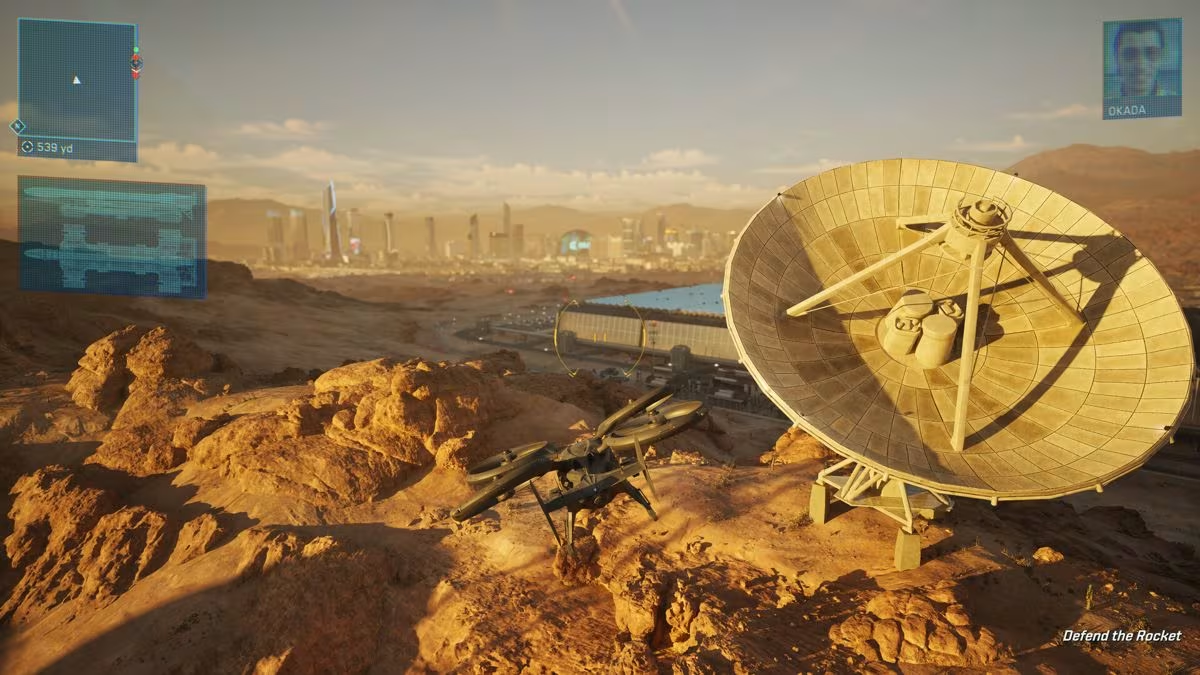
Redrock itself is the perfect metaphor for MindsEye as a whole: initially impressive from a distance, hollow once you actually step inside. It should look striking — Unreal 5 lighting, detailed cityscapes, nice character models — but all that visual fidelity is draped over a world that might as well be a themed lobby. For a game happy to throw around terms like “ever-expanding” and “rich environments”, there is shockingly little to actually do between missions. You can’t meaningfully interact with the city, side activities are practically non-existent, and the “open world” phase is mostly an excuse to make you drive mind-numbing distances between waypoints while radio chatter pretends something interesting is happening.
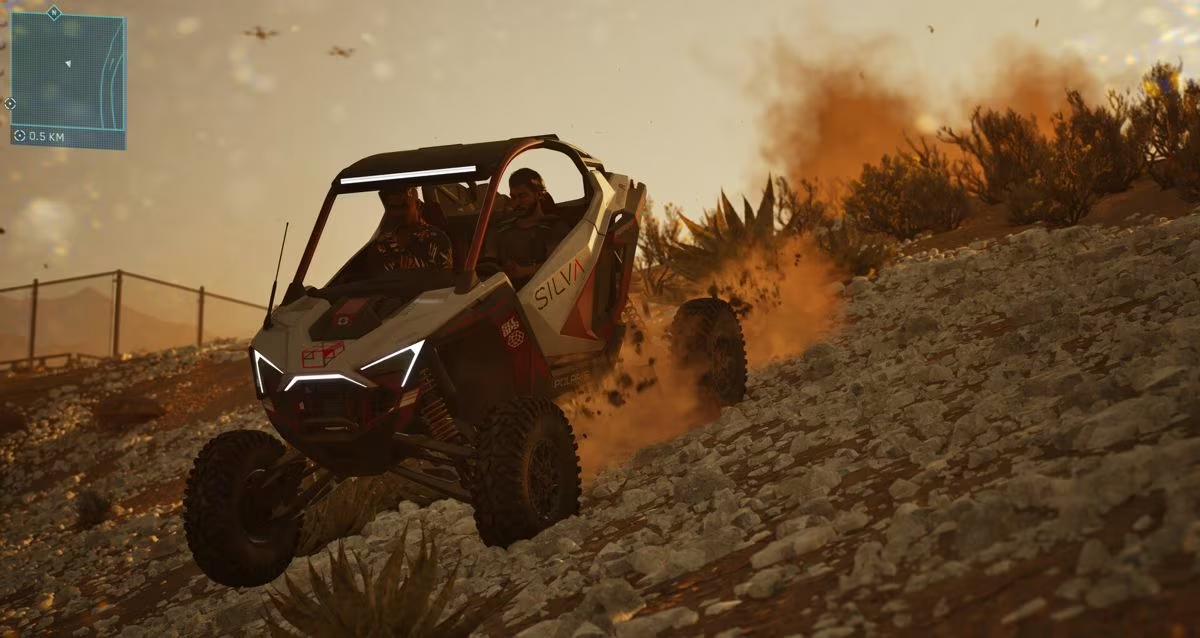
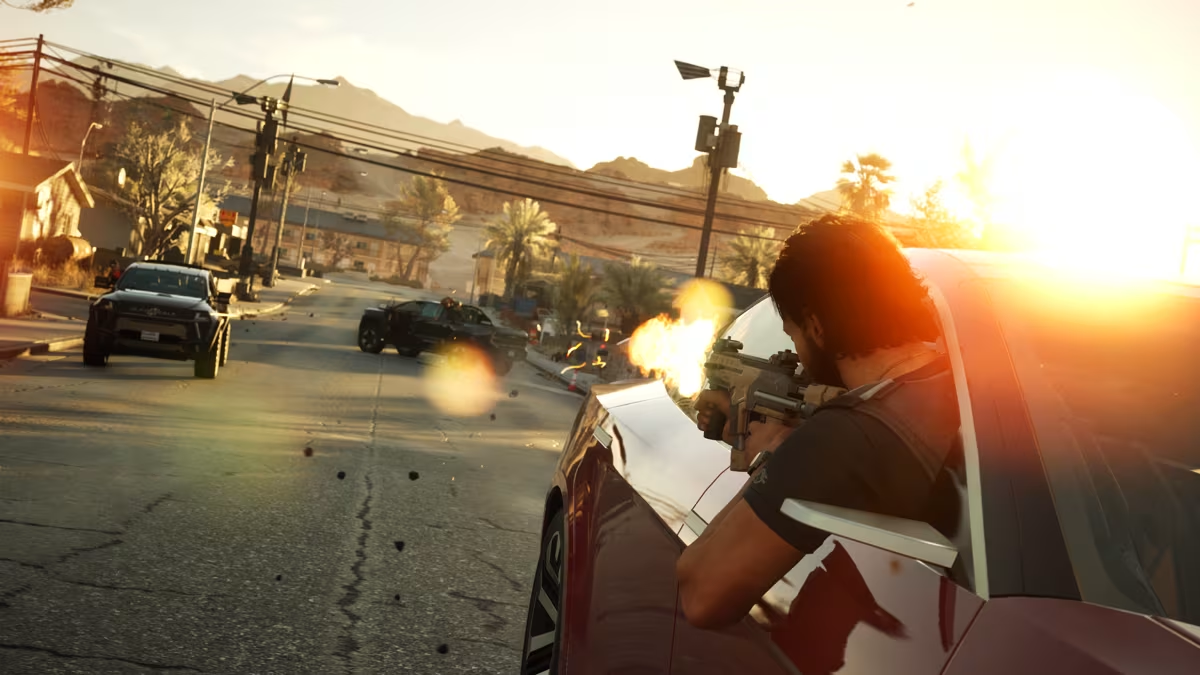
Those commutes are emblematic of the padding problem. Driving and vehicle handling never graduate beyond serviceable, yet the game insists on stretching sequences out as if length alone equals value. Get in car. Drive across the map through lifeless traffic. Watch a cutscene. Repeat. On paper, MindsEye promises high-speed chases and cinematic set pieces; in practice, you mostly get a sluggish cruise control simulator occasionally interrupted by performance hitches and frame drops that make threading between traffic more awkward than exciting. When the PS5 frame rate is still being reported dipping into the 20s in on-rails shootouts after multiple patches, you know optimisation was not high on the priority list. It certainly wasn’t on PC.
Step out of the car and things somehow manage to get worse. Combat is a cover-based third-person shooter so mechanically barebones it feels like a late PS3 launch title in a very unflattering way. Weapons sound decent enough and there’s a vague punch to some of the guns, but enemy encounters are a conveyor belt of identikit goons and drones thrown into arenas with almost no imagination. AI behaviour swings wildly between “psychic flanking expert” and “man who has forgotten how doors work”, often in the same room. Enemies will either beeline directly into your line of fire or stand rooted behind cover long after it’s stopped making tactical sense. It doesn’t feel like you’re outsmarting opponents; it feels like you’re babysitting a script that can’t decide what mood it’s in.
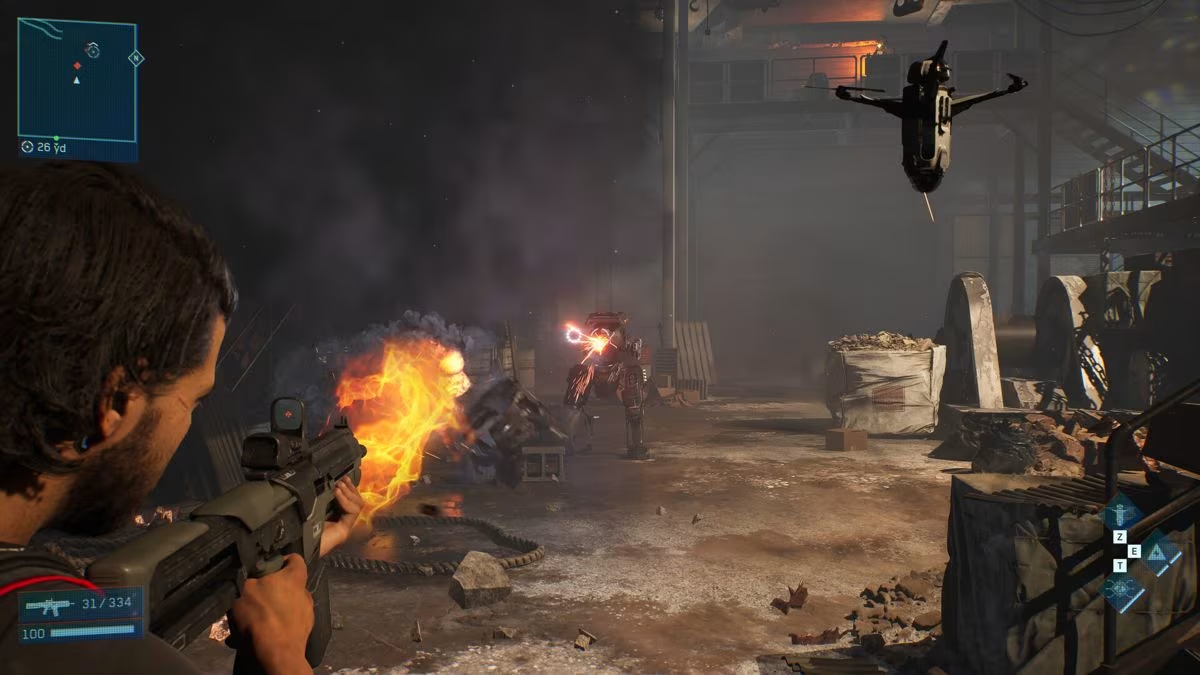
Compounding this is how limited your movement and options are. There’s no melee, no dodge, no roll, no real mobility tech at all. You are a former elite soldier in a cutting-edge world, yet you move like someone ordered a “Generic Third-Person Protagonist” from a catalogue and ticked the “Basic Package” box. The much-touted neural implant and “evolving” combat don’t change that fundamental stiffness; you’re still glued to waist-high cover, popping up to shoot recycled enemies that soak just enough damage to turn each encounter into a slog. The occasional drone ability does add a fleeting glimpse of flair, but these moments are rare and feel bolted-on instead of baked into encounters.
Then there are the technical issues. MindsEye shipped in a state that reviewers and players alike compared, without exaggeration, to Cyberpunk 2077’s early days. We’re talking enemies pathfinding into walls, NPCs glitching into T-pose breakdowns in the middle of cutscenes, cars launching skyward for no reason, and frequent tumbles through the floor into endless voids. Even basic AI routines break, leaving foes milling aimlessly or failing to react at all until you practically tap them on the shoulder. Performance, as mentioned, is equally shaky, and it all adds up to an experience that never feels finished, let alone polished.
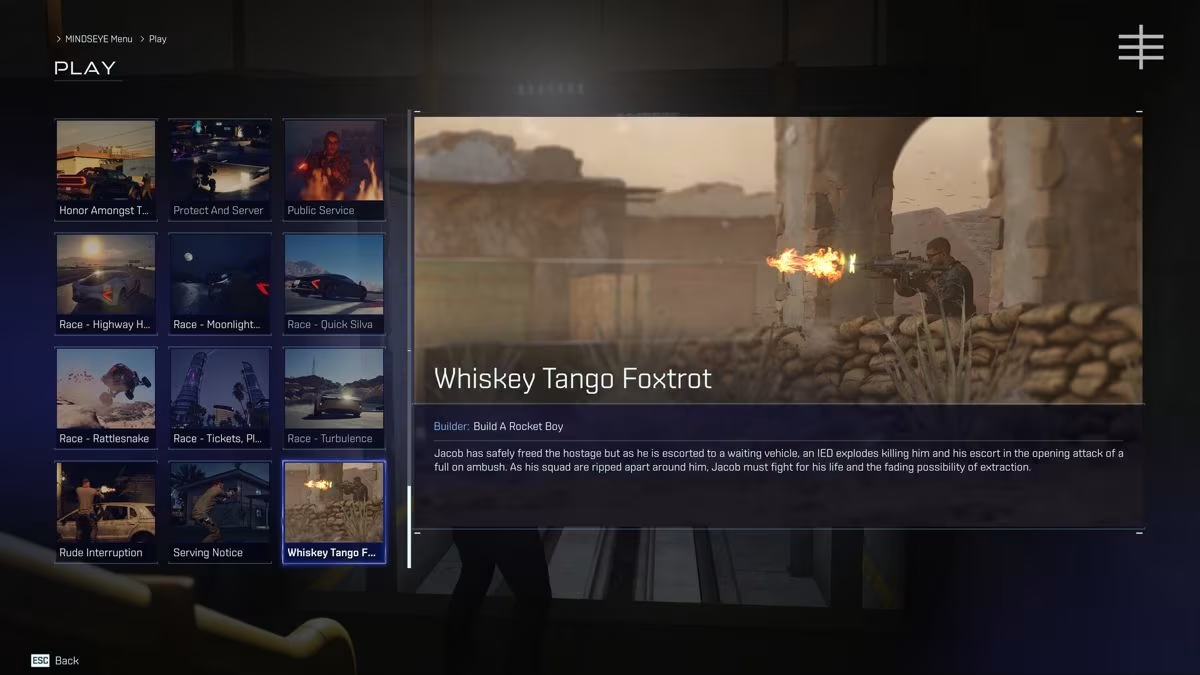
The frustration is sharpened by how much the studio talked up ambition beforehand. MindsEye was pitched as a flagship, with an ongoing live component (Build.MindsEye) and PC tools for players to build and share their own content down the line. In theory that sounds fantastic; in practice, it feels like a baffling case of priorities. When your foundational story campaign is a lifeless trudge wrapped in a bug-riddled shell, promising an “endless stream of new playable content” reads less like ambition and more like a threat. The base game needed ruthless editing and months more hard QA; instead, it shipped bloated and broken, and the conversation around it very quickly shifted from “What’s this mysterious project?” to “How did this leave the building?”
Even outside the game, it’s been messy. Reports of layoffs at Build A Rocket Boy in the immediate aftermath of launch did not land well, especially paired with early defensive comments brushing off criticism rather than owning the very obvious problems. When your game is sitting near the bottom of the year’s Metacritic pile with an average in the 30s, and user scores circling 2.5 out of 10, accusing reviewers of sabotage doesn’t play well. It just reinforces the impression of a project that believed its own hype right up until reality kicked the door in.
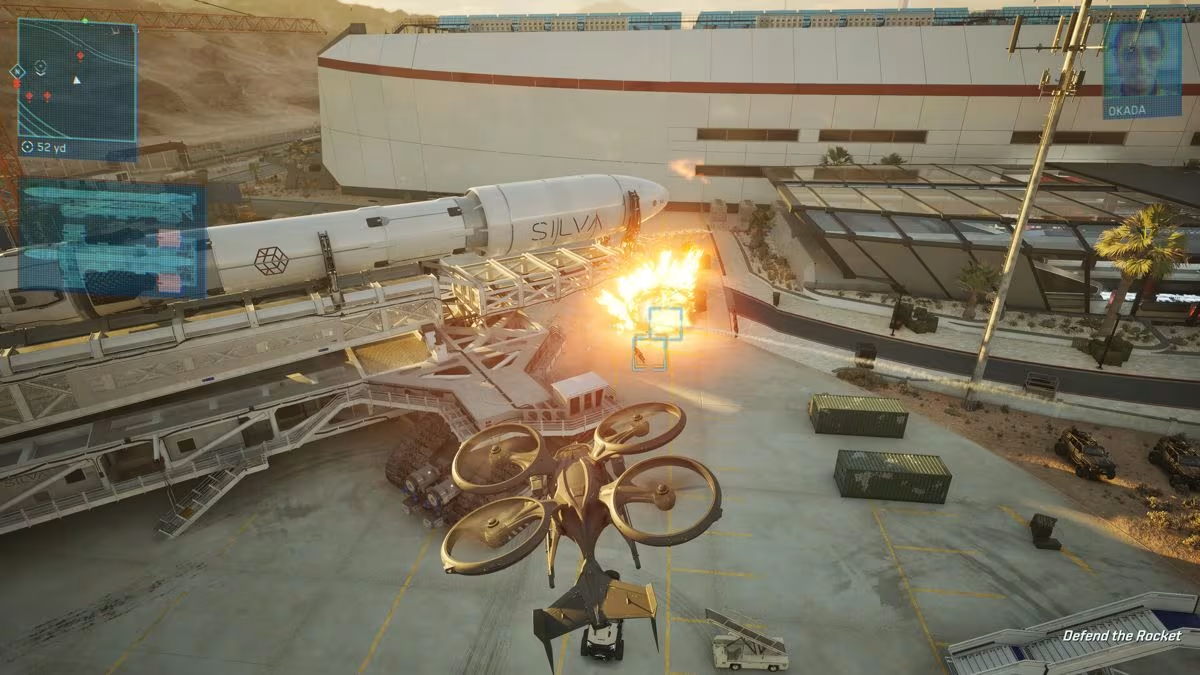
There are glimmers of something better buried in the rubble. The art team clearly poured effort into the look of Redrock. Some cutscenes are slickly directed, and every now and then you stumble across a vista that hints at the atmosphere MindsEye could have had if the design hadn’t been stuck in 2010 and the tech in early access. But attractive screenshots don’t save a game that is, minute-to-minute, a joyless, repetitive slog. Impressive visuals can’t compensate for a hollow world, tedious combat, broken systems and writing so bland it evaporates the instant you put the pad down.
MindsEye, then, is not just a misfire; it’s a cautionary tale. Big promises, small ideas. Glossy surface, hollow core. In a year overflowing with inventive action games and genuinely bold narrative experiments, it feels archaic and insipid — a relic from an era when slapping “cinematic” on the box was enough to excuse everything else. As it stands today, this is one desert trip you can safely skip.
You can subscribe to Jump Chat Roll on your favourite podcast players including:
Let us know in the comments if you enjoyed this podcast, and if there are any topics you'd like to hear us tackle in future episodes!