PS5
PC
Switch
Switch 2
Xbox Series
There are two ways to make a retro-inspired game. The first is to lovingly recreate the thing you grew up with and hope nostalgia does the heavy lifting. The second is to understand why those games worked in the first place, then build something new using those foundations. Yacht Club Games has always belonged firmly in the latter camp.
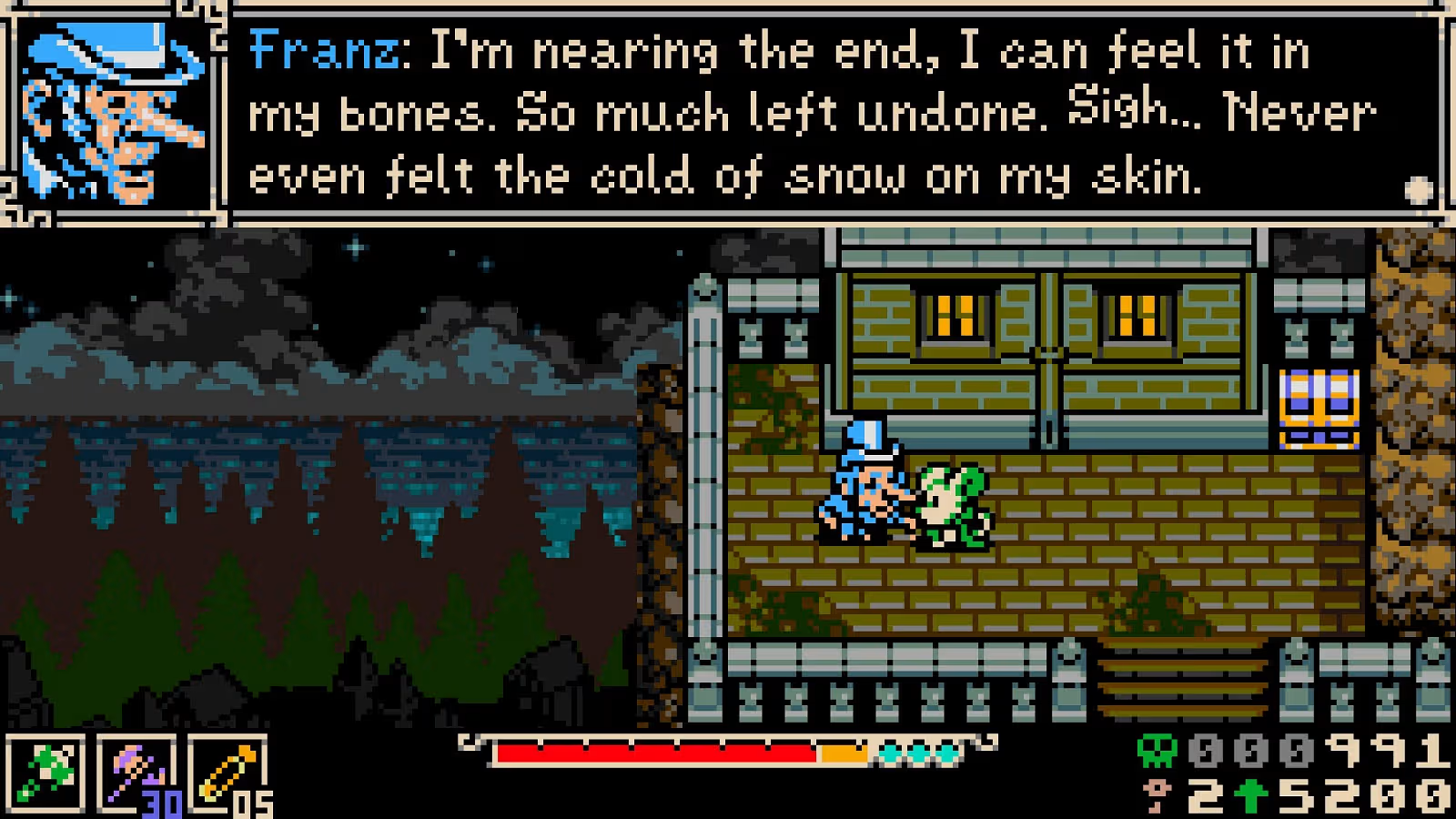
Shovel Knight wasn't successful because it looked like an NES game, but because it understood the language of those classics better than many of its retro-inspired contemporaries. More than a decade later, Mina the Hollower applies that same philosophy to the era of monochrome handheld adventures and top-down action RPGs. On the surface, it looks like the lost Game Boy Color masterpiece Nintendo forgot to release. In practice, it's far stranger, darker, more ambitious, and considerably more willing to kick your teeth in.
You play as Mina, a celebrated inventor and Hollower summoned back to Tenebrous Isle after the Spark Generators she helped create begin to fail. Once a thriving land powered by her inventions, the island has fallen into decay. Strange creatures roam the wilderness, settlements cling desperately to survival, and a creeping corruption threatens to consume everything. Mina's task is straightforward enough: restore six Spark Generators scattered across the island and uncover the truth behind the growing darkness. Naturally, things become considerably more complicated than that.
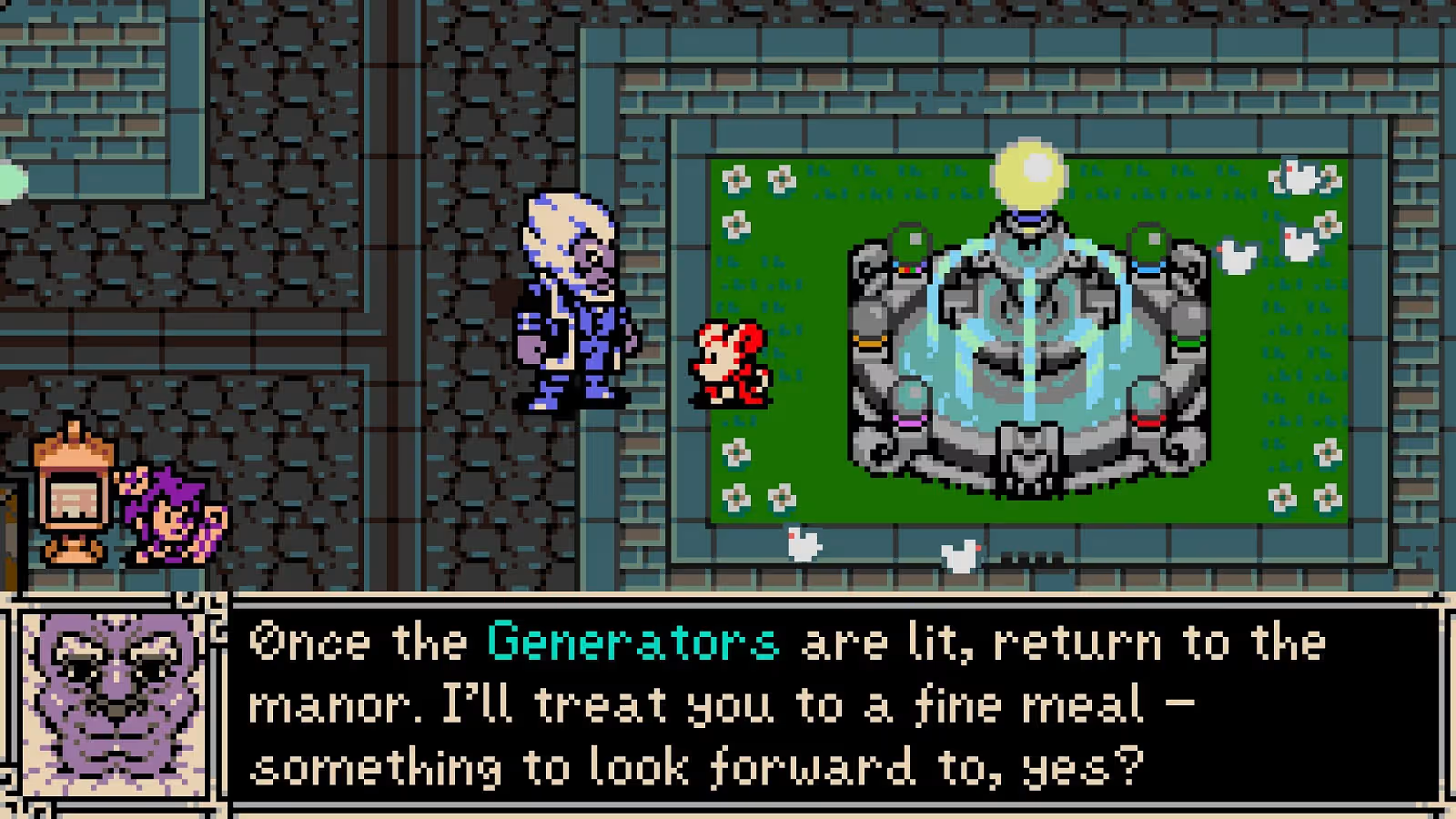
What struck me almost immediately is how confident the game feels in its world-building. Tenebrous Isle is a place overflowing with personality. Every settlement, dungeon, and stretch of wilderness feels distinct, populated by bizarre creatures, eccentric residents, and just enough gothic weirdness to make exploration consistently rewarding.
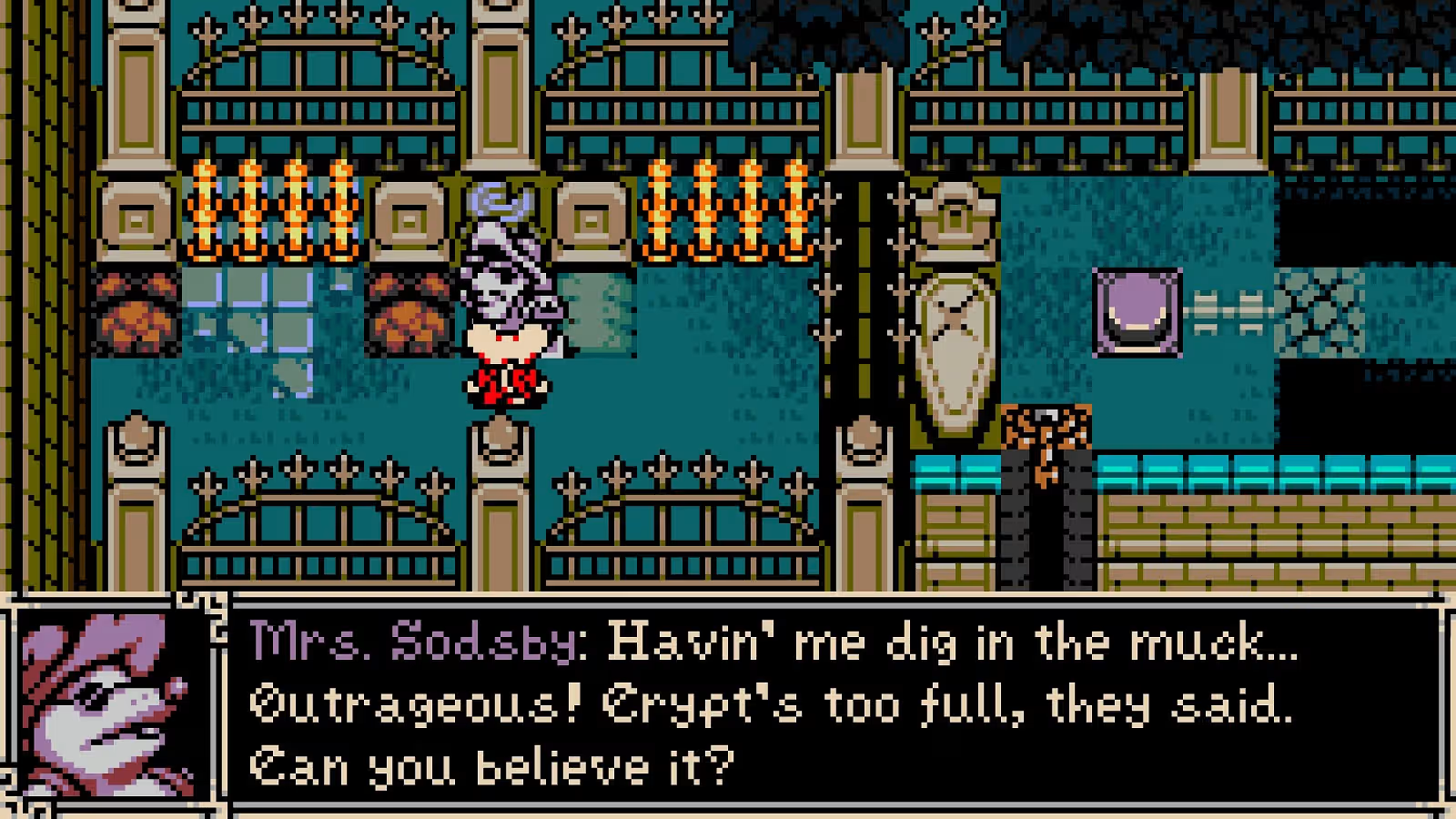
The visual style deserves enormous praise. Screenshots simply do not do it justice. Yacht Club has somehow managed to create a game that looks exactly how you remember Game Boy Colour adventures looking, rather than how they actually looked. The chunky sprites, limited palette, and pixel-perfect presentation evoke an era of gaming that probably only exists in our collective imagination. It feels retro without ever feeling constrained by nostalgia.
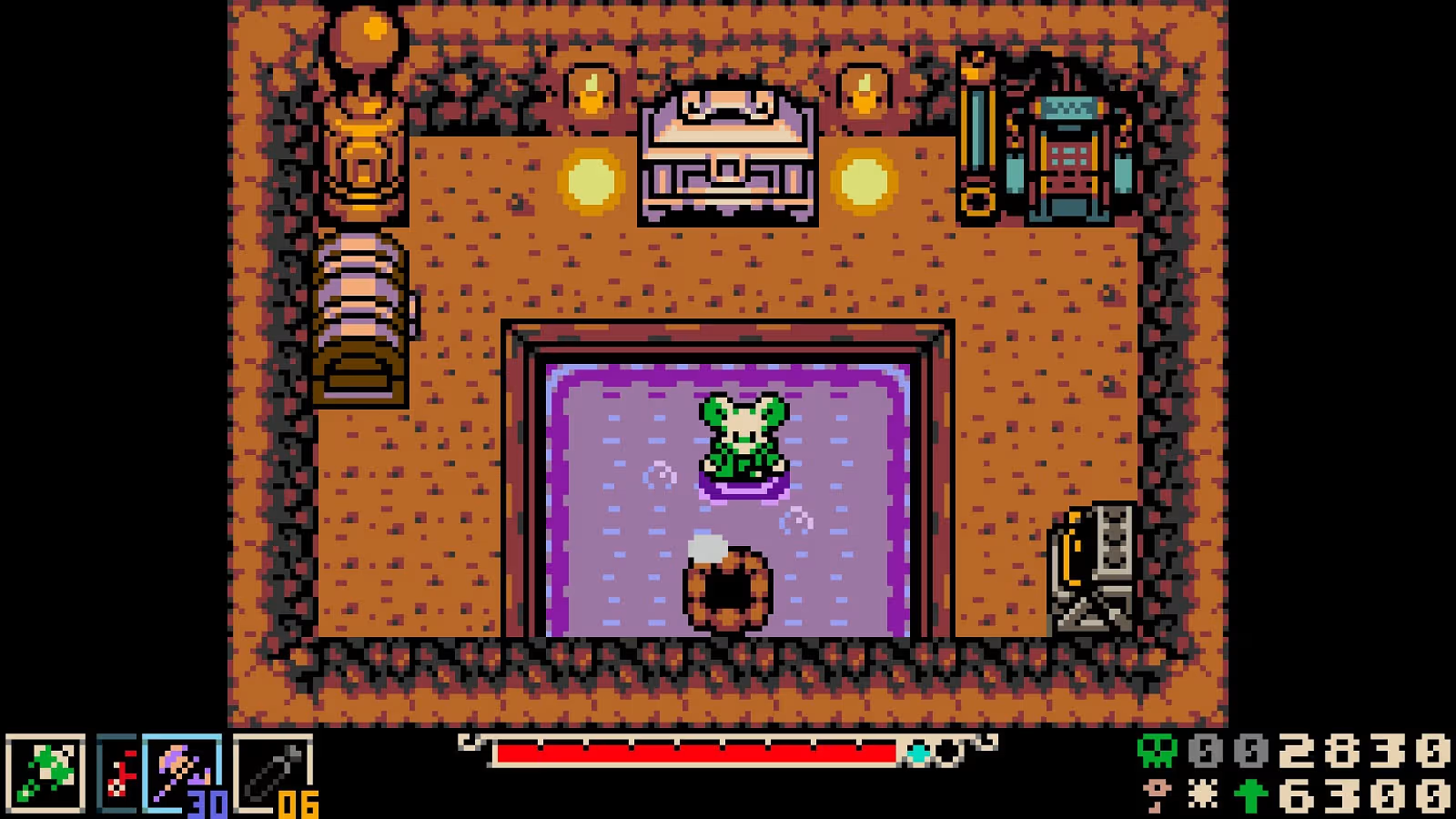
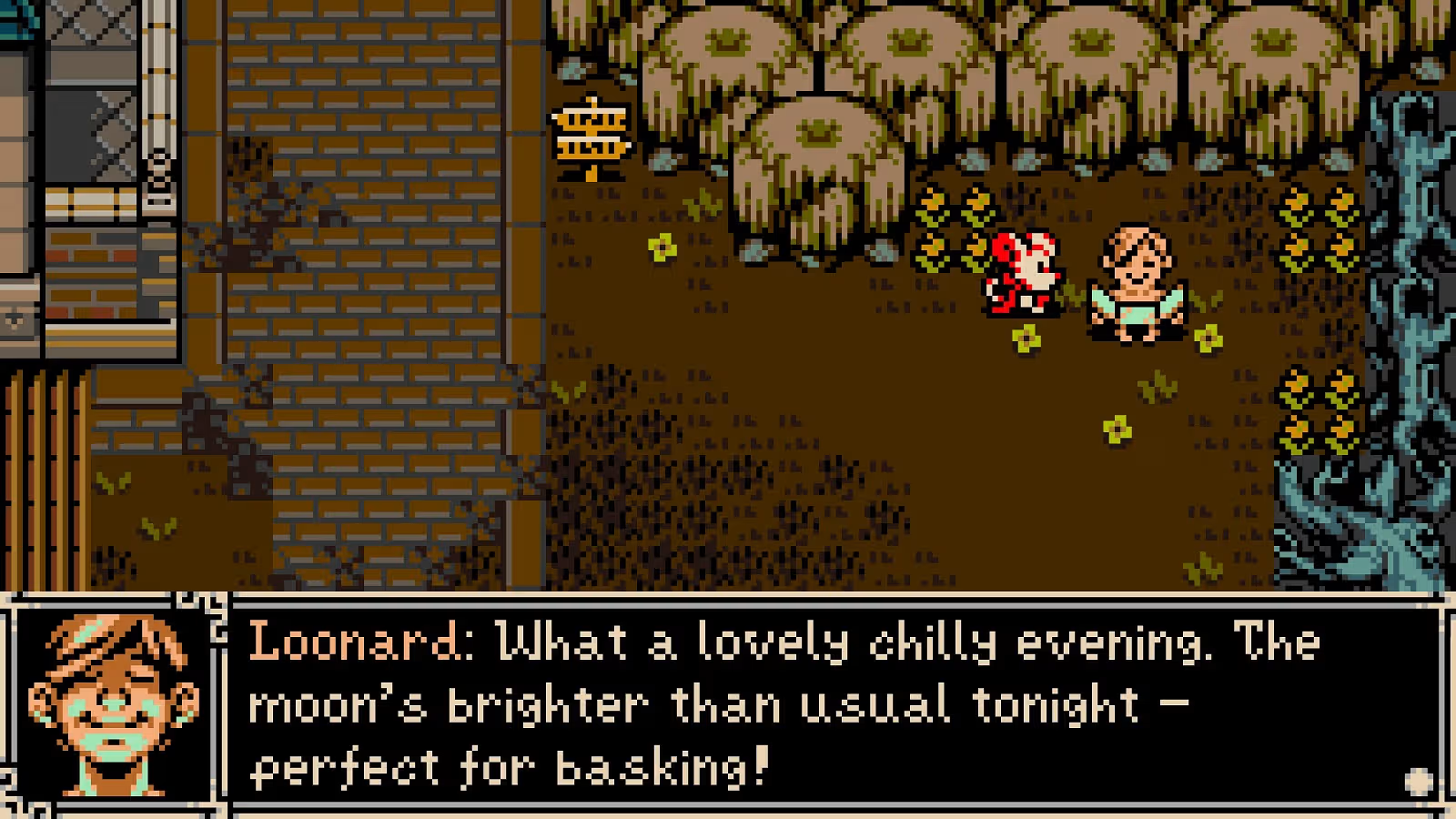
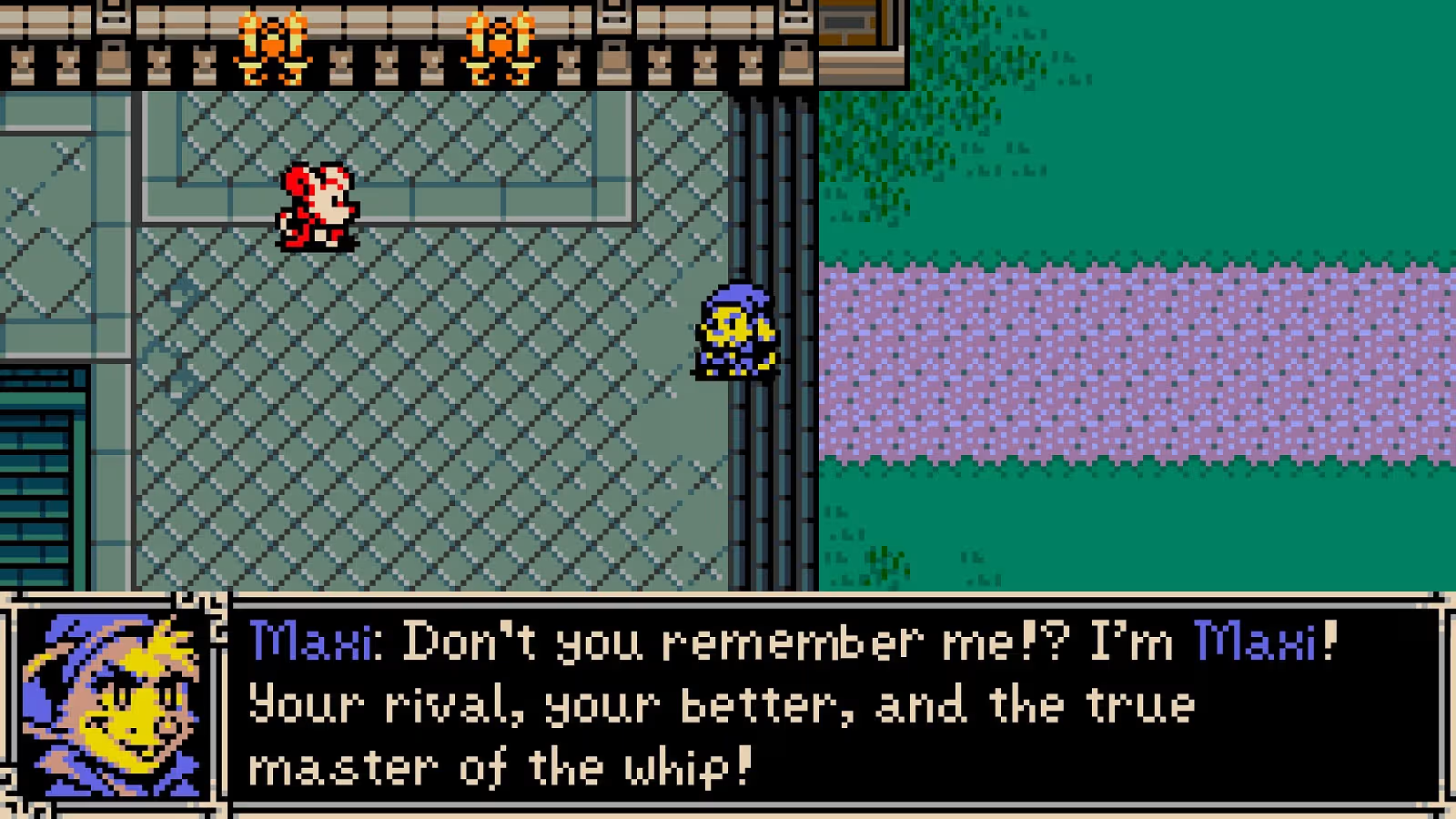
Then there is Mina herself. Gaming has no shortage of silent heroes, gruff warriors, or chosen ones burdened by destiny. Mina is refreshingly different. Intelligent, curious, occasionally naïve, and driven more by compassion than heroism, she is an instantly likeable protagonist. The fact she's also a mouse armed with a whip and an engineering degree only adds to her charm. Throughout the adventure, she meets a colourful cast of allies, eccentrics, and complete oddballs, and the writing consistently manages to balance humour with genuine warmth.
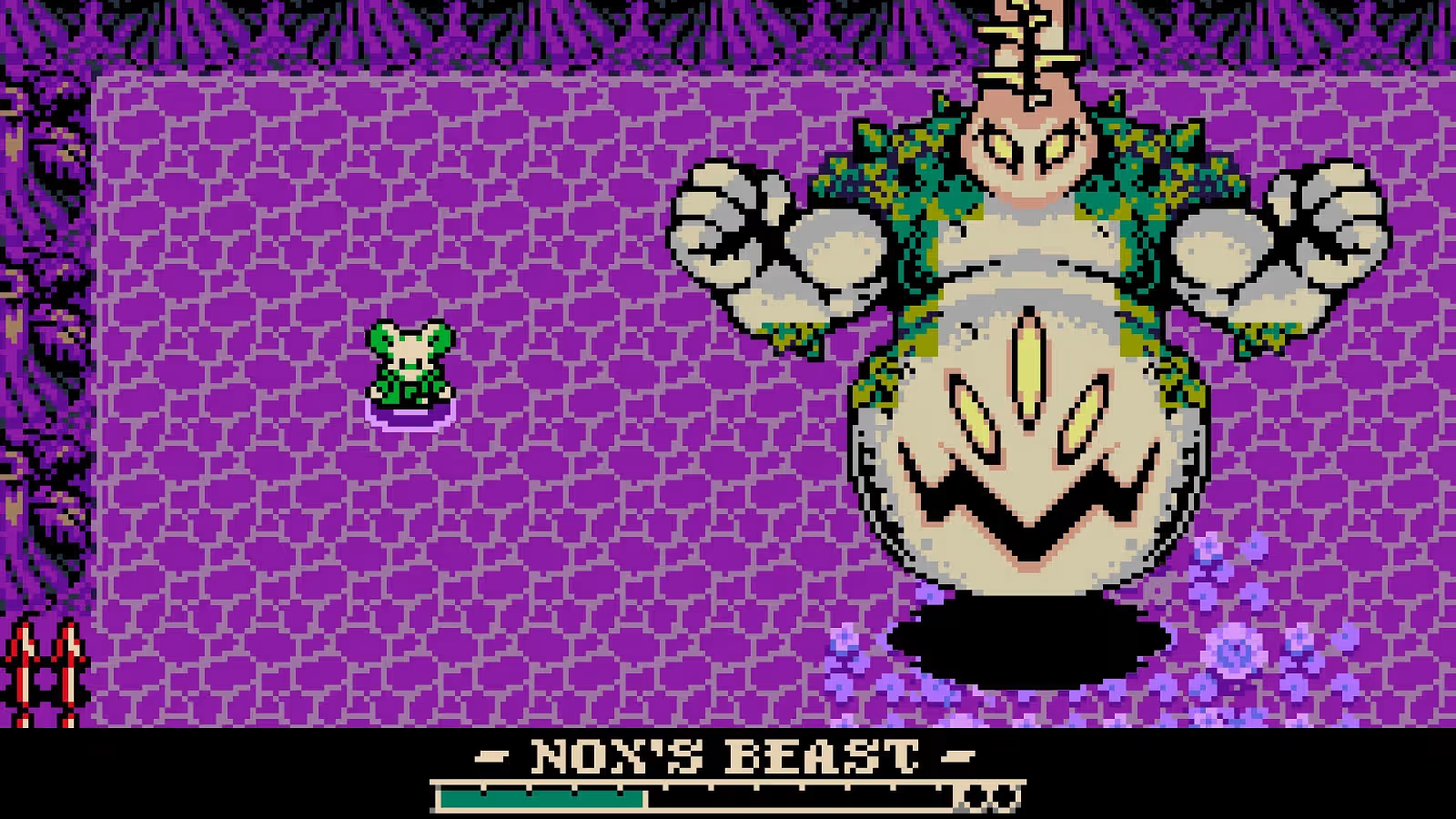
What really elevates the narrative, though, is its willingness to embrace darkness. The island feels haunted by its history. Entire regions tell stories through environmental details alone. Abandoned structures hint at forgotten tragedies. Strange creatures evoke sympathy as often as fear. While the main plot itself is relatively straightforward, the world surrounding it constantly rewards curiosity. You find yourself talking to everyone, poking into every corner, and taking detours simply because you want to know what bizarre thing you'll discover next.
Of course, none of that would matter if the gameplay couldn't support it.
Thankfully, Mina controls beautifully. Her signature ability is burrowing underground, allowing her to tunnel beneath enemies, avoid attacks, cross hazards, and discover hidden pathways. It's one of those mechanics that feels clever the moment you unlock it, then somehow continues to find new uses twenty hours later. What initially seems like a simple dodge evolves into the foundation of exploration, puzzle solving, and combat.
Combat itself sits somewhere between classic Zelda and modern Soulslikes. Mina is vulnerable. Healing resources are limited. Enemies hit surprisingly hard. Death carries consequences. Yet the game never feels unfair. Every encounter is designed around pattern recognition, positioning, and understanding your tools. Victory comes from mastery rather than grinding. I found the toughest stretch came in the first two hours, when I was still getting used to the rigid four-directional attack and movement system. Farming currency (bones) to increase each of my three stats (“boning up”) by a couple of levels made a huge difference in my approach to the game. That time investment made some of the early fights less brutal, and let me focus on navigating the world with the tools at my disposal.
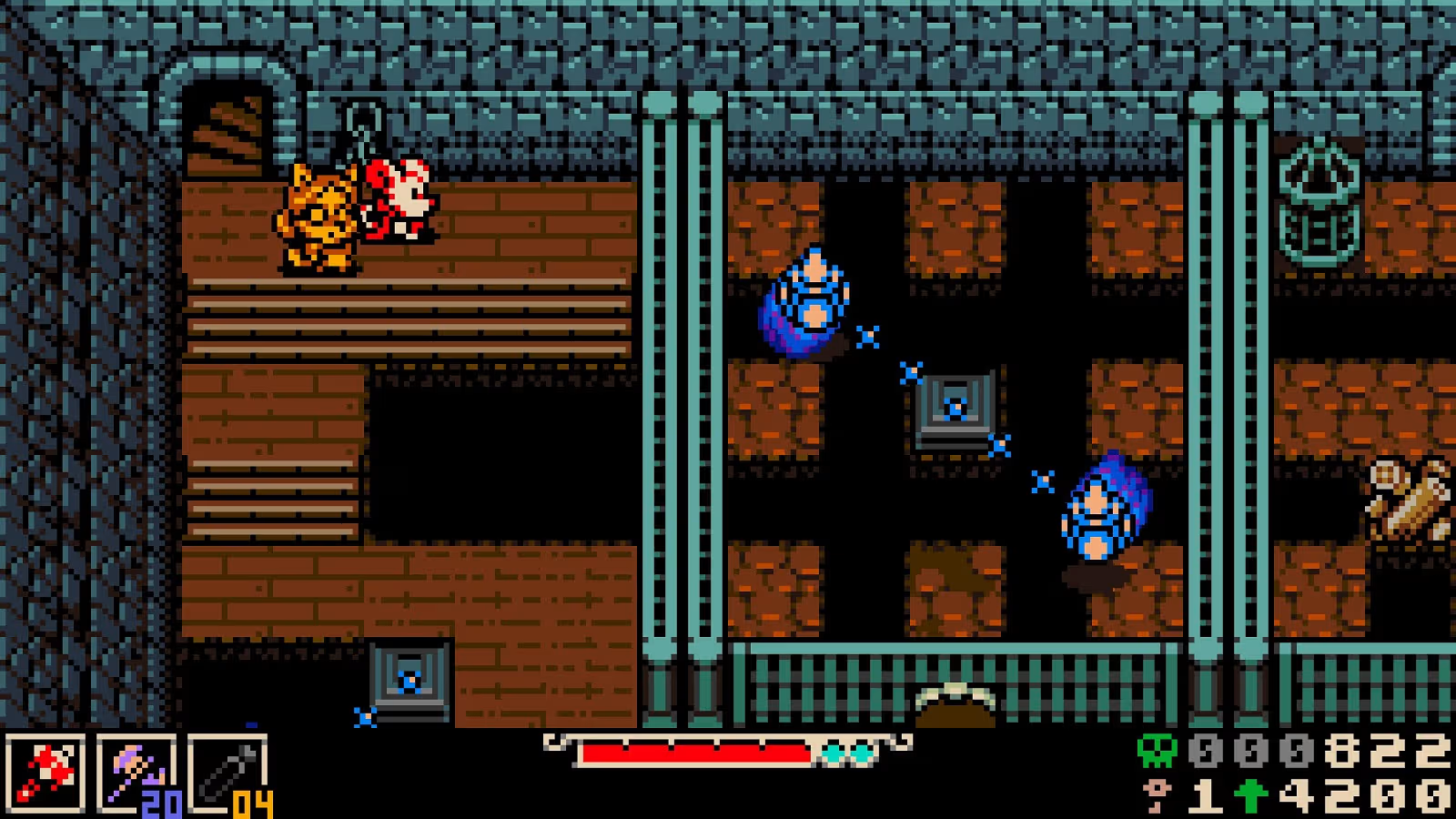
And there are a lot of tools. Early on, you're given a choice of primary weapon, each dramatically changing how the game feels. The Nightstar chain whip rewards careful spacing and control. The Blaststrike Maul turns Mina into a walking demolition crew. Whisper & Vesper favour aggression and speed. This isn't a cosmetic choice either. Each weapon encourages an entirely different approach to combat.
Then come the sidearms, trinkets, upgrades, and character progression systems. Ordinarily, I would complain about a game piling systems on top of systems. Modern design has an unfortunate habit of equating abundance with depth, a trap Mina avoids because almost everything serves a clear purpose. Trinkets provide meaningful passive bonuses. Sidearms expand your tactical options. Levelling allows you to specialise. By the midpoint of the game, my Mina felt fundamentally different from the version that stepped onto the island at the start.
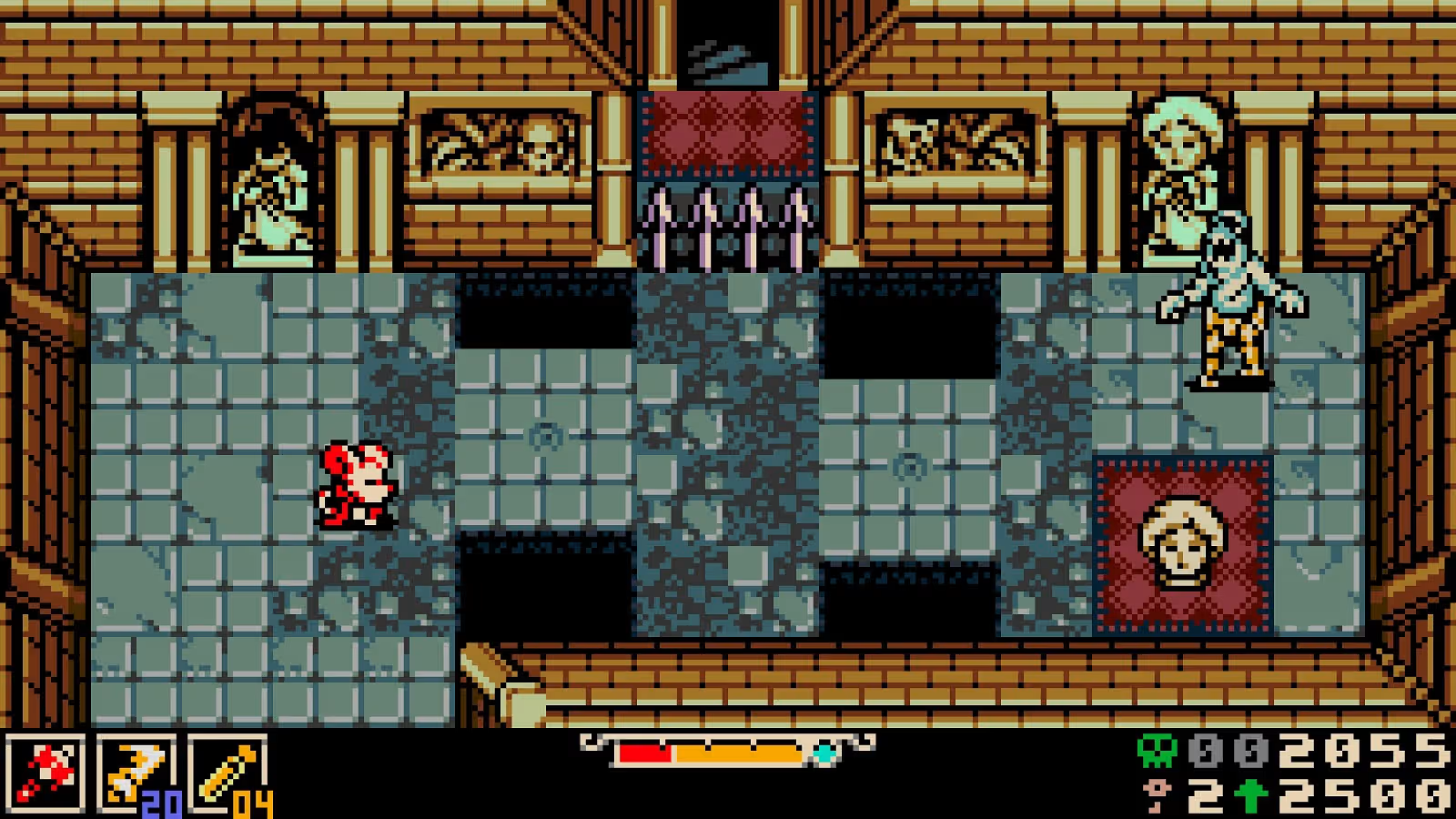
This is perhaps Mina's greatest strength: the game constantly rewards curiosity. A suspicious wall leads to a hidden cavern. A strange NPC hints at a side quest several hours before you understand what they're talking about. A forgotten path opens up an entirely optional area packed with treasures and lore. At one point I spent nearly forty minutes pursuing what I assumed was a major questline, only to discover I'd accidentally wandered into an optional region containing a mini-boss and a fishing spot.
I regret none of it.
The comparison that kept coming to mind wasn't actually classic Zelda. It was Elden Ring. Not because the games are mechanically similar, but because they share the same philosophy of exploration. Both trust the player to get lost. Both understand that discovery is more rewarding when it isn't constantly signposted. Both recognise that mystery is often more compelling than instruction.
That isn't to say everything is perfect. For all its strengths, Mina occasionally struggles with readability. Certain areas become visually cluttered during combat, particularly when projectiles, environmental hazards, and enemies are competing for your attention simultaneously. The commitment to retro presentation sometimes works against clarity.
Navigation can also be surprisingly obtuse. There were several occasions where I spent longer than I'd like figuring out where to go next, not because the puzzle itself was difficult, but because the game wasn't always communicating information clearly. Some players will see this as part of the charm. Others will be reaching for a guide after the third lap around a dungeon.
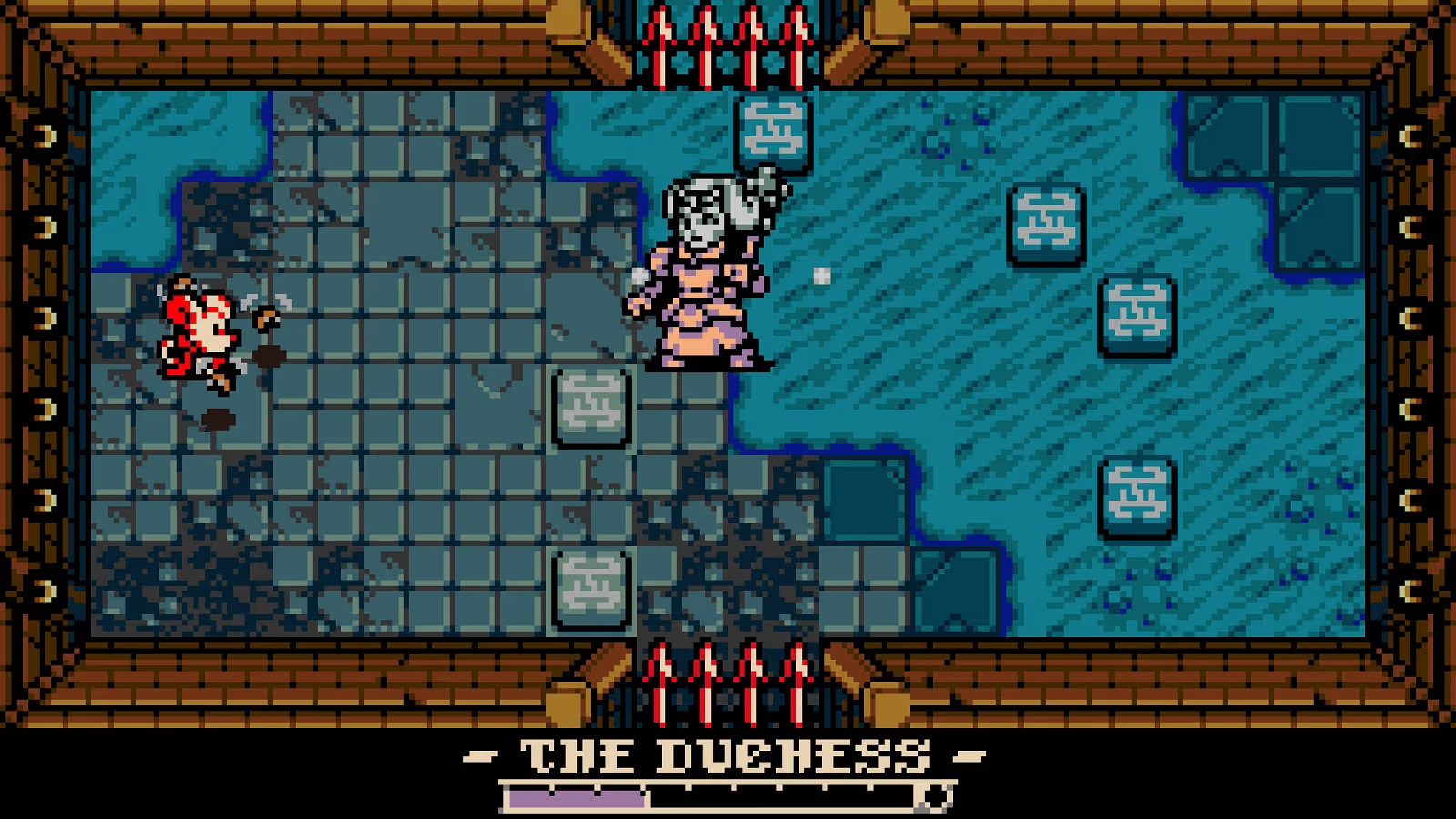
Combat, while excellent overall, can occasionally drift into frustration during certain boss encounters. The difficulty curve is generally well judged, but there are moments where the game's enthusiasm for challenge slightly outweighs its enthusiasm for readability. A handful of bosses felt like exercises in memorisation rather than tests of skill. They're rarely bad encounters; they're just not quite as elegant as the best ones.
Still, these criticisms feel relatively minor when weighed against everything the game does right. Because what surprised me most about Mina the Hollower wasn't its combat, its exploration, or even its superb art direction. It was its density. This game is absolutely packed.
There are side quests. Hidden bosses. Fishing minigames. Collectibles. Optional dungeons. New Game Plus modifiers. Build experimentation. Secret areas. Weird NPCs. Stranger NPCs. More trinkets than any reasonable person should be expected to catalogue. The deeper you dig, the more the game seems determined to reward your effort. In an era where many open-world games mistake size for substance, Mina feels refreshing because almost every discovery feels deliberate. Nothing here exists simply to fill space.
And then there is the soundtrack. Jake Kaufman's work has been excellent for years, but this might be some of his finest material to date. Melancholic melodies drift through haunted forests. Upbeat themes accompany bustling settlements. Boss battles erupt into frantic compositions that perfectly capture the chaos unfolding onscreen. The music constantly reinforces the atmosphere without overwhelming it. It's the sort of soundtrack you'll find yourself humming hours after you've switched the console off.
It’s also fantastically accessible rather than punishing. The settings menu offers a wide range of granular options that allow you to tailor the experience to your liking, from incoming damage and item effects to Mina’s movement and healing speed. You can make it as forgiving or as brutally demanding as you want. This level of control feels like the gold standard for the genre. It respects the player’s time, skill level, and patience without compromising the design itself. Both newcomers and seasoned players can find their own version of the game without compromise. The simple act of giving control to the player to curate their experience is nothing short of brilliant, and I hope other studios take note.
The remarkable thing is how effortlessly everything comes together. Mina the Hollower borrows from countless sources. Zelda. Castlevania. Soulslikes. Metroidvanias. Yet it never feels derivative. Instead, it feels like a game built by developers who genuinely understand what made those influences special. That's a surprisingly rare skill.
Anyone can replicate mechanics. Much harder is replicating the feeling of discovery, wonder, and excitement those games inspired in the first place. Mina manages it. After dozens of hours in this wonderful world, I wasn't thinking about Game Boy Color games. I wasn't thinking about Zelda or Castlevania. I was thinking about Tenebrous Isle, Mina, and the dozens of stories I'd uncovered along the way. That's perhaps the highest compliment I can pay it. For years, Yacht Club Games has lived in the enormous shadow of Shovel Knight. It would have been easy to simply keep making variations on that formula forever. Instead, they've delivered something equally confident, equally distinctive, and arguably even more ambitious.
You can subscribe to Jump Chat Roll on your favourite podcast players including:
Let us know in the comments if you enjoyed this podcast, and if there are any topics you'd like to hear us tackle in future episodes!